
Articles for Biochemical Society
Explore 1 business insights in all locations
Insider
Share Your Business Story
Reach our community by sharing your business insights, expert guides, or success stories on the world's most trusted local platform.
Write Your Article Now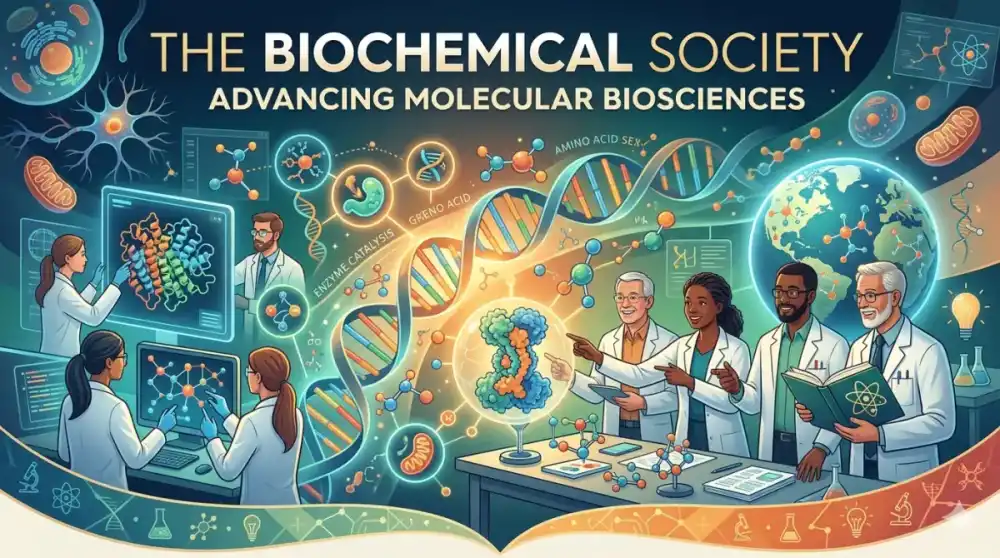
Educational Services
Apr 08, 2026
The Biochemical Society: Advancing Molecular Biosciences
In the vast landscape of scientific discovery, few organizations carry the weight of tradition and the spark of innovation as effectively as The Biochemical Society. Established in 1911, this premier UK-based learned society has spent over a century at the heart of the molecular biosciences. From its humble beginnings in a committee room to its current status as a global authority, the Society remains dedicated to one core mission: advancing the molecular biosciences to address the most pressing challenges of our time.
Whether you are an early-career researcher looking for research grants, a senior academic seeking to publish in high-impact scientific journals, or a policy expert shaping the future of UK science, The Biochemical Society provides the infrastructure, community, and prestige necessary to succeed.
A Legacy of Excellence: The History of The Biochemical Society
The history of the Society is, in many ways, the history of biochemistry itself. Founded on January 21, 1911, by visionaries Benjamin Moore and R.H.A. Plimmer, the organization was born from a need to provide a dedicated space for the burgeoning field of biochemistry.
Key Milestones in Our Journey
1911: The Society is founded with a commitment to academic excellence.
1912: Acquisition of the Biochemical Journal, which would become one of the most cited publications in the field.
2026: Leading the transition toward Open Access (OA) through the Subscribe to Open (S2O) model, ensuring global access to vital research.
Today, headquartered at Albert House in London, the Society continues to evolve, supporting over 4,000 members worldwide and acting as a bridge between academia and industry.
Portland Press: World-Leading Scientific Publishing
One of the most significant assets of The Biochemical Society is its wholly-owned publishing arm, Portland Press. Unlike commercial publishers, Portland Press operates under a "surplus-back-to-science" model. This means that every pound generated through journal subscriptions and article processing charges is reinvested into the scientific community via grants, awards, and educational resources.
Our Flagship Publications
The Society oversees a portfolio of high-impact journals that cover the full spectrum of molecular life sciences:
Biochemical Journal: Exploring the mechanisms of life for over 100 years.
Clinical Science: Bridging the gap between basic molecular science and disease mechanisms.
Bioscience Reports: A fully open-access journal for sound scientific research.
Neuronal Signaling: Focused on cellular neuroscience and signaling pathways.
Biochemical Society Transactions: The go-to source for mini-reviews and snapshots of current research.
Supporting the Scientist: Grants, Awards, and Career Development
For many bioscientists, the Society is a lifeline during critical career transitions. By offering a diverse range of research grants and travel bursaries, the Society ensures that financial constraints do not hinder scientific progress.
Opportunities for Growth
Summer Vacation Studentships: Providing undergraduates with their first taste of laboratory research.
General Travel Grants: Assisting members with travel and registration costs for international scientific conferences.
Early Career Research Awards: Recognizing outstanding achievements by scientists within six years of their PhD.
Care and Assistance Grants: Supporting researchers with caring responsibilities to attend events and training.
Advocacy and Science Policy: A Voice in Government
As a member of the Science Council and the Royal Society of Biology, The Biochemical Society plays a pivotal role in shaping science policy. The Society identifies key issues—such as R&D investment, climate change, and education reform—and ensures the voices of its members reach policymakers in the UK government.
By participating in consultations and issuing position statements, the Society protects the future of the discipline, advocating for an inclusive and sustainable research ecosystem.
Core Specializations and Research Areas
The Society’s expertise spans the most critical areas of modern biology, including:
Molecular Biosciences: Understanding the fundamental chemical processes of life.
Biotechnology: Applying biological systems to industrial and environmental solutions.
Protein Science: Investigating the structure and function of proteins in health and disease.
Cell Biology: Deciphering the inner workings of the cell to treat complex illnesses.
Membership: Join a Global Community
With over 4,000 members across the globe, membership in The Biochemical Society is a mark of professional distinction. Members enjoy a suite of exclusive amenities, including:
Discounted Registration: Reduced fees for world-class scientific meetings and training events.
Networking: Access to a vast network of peers in both academia and industry.
Free Journal Access: Complimentary online access to the Biochemical Journal and Biochemical Society Transactions.
Professional Development: Exclusive workshops, webinars, and online training portals.
Frequently Asked Questions
1. How do I join The Biochemical Society?
You can join via our website at . We offer various membership tiers, including student, early career, and full membership.
2. What is Portland Press?
Portland Press is the Society’s publishing arm. All profits from its journals are reinvested into the bioscience community to fund grants and educational programs.
3. Are there grants available for international students?
Yes, many of our grants and bursaries are available to both UK-based and international members.
4. Where is the Society’s headquarters located?
We are located at Office 605, Albert House, 256-260 Old Street, London, EC1V 9DD, near Old Street Station.
5. How can I submit a paper to the Biochemical Journal?
Submissions can be made through the Portland Press editorial portal. We follow a rigorous peer-review process to ensure scientific excellence.
6. Does the Society provide resources for teachers?
Absolutely. We offer a range of educational resources, scientific outreach grants, and classroom activities to support educators at all levels.
7. Can I attend a scientific meeting if I am not a member?
Yes, our meetings are open to the public, though members receive significantly discounted registration rates.
8. What is the Society’s role in UK science policy?
We provide expert advice to the government, respond to parliamentary consultations, and advocate for increased R&D funding and science education.
9. Is The Biochemical Society a registered charity?
Yes, we are a Registered Charity (No. 253894) and a company limited by guarantee.
10. How can I contact the helpdesk?
You can reach our London office at +44 (0)20 3880 2793 or email info@biochemistry.org.
Business Information Summary
Feature
Details
Address
Office 605, Albert House, 256-260 Old Street, London, EC1V 9DD
Phone
+44 203 880 2793
Website
Working Hours
Monday-Friday: 9:00 AM – 5:00 PM (GMT)
Accepted Payments
Credit/Debit Cards, Bank Transfer, PayPal
Key Associations
Science Council, Royal Society of Biology, FEBS
Cambridge
0 Views
- Prev
- 1
- Next
Share This Page
My Page
Scan QR to open
Barcode