
Articles for Chartered Institute for Archaeologists
Explore 1 business insights in all locations
Insider
Share Your Business Story
Reach our community by sharing your business insights, expert guides, or success stories on the world's most trusted local platform.
Write Your Article Now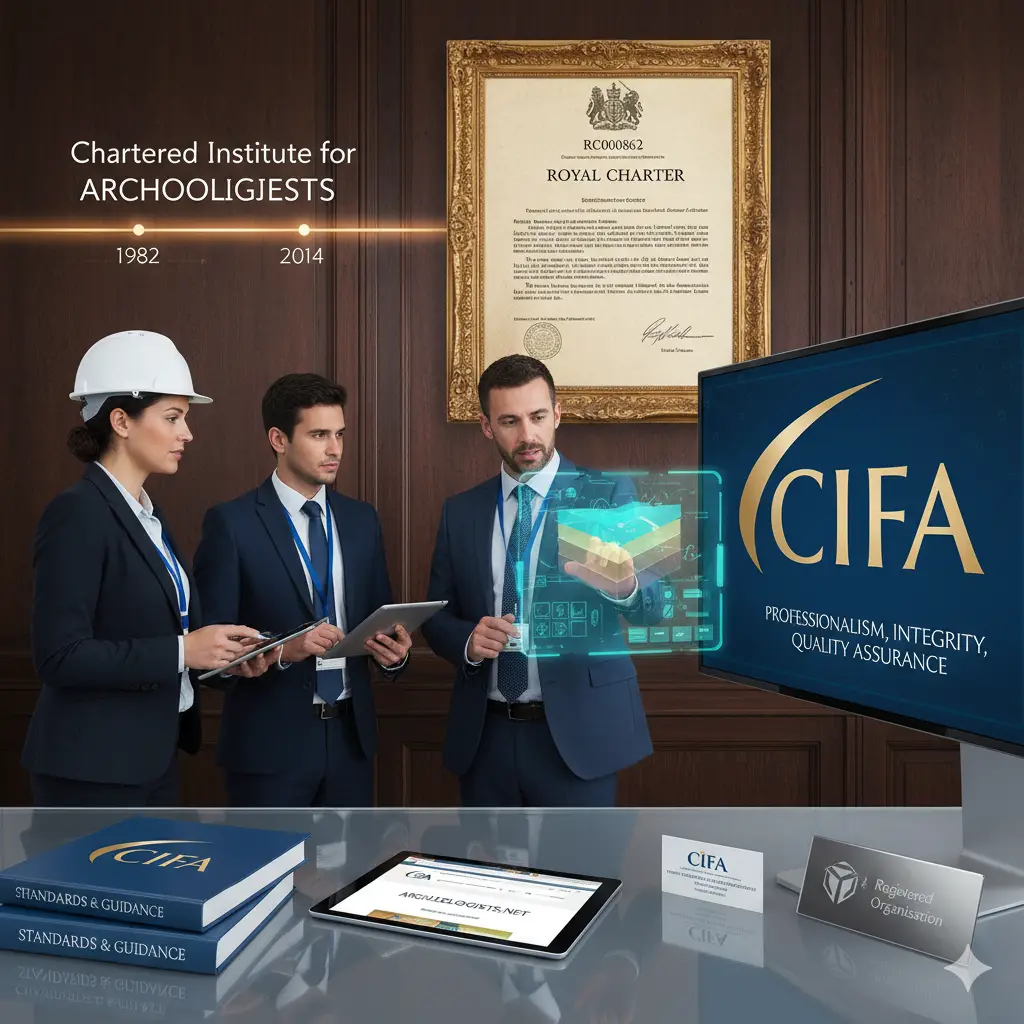
Business Services
Apr 08, 2026
CIfA: The Global Standard for Professional Archaeology
The Chartered Institute for Archaeologists (CIfA) stands as the preeminent professional body for individuals and organizations dedicated to the study, conservation, and management of our shared past. In an era where development and heritage preservation must find a delicate balance, CIfA provides the necessary regulatory framework to ensure that archaeology is not merely a scientific pursuit, but a high-quality professional service conducted for the public good.
Headquartered in Reading, Berkshire, CIfA has evolved from a small collective of field practitioners into a globally recognized institution. With over 4,000 individual members and 80 Registered Organisations, the Institute acts as the "gold standard" for competence and ethical conduct in the heritage sector.
The Evolution of CIfA: From 1982 to the Royal Charter
The journey of CIfA began on 21 December 1982, founded by the Council for British Archaeology. Under the leadership of its first chair, Peter Addyman, the organization was initially known as the Institute of Field Archaeologists (IFA). The primary catalyst for its creation was the rapid growth of "rescue archaeology" in the UK, which necessitated a formal body to govern professional conduct and technical quality.
A transformative milestone occurred in 2014, when the Institute was granted a Royal Charter (RC000862). This prestigious status elevated archaeology to the same professional standing as chartered surveying, engineering, and architecture. It signaled to the world that archaeology is a regulated profession with a rigorous commitment to the public interest.
The Value Proposition: Professionalism, Integrity, and Quality Assurance
At the heart of CIfA’s operations is a three-pronged value proposition:
Professionalism: Ensuring that practitioners possess the validated skills required for complex heritage projects.
Integrity: Adherence to a strict Code of Conduct that prioritizes ethical decision-making.
Quality Assurance: Through the Registered Organisation (RO) scheme, CIfA provides a "kite mark" that reassures developers and local authorities of an organization’s commitment to excellence.
Professional Accreditation: The Three Pillars (PCIfA, ACIfA, MCIfA)
CIfA offers a clear career trajectory through its accredited membership grades. These post-nominals are more than just titles; they are verified benchmarks of a practitioner's experience and competence.
Practitioner (PCIfA)
The Practitioner grade is designed for those who demonstrate a solid working knowledge of archaeological practice and the ability to carry out defined tasks under general supervision. It is the entry point for professional accreditation, often achieved by those working in fieldwork, archives, or laboratory roles.
Associate (ACIfA)
Associate status is for professionals who have significant experience and can demonstrate their ability to manage parts of projects or provide technical specialist advice. They are expected to exercise independent judgment and contribute to the advancement of archaeological understanding.
Member (MCIfA)
The Member grade is the highest level of individual accreditation. MCIfA practitioners are leaders in the field, capable of managing large-scale projects, formulating policy, and taking ultimate responsibility for archaeological outcomes. They are the primary influencers in the heritage sector.
The Registered Organisation (RO) Scheme
For businesses, the Registered Organisation status is a vital commercial asset. It is an organizational-level accreditation that proves a company has the management systems, technical skills, and ethical oversight to deliver high-quality archaeological work.
Developers often look for the RO "kite mark" because it minimizes risk. A CIfA-registered organization is subject to peer review and a robust complaints procedure, ensuring accountability that non-registered firms cannot match.
Technical Standards and Guidance
One of CIfA’s most significant contributions to the industry is its library of Standards and Guidance. These documents cover every aspect of archaeological work, from desk-based assessments and field evaluations to forensic archaeology and the treatment of human remains.
By following CIfA standards, heritage professionals ensure that their work is:
Scientifically Robust: Using methodologies that maximize data recovery.
Legally Compliant: Meeting the requirements of national planning policies (such as the NPPF in England).
Economically Efficient: Reducing delays in the planning process by providing "right-first-time" advice.
Continuing Professional Development (CPD) and Training
Archaeology is a dynamic field where technology and policy change rapidly. CIfA mandates that all accredited members complete at least 50 hours of CPD every two years. The Institute supports this through:
The Annual Archaeology Conference: A flagship event for networking and knowledge exchange.
E-learning Portals: Providing flexible training on ethics, project management, and technical skills.
Specialist Interest Groups: Focused on niches such as Forensic Archaeology, Buildings Archaeology, and Marine Archaeology.
Advocacy and Government Policy
CIfA is the "authoritative voice" for archaeology in the UK and abroad. Through the All-Party Parliamentary Archaeology Group (APPAG) and partnerships with bodies like the European Association of Archaeologists (EAA), CIfA lobbies for:
Stronger protection for the historic environment in planning legislation.
Improved pay and working conditions for archaeologists.
Recognition of archaeology’s role in sustainable development and social wellbeing.
Global Reach: Archaeology Without Borders
While based in Reading, CIfA's influence is international. With active groups in Germany and Australia, the Institute promotes professional standards across the globe. This international perspective is crucial as heritage professionals increasingly work on cross-border infrastructure projects and international conservation efforts.
Contact Information and Business Details
For those looking to join, hire an archaeologist, or seek technical guidance, CIfA is easily accessible:
Address: Power Steele Building, Wessex Hall, Whiteknights Road, Earley, Reading, RG6 6DE, UK.
Phone: 01189662841
Email: admin@archaeologists.net
Website: www.archaeologists.net
Working Hours: Monday to Friday, 09:00 – 17:00.
Frequently Asked Questions
1. What is the difference between a CIfA member and a regular archaeologist?
A CIfA member is professionally accredited, meaning their skills and ethics have been independently verified against a national competence matrix. They are also subject to a formal Code of Conduct and disciplinary procedures.
2. Why should developers hire a Registered Organisation (RO)?
Hiring an RO provides quality assurance. It ensures the archaeological work meets planning requirements efficiently, reducing the risk of project delays and legal challenges regarding heritage assets.
3. How do I become a Chartered Archaeologist?
Individuals must first reach the MCIfA (Member) grade. From there, they can apply for Chartered status, which requires demonstrating a high level of technical and ethical competence alongside a commitment to the public good.
4. Does CIfA provide insurance for archaeologists?
CIfA provides specialist advice on Professional Indemnity Insurance, ensuring that its members and Registered Organisations are adequately protected against the unique risks of heritage work.
5. What is forensic archaeology?
Forensic archaeology is a CIfA specialization that applies archaeological techniques to criminal investigations, often assisting police in the recovery of human remains or evidence from clandestine sites.
6. Can students join CIfA?
Yes, CIfA has a specific Student membership category. It provides early-career support, access to the jobs bulletin, and discounted rates for training and the annual conference.
7. How does CIfA influence government policy?
CIfA acts as an advisor to the government on heritage legislation, responding to consultations and working through parliamentary groups to ensure archaeology is protected in the planning system.
8. What are the payment methods for CIfA subscriptions?
CIfA accepts Bank Transfers (BACS), Credit/Debit Cards, and Direct Debit for membership and registration fees.
9. Is CIfA recognized outside the UK?
Yes. CIfA is a global body with international members and formal groups in Germany and Australia. Its standards are often used as benchmarks for professional practice worldwide.
10. What is "The Archaeologist"?
"The Archaeologist" is CIfA's professional journal, providing members with the latest news, research, and technical developments in the heritage sector.
The Future of Our Past
The Chartered Institute for Archaeologists remains vital to the health of the heritage sector. By bridging the gap between academic research and commercial reality, CIfA ensures that our history is not just uncovered, but understood and protected for future generations. Whether you are a student starting your journey or a developer planning a major project, CIfA provides the framework for success in the historic environment.
Reading
0 Views
- Prev
- 1
- Next
Share This Page
My Page
Scan QR to open
Barcode