
Articles for CLAWAR Association
Explore 1 business insights in all locations
Insider
Share Your Business Story
Reach our community by sharing your business insights, expert guides, or success stories on the world's most trusted local platform.
Write Your Article Now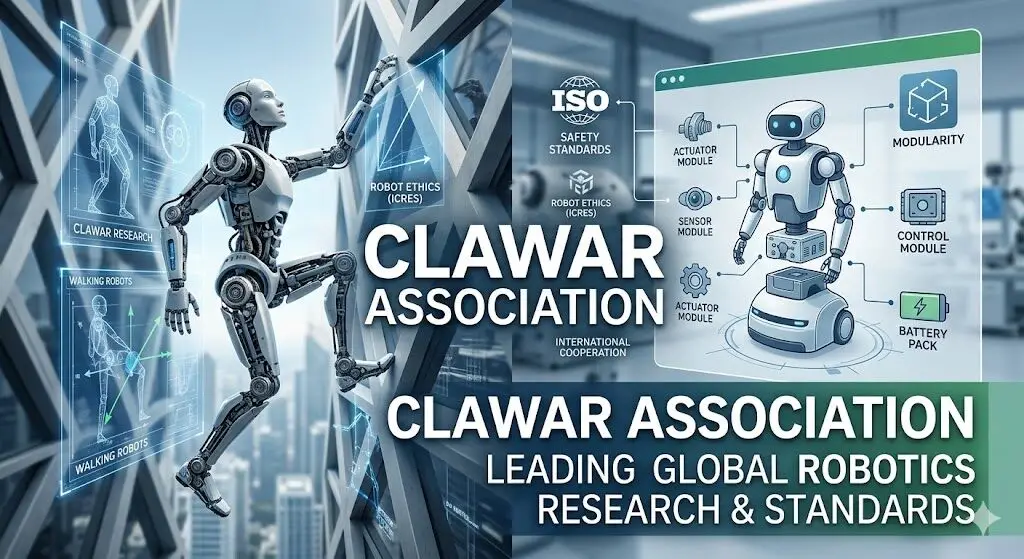
Educational Services
Apr 04, 2026
Role of the CLAWAR Association in Global Robotics
The landscape of modern robotics is shifting from stationary industrial arms to dynamic, mobile, and interactive systems. At the heart of this evolution is the CLAWAR Association Limited, a premier international non-profit organization dedicated to advancing education and science in the field of robotics. From its origins as a European research network to its current status as a global authority on climbing and walking robots, CLAWAR has become the connective tissue between high-level academic discovery and the rigorous demands of industrial application.
The Genesis of CLAWAR: From Research Network to Global Authority
The story of CLAWAR (Climbing and Walking Robots) began in 1998 as a "Network of Excellence" funded by the European Commission. Led by Professor Gurvinder S. Virk, the initiative was born out of a necessity to synchronize the fragmented efforts of roboticists across Europe.
Initially, the goal was simple yet ambitious: to solve the complex challenges of robotic locomotion in unstructured environments. Unlike wheeled robots that require flat surfaces, climbing and walking robots are designed to navigate the "human world"—stairs, uneven terrain, and vertical structures. In 2006, the network transitioned into the CLAWAR Association Limited, a registered charity in England and Wales, ensuring its longevity as an independent scientific body.
Bridging the Gap: Academic Excellence and Industrial Reality
One of the most significant hurdles in robotics is "reinventing the wheel." Researchers often spend years developing proprietary systems that cannot communicate with other technologies. The CLAWAR Association addresses this through its core mission: reducing duplication of effort through international cooperation.
1. Modularity in Robotics
CLAWAR advocates for a modular approach to robot design. By treating robot components—such as actuators, sensors, and processing units—as interchangeable modules, the industry can scale faster and at a lower cost. This modularity is essential for service robots and medical robotics, where custom solutions are often required for specific patient needs or environmental tasks.
2. International Robot Standardization (ISO/IEC)
Perhaps the most impactful contribution of the CLAWAR Association is its leadership in standardization. The association is a key technical partner for ISO TC299 (Robots and Robotic Devices).
ISO 13482: CLAWAR members were instrumental in formulating this landmark safety standard for personal care robots. It defines the safety requirements for mobile servant robots, physical assistant robots, and person carrier robots.
Safety and Ethics: As robots enter our homes and hospitals, safety is no longer just a technical requirement—it is a legal and ethical mandate.
Flagship Initiatives: Conferences and Publications
The CLAWAR Association maintains its global influence through a series of prestigious events and scholarly publications that serve as the primary conduits for new knowledge.
The International CLAWAR Conference Series
Now approaching its 30th year, the International Conference on Climbing and Walking Robots (CLAWAR) is a staple in the scientific calendar. The conference moves globally—from the UK and China to Brazil and Portugal—reflecting its international reach.
Peer-Reviewed Research: Every paper presented undergoes rigorous scrutiny, ensuring that only the most innovative and scientifically sound technologies are shared.
Interdisciplinary Themes: Topics range from biologically-inspired systems (biomimetics) to advanced sensor fusion and autonomous navigation.
ICRES: Tackling the Ethics of Automation
The International Conference on Robot Ethics and Standards (ICRES) is CLAWAR’s response to the societal challenges of AI and automation. As machines gain autonomy, questions of liability, privacy, and "machine morality" become paramount. ICRES provides a multidisciplinary forum where engineers, lawyers, and philosophers collaborate to build a framework for trustworthy AI.
Membership and Community Impact
The CLAWAR Association is a membership-based organization, offering tiers for students, regular professionals, and corporate entities.
Feature
Student Membership
Professional/Regular
Corporate Membership
Access to Research
Open-access repository
Full technical briefings
Priority project collaboration
Networking
Global expert directory
Working group participation
Standardization consultancy
Event Discounts
Significant reduction
Member rates
Multi-delegate packages
Through these networks, CLAWAR fosters a "Global Expert Community," allowing a researcher in High Wycombe to collaborate with a developer in Tokyo on the next generation of assistive exoskeletons.
Specialist Expertise: Why CLAWAR Matters
The association’s specialization in Climbing and Walking Robots is not just about verticality; it's about versatility. These technologies are critical for:
Hazardous Environments: Inspecting nuclear power plants or offshore oil rigs where human presence is dangerous.
Healthcare: Developing wearable robots (exoskeletons) that help paralyzed individuals walk again.
Search and Rescue: Navigating rubble after natural disasters.
By advocating for ethical design and robust regulatory frameworks, the CLAWAR Association ensures that the robotics community is equipped to navigate both the technical and societal challenges of a rapidly automating world.
The Road Ahead
As we look toward 2030 and beyond, the CLAWAR Association remains committed to its founding principles: education, science, and the public benefit. Under the continued guidance of its Board of Trustees and the legacy of Professor Gurvinder S. Virk, the association will continue to lead the charge in making robots safer, more modular, and more ethically integrated into our daily lives.
Frequently Asked Questions
1. What is the main goal of the CLAWAR Association?
The mission is to advance education and science in robotics, specifically focusing on mobile robotics, modularity, and international standardization to reduce duplication of effort in the field.
2. Where is the CLAWAR Association headquartered?
The headquarters are located in High Wycombe, Buckinghamshire, United Kingdom, near the High Wycombe Train Station and Eden Shopping Centre.
3. Who founded the CLAWAR Association?
It was founded by Professor Gurvinder S. Virk, who remains a Founding Trustee.
4. What is ISO 13482, and why is CLAWAR involved?
ISO 13482 is the international safety standard for personal care robots. CLAWAR actively supports ISO working groups to ensure service and medical robots are safe for human interaction.
5. Can students join the CLAWAR Association?
Yes, there is a dedicated Student Membership tier that provides access to research repositories, technical briefings, and networking opportunities at a reduced rate.
6. What are the flagship conferences organized by CLAWAR?
The two main conferences are the International Conference on Climbing and Walking Robots (CLAWAR) and the International Conference on Robot Ethics and Standards (ICRES).
7. Is the CLAWAR Association a commercial company?
No, it is a non-profit organization and a registered charity in England and Wales (No. 1146742).
8. How does modularity help the robotics industry?
Modularity allows for the reuse of components across different platforms, which speeds up development cycles, reduces costs, and facilitates easier maintenance and upgrades.
9. Does CLAWAR provide open-access research?
Yes, the association maintains an open-access research repository and conference proceedings to ensure the global dissemination of scientific knowledge.
10. How can I contact the CLAWAR Association for consultancy?
You can reach them via email at info@clawar.org or by phone at +44 (0)1494 440386 for inquiries regarding standardization, membership, or conference participation.
Sheffield
4 Views
- Prev
- 1
- Next
Share This Page
My Page
Scan QR to open
Barcode