
Articles for European Society for Mental Health and Deafness
Explore 1 business insights in all locations
Insider
Share Your Business Story
Reach our community by sharing your business insights, expert guides, or success stories on the world's most trusted local platform.
Write Your Article Now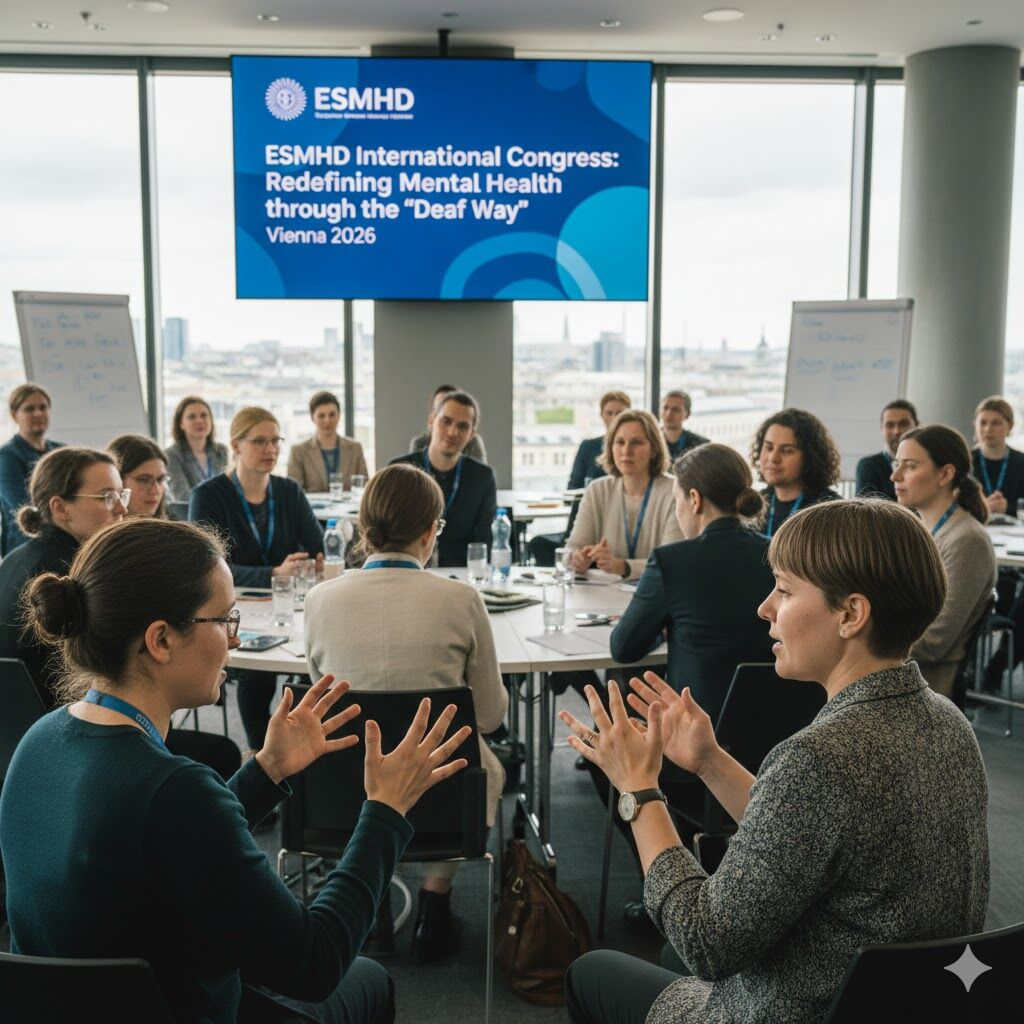
Business Services
Apr 06, 2026
ESMHD: Redefining Mental Health Through the Deaf Way
The European Society for Mental Health and Deafness (ESMHD) stands as a beacon of progress in the international landscape of mental health. Established in 1986, this premier international Non-Governmental Organisation (NGO) has spent nearly four decades bridging the critical gap between traditional medical models and the lived experience of the Deaf community. By viewing deafness not as a disability to be "fixed," but as a distinct human experience and linguistic identity, ESMHD has transformed how psychological and social services are delivered across Europe and beyond.
The Foundation of a Movement: Our History and Mission
Founded by a visionary group of experts from the United Kingdom, Belgium, the Netherlands, and Germany, ESMHD was born out of a stark necessity. In the mid-1980s, Deaf individuals across Europe faced significant barriers to mental health care—most notably a lack of practitioners who understood sign language or the cultural nuances of the "Deaf way" of life.
Today, our mission remains steadfast: to promote positive mental health and well-being for all Deaf people. We advocate for a holistic approach that includes healthy emotional, psychological, and social development. By fostering international cooperation, we ensure that mental health services are not only accessible but also culturally competent and respectful of Deaf identity.
Bridging Science and Advocacy: The ESMHD Value Proposition
What sets ESMHD apart is its multidisciplinary network. We serve as a nexus for:
Researchers: Pioneering studies into sign language linguistics in therapy and neurodiversity.
Practitioners: Clinicians, psychologists, and social workers sharing best practices in trauma-informed care.
Service Users: Ensuring that "co-production" is not just a buzzword, but a lived reality where Deaf individuals lead the development of their own services.
Our recent collaboration with the United Nations in Vienna for the Zero Project Conference 2026 highlights our influence on global health policy. By hosting specialized symposia on topics like "Trauma in the Deaf Community," we bring visibility to the specific psychological challenges faced by those who use sign language as their primary communication method.
Specialist Services and Global Impact
The work of ESMHD extends far beyond annual meetings. We provide a robust framework for professional development and policy advocacy, including:
International Mental Health Congresses: World-class events that set the standard for clinical excellence in the field.
Special Interest Groups (SIGs): Focused clusters researching specific areas such as deafblindness (MSI), substance use, and family support.
The International Journal on Mental Health for Deaf People (IJMHD): A peer-reviewed, open-access archive that breaks down financial barriers to critical research.
Culturally Competent Care: Why It Matters
For a Deaf person, accessing therapy through a hearing interpreter is often insufficient. It can lead to "access trauma" and misdiagnosis. ESMHD advocates for a signing environment where the therapist and patient can communicate directly. This linguistic accessibility is the cornerstone of effective psychiatric assessment and treatment.
Our specialization in Trauma-Informed Care recognizes the unique systemic and communication-related traumas experienced by the Deaf community. By integrating sign language linguistics into therapeutic models, we empower individuals to process their experiences in their own heart language.
Membership and Community Engagement
ESMHD is a volunteer-led executive board supported by dedicated member delegates across the globe. We invite professionals, students, and organizations to join our network. Membership provides:
Access to exclusive research archives.
Discounted rates for international congresses.
A platform to influence European health policy through our partnerships with the European Union of the Deaf (EUD) and the World Federation of the Deaf (WFD).
Frequently Asked Questions
1. What is the primary goal of the ESMHD?
The primary goal is to promote positive mental health for Deaf people across Europe by ensuring they have access to specialized, linguistically accessible, and culturally competent mental health services.
2. When was the European Society for Mental Health and Deafness established?
ESMHD was established in 1986 by a founding group of representatives from the UK, Netherlands, Belgium, and Germany.
3. Does ESMHD provide direct therapy to individuals?
As an international NGO, ESMHD focuses on advocacy, research, and professional networking. While we do not provide direct clinical therapy, we establish the best practice guidelines and clinical standards used by service providers.
4. How can I contact the ESMHD secretariat?
You can reach the administrative liaison office via email at info@esmhd.org or by calling the helpdesk at +44 (0)1604 616069.
5. Is the ESMHD only for professionals in the UK?
No, ESMHD is a pan-European and global organization. While our secretariat has historical ties to the UK and Netherlands, our impact and membership extend across all European Union countries and beyond.
6. What languages are supported at ESMHD events?
We prioritize linguistic accessibility by providing International Sign (IS), English, and various national sign languages (such as BSL or DGS) depending on the event location.
7. Where is the ESMHD headquarters located?
The administrative liaison office is located at Christopher Cargill House, 21-23 Pelham Road, Nottingham, NG5 1AP, United Kingdom.
8. What kind of payment methods does ESMHD accept for membership?
We accept Bank Transfers (SEPA/BACS), payments via our online membership portal, and PayPal.
9. Can students join the ESMHD?
Yes, we have a specific membership category for students, individuals under 25, and those over 65, offering reduced rates to encourage the next generation of researchers.
10. How does ESMHD support research?
We host the International Journal on Mental Health for Deaf People (IJMHD), an open-access, peer-reviewed journal, and organize specialized research symposia at our international congresses.
Contact Information
Website: https://esmhd.org
Phone: +44 (0)7788 520323
Address: c/o Self Help UK, 21-23 Pelham Road, Nottingham, NG5 1AP, UK.
Lisburn
6 Views
- Prev
- 1
- Next
Share This Page
My Page
Scan QR to open
Barcode