
Articles for Nautical Archaeology Society
Explore 1 business insights in all locations
Insider
Share Your Business Story
Reach our community by sharing your business insights, expert guides, or success stories on the world's most trusted local platform.
Write Your Article Now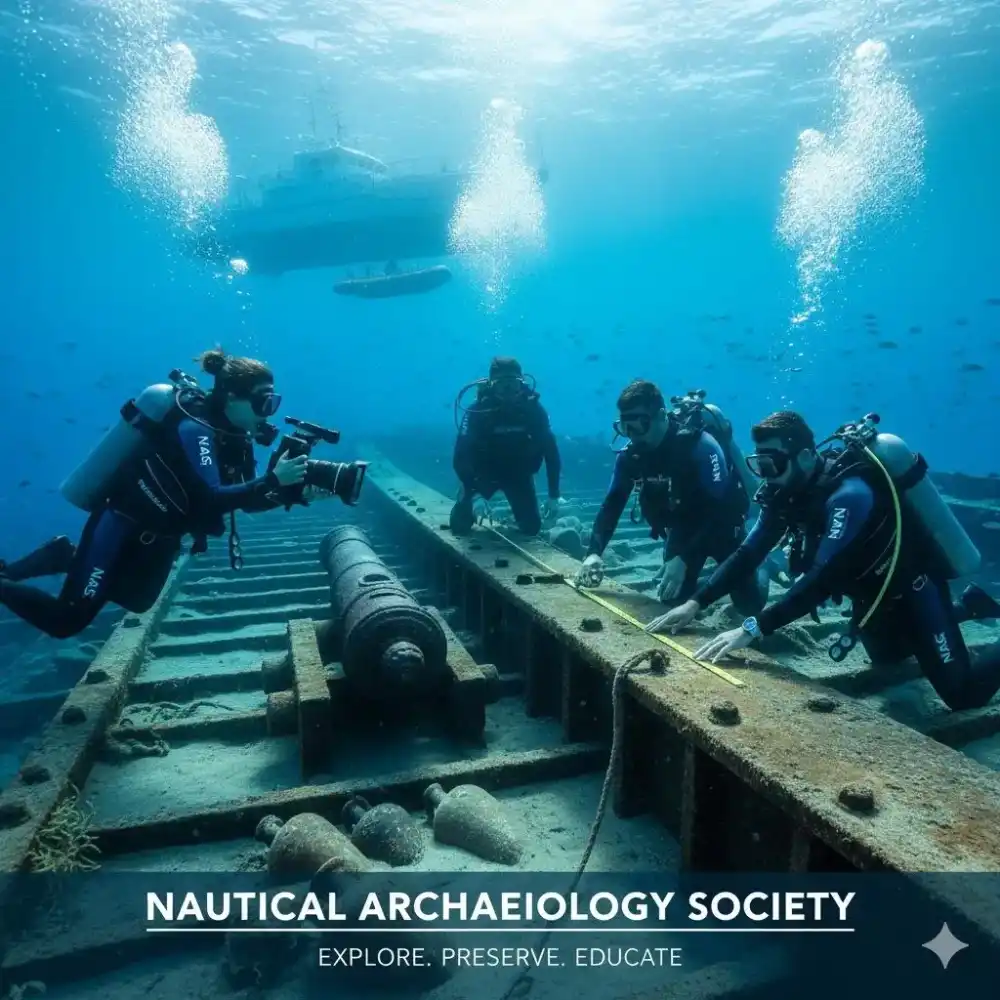
Educational Services
Apr 06, 2026
Nautical Archaeology Society: Preserving Our Sunken Past
The Nautical Archaeology Society (NAS) stands as a beacon for the preservation and exploration of global underwater cultural heritage. Established in 1972 and headquartered in Portsmouth, United Kingdom, this registered charity (No. 264209) has spent over five decades bridging the gap between professional maritime researchers and passionate volunteers. Whether you are a recreational diver, a history enthusiast, or a professional academic, the NAS provides a structured gateway into the fascinating world of maritime archaeology.
The Mission and Vision
The primary mission of the NAS is to advance education in nautical archaeology at every level. By improving the standards of recording, conservation, and reporting of shipwrecks and submerged landscapes, the society ensures that the stories of our sunken past are not lost to time or decay. As a UNESCO-accredited NGO, the NAS plays a vital role in international consultancy, advocating for the 2001 Convention on the Protection of the Underwater Cultural Heritage.
A Legacy of Discovery: Founded in 1972
The roots of the NAS trace back to the Council for Nautical Archaeology, its predecessor, which sought to channel the discoveries of the diving community into academic research. Since its official formation in 1972, with prominent figures like Phil Harding serving as President, the society has evolved into an international powerhouse with a service area that spans the globe.
Internationally Recognized Archaeological Training
One of the core pillars of the NAS is its award-winning training program. Designed to be accessible to both divers and non-divers, the curriculum scales from foundational concepts to a specialized Diploma.
Training Levels and Certification
Introduction to Maritime Archaeology: A perfect starting point for beginners, covering basic principles and the importance of heritage.
Foundation to Part I: Focuses on practical skills, including site surveying and 2D recording.
Part II & III (Advanced Skills): Covers specialized subjects like photogrammetry, shipwreck conservation, and intertidal recording.
Diploma in Maritime Archaeology: The highest level of NAS accreditation, requiring significant fieldwork and a published report.
eLearning and Specialist Skills Days
For those unable to travel to Portsmouth, the NAS offers a robust eLearning platform. This digital suite allows students to complete modules on their own schedule, covering everything from "Timber Recording" to "Ceramic Identification." Specialist skills days often take place at historic sites like Fort Cumberland, providing hands-on experience in underwater surveying and site management.
The International Journal of Nautical Archaeology (IJNA)
The NAS is the proud manager of the International Journal of Nautical Archaeology (IJNA). This peer-reviewed publication is the gold standard for maritime research, featuring original articles on shipwrecks, maritime trade, and submerged landscapes from prehistory to the modern era. Members receive exclusive access to this journal, keeping them at the cutting edge of global archaeological developments.
Community Engagement: The "Adopt-a-Wreck" Scheme
The "Adopt-a-Wreck" scheme is a hallmark of the NAS’s commitment to citizen science. It empowers local dive clubs and individuals to take ownership of a specific maritime site.
Stewardship: Volunteers monitor the condition of wrecks over time.
Reporting: Data collected by "adopters" is fed into national databases, assisting heritage agencies like Historic England and Cadw.
Awards: The NAS hosts an annual conference where the best "Adopt-a-Wreck" projects are recognized for their contribution to history.
Specialized Services and Expert Consultancy
Beyond education, the NAS operates as a specialized consultancy. Their expertise in maritime archaeology is sought after by governments and private developers to ensure that offshore projects (such as wind farms or harbor expansions) do not impact significant heritage sites.
Core Specializations Include:
Underwater Surveying: High-precision mapping of submerged structures.
Photogrammetry: Creating 3D digital models of shipwrecks.
Intertidal & Foreshore Recording: Documenting sites exposed at low tide.
Technical Library: Access to a specialist library at the Portsmouth headquarters for members.
Membership and The NAS Dive Club (NASAC)
Joining the NAS is more than just a subscription; it is an entry into a global community. Members benefit from:
Heritage Tours: Exclusive access to sites like the Mary Rose or the Newport Medieval Ship.
Fieldwork Opportunities: Priority placement on active archaeological digs.
NASAC: The society’s own dive club, where members can practice their surveying skills in a social, supportive environment.
Business Information & Contact Details
Business Name: Nautical Archaeology Society (NAS)
Physical Address: Fort Cumberland, Fort Cumberland Road, Eastney, Portsmouth, PO4 9LD, United Kingdom
Phone Number: 02392818419
Email: nas@nauticalarchaeologysociety.org
Website: https://www.nauticalarchaeologysociety.org
Working Hours: Monday–Friday, 09:00–17:00
Accepted Payments: Bank Transfer, Credit/Debit Cards, PayPal, Monthly Subscriptions.
Frequently Asked Questions
1. Do I need to be a scuba diver to join the Nautical Archaeology Society?
No! The NAS offers many opportunities for non-divers, including intertidal recording (foreshore archaeology), archival research, and terrestrial surveying at maritime sites.
2. How do I start the NAS training program?
The best way to start is by enrolling in the "Introduction to Maritime Archaeology" course, which is available both in-person and via our eLearning platform.
3. What is the "Adopt-a-Wreck" scheme?
It is a volunteer program where groups or individuals "adopt" a shipwreck or maritime site to monitor, research, and record its condition, promoting long-term stewardship.
4. Is the NAS training recognized internationally?
Yes, the NAS training certificate is globally recognized and often used as a prerequisite for participating in international maritime archaeological projects.
5. Can I visit the NAS headquarters?
The NAS is based at Fort Cumberland in Portsmouth. While the office is open for support, we recommend contacting us in advance if you wish to access the specialist library.
6. What is the IJNA?
The International Journal of Nautical Archaeology (IJNA) is a leading academic journal published by the NAS that covers all aspects of maritime and nautical archaeology.
7. How does the NAS support UNESCO?
The NAS is a UNESCO-accredited NGO. We provide expert advice and advocate for the protection of underwater cultural heritage according to the 2001 UNESCO Convention.
8. Are there student or family memberships available?
Yes, the NAS offers various membership tiers, including discounted rates for students and comprehensive packages for families and couples.
9. Can the NAS help with professional career development in archaeology?
Absolutely. Many professional maritime archaeologists began their careers with NAS credits. Our courses provide the practical field experience required for many graduate programs.
10. What payment methods does the NAS accept for courses?
We accept all major credit/debit cards, PayPal, bank transfers, and offer monthly subscription options for memberships.
The Nautical Archaeology Society remains the premier organization for anyone looking to make a real-world impact on the preservation of history. Through rigorous archaeological training, high-impact research in the IJNA, and a passionate community of volunteers, the NAS ensures that the secrets of the deep are brought to light ethically and scientifically. Visit our website today to start your journey into the past.
Portsmouth
11 Views
- Prev
- 1
- Next
Share This Page
My Page
Scan QR to open
Barcode