
Articles for Newcastle University
Explore 1 business insights in all locations
Insider
Share Your Business Story
Reach our community by sharing your business insights, expert guides, or success stories on the world's most trusted local platform.
Write Your Article Now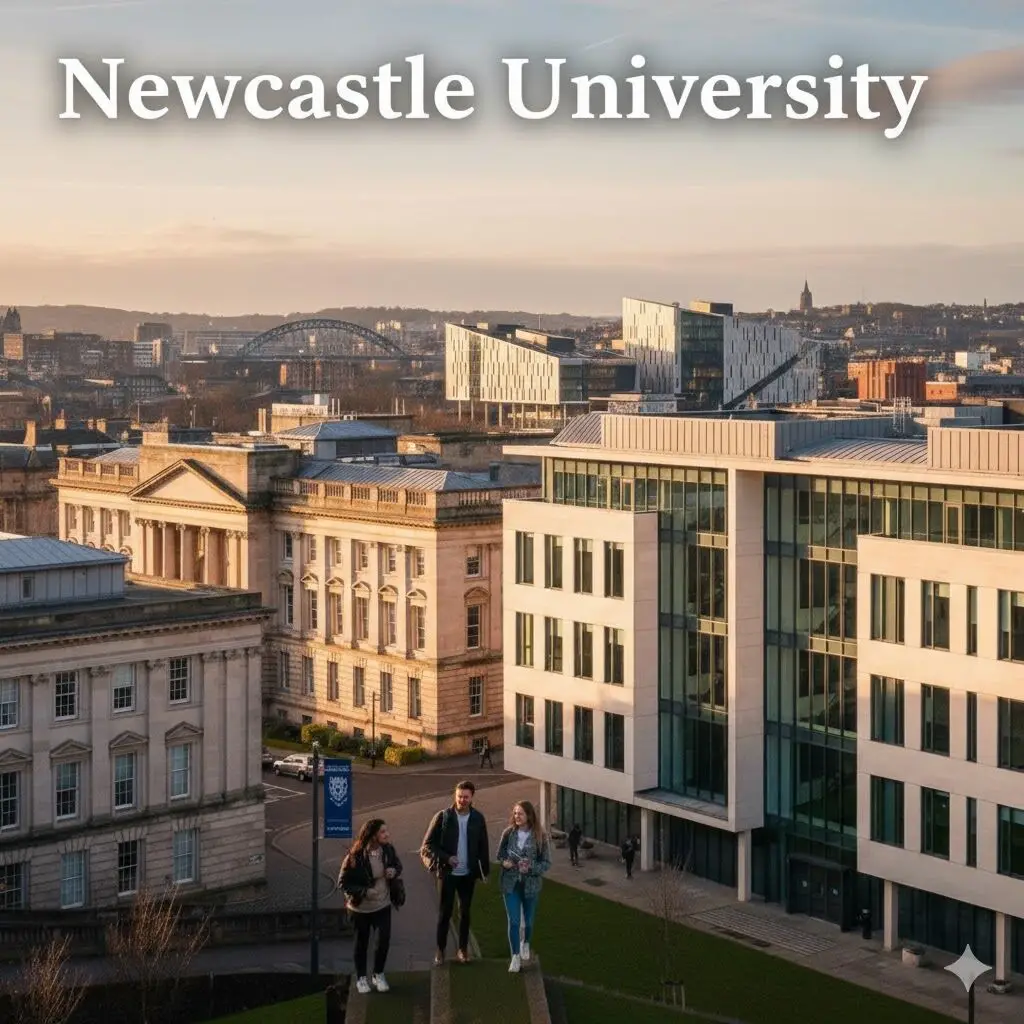
Educational Services
Apr 04, 2026
Newcastle University: Excellence in Global Research and Education
Newcastle University stands as a testament to nearly two centuries of academic evolution, transitioning from a localized school of medicine in 1834 to a world-leading, research-intensive institution in the 21st century. As a founding member of the prestigious Russell Group, the university has solidified its reputation as a powerhouse of innovation, consistently ranking within the top 150 universities globally. Its mission, "From Newcastle. For the World," reflects a deep-rooted commitment to tackling the most profound challenges facing modern society through interdisciplinary collaboration and academic rigour.
A Legacy of Excellence: The History of Newcastle University
The story of Newcastle University began in 1834 with the establishment of the School of Medicine and Surgery. Over the decades, it evolved through various mergers and affiliations—most notably with the University of Durham—before gaining independent university status in 1963. This historical journey has imbued the institution with a unique "red brick" character, blending Victorian architectural heritage with state-of-the-art modern facilities.
Today, the university serves a diverse community of over 28,000 students and 6,000 staff members. Its historical milestones are not merely dates but markers of societal impact, such as its pioneering work in identifying the causes of Alzheimer's disease and its leadership in the UK’s first Fine Art degree.
Academic Structure: The Three Core Faculties
Newcastle University’s academic prowess is organized into three distinct faculties, each housing world-renowned schools and research institutes:
1. Faculty of Humanities and Social Sciences (HaSS)
This faculty is the creative and intellectual heart of the university. It covers a vast spectrum of disciplines including:
Newcastle University Business School: A "Triple Crown" accredited institution (AACSB, AMBA, and EQUIS), placing it among the elite top 1% of business schools worldwide.
Architecture and Planning: Consistently ranked among the best in the UK for urban design and sustainable development.
Law, Arts, and Cultures: Providing a platform for critical thinking and cultural preservation.
2. Faculty of Medical Sciences (FMS)
As the founding discipline of the university, Medical Sciences continues to lead the way in global healthcare. Key specializations include:
Aging and Health: Home to the National Innovation Centre for Ageing (NICA).
Biomedical Research: Tackling chronic diseases, genetics, and pharmaceutical innovation.
Dentistry and Psychology: Providing top-tier clinical training and psychological research.
3. Faculty of Science, Agriculture, and Engineering (SAgE)
This faculty drives the technological and environmental solutions required for a sustainable future. Focus areas include:
Data Science: Hosting the National Innovation Centre for Data (NICD).
Sustainable Energy: Researching hydrogen power, carbon capture, and renewable grids.
Marine Science and Engineering: Utilizing the university’s unique coastal proximity for world-leading subsea and naval research.
Global Innovation Hubs: NICA and NICD
Newcastle University is not just a place for learning; it is an engine for economic and industrial growth. The university hosts two national centres of excellence that bridge the gap between academic theory and real-world application.
National Innovation Centre for Ageing (NICA): This centre works with businesses and the public to develop products and services that help people live longer, healthier lives. It is at the forefront of the "longevity economy."
National Innovation Centre for Data (NICD): By helping organizations gain insight from their data, NICD ensures that the UK remains a leader in the global digital economy. It provides the infrastructure for startups and multinationals to innovate through data science.
Research Impact: Tackling Global Challenges
The university’s research strategy is defined by "Excellence with Impact." In the latest Research Excellence Framework (REF), Newcastle was ranked 15th in the UK for research power. Its work extends into:
Sustainable Cities: Creating urban environments that are resilient to climate change.
One Planet: Focused on environmental justice and biodiversity.
Health and Wellbeing: From rare disease diagnostics to public health policy.
The Student Experience: Life in a Top 5 Student City
Newcastle is frequently voted one of the best and most affordable student cities in the UK. The university campus is situated in the heart of the city, offering a "city-centre campus" feel that is both safe and vibrant.
Campus Amenities
Libraries: The Philip Robinson Library offers 24/7 access during term time, complemented by the Marjorie Robinson Library Rooms.
Student Union (NUSU): An award-winning hub for over 160 societies and 60 sports clubs.
Sports Centre: Offering state-of-the-art fitness suites, indoor courts, and high-performance training environments.
Health and Wellbeing: A dedicated University Health Centre ensuring students are supported throughout their academic journey.
Professional Development and Careers
Newcastle University is highly regarded for graduate employability. The Careers Service provides lifelong support to alumni, facilitating internships, work placements, and entrepreneurship through its "Start Up" programme. Knowledge Transfer Partnerships (KTPs) further connect graduates with industry leaders to solve complex business problems.
Sustainability and Global Responsibility
The university is a world leader in sustainability, currently ranked 56th globally for its social and environmental impact (QS Sustainability Rankings). From divesting from fossil fuels to conducting cutting-edge research into sustainable agriculture at its own university farms, Newcastle is dedicated to the United Nations Sustainable Development Goals.
Why Choose Newcastle University?
Choosing Newcastle University means joining a global community dedicated to excellence. Whether you are an undergraduate student beginning your journey, a researcher seeking to solve the world's biggest problems, or a business looking for innovation, Newcastle University offers the expertise, facilities, and inclusive environment required for success.
Frequently Asked Questions
1. Is Newcastle University a member of the Russell Group?
Yes, Newcastle University is a founding member of the Russell Group, which represents 24 of the UK's leading research-intensive universities.
2. What is Newcastle University’s world ranking?
As of 2025, Newcastle University is ranked 129th in the world by the QS World University Rankings and is consistently within the top 150 globally.
3. What are the "Triple Crown" accreditations for the Business School?
The Newcastle University Business School holds accreditations from AACSB, AMBA, and EQUIS, a distinction held by only a small percentage of business schools worldwide.
4. Does the university offer 24/7 library access?
Yes, the Philip Robinson Library provides 24/7 access to students during term time, offering a variety of silent and collaborative study spaces.
5. What are NICA and NICD?
NICA is the National Innovation Centre for Ageing, and NICD is the National Innovation Centre for Data. Both are based at the Newcastle Helix site and focus on bridging academic research with industrial innovation.
6. What is the campus location like?
The university has a beautiful city-centre campus in Newcastle upon Tyne, located near landmarks like St James' Park and the Great North Museum: Hancock.
7. How many students attend Newcastle University?
The university hosts a diverse community of over 28,000 students from more than 130 countries.
8. What are the main areas of research specialization?
Key specializations include Aging and Health, Data Science, Sustainable Energy, Civil Engineering, and Marine Science.
9. What support is available for international students?
Newcastle offers dedicated international student support, including visa advice, English language programs through INTO, and global scholarships.
10. How can I contact the university helpdesk?
You can reach the main helpdesk at 0191 208 6000 or email general enquiries to enquiries@ncl.ac.uk.
Business Contact Information
Address: Newcastle University, Newcastle upon Tyne, Tyne and Wear, NE1 7RU, UK
Website: www.ncl.ac.uk
Phone: 0191 208 6000
Email: admissions@ncl.ac.uk
Newcastle upon Tyne
12 Views
- Prev
- 1
- Next
Share This Page
My Page
Scan QR to open
Barcode