
Articles for Royal Meteorological Society
Explore 1 business insights in all locations
Insider
Share Your Business Story
Reach our community by sharing your business insights, expert guides, or success stories on the world's most trusted local platform.
Write Your Article Now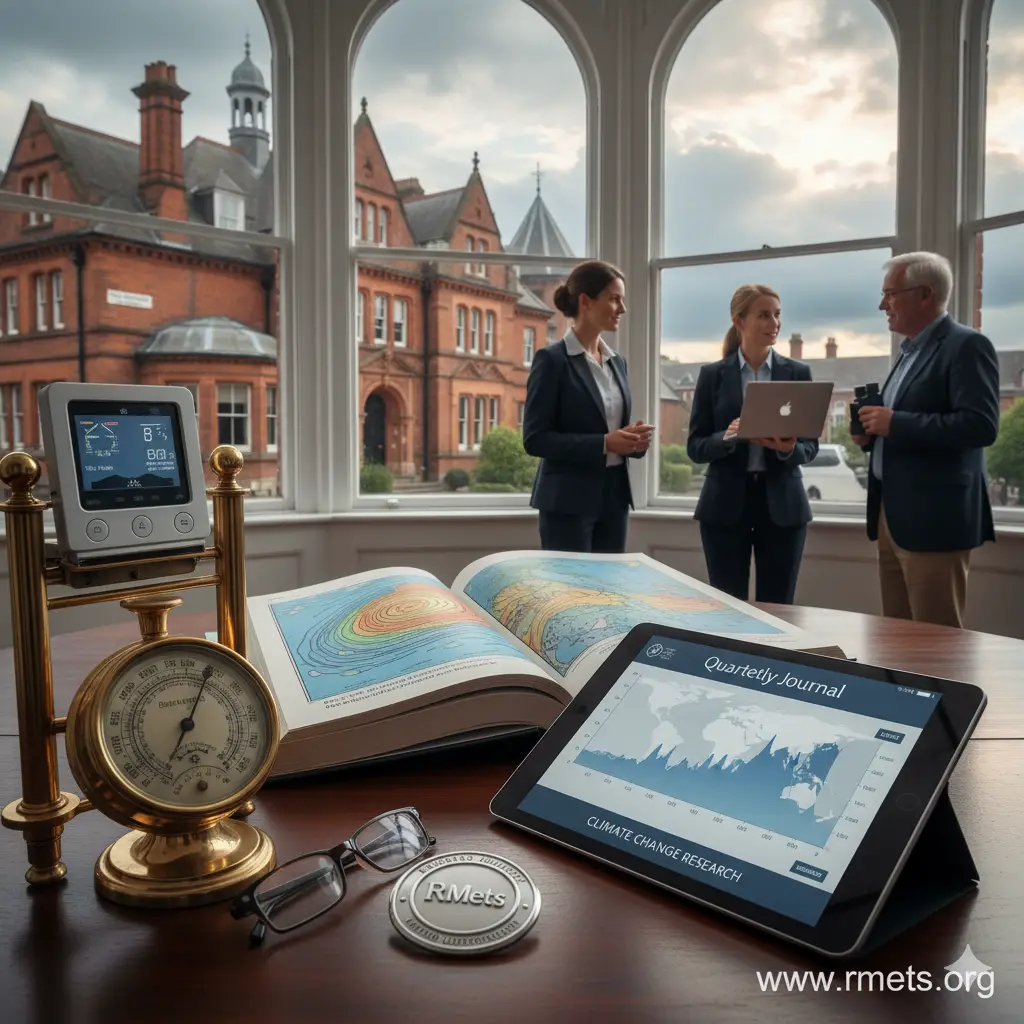
Business Services
Apr 08, 2026
Advancing Weather & Climate Science: Royal Meteorological Society
In an era defined by shifting weather patterns and the undeniable urgency of climate change, the role of scientific institutions has never been more critical. The Royal Meteorological Society (RMetS) stands at the global forefront of this mission. Established in 1850 and headquartered in Reading, Berkshire, the Society serves as the professional and learned body for weather and climate in the United Kingdom and beyond.
With a legacy spanning over 175 years, RMetS has evolved from a small gathering of Victorian enthusiasts into a world-leading authority. Today, it bridges the gap between complex atmospheric research and public understanding, ensuring that the science of the atmosphere is used for the "benefit of all."
A Legacy of Discovery: The Founding of RMetS
The history of the Royal Meteorological Society is a testament to the enduring human fascination with the skies. Founded on 03 April 1850 as the "British Meteorological Society," its first President was Samuel Charles Whitbread. The organization was later incorporated by Royal Charter in 1866 and officially granted the "Royal" prefix by Queen Victoria in 1883.
Based in the heart of the UK’s "weather hub"—Reading—near landmarks like the Reading West Station and Broad Street Mall, the Society’s physical presence at 104 Oxford Road is a symbol of its stability. However, its influence is truly global, supporting a diverse community of professional meteorologists, academics, students, and weather enthusiasts in more than 50 countries.
The Pillars of the Society: Mission and Value Proposition
The Society operates under a core value proposition: "Scientific Excellence and Public Engagement." This dual focus ensures that while the highest standards of research are maintained, the findings are communicated effectively to government bodies, schools, and the general public.
1. Advancing Scientific Understanding
Through its eight peer-reviewed academic journals, including the prestigious Quarterly Journal of the Royal Meteorological Society and the International Journal of Climatology, the Society facilitates the exchange of groundbreaking research. These publications cover everything from numerical weather prediction to the socio-economic impacts of climate change.
2. Professionalism and Accreditation
Perhaps the most significant role of the RMetS is its status as the only awarding body for national meteorological qualifications. It ensures professional standards through two key accreditations:
Chartered Meteorologist (CMet): The highest level of professional recognition for experienced meteorologists.
Registered Meteorologist (RMet): A professional qualification for those at the early stages of their careers or in supporting roles.
3. Public Engagement and Education
The Society’s public outreach arm, theWeather Club, and its educational portal, MetLink, provide resources that bring weather science into the classroom. By influencing the national curriculum and supporting teachers with high-quality materials, RMetS inspires the next generation of atmospheric scientists.
Professional Membership: A Gateway to Expertise
Membership in the Royal Meteorological Society is not restricted to experts; it is open to anyone with a passion for weather and climate.
Why Join the RMetS?
Networking: Access to specialist scientific groups and local centers.
CPD Support: The ACCSYS online CPD tracking tool helps professionals manage their career progression.
Grants and Bursaries: Support for research, conference attendance, and field expeditions.
Resources: Monthly access to Weather magazine and discounts on academic journals.
Championing Climate Change Science
As the world grapples with global warming, the RMetS plays a pivotal role as an independent voice. The Society provides evidence-based communication to help the public navigate the complexities of climate science. By publishing "State of the Climate" reports and advising the UK government, the Society ensures that policy decisions are rooted in robust data.
Specialist Scientific Groups
To cater to the diverse interests of its members, the Society hosts several Specialist Groups, including:
Aviation Meteorology
Climate Science
Meteorological Observations
Atmospheric Chemistry
Data Assimilation
These groups host technical meetings and workshops, allowing specialists to dive deep into niche areas of atmospheric research.
Frequently Asked Questions
1. What is the main purpose of the Royal Meteorological Society?
The RMetS is dedicated to advancing the understanding of weather and climate. It serves as a professional body for meteorologists, a publisher of scientific research, and an educational charity that promotes public awareness of atmospheric science.
2. How do I become a Chartered Meteorologist (CMet)?
To earn CMet status, you must be a member of the Society, possess a degree in a relevant scientific subject, and demonstrate substantial professional experience and competence through a rigorous application and assessment process.
3. Is membership open to the general public?
Yes. While the Society supports professionals, it also welcomes weather enthusiasts, students, and anyone interested in climate science. There are different membership tiers to suit various levels of interest.
4. What journals does the RMetS publish?
The Society publishes eight journals, including the Quarterly Journal of the Royal Meteorological Society, International Journal of Climatology, Meteorological Applications, and Atmospheric Science Letters.
5. Where is the Royal Meteorological Society located?
The headquarters are located at 104 Oxford Road, Reading, Berkshire, RG1 7LL, United Kingdom. It is situated near Reading West Station.
6. Does the Society offer support for students?
Absolutely. RMetS offers discounted student memberships, career development workshops, student conferences, and access to grants and bursaries for academic research.
7. How can I track my Continuing Professional Development (CPD)?
Members have access to ACCSYS, a dedicated online tool designed specifically for tracking meteorological CPD and managing professional accreditation records.
8. What is the difference between RMet and CMet?
Registered Meteorologist (RMet) is designed for early-career professionals or those in technical support roles. Chartered Meteorologist (CMet) is the senior-level accreditation for those with significant expertise and leadership in the field.
9. How does the Society influence climate policy?
The RMetS acts as an independent authority, providing scientific evidence and briefings to government departments, participating in parliamentary inquiries, and ensuring that climate policy is informed by the latest peer-reviewed science.
10. What payment methods does RMetS accept for membership?
The Society accepts Bank Transfers (BACS), Credit/Debit Cards, and Direct Debit for membership fees and event registrations.
The Royal Meteorological Society remains an indispensable institution in the global scientific landscape. By fostering professional excellence through CMet and RMet qualifications and driving public discourse on climate change, RMetS continues to uphold its 1850 mandate. Whether you are a scientist publishing in the Quarterly Journal or a teacher using MetLink resources, the Society provides the foundation for a more weather-literate and climate-resilient world.
For more information, visit their official website at https://www.rmets.org or contact the helpdesk at 01189568500.
Reading
4 Views
- Prev
- 1
- Next
Share This Page
My Page
Scan QR to open
Barcode