
Articles for University of Edinburgh
Explore 1 business insights in all locations
Insider
Share Your Business Story
Reach our community by sharing your business insights, expert guides, or success stories on the world's most trusted local platform.
Write Your Article Now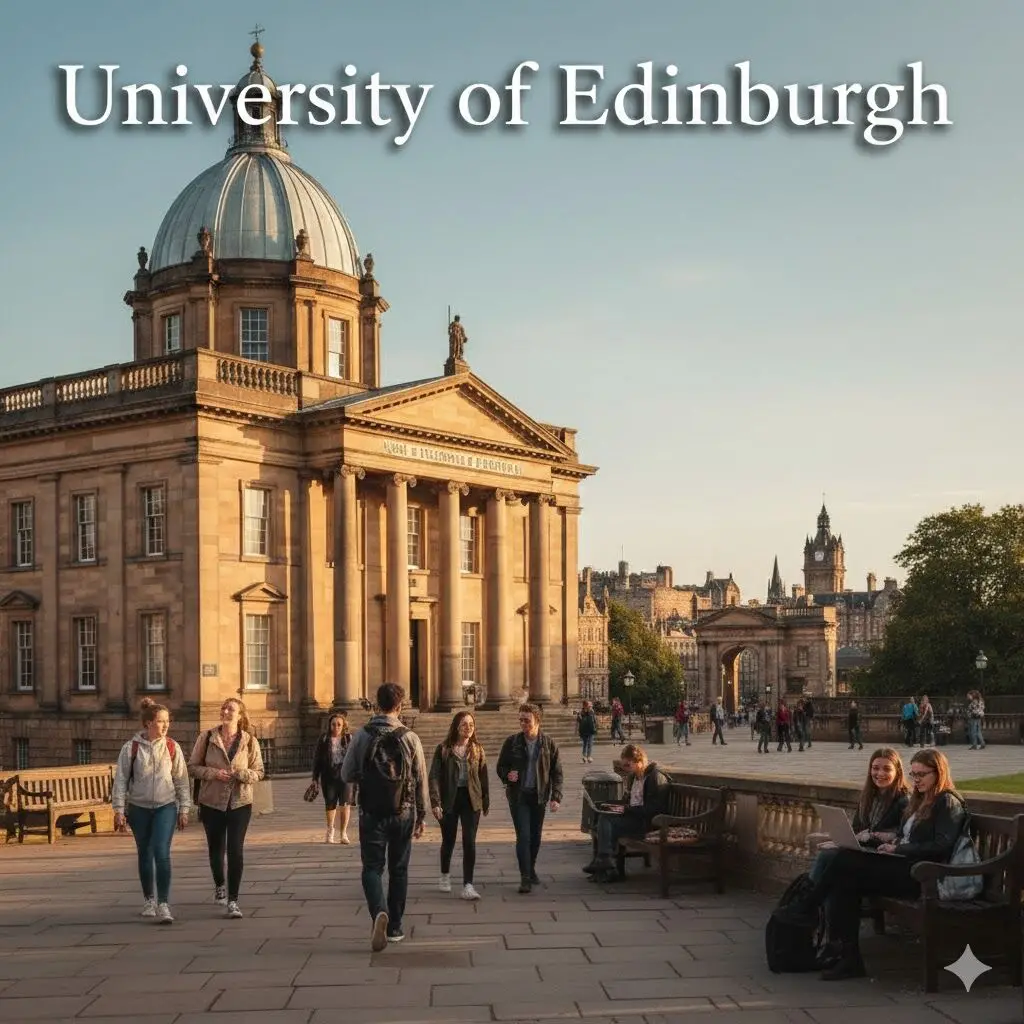
Educational Services
Apr 03, 2026
The University of Edinburgh: A Global Leader in Research and Education
The Athens of the North
Founded in 1582, the University of Edinburgh stands as a beacon of the Scottish Enlightenment and a global powerhouse in higher education. As the sixth oldest university in the English-speaking world, it has spent over four centuries "rewriting history time and again." Located in the heart of Scotland’s capital, the university is not merely an academic institution but a cornerstone of global progress, consistently ranked within the top 50 universities worldwide.
From the discovery of Penicillin by Alexander Fleming to the cloning of Dolly the Sheep at the Roslin Institute, Edinburgh’s legacy is one of transformative innovation. Today, with a community of over 45,000 students and 15,000 staff, the university continues to lead in fields as diverse as Artificial Intelligence, Medicine, and Climate Science.
Visual Identity: Branding and Using the Logo on Images
The University of Edinburgh maintains a strict corporate and visual identity to ensure a consistent global image. When creating marketing materials or social media content, it is vital to follow these branding protocols:
Logo Usage on Imagery
The Roundel and Wordmark: The official logo must always include both the roundel (incorporating the thistle, book, castle, and world) and the full text "The University of Edinburgh."
Placement: The primary position for the logo is the top left-hand corner. For social media assets, it is often placed in the bottom right corner.
Text Overlays: When adding text to an image of the campus (such as Old College or McEwan Hall), the text must not touch or overlap with the logo. Use a "clear space" equal to the size of the shield within the logo on all sides.
Color Palette: The corporate colors are Blue (Pantone 280) and Red (Pantone 186). When placing the logo on dark or busy photographic backgrounds, a "reversed" white-out version of the logo should be used to ensure legibility.
World-Class Rankings and Reputation
The University of Edinburgh’s global standing is reflected in its consistent performance across major ranking indices. As of the 2026 QS World University Rankings, Edinburgh holds the 34th position globally.
Key Performance Indicators:
Research Power: Ranked 4th in the UK based on the 2021 Research Excellence Framework (REF).
Employability: Ranked 33rd in the world for graduate employability by global employers.
International Outlook: Ranked 19th among the world's most international universities, reflecting a diverse student body representing two-thirds of the world’s nationalities.
Student Experience: Edinburgh is frequently voted the UK's safest city and ranks 15th globally in the QS Best Student Cities index.
Strategy 2030: Shaping the Future
The university’s roadmap, Strategy 2030, is an ambitious vision focused on four key pillars: People, Research, Teaching and Learning, and Social and Civic Responsibility. ### The Three Research Missions To address the most pressing global challenges, Edinburgh has consolidated its research focus into three core missions:
Shaping the Future of Health and Care: Developing innovations in physical and mental health to help people live longer, healthier lives.
Tackling the Climate and Environmental Crisis: Integrating research in biodiversity, clean energy, and circular economies to mitigate the climate emergency.
Harnessing Data, Digital, and AI for Public Good: Leveraging the university’s status as a leader in Informatics to make Edinburgh the "Data Capital of Europe."
Academic Excellence Across Three Colleges
The university's academic structure is divided into three distinct colleges, each housing world-renowned schools and institutes.
1. College of Arts, Humanities & Social Sciences
This is the largest college, offering a vast range of programs from Law and Business to Architecture and Philosophy. It includes the Edinburgh Futures Institute, which focuses on interdisciplinary research to tackle future societal shifts.
2. College of Medicine & Veterinary Medicine
Home to the Royal (Dick) School of Veterinary Studies, consistently ranked among the best in the world, and a medical school that has pioneered surgical and pharmaceutical breakthroughs for centuries.
3. College of Science & Engineering
This college is a leader in STEM, particularly in Informatics and Artificial Intelligence. The university’s expertise in AI dates back decades, providing a foundation for modern deep learning and robotics.
The International Student Experience
For international applicants, the University of Edinburgh offers an elite educational environment coupled with extensive support systems.
Admission Requirements (2025/2026 Intake)
Admission is highly competitive, with an overall acceptance rate of approximately 10-12%.
Undergraduate: Typical requirements include A-Levels (AAA-ABB), International Baccalaureate (32-37 points), or equivalent international qualifications.
Postgraduate: Usually requires a UK 2:1 honors degree or a GPA of 3.3/4.0 (for US students).
English Proficiency: IELTS scores of 6.5 to 7.0 are generally required depending on the program.
Campus Amenities and Facilities
The university’s campuses—from the historic Old College on South Bridge to the modern King’s Buildings—offer state-of-the-art facilities:
Libraries: The Main Library at George Square is one of the largest academic libraries in Europe.
Sports: The Centre for Sport and Exercise is ranked among the top 3 sporting institutions in the UK.
Innovation Hubs: Edinburgh Innovations provides commercialization services, helping students and staff turn ideas into businesses.
Notable Alumni: A Legacy of Brilliance
The university's alumni list reads like a "Who's Who" of human achievement:
Science: Charles Darwin (Theory of Evolution), James Clerk Maxwell (Electromagnetism), and Peter Higgs (Higgs Boson).
Literature: Sir Arthur Conan Doyle (Sherlock Holmes), J.M. Barrie (Peter Pan), and Robert Louis Stevenson.
Philosophy & Economics: Adam Smith (Father of Modern Economics) and David Hume.
Innovation: Alexander Graham Bell (Inventor of the Telephone).
Modern AI: Geoffrey Hinton, the "Godfather of Deep Learning" and 2024 Nobel Laureate.
Sustainable and Social Responsibility
The University of Edinburgh is committed to becoming net-zero by 2040. Through the Edinburgh Earth Initiative, the university drives resources toward food systems, clean energy, and sustainable cities. Their social responsibility extends to "widening participation," ensuring that students from all backgrounds have access to world-class education.
Frequently Asked Questions
1. What is the acceptance rate for international students at the University of Edinburgh?
The overall acceptance rate is approximately 10-12%, but it is much more competitive for high-demand programs like Medicine (4%) and Computer Science (9%).
2. When are the application deadlines for 2025?
For Medicine and Veterinary Medicine, the deadline is October 16, 2024. For most other undergraduate courses, the UCAS deadline is January 31, 2025.
3. Does the university offer scholarships for international students?
Yes. Key opportunities include the Global Undergraduate Scholarships (£5,000/year) and various Edinburgh Global Master’s Scholarships.
4. What are the primary language requirements?
English is the primary language. Most courses require an IELTS score of 6.5–7.0. Support for Gaelic and British Sign Language (BSL) is also available.
5. How many campuses does the university have?
The university has five main campuses across the city: Central Area, King's Buildings, BioQuarter, Western General, and Easter Bush.
6. Is accommodation guaranteed for new students?
The university guarantees an offer of accommodation for all eligible undergraduate students coming from outside the city of Edinburgh.
7. What makes the "Edinburgh Strategy 2030" unique?
It shifts focus toward interdisciplinary "missions"—health, climate, and data—ensuring that research directly addresses 21st-century global crises.
8. Can I work while studying at Edinburgh?
Yes, most international students on a Student Visa can work up to 20 hours per week during term time, though checking specific visa conditions is essential.
9. What are the university's strongest subjects?
Edinburgh is world-renowned for Medicine, Veterinary Science, Informatics (AI), Law, Philosophy, and English Literature.
10. How do I contact the general admissions helpdesk?
General enquiries can be made via phone at +44 (0)131 650 1000 or by emailing enquiries@ed.ac.uk.
The University of Edinburgh remains a titan of global education. By blending its 400-year heritage with a forward-thinking approach to AI and sustainability, it provides an unparalleled environment for students and researchers alike. Whether you are an aspiring undergraduate or a professional seeking advanced development, Edinburgh offers the tools to "influence the world" and achieve the highest standards of personal and professional excellence.
Edinburgh
10 Views
- Prev
- 1
- Next
Share This Page
My Page
Scan QR to open
Barcode