
Airfreight Services UK: Routes, Customs & Logistics Chain Breakdown
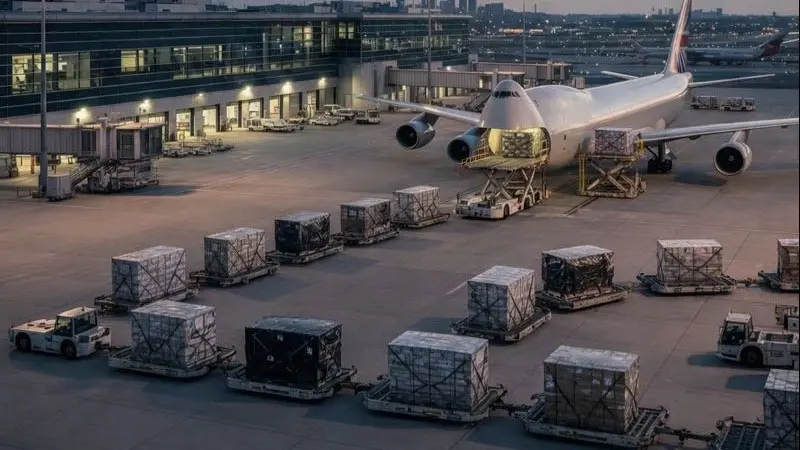
The airfreight services sector in the United Kingdom stands as a cornerstone of the nation’s economic infrastructure. Unlike sea freight, which handles the lion's share of volume, airfreight is the lifeblood of high-value, time-sensitive, and perishable trade. From the delivery of critical pharmaceuticals and high-tech components to the rapid movement of luxury goods and automotive parts, the speed of air transit provides British businesses with a competitive edge in a globalized marketplace.
Statistically, while air cargo represents a small percentage of total tonnage moved in and out of the UK, it accounts for approximately 40% of the total value of non-EU exports. This disproportionate value-to-weight ratio underscores its importance. As an island nation with a robust manufacturing base and a world-class service sector, the UK relies on its airports—primarily London Heathrow, East Midlands, and Manchester—to maintain its status as a leading global trading hub.
In recent years, the industry has faced unprecedented volatility. The dual impact of the COVID-19 pandemic and the subsequent regulatory shifts following the UK's departure from the European Union has forced a radical rethink of logistics chains. Modern airfreight is no longer just about moving a box from point A to point B; it is a complex symphony of digital data, customs compliance, and synchronized ground handling. For those looking to navigate this space, finding reliable partners through a uk business directory website is often the first step in building a resilient supply chain.
The Landscape of Airfreight Services in the UK
The current landscape of UK airfreight is characterized by a "hub and spoke" model, with London Heathrow serving as the primary gateway for belly-hold cargo (freight carried on passenger planes), while East Midlands Airport dominates the dedicated freighter market. Post-pandemic, the industry has seen a permanent shift in how capacity is managed. During the global lockdowns, the loss of passenger flights led to a massive shortage of cargo space, causing rates to skyrocket and forcing many providers to charter dedicated aircraft.
Today, the market has stabilized but remains transformed. We are seeing an increased reliance on regional airports to alleviate congestion at major hubs. This regionalization has created a surge in demand for local logistics providers who understand the specific nuances of their territory. Many of these specialists can be found by consulting a local businesses list uk, which allows shippers to connect with niche operators who offer personalized service levels that global conglomerates often overlook.
Market size remains robust, with the UK air cargo market valued in the billions of pounds. However, the evolution of the industry post-Brexit has introduced new complexities. Every shipment to and from the EU is now subject to full customs declarations, a change that has increased the administrative burden on small to medium-sized enterprises (SMEs). Consequently, there has been a significant rise in the importance of freight forwarders who act as intermediaries, navigating the "Chunnel of paperwork" to ensure goods are not delayed at the border.
The UK government’s "Jet Zero" strategy also looms large over the landscape. Airlines and ground handlers are under increasing pressure to decarbonize, leading to investments in sustainable aviation fuel (SAF) and electric ground support equipment. This shift is not just environmental; it is a business imperative as corporate social responsibility (CSR) becomes a key metric for B2B contract tenders.
Comprehensive Services Breakdown
Airfreight services in the UK are segmented into several specialized categories, each designed to meet specific transit times and security requirements:
Express and Courier Services: Ideal for small parcels and urgent documents. These services utilize integrated networks (like DHL, FedEx, or UPS) to provide door-to-door delivery within 24–48 hours.
General Cargo: This is the standard service for non-perishable goods. It is more cost-effective than express services and is usually consolidated to maximize space and reduce costs.
Perishable Cargo: A critical sector for the UK’s food and pharmaceutical industries. This requires a "cold chain" breakdown where goods are kept in temperature-controlled environments from the warehouse to the aircraft.
Hazardous Materials (HAZMAT): The transportation of chemicals, batteries, and flammable liquids is strictly regulated by IATA (International Air Transport Association). Specialist providers must be used to ensure safety and compliance.
Project Cargo: For oversized or heavy items that cannot fit on standard scheduled flights.
This often involves chartering entire Antonov or Boeing 747 freighters.
For businesses seeking these specialized services, navigating uk service listings can help identify which providers have the specific equipment and certifications needed for complex cargo types.
The logistics chain itself involves multiple stakeholders: the exporter, the freight forwarder, the haulier (road transport), the ground handling agent (GHA), the airline, and the customs broker. Each link in this chain must be perfectly aligned. A delay in customs at the airport can render a perishable shipment worthless, highlighting why choosing a provider with a proven track record of uk verified business listings is essential for risk mitigation.
How to Choose the Right Service Provider
Selecting an airfreight partner is one of the most significant decisions a British business owner will make. The "cheapest" option often turns out to be the most expensive if cargo is lost, damaged, or delayed.
When evaluating a provider, first look for accreditations. In the UK, membership in the British International Freight Association (BIFA) is a baseline requirement. For international security compliance, look for Authorized Economic Operator (AEO) status, which demonstrates that the company's customs processes are secure and efficient.
Secondly, consider local reputation. While global players have the reach, local providers often have better relationships with airport ground handlers. You can often gauge this by checking a uk local business directory for reviews and testimonials. Direct feedback from other UK businesses is invaluable in assessing whether a provider can handle the specific challenges of your industry.
Thirdly, ensure they have adequate insurance. Standard carrier liability (measured in SDRs per kilogram) is often insufficient for high-value air cargo. A professional provider will offer comprehensive marine insurance or specialized air cargo cover.
Finally, check their digital capabilities. In 2024, if a freight forwarder cannot provide real-time tracking or digital copies of the Air Waybill (AWB), they are behind the curve. Transparency is the hallmark of a modern logistics partner. For those looking to expand their vendor list, a search through the uk b2b business directory will yield a list of technologically advanced providers who can integrate with your own ERP systems.
Industry Challenges & Future Outlook
The UK airfreight industry is currently navigating a period of rapid technological and regulatory change. The most pressing challenge is the transition to the Customs Declaration Service (CDS), which replaced the old CHIEF system. This transition required a massive upskilling of the workforce and investment in new software.
Sustainability is the other major hurdle. The aviation industry is a significant contributor to carbon emissions, and the "flight shaming" movement has pressured cargo carriers to adopt greener practices. We are seeing the rise of "Carbon Neutral" shipping options where businesses can pay a premium to offset the emissions of their flights.
Automation in warehouses is also accelerating. With labor shortages affecting the UK logistics sector, many major air cargo hubs are investing in robotic sorting systems and autonomous tugs to move cargo on the airfield. This technology reduces human error and speeds up the "truck-to-plane" transfer time.
Looking ahead, we expect to see more "multi-modal" solutions. Airfreight will increasingly be paired with sea-air routes (where goods are shipped by sea to a hub like Dubai and then flown to the UK) to balance cost and speed. To stay ahead of these trends, professionals should ensure their companies are listed in a business listing uk to remain visible to international partners seeking reliable UK connections.
Business Tips for Airfreight Services Professionals
For those operating within the airfreight sector, the competition is fierce. To stand out, you must prioritize digital visibility.
Gone are the days when contracts were won solely over lunch and a handshake. Today’s procurement managers start their search on Google.
If you are a local freight forwarder or customs agent, you must claim your business listing uk on reputable platforms. This ensures that when a manufacturer in your area searches for "airfreight services near me," your business appears.
Content Marketing is also vital. Write about the common pitfalls of customs declarations or how to pack goods for air transit. Position yourself as an expert, not just a service provider. Networking within your industry is equally important. Ensure you are part of a uk professional services listings group where you can collaborate with hauliers and warehouse owners to offer a truly end-to-end solution.
Finally, never underestimate the power of data. Use your shipping data to show prospective clients how you have optimized routes for other businesses. In a world of uncertainty, data-driven reliability is your most valuable product.
Wrapping Up & Local Page Integration
The airfreight services industry in the UK is a dynamic, high-stakes environment that requires precision, expertise, and the right partnerships. Whether you are an exporter sending your first shipment abroad or a seasoned logistics professional, the strength of your network determines your success.
As the UK continues to carve out its new role in global trade, the demand for transparent, reliable, and accessible business information has never been higher. This is where Local Page serves as an indispensable tool. By providing a comprehensive uk online business directory, we bridge the gap between service providers and the businesses that need them.
For the logistics sector, visibility is the currency of growth. By leveraging the tools available on our platform, UK businesses can ensure they are not just part of the supply chain, but leaders within it.
Boost Your Visibility with Local Page UK
In the fast-moving world of Airfreight Services, being invisible is being out of business. Every day, hundreds of UK manufacturers and retailers are looking for logistics partners who can handle their most urgent shipments.
Don't let your competitors take the lead. You can claim your business listing uk today and join the thousands of companies that use Local Page to reach a wider audience. Whether you offer niche customs brokerage or global freighter charters, our platform provides the SEO boost and professional credibility you need to thrive in the British market.
Frequently Asked Questions
1. What is the difference between air cargo and airfreight? While often used interchangeably, "airfreight" typically refers to the service or the cost of transporting goods by air, whereas
"air cargo" refers to the actual goods being carried. In a business context, airfreight services encompass the entire logistics chain including ground handling and customs.
2. How is airfreight cost calculated in the UK? Airfreight is calculated based on "chargeable weight." This is either the actual weight of the shipment or its volumetric weight (calculated as Length x Width x Height / 6000), whichever is greater. This ensures that carriers are fairly compensated for large, lightweight items that take up significant space.
3. What are the key documents needed for UK airfreight? The most critical documents include the Commercial Invoice, the Packing List, and the Air Waybill (AWB). Following Brexit, you also require an EORI number (Economic Operator Registration and Identification) and a full Customs Declaration for all goods entering or leaving the UK.
4. How long does airfreight typically take from the UK to the UK? Standard airfreight usually takes between 3 and 5 days, including ground transit and customs clearance. Express services can reduce this to 24–48 hours, depending on the proximity of the origin and destination to major airport hubs like London Heathrow and JFK.
5. Can I ship hazardous materials by air from the UK? Yes, but it is strictly regulated. You must use a carrier and freight forwarder certified in Dangerous Goods (DG) handling. The items must be packed, labeled, and documented according to IATA Dangerous Goods Regulations, and a "Shipper’s Declaration for Dangerous Goods" must be provided.
6. What is the "belly-hold" in airfreight? Belly-hold refers to the cargo space located beneath the passenger deck of a standard commercial airliner. A significant portion of the UK's airfreight is carried this way on scheduled passenger flights, making passenger routes vital for global trade capacity.
7. How has Brexit affected airfreight services? Brexit introduced the requirement for customs declarations for all trade between the UK and the EU. This has led to increased administrative costs and a greater need for professional customs brokers. It has also necessitated stricter adherence to Rules of Origin for tariff-free trade.
8. What is a "Freight Forwarder" and do I need one? A freight forwarder acts as a travel agent for your cargo. They don't usually own the planes but manage the logistics, paperwork, and various carriers involved. For most SMEs, using a freight forwarder is essential to navigate the complexities of international airfreight.
9. Is airfreight more environmentally damaging than sea freight? Yes, per tonne-kilometer, airfreight has a significantly higher carbon footprint than sea or rail. However, the industry is investing heavily in Sustainable Aviation Fuel (SAF) and carbon offsetting programs to mitigate this impact for eco-conscious shippers.
10. What is an EORI number? An EORI number is a unique identification number used by customs authorities to track shipments. Every UK business that imports or exports goods must have an EORI number starting with "GB." Without it, your goods will be held at the airport indefinitely.
11. What is the role of Heathrow in UK airfreight? Heathrow is the UK's largest port by value. It handles over 70% of all UK air cargo, primarily because of its massive network of passenger flights which provide extensive belly-hold capacity to almost every major global economy.
12. How do I protect my air cargo from damage? Proper packaging is key. Air cargo is subject to significant G-forces during take-off and landing, as well as pressure changes. Use double-walled boxes, avoid empty spaces inside crates, and ensure all items are palletized and shrink-wrapped for stability.
13. What happens if my airfreight is delayed? If a delay occurs, your freight forwarder should provide real-time updates. Depending on the cause (weather, mechanical failure, or customs), you may be able to claim compensation under the Montreal Convention, though this is often limited, making private cargo insurance vital.
14. What is the "Customs Declaration Service" (CDS)? CDS is the UK government's modern platform for customs declarations. It replaced the 30-year-old CHIEF system.
It requires more specific data elements and is designed to handle the increased volume of declarations required in the post-Brexit trade environment.
15. Where can I find a reliable local freight forwarder? The best way to find a vetted provider is to search through a dedicated directory. Using the local page uk listings, you can filter for providers in your specific region and check their credentials and reviews before making a commitment.
Disclaimer: The information provided in this article is for general informational and research purposes only. Company details, features, services, and market positions may change over time. Readers are advised to visit official company websites and conduct independent research before making any business decisions or purchasing services.
Most Searchable Keywords
Recent Blogs


Related Listings

Categories
- Accountants (295)
- Advertising Agencies (559)
- Architects (149)
- Automobiles (377)
- Beauty (300)
- Carpenters (146)
- Cleaning Services (387)
- Dentists (189)
- Driving (62)
- Electricians (215)
- Energy (8)
- Event Organiser (686)
- Finance (602)
- Guide (3376)
- Health (2207)
- Information technology (206)
- Legal Services (356)
- Logistics (6)
- Maintenance (65)
- Manufacturing (35)
Sponsored Listings in Religious Organizations


Related Blogs

Sexual Harassment Rules Tighten Across UK Fro...
Read this insightful article "Sexual Harassment Rules Tighten Across UK From October 2026" to expand your knowledge!

Employment Tribunal Claim Deadline Extends Fr...
Read this insightful article "Employment Tribunal Claim Deadline Extends From October 2026" to expand your knowledge!

Rainy Day Activities in Cheltenham Hidden Gem...
Read this insightful article "Rainy Day Activities in Cheltenham Hidden Gems for 2026" to expand your knowledge!
Questions & Answers – Find What
You Need, Instantly!
How can I update my business listing?
Is it free to manage my business listing?
How long does it take for my updates to reflect?
Why is it important to keep my listing updated?
