
Aluminium Fabricators UK: Processes, Finishes & Project Capabilities
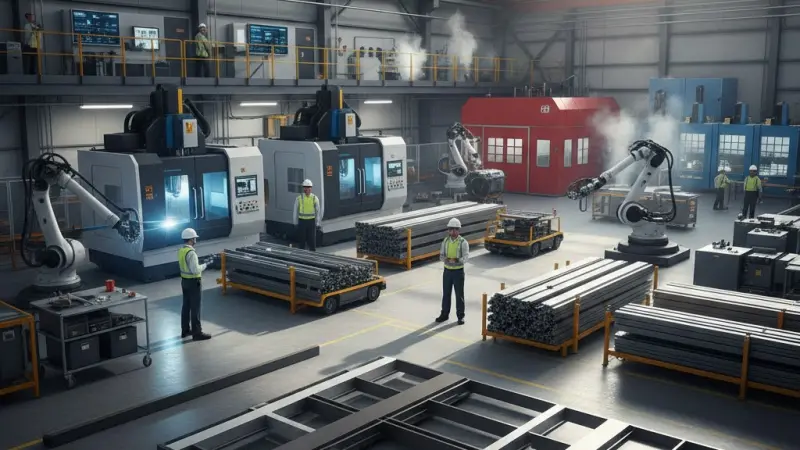
The aluminium fabrication sector stands as a cornerstone of British industrial prowess, acting as a critical linchpin in the nation’s construction, automotive, and aerospace supply chains. As we navigate the mid-2020s, the demand for lightweight, durable, and infinitely recyclable materials has catapulted aluminium from a secondary metal to a primary architectural and industrial necessity. For procurement managers and developers seeking to find local businesses uk, understanding the depth of this sector is vital for project success.

Economically, aluminium fabricators contribute billions to the UK GDP. The industry isn't merely about "shaping metal"; it is a sophisticated ecosystem of high-tech engineering that supports tens of thousands of skilled jobs across the Midlands, Northern England, and beyond. From the sleek curtain walling of London’s skyscrapers to the bespoke components used in British-made electric vehicles, the versatility of aluminium is unmatched. As businesses look to expand their reach, many find that registering on a uk business directory website is the first step toward securing high-value contracts.
The strategic importance of this sector cannot be overstated. In an era where "net zero" is a mandate rather than a suggestion, the UK's ability to extrude, cut, weld, and finish aluminium locally reduces the carbon footprint of major infrastructure projects. This guide provides an exhaustive analysis of the landscape, the technical processes involved, and the business strategies that define the modern UK aluminium fabricator.
The Landscape of Aluminium Fabricators in the UK
The current market for aluminium fabrication in the United Kingdom is characterized by a blend of long-standing family-run enterprises and highly automated, private-equity-backed industrial giants. Following the turbulence of the early 2020s, the industry has undergone a radical transformation. Supply chain resilience has become the new watchword, leading to a resurgence in "near-shoring," where developers prefer to find local businesses uk rather than relying on volatile international imports.
Key regions of activity remain concentrated in the West Midlands—the traditional heartland of British metalwork—but we have seen significant growth in the "Northern Powerhouse" regions. Sheffield and Leeds have leveraged their steel-working heritage to pivot toward high-grade aluminium fabrication, while the South East remains a hub for architectural glazing specialists who serve the London commercial property market. For those navigating this dense market, a uk local business directory provides the necessary transparency to identify reliable partners.
Post-pandemic, the evolution of the industry has been marked by "The Digital Leap." Fabricators who previously relied on word-of-mouth are now embracing digital procurement platforms. The rise of the uk online business directory has allowed smaller, specialized shops to compete with larger entities by showcasing their niche certifications and rapid turnaround times. Market data suggests the UK aluminium market is projected to grow by 4% annually over the next five years, driven largely by the transition to green energy and the expansion of the "Build to Rent" housing sector.
Comprehensive Services Breakdown
The scope of services offered by UK aluminium fabricators is vast, ranging from basic extrusion handling to complex multi-axis CNC machining. Understanding these services is essential for any professional using a uk service providers directory to source a manufacturer.
Precision Cutting and CNC Machining
Modern fabrication begins with precision. Using 3-axis, 4-axis, and even 5-axis CNC machines, fabricators can produce components with tolerances measured in microns. This is essential for the aerospace and medical sectors where "near enough" is never sufficient. Many top-tier firms listed on a uk business directory now offer integrated CAD/CAM services, allowing clients to send digital files that are translated directly into machine code.
Welding and Assembly
Aluminium welding requires a higher degree of skill than steel due to the metal's high thermal conductivity and low melting point. TIG (Tungsten Inert Gas) and MIG (Metal Inert Gas) welding are the industry standards. Beyond welding, mechanical assembly involving rivets, high-strength adhesives, and specialized fasteners is common in the production of architectural facades and automotive chassis.
Architectural Glazing and Curtain Walling
A significant portion of the UK sector is dedicated to the building envelope. This includes the fabrication of windows, doors, bi-folds, and curtain walling systems. These products must meet stringent UK Building Regulations (Part L) regarding thermal efficiency. Developers searching through local business listings uk often prioritize fabricators who hold specific system-supplier certifications (such as Schuco, Reynaers, or Senior Architectural Systems).
Surface Finishing: Anodising and Powder Coating
The finish is what protects the aluminium from the British weather. Powder coating is the most popular choice, offering a near-infinite palette of RAL colours. Anodising, an electrochemical process that thickens the natural oxide layer, provides a premium, metallic finish that is exceptionally hard-wearing.
For bespoke projects, finding a provider via a uk trade services listings site ensures access to specialists who can offer marine-grade finishes for coastal installations.
How to Choose the Right Service Provider
Selecting a fabrication partner is a high-stakes decision. A mistake in material grade or finishing can lead to catastrophic project delays or structural failures. When browsing a uk local business search, one must look beyond the price per unit.
Accreditations and Standards
First and foremost, check for ISO 9001 (Quality Management). For structural work, CE or UKCA marking is a legal requirement in the UK. Fabricators should be able to provide "Execution Class" certifications (BS EN 1090), which dictate the level of complexity and risk they are qualified to handle. Verified platforms like local page uk listings often highlight these credentials.
Reviews and Local Reputation
In the digital age, a company's past performance is visible for all to see. Utilize a uk local business directory to read peer reviews. Pay attention to how a fabricator handles "non-conformance." Every factory has issues; the great ones are defined by how quickly and fairly they resolve them.
Insurance and Financial Stability
Given the fluctuating price of raw aluminium, ensure your partner is financially stable. They should hold substantial Public Liability and Professional Indemnity insurance. When you find local businesses uk, don't be afraid to ask for their latest accounts or a credit reference, especially for multi-million pound contracts.
Industry Challenges & Future Outlook
The UK aluminium sector faces a "perfect storm" of technological shift and regulatory pressure. The most pressing challenge is the move toward "Circular Economy" models. Aluminium is 100% recyclable, but the energy required to produce "primary" aluminium is significant. Consequently, there is a massive push toward using "secondary" (recycled) billets.
Sustainability is no longer a marketing buzzword; it is a procurement requirement. Many architects now demand Environmental Product Declarations (EPDs). Fabricators who fail to document their carbon footprint will soon find themselves excluded from uk verified business listings for major government and Tier-1 construction projects.
Technologically, we are seeing the rise of "Industry 4.0." This involves the use of IoT (Internet of Things) sensors on the factory floor to monitor machine health and energy usage in real-time. Cobalt (Collaborative Robots) are also becoming common, assisting human welders with repetitive tasks to increase throughput. For a small business, staying visible during this transition is key, which is why a business listing uk on a high-traffic platform is an essential first step in modern marketing.
Business Tips for Aluminium Fabricators Professionals
In a crowded market, technical excellence is only half the battle; the other half is visibility. For a local fabricator in Birmingham or Manchester, appearing in the uk business listings online is the difference between a full order book and a quiet workshop.
Master Your Digital Presence
Most B2B buyers start their journey on a search engine. If your company isn't appearing in a business listing uk, you are effectively invisible. Ensure your listing is complete with high-resolution photos of your workshop, a full list of your CNC capabilities, and clear contact information.
Local SEO and Hyper-Local Targeting
Aluminium is heavy, and shipping costs matter. Most clients want to work with someone within a 50-mile radius. Optimizing your profile on a local businesses list uk for specific
regional keywords (e.g., "Aluminium Welding Kent") can significantly improve your lead quality. Don't forget to claim your business listing uk to capture this local intent.
Networking in the B2B Space
Aluminium fabrication is a B2B heavy industry. Being part of a uk b2b business directory allows you to connect with architects, main contractors, and window installers who require your specific services. Consistency is key—update your project portfolio regularly to show you are active and capable of handling modern design challenges.
Wrapping Up & Local Page Integration
The UK aluminium fabrication industry is a vibrant, essential, and evolving sector. As we look toward a future dominated by sustainable building and lightweight transport, the importance of high-quality local fabrication will only grow. Whether you are a developer looking for a partner or a fabricator looking for a client, the bridge between you is digital visibility.
Local Page UK has emerged as the premier solution for British businesses to navigate this landscape. By providing a structured, authoritative, and easy-to-search uk business directory, it empowers local shops to stand tall alongside national giants. In an industry built on precision, your marketing should be no different.
Boost Your Visibility with Local Page UK
For professionals in the aluminium fabrication sector, staying ahead of the competition requires more than just the latest CNC machine. You need to be where your customers are looking. By choosing to claim your business listing uk, you position your brand in front of thousands of procurement managers and local homeowners daily. Don't let your expertise go unnoticed—join the uk local business directory today and ensure your business is the first one found when a project demands the best in British fabrication.
FAQ
1. What are the primary benefits of using aluminium over steel in UK construction?
Aluminium offers a superior strength-to-weight ratio compared to steel, making it ideal for modern architectural designs that require large spans of glass with minimal framing. In the UK’s damp climate, aluminium’s natural resistance to corrosion is a significant advantage, reducing long-term maintenance costs. Furthermore, it is 100% recyclable without loss of quality, aligning with the UK’s stringent sustainability goals. Many developers searching a uk professional services listings specifically look for aluminium specialists for these reasons.
2. How do I verify if a UK aluminium fabricator is qualified for structural work?
Structural aluminium work in the UK must adhere to BS EN 1090 standards. You should ask the fabricator for their UKCA (formerly CE) marking certificate and their Execution Class (EXC) rating. EXC2 is standard for most buildings, while EXC3 is required for more complex structures. Verifying these credentials on a uk verified business listings site can save time during the due diligence process.
3. What is the difference between powder coating and anodising?
Powder coating involves spraying a dry powder onto the aluminium which is then cured under heat to form a "skin." It offers a huge range of colours and finishes. Anodising is an electrochemical process that converts the metal surface into a decorative, durable, corrosion-resistant, anodic oxide finish. It is integral to the metal and cannot peel or flake. Both options are frequently listed by providers on a uk local trades directory.
4. Why has the price of fabricated aluminium in the UK been so volatile recently?
Prices are influenced by the London Metal Exchange (LME) global rates, energy costs (as smelting is energy-intensive), and post-Brexit trade arrangements. Shipping costs and global demand for EVs also play a role.
To mitigate this, many UK buyers use a uk b2b business directory to find local fabricators who offer fixed-price contracts or hold significant stock levels.
5. Can aluminium fabricators help with thermal efficiency in buildings?
Yes, modern aluminium systems use "thermal breaks"—usually a polyamide strip—to separate the inner and outer frames. This prevents heat transfer and helps buildings meet Part L of the UK Building Regulations. Specialized installers can be found through a uk home services directory.
6. What is the standard lead time for bespoke aluminium fabrication in the UK?
For standard powder-coated extrusions, lead times are typically 2-4 weeks. However, for bespoke CNC-machined components or complex curtain walling, it can range from 6 to 12 weeks. Using a business listing uk to find multiple local quotes can help you find the best balance between speed and cost.
7. How does the "Circular Economy" affect UK aluminium fabricators?
Fabricators are increasingly expected to prove the provenance of their metal. Using "Green Aluminium" (made with renewable energy) or high-recycled-content billets is becoming standard. This information is often included in the company's profile on a uk business directory website.
8. Is TIG welding better than MIG welding for aluminium?
TIG welding offers more control and is better for thinner materials or aesthetic joints, but it is slower. MIG welding is much faster and better for thick, structural components. Most high-end shops found via uk service listings will offer both.
9. What is a "marine-grade" finish for aluminium?
In coastal areas (within 5 miles of the sea), a standard powder coating isn't enough. A marine-grade finish (often Qualicoat Class 2) or a thicker micron anodised layer is required to prevent "filiform corrosion." Look for this specialty on a local businesses list uk.
10. How can a small fabrication business compete with large industrial firms?
Small firms excel at "bespoke" and "rapid prototyping" work. By listing on a business listing uk, they can highlight their agility and personal service, which large firms often lack.
11. Do I need an architect before contacting an aluminium fabricator?
Not necessarily. Many fabricators offer "design and build" services or have in-house CAD teams. If you are a homeowner, you can find these specialists in a uk home services directory.
12. What are the most common aluminium alloys used in UK fabrication?
The 6000 series (6063 or 6082) is most common for architectural extrusions due to its excellent strength and finishing properties. The 5000 series is often used for sheet metal work in marine environments.
13. How do I get a "business listing uk" for my fabrication shop?
You can easily register your business on Local Page UK. This provides a platform to showcase your services, location, and contact details to a national audience at no cost.
14. What digital tools are essential for a modern aluminium fabricator?
Beyond CNC software, ERP (Enterprise Resource Planning) systems are vital for tracking material costs.
Additionally, maintaining a presence on a uk b2c business directory helps in managing customer inquiries and digital leads.
15. Why is local sourcing important for UK infrastructure projects?
Local sourcing reduces "Scope 3" carbon emissions associated with transport. It also ensures that the fabricator understands local building codes and can provide on-site support if issues arise. Finding these partners is made easy with a uk local business search.

Disclaimer: The information provided in this article is for general informational and research purposes only. Company details, features, services, and market positions may change over time. Readers are advised to visit official company websites and conduct independent research before making any business decisions or purchasing services.
Most Searchable Keywords

Recent Blogs

Related Listings


Categories
- Accountants (295)
- Advertising Agencies (559)
- Architects (149)
- Automobiles (377)
- Beauty (300)
- Carpenters (146)
- Cleaning Services (386)
- Dentists (189)
- Driving (62)
- Electricians (215)
- Energy (8)
- Event Organiser (685)
- Finance (599)
- Guide (3365)
- Health (2207)
- Information technology (206)
- Legal Services (353)
- Logistics (6)
- Maintenance (65)
- Manufacturing (35)

Sponsored Listings in Locksmith Services


Related Blogs

Gen Z Political Reporters and News Creators i...
Read this insightful article "Gen Z Political Reporters and News Creators in the UK" to expand your knowledge!

Famous Female Social Media Influencers Across...
Read this insightful article "Famous Female Social Media Influencers Across the UK" to expand your knowledge!

Your UK Sponsor Licence 2026 Step by Step Gui...
Read this insightful article "Your UK Sponsor Licence 2026 Step by Step Guide" to expand your knowledge!
Questions & Answers – Find What
You Need, Instantly!
How can I update my business listing?
Is it free to manage my business listing?
How long does it take for my updates to reflect?
Why is it important to keep my listing updated?
