
Arts Centres UK: Programs, Events & Community Engagement Guide
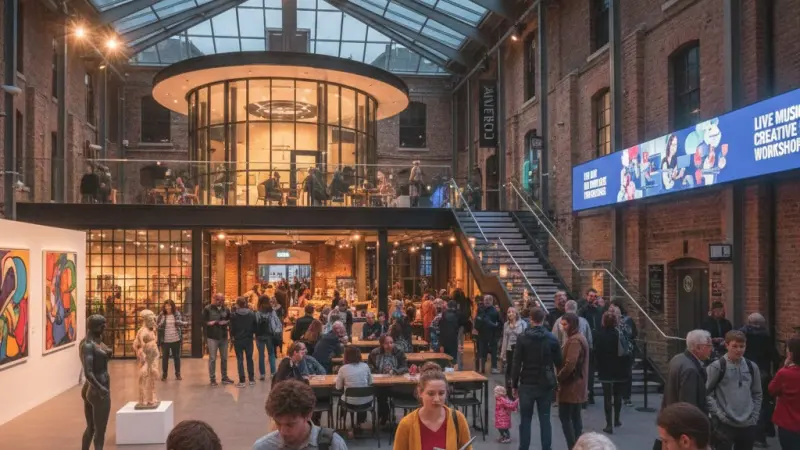
The arts centres sector in the United Kingdom stands as a cornerstone of the nation’s cultural identity and a vital engine for the creative economy. Far from being mere buildings, these institutions act as "creative hubs" where professional artistry meets grassroots community participation. In 2024, the UK arts promoter market was valued at approximately $2.1 billion, with projections suggesting a rise to $4.68 billion by 2035. This growth is not just a figure on a balance sheet; it represents a significant economic contribution through tourism, local employment, and the regeneration of high streets.

From a business perspective, arts centres are unique social enterprises. They bridge the gap between public funding and commercial viability, often operating under charitable trusts. Their importance extends beyond the stage or gallery; they are essential for the mental wellbeing of the population, with 93% of young people reporting that engagement with creative subjects positively impacts their mental health. For any professional or visitor looking to navigate this space, understanding the breadth of the industry is essential. Whether you are a local resident looking for a workshop or a business owner seeking to network, finding the right venue is the first step. To explore a comprehensive list of nearby facilities, many users rely on a business listing uk to identify high-quality local venues.
The economic importance of these centres is particularly evident in their role in urban regeneration. A thriving arts centre increases footfall for surrounding businesses, from cafes to transport providers. As the sector continues to professionalize, the integration of digital tools and commercial strategies has become paramount, ensuring that these cultural beacons remain sustainable in an increasingly competitive leisure market.
The Landscape of Arts Centres in the UK
The current landscape of UK arts centres is one of resilient transformation. Historically, the industry was heavily reliant on Arts Council England (ACE) and local authority grants. However, the post-pandemic era has necessitated a shift toward diversified income streams. There are currently over 180 members in the Future Arts Centres network alone, representing a diverse cohort of venues across England, Scotland, Wales, and Northern Ireland. These venues are typically multi-artform, combining theatre, cinema, visual arts, and educational spaces under one roof.
Market size analysis indicates that while the "Creative Industries" as a whole contributed £115.9 billion to the UK GVA pre-pandemic, the specific arts and entertainment sub-sector has had to work harder to recover audience numbers. By 2025, we have seen a record-breaking return to live engagement, with major theatre groups reporting revenues surpassing £1 billion for the first time. Key regions of activity remain concentrated in London and the South East, but there has been significant growth in "Creative Clusters" in the North of England and Scotland, fueled by "levelling up" initiatives and regional investment.
Post-pandemic, the industry has evolved to embrace a "hybrid" model. Digital engagement is no longer a luxury but a core component of the business model. Over 25 million people in the UK engaged with arts and culture online during the lockdown periods, and this habit has persisted. Arts centres now use digital streaming and virtual workshops to reach audiences who may be geographically or physically unable to attend in person. This evolution has made it even more critical for these institutions to maintain a strong presence on a uk service listings page to ensure they remain visible to both local and international patrons.
Furthermore, the ownership structure of these centres is predominantly (72%) independent charitable trusts. This allows for a degree of agility, although it also places a significant burden on trustees and executive directors to manage financial risks. With 28% of organisations still navigating deficits in the 2023-24 financial year, the focus for the next decade is firmly on business model innovation and capitalising on the "experience economy."
Comprehensive Services Breakdown
Arts centres in the UK offer a sophisticated array of services that cater to diverse demographics, from early years to the elderly. These services can be broadly categorised into performance, education, and commercial hires.
1. Performance and Exhibition Spaces The core "product" of any arts centre is its curated programme. This includes professional touring theatre, independent cinema, live music, and contemporary art galleries. Many centres also act as incubators for new talent, providing "work-in-progress" slots for local artists. For those looking for specific artistic services, searching through a uk local business directory can reveal specialised venues that focus on niche genres like experimental dance or digital art.
2. Community and Participatory Programmes Community engagement is the "social glue" of the arts centre. This includes weekly workshops in pottery, life drawing, or creative writing. Many centres run "Social Prescribing" initiatives, where GPs refer patients to arts classes to combat loneliness or depression. These programs are often funded through a combination of participant fees and social health grants.
3. Commercial Venue Hire and Corporate Services To maintain financial stability, many arts centres have pivoted toward the B2B market. Their unique architectural spaces make them ideal for corporate conferences, weddings, and private parties. They offer a creative alternative to sterile hotel conference rooms. If you are a business coordinator, you might find these venues listed in a business listing uk, allowing you to compare facilities and technical capabilities without initial costs.
4. Educational Outreach Partnering with schools and universities, arts centres provide essential "Creative Entitlement" opportunities for children. This includes backstage tours, technical theatre workshops, and artist-led school residencies. This service is crucial for developing the next generation of talent for the UK’s broader creative economy.
5. Cafe and Retail Operations The "Third Space" concept—where a venue is neither home nor work—is vital. On-site cafes and bars often contribute up to 30% of an arts centre’s earned income.
Many also host "Maker Markets," providing a retail platform for local artisans. This holistic approach ensures that the arts centre is a daily destination rather than an occasional treat.
How to Choose the Right Service Provider
For consumers and corporate clients, selecting the right arts centre or creative service provider requires careful due diligence. Whether you are looking for a venue for a private event or a place to enroll your child in a drama club, several factors should influence your decision.
Accreditations and Safeguarding First and foremost, check for official affiliations. Most reputable arts centres are members of bodies like "Future Arts Centres" or "The National Alliance for Arts, Health and Wellbeing." For educational services, ensuring the staff are DBS-checked and the venue follows rigorous safeguarding protocols is non-negotiable.
Reviews and Reputation In the digital age, local reputation is transparent. Look for venues that maintain high ratings on uk verified business listings. Reviews from other community members can provide insight into the quality of the teaching, the comfort of the auditorium, and the friendliness of the front-of-house staff.
Insurance and Health & Safety For corporate hires, verify that the venue holds comprehensive public liability insurance. UK regulations regarding fire safety and accessibility (Equality Act 2010) are strict; a professional venue should be able to provide its risk assessment and accessibility guide upon request.
Local Roots and Social Value Choosing a service provider that is a registered charity or a social enterprise ensures that your money is reinvested into the local community. This "Social Value" is an increasingly important metric for corporate CSR (Corporate Social Responsibility) programs. By supporting a local arts centre, you are contributing to the cultural health of your town.
Industry Challenges & Future Outlook
The arts sector faces a "pivotal moment" as we move toward 2030. While audience appetite is at an all-time high, the "fiscal backdrop" remains challenging.
Sustainability and Green Initiatives The most significant shift is the drive toward Net Zero. Arts Council England has mandated that all National Portfolio Organisations (NPOs) must have an Environmental Responsibility Action Plan. This involves decarbonising old, energy-inefficient buildings—a massive capital expense for many centres. Future-proofed centres are now investing in LED lighting rigs, solar panels, and "Circular Economy" principles for set design and costumes.
Technology and AI Artificial Intelligence is both a threat and an opportunity. While it raises concerns about copyright and the "human-touch" of art, AI is being used behind the scenes to improve audience segmentation and digital marketing. The ability to be discovered via search engines is more competitive than ever, making it vital for centres to be listed in a uk b2b business directory to capture corporate interests and a business listing uk for the general public.
Regulatory Changes Changes in the "Progress 8" school accountability measures are expected to give more weight to creative subjects, potentially increasing the demand for arts centre educational services. Additionally, new tax reliefs for theatres and galleries have been extended, providing a much-needed financial cushion for production-heavy venues.
Business Tips for Arts Centres Professionals
To thrive in the modern UK market, arts centre managers must think like CEOs as much as Artistic Directors.
Digital Visibility is Key Your website is your digital front door, but you must be visible where people are searching. Ensuring your venue appears in a uk local business search is the most effective way to capture local traffic. Use Google Ads Grants—which offer up to £10,000 per month for non-profits—to drive traffic to your shows and workshops.
Audience Segmentation Move away from "spray and pray" marketing. Use your CRM (Customer Relationship Management) data to segment your audience.
A family that attends a pantomime is a different segment from a student attending an experimental film screening. Tailor your email automations accordingly.
Diversified Income Don't rely solely on ticket sales. Develop a robust "Friends Of" membership scheme, seek out corporate sponsorships, and optimize your cafe/bar margins. Diversification is the only defense against the unpredictable nature of public funding.
Networking and Partnerships Collaborate with other local businesses. A "Dinner and a Show" package with a local restaurant benefits both parties. To find potential partners, browse your uk local business directory to see which nearby businesses align with your brand values.
Wrapping Up & Local Page Integration
The UK arts centres industry is more than just a sector; it is the heartbeat of our communities. It fosters creativity, supports the economy, and provides a space for human connection in an increasingly digital world. As these centres evolve to meet the challenges of the 2020s, their success will depend on their ability to remain visible and accessible to the public.
For any business owner in this niche, visibility is the currency of growth. Localpage serves as the premier solution for UK businesses looking to bridge the gap between their physical location and their digital presence. By ensuring your venue is listed in a high-authority uk business directory, you are taking a definitive step toward long-term sustainability and community reach.
Boost Your Visibility with Local Page UK
In the competitive world of arts and entertainment, being "hidden" is the same as being closed. Patrons are constantly searching for "events near me" or "creative workshops in [City]." If your arts centre is not prominently featured where these searches happen, you are losing out to commercial leisure providers.
We encourage all arts centre managers, freelance artists, and creative service providers to claim their business listing uk today. By joining our network, you place your venue in front of thousands of local users actively looking for cultural experiences. Don't let your programs go unnoticed—get listed on the Local Page UK business directory and watch your community engagement flourish.
FAQ
1. What is the main purpose of an arts centre in the UK?
An arts centre serves as a multi-functional venue designed to foster both professional artistic creation and community participation. Unlike a traditional theatre which might only focus on performances, an arts centre typically incorporates galleries, classrooms, rehearsal spaces, and social areas like cafes. Their mission is often twofold: to provide high-quality cultural entertainment and to act as a hub for local social development and education.
2. How are UK arts centres usually funded?
Most UK arts centres operate a "mixed economy" funding model. This involves a combination of earned income (ticket sales, cafe revenue, venue hire), public funding (grants from Arts Council England or local authorities), and private investment (donations, sponsorships, and memberships). Increasingly, centres are relying on commercial activities to offset reductions in public subsidies.
3. Are arts centres in the UK usually charities?
Yes, approximately 72% of arts centres in the UK are registered independent charitable trusts. This status allows them to apply for specific grants and offers certain tax advantages, such as Gift Aid on donations. Being a charity also reinforces their commitment to a social mission rather than purely generating profit for shareholders.
4. How can I find an arts centre near me?
The most effective way to find a local venue is to use a dedicated uk local business search. These directories allow you to filter by location and service type,
ensuring you find a venue that offers the specific programs you are interested in, whether that is youth theatre, pottery classes, or independent cinema.
5. What kind of workshops do arts centres typically offer?
Workshops vary by venue but commonly include visual arts (painting, ceramics, life drawing), performing arts (drama, dance, improv), and digital media (photography, film editing). Many also offer "wellbeing" focused sessions such as yoga, choir singing, or creative writing designed to improve mental health.
6. Can I hire an arts centre for a private event?
Absolutely. Many arts centres rely on private hires for income. They are popular for weddings, corporate conferences, and birthday parties because they offer unique, creative environments. Technical support (lighting and sound) is usually available on-site, making them excellent choices for professional presentations.
7. What is "Social Prescribing" in the context of arts centres?
Social prescribing is a way for GPs and health professionals to refer patients to non-clinical services to improve their health. Arts centres participate by offering programs like "Arts on Prescription," where individuals dealing with anxiety or chronic pain engage in creative activities proved to reduce symptoms and increase social connectivity.
8. Are arts centres accessible for people with disabilities?
Most UK arts centres are bound by the Equality Act 2010 to provide "reasonable adjustments" for accessibility. This includes wheelchair ramps, lifts, hearing loops, and increasingly, "Relaxed Performances" for individuals with autism or sensory sensitivities. It is always best to check the venue’s specific accessibility guide on their website.
9. How do arts centres contribute to the local economy?
They contribute through direct employment and by driving footfall to local high streets. A person attending a show is likely to pay for parking, eat at a nearby restaurant, or visit a local shop. This "multiplier effect" makes arts centres vital anchors for town centre regeneration projects.
10. How has the pandemic changed the way arts centres operate?
The pandemic accelerated the adoption of digital technologies. Many centres now offer live-streamed performances and online workshops alongside their physical programs. There is also a greater focus on outdoor events and ventilated, flexible spaces to ensure public safety and comfort.
11. What is the role of Arts Council England?
Arts Council England (ACE) is the national development agency for creativity and culture. They distribute government and National Lottery funding to various organisations. While not all arts centres receive "National Portfolio" funding, many apply for specific project grants to support community outreach or capital improvements.
12. How can artists get their work shown in an arts centre?
Most centres have an "Open Call" process for their galleries or offer "Scratch Nights" for performers to test new material. Artists should research a centre’s programming policy and reach out to the Artistic Director or Visual Arts Coordinator with a professional portfolio or proposal.
13. Is it expensive to attend events at an arts centre?
Arts centres strive to be inclusive. While professional touring shows carry a market-rate ticket price, many offer "pay what you can" schemes, student discounts, and free community exhibitions to ensure that financial status is not a barrier to cultural participation.
14. Why is digital visibility important for these venues?
With most people using smartphones to plan their leisure time, an arts centre must be easily discoverable online. High-ranking listings in a uk business directory website ensure that when someone searches for local activities, the arts centre appears alongside other major entertainment options.
15. How can I support my local arts centre?
Beyond buying tickets, you can support them by becoming a "Friend" or member, volunteering your time, or simply by spreading the word. Following them on social media and leaving positive reviews on a local page uk listings site significantly helps their organic visibility and reputation.

Disclaimer: The information provided in this article is for general informational and research purposes only. Company details, features, services, and market positions may change over time. Readers are advised to visit official company websites and conduct independent research before making any business decisions or purchasing services.
Most Searchable Keywords

Recent Blogs



Related Listings


Categories
- Accountants (295)
- Advertising Agencies (559)
- Architects (149)
- Automobiles (377)
- Beauty (300)
- Carpenters (146)
- Cleaning Services (386)
- Dentists (189)
- Driving (62)
- Electricians (215)
- Energy (8)
- Event Organiser (685)
- Finance (599)
- Guide (3365)
- Health (2207)
- Information technology (206)
- Legal Services (353)
- Logistics (6)
- Maintenance (65)
- Manufacturing (35)

Sponsored Listings in Locksmith Services


Related Blogs

Gen Z Political Reporters and News Creators i...
Read this insightful article "Gen Z Political Reporters and News Creators in the UK" to expand your knowledge!

Famous Female Social Media Influencers Across...
Read this insightful article "Famous Female Social Media Influencers Across the UK" to expand your knowledge!

Your UK Sponsor Licence 2026 Step by Step Gui...
Read this insightful article "Your UK Sponsor Licence 2026 Step by Step Guide" to expand your knowledge!
Questions & Answers – Find What
You Need, Instantly!
How can I update my business listing?
Is it free to manage my business listing?
How long does it take for my updates to reflect?
Why is it important to keep my listing updated?
