
Asbestos Surveys & Removal UK: Regulations, Risks & Certified Providers
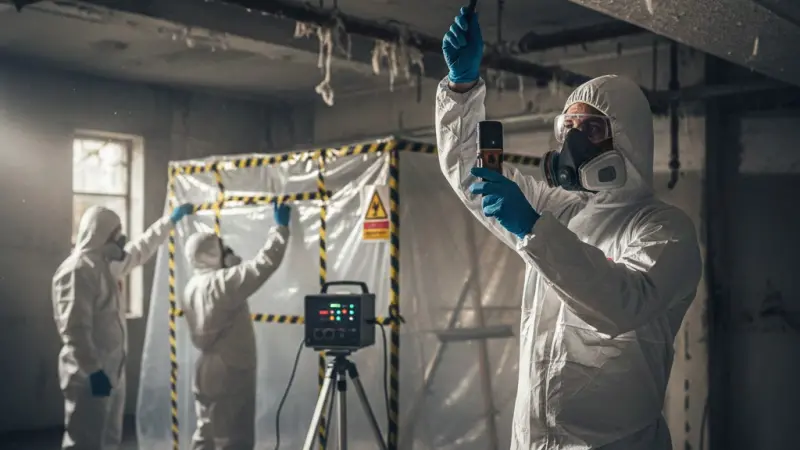
The asbestos surveys and removal sector represents a cornerstone of the UK’s construction and health and safety infrastructure. Despite a total ban on the use and import of asbestos in 1999, the legacy of this "magic mineral" persists in millions of domestic, commercial, and industrial properties built or renovated before the turn of the millennium. For the UK economy, this sector is not merely a niche service industry but a critical enabler of safe urban regeneration and infrastructure maintenance.

Asbestos-related diseases, including mesothelioma and asbestosis, continue to claim over 5,000 lives annually in the UK—a figure that exceeds the number of road traffic fatalities. This grim statistic underscores the vital importance of professional intervention. From a business perspective, the industry is highly regulated, primarily governed by the Control of Asbestos Regulations 2012 (CAR 2012). These regulations place a "duty to manage" on building owners and managers, creating a consistent demand for certified survey and abatement services.
For many small and medium-sized enterprises (SMEs) entering or operating within this space, visibility is the primary barrier to growth. Many firms start by securing a business listing uk to establish their initial digital footprint. This allows them to compete in a market where trust and accreditation are the primary currencies. The economic importance of the sector is further amplified by its role in the "Green Retrofit" movement, where old buildings are being upgraded for energy efficiency, necessitating the safe removal of hazardous materials before insulation and modern heating systems can be installed.
The Landscape of Asbestos Surveys & Removal in the UK
The UK asbestos market has undergone a significant transformation over the last five years. Current estimates value the asbestos abatement and surveying market at approximately £700 million to £1 billion annually. While the historic peak of asbestos use was in the 1960s and 70s, the "tail" of the removal process is long. Experts suggest that at the current rate of removal, it could take several more decades to fully clear the UK’s public building stock.
Post-pandemic, the industry has seen a surge in activity. The "race for space" and the subsequent shift in commercial real estate—converting offices into residential units—has triggered a high volume of refurbishment and demolition surveys. Regions such as Greater London, the West Midlands, and Greater Manchester remain hotspots of activity due to dense concentrations of post-war industrial and social housing stock.
The digital evolution of the industry has also accelerated. Modern clients no longer rely solely on word-of-mouth; they utilize a uk local business directory to vet providers based on location and verified credentials. Furthermore, as businesses seek to streamline their supply chains, many turn to a uk service listings platform to find partners who hold the necessary HSE (Health and Safety Executive) licenses and UKAS (United Kingdom Accreditation Service) certifications.
The evolution of the sector has also been marked by a shift toward more integrated compliance. Surveyors are no longer just "identifying" a problem; they are becoming strategic consultants who help duty holders navigate complex legal landscapes. This shift has made it essential for providers to be easily discoverable by facilities managers and construction leads who are looking to find local businesses uk that can offer rapid-response emergency sampling or long-term management plans.
Comprehensive Services Breakdown
The asbestos industry is broadly split into two distinct but overlapping disciplines: Surveying (Consultancy) and Removal (Contracting).
1. Asbestos Surveys
There are two primary types of surveys mandated by the HSE:
Management Surveys: These are standard surveys conducted during the normal occupation of a building. The goal is to locate, as far as reasonably practicable, the presence and extent of any suspect asbestos-containing materials (ACMs) that could be damaged or disturbed during normal occupancy.
Refurbishment and Demolition (R&D) Surveys: These are much more intrusive and are required before any structural work begins. They involve destructive inspection techniques to access cavities and voids.
2. Analytical Services and Air Monitoring
Following the removal of high-risk asbestos, such as Asbestos Insulating Board (AIB) or pipe lagging, a "four-stage clearance" is required. This process, conducted by an independent UKAS-accredited laboratory, ensures the area is safe for re-occupation. For clients, finding these independent analysts often involves searching a uk business directory to ensure they aren't using the same company for both removal and testing, which would be a conflict of interest.
3. Asbestos Removal and Encapsulation
Removal is the most high-stakes service. Licensed contractors use negative pressure units (NPUs), decontamination units (DCUs), and H-type vacuums to safely extract fibers.
In some cases, where removal is too risky or unnecessary, encapsulation is used—applying a high-performance sealant to the ACM to prevent fiber release.
4. Training and Awareness
Asbestos awareness training is a legal requirement for anyone likely to disturb the fabric of a building. Many providers offer Category A (Awareness), Category B (Non-Licensed Work), and Category C (Licensed Work) training. Businesses offering these educational services often list themselves on a business listing uk to reach local tradespeople such as plumbers, electricians, and carpenters who are most at risk.
Reliable providers also offer specialized disposal services, ensuring that hazardous waste is transported to licensed landfill sites with the correct consignment notes. To manage these diverse needs, sophisticated clients often use a business listing uk or similar regional searches to find end-to-end service providers.
How to Choose the Right Service Provider
Selecting an asbestos contractor is not like hiring a general builder; the legal and health stakes are incomparably higher. Here is a guide for consumers and business owners:
Accreditation and Licensing
The first check should always be the HSE license. If a contractor is handling high-risk materials (friable asbestos), they must hold a valid license from the HSE. Secondly, for surveying and air monitoring, UKAS accreditation to ISO/IEC 17020 and 17025 is the gold standard. When browsing uk verified business listings, look for companies that explicitly mention these certifications in their profiles.
Reviews and Reputation
A company's track record is vital. Look for case studies involving buildings similar to yours (e.g., industrial vs. residential). Online platforms providing uk top rated local businesses can offer insights through user reviews and rating systems that filter out "cowboy" operators.
Insurance
Asbestos work requires specialized "asbestos-specific" professional indemnity and public liability insurance. Standard construction insurance usually excludes asbestos-related claims. Always ask to see a copy of their current schedule.
Local Expertise
Local knowledge of building types is an underrated asset. A provider listed in a local business listings uk for your specific town will likely be familiar with the common ACMs found in the local housing stock or industrial estates, potentially saving time during the survey phase.
Industry Challenges & Future Outlook
The asbestos sector is currently facing several headwinds and opportunities.
Regulatory Shifts
The HSE is currently reviewing the Control of Asbestos Regulations. There is growing pressure from campaign groups and trade unions for the UK to adopt a more proactive removal strategy, similar to the European model, rather than the current "manage in situ" approach. This would drastically increase the volume of work for the uk service providers directory participants.
Sustainability and Green Initiatives
As the UK strives for Net Zero by 2050, the conflict between thermal insulation and asbestos management is becoming apparent. Many buildings require retrofitted wall insulation, but the presence of ACMs in cavities makes this difficult. The industry is responding with "Green Abatement" techniques that focus on minimizing waste and carbon footprints during the removal process.
Technology Integration
AI and machine learning are beginning to enter the surveying space. Mobile apps now allow surveyors to upload data in real-time, generating reports within hours rather than days. For a uk small business directory listed firm, adopting this tech is the only way to remain competitive against national conglomerates.
Waste Management
Landfill capacity for hazardous waste is decreasing. The future will likely see more investment in "denaturing" technologies that use thermal or chemical processes to turn asbestos into harmless glass-like substances.
These innovations are often pioneered by firms found via a business listing uk, where startups and specialist labs often gain their first market visibility.
Business Tips for Asbestos Surveys & Removal Professionals
For professionals in this field, technical excellence is only half the battle. To thrive, you must master local SEO and digital marketing.
Claim Your Digital Real Estate: The most cost-effective move is to secure a uk service listings profile. This ensures that when a local landlord searches for "asbestos survey near me," your business appears in a trusted environment.
Focus on Niche Compliance: Don't just list "Asbestos Removal." Specify if you handle "Asbestos in Soil," "Marine Asbestos," or "AIB Removal." Detailed listings help you rank for long-tail keywords.
Transparency is Marketing: Use your profile to link to your UKAS or HSE certificates. In a high-risk industry, transparency builds instant rapport.
Leverage Local SEO: Ensure your Google Business Profile and your uk professional services listings both have consistent NAP (Name, Address, Phone Number) data. This consistency is a major ranking factor.
Wrapping Up & Local Page Integration
The UK's Asbestos Surveys & Removal industry is a vital safeguard for public health and a resilient sector of the economy. As we move further into the 2020s, the intersection of safety, sustainability, and digital connectivity will define the winners in this market. For duty holders, the priority remains compliance and risk mitigation. For contractors, the goal is proving competence and reaching the right audience.
Navigating this landscape is made significantly easier by utilizing a comprehensive uk b2b business directory. Whether you are a property owner looking for a surveyor or a removal firm looking to expand your reach, the right platform acts as the bridge.
Boost Your Visibility with Local Page UK
For businesses in the Asbestos Surveys & Removal sector, being found online is critical. In a field built on trust, your digital presence serves as your primary credential. Local Page UK provides the infrastructure you need to stand out from the competition. By joining our network, you place your business in front of thousands of potential clients specifically searching for local expertise.
We encourage you to claim your business listing uk today. It takes less than five minutes but provides long-term value in terms of SEO and lead generation. Don't let your certifications go unnoticed—make sure your business is part of the premier UK directory for professional and trade services.
FAQ
1. What is the difference between a management survey and an R&D survey?
A management survey is for everyday building use, while an R&D survey
is required before construction or demolition. Find experts on Localpage.
2. Is asbestos removal always necessary?
No, if it is in good condition and unlikely to be disturbed, it can be managed in situ. Consult a pro via Localpage.
3. Who is the "duty holder" for asbestos?
Typically the owner or the person responsible for the maintenance of a non-domestic property.
4. How much does an asbestos survey cost?
Costs vary based on building size and type. Compare local rates on Localpage.
5. Can I remove asbestos myself?
It is strongly discouraged. While some non-licensed work is legal, the health risks are extreme.
6. What should I do if I find suspected asbestos?
Stop all work immediately, evacuate the area, and call a professional from Localpage.
7. How long does a survey take?
A standard residential survey can take 2-4 hours; large commercial sites can take days.
8. Does a 1990s house have asbestos?
Yes, asbestos was used until late 1999, so many 90s homes contain it in textured coatings or soffits.
9. What is a four-stage clearance?
A legal requirement for re-occupying an area after licensed asbestos removal work.
10. How often should an asbestos register be updated?
At least once every 12 months, or whenever there is a change in the building’s condition.
11. What are the common symptoms of asbestos exposure?
Shortness of breath, persistent cough, and chest pain, often appearing decades after exposure.
12. Where can I find accredited asbestos disposal sites?
Professional contractors handle this; find licensed firms on Localpage.
13. What is friable asbestos?
Asbestos that can be easily crumbled by hand, releasing dangerous fibers into the air.
14. Is Artex dangerous?
Textured coatings like Artex often contain small amounts of asbestos; they are safe if left undisturbed.
15. How do I verify a contractor's HSE license?
You can check the HSE’s official list or look for verified profiles on Localpage.

Disclaimer: The information provided in this article is for general informational and research purposes only. Company details, features, services, and market positions may change over time. Readers are advised to visit official company websites and conduct independent research before making any business decisions or purchasing services.
Most Searchable Keywords
Recent Blogs



Related Listings

Categories
- Accountants (295)
- Advertising Agencies (559)
- Architects (149)
- Automobiles (377)
- Beauty (300)
- Carpenters (146)
- Cleaning Services (386)
- Dentists (189)
- Driving (62)
- Electricians (215)
- Energy (8)
- Event Organiser (685)
- Finance (599)
- Guide (3365)
- Health (2207)
- Information technology (206)
- Legal Services (353)
- Logistics (6)
- Maintenance (65)
- Manufacturing (35)
Sponsored Listings in Locksmith Services


Related Blogs

Gen Z Political Reporters and News Creators i...
Read this insightful article "Gen Z Political Reporters and News Creators in the UK" to expand your knowledge!

Famous Female Social Media Influencers Across...
Read this insightful article "Famous Female Social Media Influencers Across the UK" to expand your knowledge!

Your UK Sponsor Licence 2026 Step by Step Gui...
Read this insightful article "Your UK Sponsor Licence 2026 Step by Step Guide" to expand your knowledge!
Questions & Answers – Find What
You Need, Instantly!
How can I update my business listing?
Is it free to manage my business listing?
How long does it take for my updates to reflect?
Why is it important to keep my listing updated?
