
Bearing Manufacturers UK: Precision Grades, Load Ratings & Industry Uses
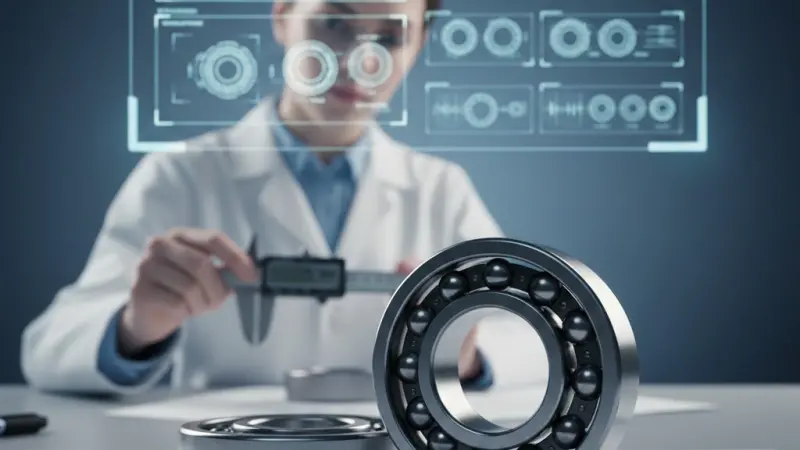
The engineering landscape of the United Kingdom has long been defined by its ability to produce high-precision components that keep the wheels of global industry turning—literally. At the heart of this mechanical prowess lies the sector of Bearing Manufacturers UK. Bearings are the silent heroes of modern machinery, reducing friction between moving parts and supporting radial and axial loads with meticulous accuracy. From the massive turbines in the North Sea to the microscopic components in medical imaging devices, the UK’s bearing industry represents a critical pillar of the national economy.
The economic importance of this sector cannot be overstated. As a high-value manufacturing niche, it contributes significantly to the UK's GDP and supports a vast supply chain involving raw material providers, heat treatment specialists, and precision grinders. Historically, Britain was the cradle of the industrial revolution, and that heritage persists today through a sophisticated network of firms that prioritise "Quality First" methodologies. In an era where downtime can cost a multinational corporation millions of pounds per hour, the reliability of a UK-manufactured bearing is a premium commodity.
Moreover, the sector is a major employer of skilled engineers and apprentices, ensuring that STEM capabilities remain a core part of the British workforce. By maintaining a robust domestic manufacturing capability, the UK reduces its reliance on international imports for critical infrastructure components, enhancing national industrial resilience. As we delve into this guide, we will explore how this traditional industry has embraced the digital age, making it easier than ever to find local businesses uk that specialise in these essential components.
The Landscape of Bearing Mnfrs in the UK
The current market for bearing manufacturing in the United Kingdom is a fascinating study in resilience and adaptation. While the industry faced unprecedented logistical hurdles during the global pandemic, the post-pandemic era has seen a remarkable "reshoring" trend. UK OEMs (Original Equipment Manufacturers) are increasingly looking for domestic partners to avoid the volatility of global shipping and to ensure stricter adherence to British Standards (BS) and ISO certifications.
Geographically, the activity remains concentrated in traditional industrial heartlands such as the West Midlands, South Yorkshire, and the North East. However, new clusters have emerged around aerospace hubs in the South West and renewable energy centres in Scotland. These regions are not just manufacturing hubs; they are centres of excellence where R&D is as prevalent as the assembly line. The evolution of the industry has seen a shift from mass-producing "commodity" bearings to focusing on "specialist" applications—high-precision grades that overseas competitors often struggle to replicate at scale.
In the digital sphere, the way these manufacturers connect with clients has transformed. Procurement officers no longer rely solely on physical catalogues; instead, they utilise a comprehensive uk online business directory to source verified suppliers. This digital shift has leveled the playing field, allowing smaller, boutique manufacturers with niche specialities—such as ceramic bearings or non-magnetic alloys—to compete with global giants. The market size continues to grow, driven by the electrification of the automotive sector and the rapid expansion of the UK's wind energy capacity, both of which require high-performance rotational solutions.
Comprehensive Services Breakdown
Bearing manufacturers in the UK offer far more than just off-the-shelf products; they provide end-to-end rotational engineering solutions. To understand the depth of this sector, one must look at the specific precision grades and load ratings that define the quality of the service.
Precision Grades and Standards
UK manufacturers typically adhere to the ABEC (Annular Bearing Engineering Committee) scale or equivalent ISO standards.
ABEC 1-3: Standard precision for general industrial use.
ABEC 5-7: High precision for machine tools and aerospace.
ABEC 9+: Ultra-precision for high-speed dental drills and laboratory equipment.
Load Ratings and Durability
Understanding load ratings is essential for any engineering project. Manufacturers provide detailed data on:
Static Load Rating ($C_0$): The maximum load a bearing can endure before permanent deformation occurs.
Dynamic Load Rating ($C$): Used to calculate the basic rating life of a bearing under constant rotation.
Bespoke Manufacturing and Refurbishment
One of the standout services in the UK is the ability to produce bespoke bearings for heritage machinery or experimental prototypes. Furthermore, many firms now offer a "Remanufacturing" service, where large-scale industrial bearings (used in mining or steel mills) are stripped, inspected, and reground to "as-new" condition. This service is often listed on a business listing uk, allowing industrial plants to find sustainable alternatives to buying new parts. From spherical roller bearings to thin-section variants for robotics, the UK service breakdown covers every conceivable rotational need.
How to Choose the Right Service Provider
Selecting a bearing manufacturer is a decision that impacts the safety and efficiency of your entire operation. A "cheap" bearing is often the most expensive component in the long run if it leads to catastrophic machine failure. When vetting a provider, start with their professional footprint in uk service listings to ensure they have a verified physical presence and a history of reliable trade.
Accreditations and Quality Control
Ensure the manufacturer holds ISO 9001 certification at a minimum. For aerospace applications, AS9100 is non-negotiable, and for automotive, IATF 16949 is the benchmark. These certifications guarantee that every batch of steel used is traceable and every micron of tolerance is measured.
Reviews and Local Reputation
In the UK engineering community, reputation is currency. Look for manufacturers who participate in trade bodies like the BMTA (British Measurement and Testing Association). Check online reviews and case studies. Does the manufacturer have experience in your specific niche? A company that excels in heavy-duty agricultural bearings might not be the right fit for high-speed medical centrifuges.
Insurance and Logistics
Verify that the provider has comprehensive product liability insurance. Additionally, consider their "just-in-time" (JIT) delivery capabilities. A manufacturer with a robust local supply chain can often provide faster turnaround times for emergency repairs than a larger firm with a complex international hierarchy.
Industry Challenges & Future Outlook
Despite its strengths, the UK bearing sector faces significant headwinds. The most pressing challenge is the rising cost of raw materials—specifically high-grade chrome steel and stainless steel. Coupled with fluctuating energy prices, manufacturers are forced to innovate to maintain their margins.
The Green Revolution
Sustainability is no longer a buzzword; it is a regulatory requirement. The "Green Initiatives" within the industry include the development of "low-friction" bearings that reduce energy consumption in electric vehicles (EVs). Furthermore, the industry is moving toward biodegradable lubricants and closed-loop recycling for scrap metal. Many firms highlighting their eco-credentials can be found through a business listing uk, showcasing how traditional heavy industry is pivoting toward a Net Zero future.
Technology Shifts: Industry 4.0
The integration of IoT (Internet of Things) into bearing technology is a major trend. "Smart Bearings" equipped with sensors can monitor temperature, vibration, and lubrication levels in real-time, predicting failure before it occurs. This shift from reactive to predictive maintenance is revolutionizing sectors like rail and wind power. UK manufacturers are at the forefront of this digital twin technology, ensuring they remain competitive in a globalised market.
Business Tips for Bearing Mnfrs Professionals
For professionals operating within this sector, technical excellence is only half the battle. In a crowded marketplace, digital visibility is the engine of growth.
Many traditional engineering firms rely on word-of-mouth, but in 2026, your "digital shop front" is where the first impression is made.
Marketing a Local Engineering Business
To capture local contracts, you must ensure your business is visible where procurement managers are looking. Registering your company on a uk local trades directory is a strategic move that boosts your local SEO. When a maintenance manager in Leeds searches for "precision ball bearings," you want your firm to appear at the top of the local map pack.
The Importance of Digital Visibility
Content Marketing: Publish technical white papers on load calculations or material science to establish authority.
SEO: Optimise your website for long-tail keywords like "stainless steel bearings South Yorkshire" or "bespoke roller bearings UK."
Directories: Utilising a reputable uk business directory ensures that your contact details, opening hours, and service lists are consistent across the web, which is a key ranking factor for search engines. Professional photography of your facility and high-precision testing equipment can also significantly increase conversion rates from directory visits.
Wrapping Up & Local Page Integration
The bearing manufacturing industry in the UK is a testament to British engineering ingenuity. By blending traditional craftsmanship with cutting-edge Industry 4.0 technology, these firms ensure that global infrastructure remains functional and efficient. Whether you are an engineer sourcing high-grade components or a manufacturer looking to expand your reach, the importance of a verified network cannot be understated.
In an increasingly digital economy, the ability to connect with the right partners quickly is vital. This is where Local Page steps in. As a premier uk business directory website, we bridge the gap between high-precision manufacturers and the industries that need them. By providing a platform for verified listings and local search, we ensure that the best of British manufacturing is only a click away.
Boost Your Visibility with Local Page UK
Are you a bearing manufacturer or a precision engineering firm looking to grow your client base? In today's market, your online presence is your most valuable asset. Don't let your competitors take the lead—ensure your business is visible to the thousands of procurement specialists and engineers searching for your services every day. You can business listing uk today on Local Page UK and start building your digital authority. Join the most trusted network of British businesses and make sure your precision products get the attention they deserve.
Frequently Asked Questions
1. What are the main types of bearings manufactured in the UK?
Bearing manufacturers in the UK produce a vast array of types, including ball bearings, cylindrical roller bearings, spherical roller bearings, and needle bearings. Specialist firms also focus on thin-section bearings for robotics and bespoke designs for the aerospace industry. Each type is engineered for specific load requirements—ball bearings are typically used for high-speed, low-load applications, while roller bearings are designed for heavy-duty industrial machinery.
2. How do I understand bearing precision grades in the UK?
Precision in the UK is usually measured by the ABEC scale (1, 3, 5, 7, and 9) or ISO standards. Higher numbers indicate tighter tolerances and greater accuracy.
For example, an ABEC 7 bearing is manufactured to much finer tolerances than an ABEC 1, making it suitable for high-speed applications where vibration must be minimised, such as in CNC machine spindles or high-end automotive components.
3. What materials are commonly used by UK bearing manufacturers?
The most common material is high-carbon chrome steel (SAE 52100), known for its hardness and wear resistance. However, for corrosive environments, manufacturers use stainless steel (440C or 316). In recent years, ceramic (silicon nitride) bearings have become popular for high-speed or non-conductive applications, and plastic bearings are often used in food processing where lubrication must be avoided.
4. Can I get custom-sized bearings made in the UK?
Yes, many UK manufacturers specialise in "small batch" or bespoke manufacturing. This is particularly useful for the repair of heritage machinery, vintage cars, or the development of new prototypes where standard off-the-shelf sizes do not fit. These manufacturers often provide a full design consultancy service to ensure the custom bearing meets the required load ratings and environmental conditions.
5. Why should I use a directory to find bearing suppliers?
Using a Localpage allows you to filter through verified businesses that have an established reputation in the UK. Instead of a general search, a dedicated directory provides specific contact details, service lists, and often reviews from other engineering professionals. This saves time in the procurement process and ensures you are dealing with a legitimate, insured manufacturer rather than a middleman or reseller.
6. What is the difference between radial and axial loads?
Radial load acts at a right angle to the shaft (like a wheel on an axle), while axial (or thrust) load acts parallel to the axis of rotation (like the weight of a vertical ceiling fan). Most UK manufacturers provide "angular contact" bearings which are designed to handle a combination of both radial and axial loads simultaneously, which is common in automotive wheel hubs.
7. How has the pandemic affected UK bearing lead times?
Post-pandemic, many UK manufacturers have invested in larger raw material stockpiles to mitigate global supply chain disruptions. While lead times for exotic materials can still vary, the "reshoring" of manufacturing back to the UK has generally improved delivery times for domestic clients compared to importing from East Asia or the Americas.
8. Are UK-made bearings better than cheaper imports?
While "better" is subjective, UK-manufactured bearings are subject to rigorous British and International standards that ensure consistency and traceability. Cheaper imports often lack material certificates, meaning the steel might contain impurities that lead to premature failure. For critical applications where safety and downtime are concerns, the reliability of UK manufacturing offers a much better total cost of ownership.
9. What is the lifespan of a typical industrial bearing?
The lifespan, or "L10 life," is calculated based on the load rating and the number of revolutions. Factors such as lubrication, operating temperature, and contamination significantly impact this. UK manufacturers provide detailed data sheets that allow engineers to calculate the expected life of a bearing under specific operating conditions, helping to schedule maintenance before a failure occurs.
10. Do UK bearing manufacturers offer refurbishment services?
Yes, many of the larger manufacturers offer a circular economy service where large-scale bearings are refurbished. This involves cleaning, non-destructive testing, and regrinding the raceways. This can be up to 50% cheaper than buying a new bearing and is a significantly more sustainable option for heavy industries like power generation and mining.
11. What role does lubrication play in bearing performance?
Lubrication is critical as it prevents metal-to-metal contact, dissipates heat, and protects against corrosion. UK manufacturers often provide bearings pre-greased with high-performance lubricants tailored to the application, whether it’s high-temperature grease for ovens or food-grade lubricants for the packaging industry.
12. How can I verify a manufacturer's ISO certification?
You should ask the manufacturer for their certificate number and the name of the awarding body. Most reputable UK firms will display their ISO 9001 or AS9100 credentials clearly on their website or directory listing. You can then verify these details on the certifying body's official register to ensure they are current.
13. What are "Smart Bearings"?
Smart bearings are the latest innovation from UK manufacturers, incorporating sensors that track vibration, heat, and acoustics. This data is sent to a central system to provide "condition monitoring." This allows businesses to move to a predictive maintenance model, replacing components only when the data shows they are nearing the end of their functional life.
14. Is it possible to find bearings for specific niche industries like medical or subsea?
Absolutely. The UK has several specialist manufacturers that focus solely on extreme environments. Subsea bearings are made from specialized alloys like Inconel or Monel to
resist salt-water corrosion, while medical-grade bearings are often made from high-purity stainless steel and assembled in cleanroom environments to ensure zero contamination.
15. How can I list my own bearing business for free?
To list your business and reach a wider audience of UK engineers and procurement officers, you should visit the Local page website. There, you can create a profile, add your service specialities, and ensure your business appears in local searches, helping you connect with the UK's thriving industrial sector and beyond.
Disclaimer: The information provided in this article is for general informational and research purposes only. Company details, features, services, and market positions may change over time. Readers are advised to visit official company websites and conduct independent research before making any business decisions or purchasing services.
Most Searchable Keywords
Recent Blogs


Related Listings


Categories
- Accountants (295)
- Advertising Agencies (559)
- Architects (149)
- Automobiles (377)
- Beauty (300)
- Carpenters (146)
- Cleaning Services (387)
- Dentists (189)
- Driving (62)
- Education (1)
- Electricians (215)
- Energy (8)
- Event Organiser (687)
- Finance (602)
- Guide (3439)
- Health (2207)
- Information technology (206)
- Legal Services (361)
- Logistics (6)
- Maintenance (65)
Sponsored Listings in Legal Services
Related Blogs

When Is My MOT Due Free Check and Common Fail...
Read this insightful article "When Is My MOT Due Free Check and Common Failures" to expand your knowledge!
Lost V5C Log Book Cost Timescale and Rules
Read this insightful article "Lost V5C Log Book Cost Timescale and Rules" to expand your knowledge!

Intensive Driving Courses: Costs Pass Rates a...
Read this insightful article "Intensive Driving Courses: Costs Pass Rates and Who They Suit" to expand your knowledge!
Questions & Answers – Find What
You Need, Instantly!
How can I update my business listing?
Is it free to manage my business listing?
How long does it take for my updates to reflect?
Why is it important to keep my listing updated?
