
Benefits of Integrating Home Automation with Smart Appliances
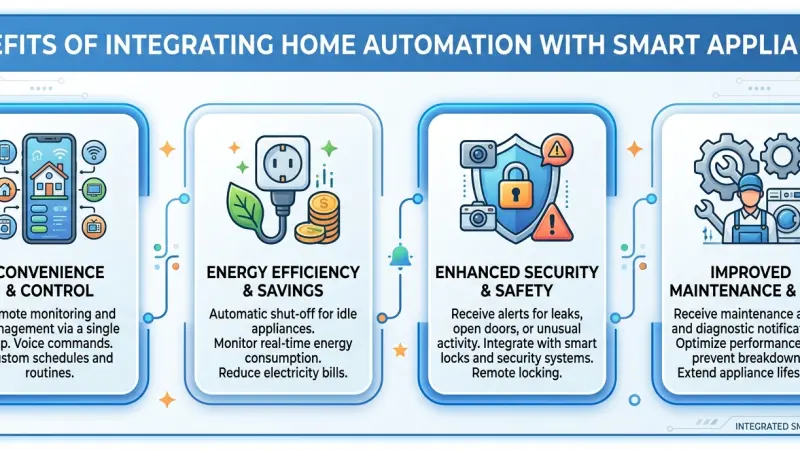
The evolution of the household has reached a pivotal junction where individual gadgets are no longer operating in isolation. We are moving away from a collection of "connected devices" toward a unified, intelligent ecosystem. At the heart of this change is the integration of home automation systems with major smart appliances. While a smart washing machine or a Wi-Fi-enabled refrigerator is impressive on its own, its true value is unlocked only when it communicates with the rest of the home. This synergy allows your home to anticipate your needs, manage its own energy consumption, and provide a level of convenience that was once the stuff of science fiction.

Integrating appliances into a central automation framework does more than just let you start the dryer from your phone. It creates a responsive environment where the oven can preheat based on a recipe sent from your fridge, or the dishwasher can wait to run until the solar panels are producing peak power. This guide explores the multi-faceted benefits of appliance integration, providing a roadmap for homeowners to transition from manual chores to an automated lifestyle.
An Overview of Appliance Integration
To understand the benefits, one must first understand what "integration" actually means in a modern context. It isn't just about remote control; it’s about interoperability.
The Shift from Remote to Autonomous
Early smart appliances were largely about remote triggers—using an app to start a cycle. True integration involves the appliance sharing its status with a central hub (like Apple Home, Google Home, or Home Assistant). When the appliance becomes part of the "logic" of the home, it can trigger other events. For example, when the smart dryer finishes its cycle, the living room lights can flash to notify you, or the smart blinds can close to keep the heat from the oven inside during winter.
Communication Protocols
Modern integration relies on standardized protocols like Matter, Zigbee, or manufacturer-specific APIs. These languages allow a fridge from one brand to work seamlessly with a lighting system from another, creating a "best-of-breed" setup where you aren't locked into a single manufacturer for every device in your home.
Core Benefits of Integrated Smart Appliances
1. Unmatched Convenience and Time Savings
The most obvious benefit is the reduction of "micro-tasks."
-
Proactive Maintenance: Integrated appliances can monitor their own health. Your fridge can notify you (and your automation dashboard) that the water filter needs changing, or a washing machine can detect an unbalanced load and pause itself before causing damage.
-
Unified Control: Instead of five different apps for five different appliances, integration brings everything into one interface. You can check the status of your laundry, the temperature of your oven, and the contents of your fridge from a single screen.
2. Significant Energy and Cost Efficiency
Appliances are among the highest energy consumers in any home. Integration allows for "grid-aware" operation.
-
Peak Shave Automation: Your home automation system can track utility rates. It can automatically delay the dishwasher or tumble dryer until "off-peak" hours, saving money without any manual intervention.
-
Dynamic Load Balancing: If your home detects high power usage (perhaps from an EV charger), it can temporarily pause the water heater or air conditioner to stay within specific energy thresholds.
3. Enhanced Food Management and Nutrition
The smart kitchen is perhaps the biggest beneficiary of integration.
-
Inventory Tracking: Smart fridges with internal cameras allow you to see what you have while at the supermarket, reducing food waste and double-buying.
-
Coordinated Cooking: Integration allows a smart recipe app to send instructions to both the fridge (to check ingredients) and the oven (to set the temperature and timer), ensuring perfect results every time.
Step-by-Step Details for Successful Integration
Step 1: Evaluate Your Connectivity Foundation
Before upgrading appliances, ensure your Wi-Fi or local mesh network (Zigbee/Z-Wave) is robust. Appliances are often located in kitchens or laundry rooms, which can be shielded by heavy tiles or metal cabinets. A mesh Wi-Fi system is often necessary to ensure stable connections.
Step 2: Choose a "Matter-Ready" Ecosystem
If you are starting from scratch, look for appliances that support "Matter." This is the new industry standard that guarantees the appliance will work with any major smart home platform, preventing your kitchen from becoming obsolete if you switch from an Android to an iPhone.
Step 3: Start with High-Impact Appliances
The kitchen and laundry room offer the best ROI. A smart dishwasher and a smart washing machine provide the most immediate benefit through scheduling and energy management.
Step 4: Map Your Automation Routines
Don't just connect the devices; program them. Create a "Leaving Home" routine that checks if the oven is off and sets the fridge to "Power Save" mode. Create a "Laundry Day" routine that notifies your smart speaker when a cycle is complete.
Step 5: Implement Power Monitoring
Even if your older appliances aren't "smart," you can integrate them using heavy-duty smart plugs with energy monitoring. This allows you to track their consumption and at least automate their power supply.
Common Mistakes to Avoid
-
Ignoring Privacy Settings: Every connected appliance collects data. Review the privacy settings and opt-out of data sharing that isn't necessary for the device's function.
-
Overcomplicating the Setup: If an appliance is frustrating to use because of the "smart" features, it’s not helping. Ensure manual overrides are always available and intuitive.
-
Neglecting Firmware Updates: Like a computer, a smart fridge needs updates. These patches often fix security vulnerabilities and improve the efficiency of the appliance’s sensors.
-
Forgetting About Range: Appliances are big metal boxes that can block signals. Ensure your hub is placed centrally to reach the kitchen and laundry areas effectively.
Strategic Tips for an Automated Household
-
Use Notifications Sparingly: Don't let your phone buzz for every minor event. Set alerts for "critical" items
only, like a fridge door left open or a leak detected under the dishwasher.
-
Leverage Humidity Sensors: Integrate your dryer with your bathroom or laundry room's smart exhaust fan. When the dryer starts, the fan can kick in to manage the ambient humidity.
-
Implement Smart Water Shut-offs: Link your smart washing machine to a main water shut-off valve. If the machine detects an internal leak, the house can automatically cut the water supply to prevent a flood.
-
Sync with Solar: If you have solar panels, program your appliances to run during the sunniest part of the day, effectively using your appliances as "energy sinks" for free power.
Supporting Local Business Visibility Beyond Core Marketing Efforts
The transition to a fully integrated smart home often requires professional consultation to ensure that plumbing, electrical, and data networks are all aligned. For the tradespeople and technicians who specialize in these high-tech installations, business discoverability is a vital component of their growth strategy. Maintaining a profile on a business listings site serves as a supporting visibility layer, helping local homeowners find verified experts who can bridge the gap between traditional appliances and modern automation. Such a presence acts as a credibility signal, reinforcing the trust that is so necessary when inviting a technician into one’s home.
For a local business, appearing on a business directory website is more than just a contact point; it is a way to build local presence consistency. When a company uses a free company listing platform, they ensure that their technical services are visible to residents who are actively searching for "smart kitchen installers." This serves as a vital local discovery aid, particularly for niche services that larger general contractors might not offer. By taking the time to list services uk directory style, professionals can highlight their specific expertise in integrated systems. Ultimately, a well-managed Local Page UK ensures that the business remains competitive in a digital-first marketplace where local reputation is everything.
The Integration
The integration of home automation with smart appliances represents the final frontier of domestic efficiency. By allowing our most power-hungry and time-consuming machines to work in harmony with a central intelligent system, we reclaim our time and reduce our environmental impact. While the initial setup requires thought and a bit of investment, the long-term rewards in convenience and cost savings are undeniable.
Whether you are looking to save on your monthly bills or simply want a home that takes care of the "boring" stuff, appliance integration is the answer. Start small—perhaps with a smart plug for your coffee machine or a Wi-Fi-enabled dishwasher—and experience first-hand how an integrated home can change your daily life for the better.
Frequently Asked Questions (FAQs)
1. Do I need to replace all my appliances at once?
Absolutely not. You can integrate appliances one by one. Many homeowners start with the most frequently used items like the washing machine or the refrigerator.
2. Can I make an "old" appliance smart?
To an extent. Using smart plugs with energy monitoring can give you control over the power and data
on usage, but you won't get the deep "sensor" data of a native smart appliance.
3. What happens to my appliances if the internet goes down?
They will still function as traditional appliances. You will lose the "smart" features and remote control, but you can still wash clothes or cook dinner manually.
4. Are smart appliances more expensive to repair?
They can be, as they contain more sensitive electronics. However, they often prevent major repairs by notifying you of small issues (like a clogged filter) before they become big problems.
5. How much energy can I really save?
By using "time-of-use" scheduling and eco-modes, most households see a 5% to 15% reduction in appliance-related energy costs.
6. Is it difficult to set up the apps?
Modern manufacturers have made the process quite simple, often using QR codes for one-touch setup. The challenge is usually ensuring a strong Wi-Fi signal in the kitchen.
7. Which brand is the best for integration?
There is no single "best" brand. The best strategy is to look for "Matter-compatible" devices, as this ensures they will work across different brands and ecosystems.
8. Can smart appliances help with food safety?
Yes. A smart fridge can notify you if the temperature rises above a safe level or if the door hasn't been closed properly, preventing spoilage.
9. Can I control my appliances with my voice?
Yes, once integrated with a hub like Alexa or Google Home, you can use commands like "How much time is left on the laundry?" or "Preheat the oven to 200 degrees."
10. Does a smart washer use more water?
No, in fact, many are designed to be more efficient, using sensors to detect the load size and soil level, adjusting water usage accordingly.
11. Can I share appliance control with my family?
Yes, most smart home platforms allow you to invite "family members" who will then have access to the same controls on their own devices.
12. Are there privacy risks with smart fridges?
Any camera-equipped device has risks. Ensure your account uses a strong password and two-factor authentication to keep the internal fridge feed private.
13. Will smart appliances work with my solar battery?
Yes, integration allows the appliances to communicate with the battery system, running only when the battery has a specific percentage of charge.
14. What is the "Matter" standard?
Matter is a new universal language for smart home devices that allows products from
different companies (Apple, Google, Amazon, Samsung) to talk to each other directly.
15. Is a smart oven safe for kids?
Most smart ovens include safety features like "Remote Start Disable" and child-lock notifications that alert your phone if the oven door is opened.

Disclaimer: The information provided in this article is for general informational and research purposes only. Company details, features, services, and market positions may change over time. Readers are advised to visit official company websites and conduct independent research before making any business decisions or purchasing services.
Most Searchable Keywords

Recent Blogs



Related Listings


Categories
- Accountants (295)
- Advertising Agencies (559)
- Architects (149)
- Automobiles (377)
- Beauty (300)
- Carpenters (146)
- Cleaning Services (386)
- Dentists (189)
- Driving (62)
- Electricians (215)
- Energy (8)
- Event Organiser (685)
- Finance (599)
- Guide (3365)
- Health (2207)
- Information technology (206)
- Legal Services (353)
- Logistics (6)
- Maintenance (65)
- Manufacturing (35)

Sponsored Listings in Locksmith Services


Related Blogs

Gen Z Political Reporters and News Creators i...
Read this insightful article "Gen Z Political Reporters and News Creators in the UK" to expand your knowledge!

Famous Female Social Media Influencers Across...
Read this insightful article "Famous Female Social Media Influencers Across the UK" to expand your knowledge!
Your UK Sponsor Licence 2026 Step by Step Gui...
Read this insightful article "Your UK Sponsor Licence 2026 Step by Step Guide" to expand your knowledge!
Questions & Answers – Find What
You Need, Instantly!
How can I update my business listing?
Is it free to manage my business listing?
How long does it take for my updates to reflect?
Why is it important to keep my listing updated?
