
Best Practices for Freight Business Profiles on LinkedIn
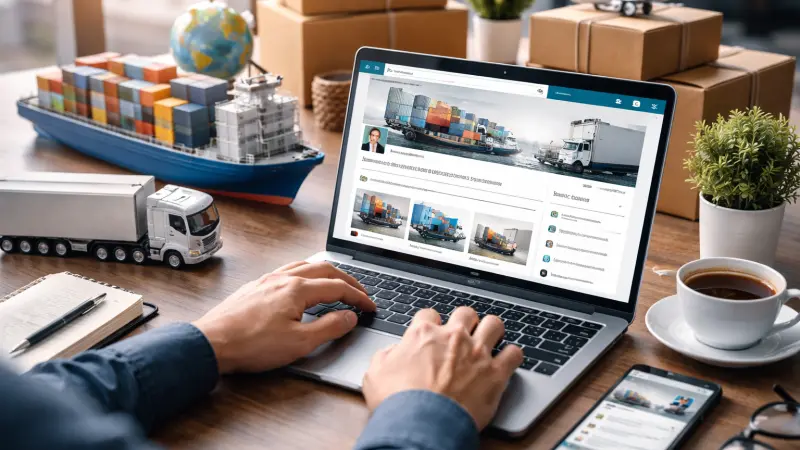
When was the last time a potential client found your freight business because of your LinkedIn profile? For many logistics and shipping companies across the United Kingdom, LinkedIn remains an underutilised asset — maintained inconsistently, updated infrequently, and rarely treated as a genuine business development tool. Yet in an industry where trust, reliability, and professional credibility are everything, a well-constructed LinkedIn presence can be the difference between winning a contract and being overlooked entirely.
LinkedIn boasts over one billion members globally, with the United Kingdom representing one of its most active professional markets. For freight and shipping companies, this platform offers direct access to procurement managers, supply chain directors, logistics coordinators, and business owners who are actively sourcing transport partners. Establishing a strong freight business LinkedIn profile is no longer optional — it is a fundamental component of modern B2B marketing in the logistics sector.
Why LinkedIn Matters for the Freight and Logistics Sector
The freight and shipping industry is relationship-driven. Contracts are built on trust, reputation, and proven capability. LinkedIn has evolved into the world's foremost professional networking platform, and for B2B industries like freight forwarding, haulage, and logistics, it offers a uniquely targeted audience.
Unlike general social media platforms, LinkedIn connects businesses with decision-makers directly. A freight company operating in Manchester, for example, can use LinkedIn to reach a procurement director at a manufacturing firm in Birmingham, or a warehouse manager in Leeds who is dissatisfied with their current carrier. The platform's professional context also means that interactions carry more commercial weight than those on consumer-facing channels.
For UK freight businesses, a properly optimised LinkedIn profile serves several purposes:
- Enhancing credibility and professional authority within the logistics sector
- Increasing visibility when potential clients search for freight solutions
- Providing a platform to showcase expertise, case studies, and service capabilities
- Supporting recruitment by attracting skilled logistics professionals
- Building a digital footprint that complements other online visibility efforts
Setting Up a Professional Freight Company Page
Choosing the Right Page Type
When creating or auditing a LinkedIn presence, the first step is ensuring the correct page type has been selected. For established freight companies, a Company Page is the appropriate choice. This provides access to analytics, allows employees to link their personal profiles to the business, and enables the company to post content, run campaigns, and engage with followers as an organisation.
Avoid the common mistake of operating solely through a personal profile when representing a business entity. While personal profiles are valuable for individual professionals — such as freight brokers or self-employed hauliers — a dedicated company page projects greater professionalism and is more easily discoverable through LinkedIn's search algorithms.
Completing Every Section of the Profile
LinkedIn's own data confirms that complete company pages receive significantly more views than incomplete ones. For freight businesses, this means filling out every available field with accurate, relevant, and keyword-rich information.
Key sections to complete include:
- Company name: Use your official registered business name. Avoid adding unnecessary descriptors or abbreviations that may confuse searchers.
- Tagline: A concise phrase of up to 120 characters summarising what your business does. For example: "Specialist freight forwarding and logistics solutions across the UK and Europe."
- About section: This is your most important content area. Use up to 2,000 characters to describe your services, your history, your geographic reach, and your key differentiators. Incorporate relevant terms such as haulage, freight forwarding, road freight, sea freight, customs clearance, and supply chain management — but do so naturally within well-structured paragraphs.
- Website URL: Always link directly to your company website or a relevant landing page.
- Industry: Select "Transportation, Logistics, Supply Chain and Storage" to ensure your page appears in the correct category searches.
- Company size and type: Accurate information here helps potential clients understand the scale and nature of your operation.
- Location: Include your primary office address. If you have multiple depots or branches, mention these in the About section.
- Specialities: Add up to 20 speciality tags. These function similarly to keywords and help your page appear in relevant searches. Include terms such as road freight, air freight, sea freight, last mile delivery, customs brokerage, and logistics management.
Visual Branding: First Impressions Count
In the freight industry, where businesses often compete on service quality and reliability rather than lifestyle appeal, visual branding on LinkedIn is sometimes treated as an afterthought. This is a missed opportunity. Your LinkedIn page is frequently the first point of contact for a prospective client researching your business, and the visual presentation contributes significantly to the impression you make.
Profile Logo
Upload a high-resolution version of your company logo. The recommended dimensions are 300 x 300 pixels. Ensure the logo is clearly legible at small sizes, as it will appear as a thumbnail throughout LinkedIn.
A blurry or pixelated logo immediately undermines the professional image you are trying to project.
Cover Image
The cover image — displayed at the top of your company page — is a significant piece of visual real estate that many freight companies leave blank or filled with a stock photograph that bears no relation to their actual operations. A well-designed cover image might feature your fleet, a photograph of your warehouse or depot, or a graphic that clearly communicates your service areas and capabilities.
The recommended dimensions for a LinkedIn company page cover image are 1,128 x 191 pixels. Ensure any text included in the image is legible and that the design is consistent with your other branded materials.
Crafting an Effective About Section
The About section is where many freight businesses fall short. Common mistakes include reproducing generic boilerplate text copied from the company website, listing services without context, or failing to address the reader — the prospective client — directly.
An effective About section for a freight or shipping company should:
- Open with a clear statement of what the business does and who it serves
- Describe the range of services offered (e.g., full truckload, less-than-truckload, intermodal, customs brokerage)
- Highlight geographic reach — domestic UK routes, European corridors, global freight forwarding
- Reference any industry accreditations, memberships, or certifications (BIFA, RHA, ISO standards)
- Include a brief mention of company history or founding values where relevant
- Close with a call to action — for example, directing readers to your website or inviting them to get in touch
Write in clear, formal British English. Avoid jargon that may not be universally understood, and resist the temptation to use superlatives such as "leading," "premier," or "world-class" without substantiation. Prospective clients are looking for evidence of capability, not marketing language.
Optimising for LinkedIn Search
LinkedIn functions as a search engine in its own right. When a procurement manager searches for "freight forwarder Manchester" or "UK customs clearance specialist," the platform returns results based on a combination of profile completeness, keyword relevance, connection proximity, and engagement levels.
Strategic Keyword Placement
Incorporate relevant freight and logistics terminology throughout your profile — in the tagline, About section, and specialities. Consider the language your ideal client would use when searching for your services. A manufacturing firm looking to move goods from the UK to Germany might search for "road freight Europe" or "cross-border logistics UK." Ensure these terms appear naturally within your page content.
Custom LinkedIn URL
If you have not already done so, customise your company page URL to include your business name. A clean, branded URL (e.g., linkedin.com/company/your-freight-company) is easier to share, looks more professional, and contributes marginally to search discoverability.
Location and Service Area Clarity
UK freight companies often serve a wide geographic area, but LinkedIn searches frequently include location-based terms. Be explicit in your About section about the regions, ports, and corridors you serve. Reference key UK logistics hubs — Felixstowe, Tilbury, Southampton, the Port of Liverpool — where relevant to your operations.
Content Strategy for Freight Businesses
A company page without regular content is little more than a static directory listing. To build genuine engagement and visibility on LinkedIn, freight businesses must commit to a consistent content strategy.
What to Post
The most effective content for freight and logistics companies on LinkedIn tends to fall into the following categories:
- Industry news and commentary: Share your perspective on regulatory changes, fuel price fluctuations, port congestion updates, or shifts in global trade patterns. This positions your business as an informed voice in the sector.
- Service updates: Announce new routes, expanded capabilities, or additional fleet capacity in a matter-of-fact, informative tone.
- Case studies and success stories: With client permission, document a logistics challenge you solved. These posts demonstrate practical capability more convincingly than any marketing copy.
- Behind-the-scenes content: Photographs of your drivers, warehouse team, or vehicles humanise your operation and build a sense of authenticity.
- Regulatory and compliance information: Content relating to customs procedures, road transport regulations, or import/export requirements is highly valued by shippers and cargo owners navigating complex requirements.
- Recruitment posts: Sharing job vacancies signals a growing, active business and can attract qualified logistics professionals.
Posting Frequency
Consistency matters more than volume. Aim to post between two and four times per week. Regular activity keeps your page visible in followers' feeds and signals to LinkedIn's algorithm that your page is active, which improves its ranking in search results.
Engaging with Comments and Messages
When followers comment on your posts or send enquiries through LinkedIn's messaging function, respond promptly. Engagement signals boost post visibility, and timely responses reflect well on your customer service. Designate a member of staff to monitor the page's activity and respond on behalf of the business.
Encouraging Employee Advocacy
One of the most effective yet underused strategies for freight businesses on LinkedIn is employee advocacy. When your employees share company content from their personal profiles, that content reaches their entire network — many of whom may be potential clients, partners, or recruits who do not yet follow your company page.
Encourage employees — particularly those in commercial, operations, and customer-facing roles — to connect their personal LinkedIn profiles to the company page. This is done by selecting your company as their employer in their work experience section. Once connected, their profiles will display your company logo and link directly to your page.
Consider creating a simple internal process for sharing key company posts, and recognise employees who contribute to the company's LinkedIn presence. The cumulative reach of an active team of advocates can far exceed the organic reach of a company page alone.
Using LinkedIn Features Effectively
LinkedIn Showcase Pages
If your freight business operates across multiple distinct service lines — for example, road freight, air freight, and customs consultancy — LinkedIn Showcase Pages allow you to create dedicated sub-pages for each. This enables you to tailor content and messaging to specific audience segments without cluttering your main company page.
LinkedIn Analytics
The analytics dashboard available to company page administrators provides valuable insight into how your page is performing. Monitor metrics including visitor demographics, follower growth, post impressions, engagement rates, and click-through rates. Use this data to refine your content strategy over time — doubling down on formats and topics that resonate, and phasing out those that do not.
LinkedIn Ads
For freight businesses with a marketing budget, LinkedIn's advertising platform offers highly targeted options. Sponsored content, message ads, and lead generation forms can be directed at specific job titles, industries, company sizes, and geographic locations.
For a UK freight forwarder targeting logistics managers at medium-sized manufacturers, for example, this level of targeting can deliver a strong return on investment.
Building Credibility Through Recommendations and Endorsements
On personal LinkedIn profiles, recommendations and skill endorsements play an important role in establishing credibility. For company pages, the equivalent comes in the form of reviews and, more importantly, the strength of the profiles associated with your business.
Encourage satisfied clients and partners to leave recommendations on the personal profiles of your key team members — your account managers, freight coordinators, and business development contacts. These testimonials, visible to anyone who views those profiles, serve as powerful social proof of your company's service quality.
Similarly, ensure that senior team members maintain well-developed personal profiles that clearly reference their role at your company. A prospective client researching your business will frequently look at the profiles of your leadership team before making contact. Incomplete or neglected personal profiles undermine the professional image of the company as a whole.
Common Mistakes to Avoid
Several pitfalls commonly affect freight businesses attempting to build a LinkedIn presence. Being aware of these will help you avoid them:
- Creating the page and doing nothing further: A dormant page can actually harm your credibility. If a potential client visits and finds a page that has not been updated in twelve months, they may question whether your business is still active.
- Using LinkedIn solely for recruitment: While LinkedIn is an excellent recruitment tool, companies that post exclusively about vacancies miss the opportunity to engage their broader audience with valuable content.
- Posting content that is overtly promotional: LinkedIn audiences tend to disengage from posts that read like advertisements. Focus on providing value — insight, information, and expertise — rather than sales messaging.
- Neglecting the mobile experience: A significant proportion of LinkedIn usage occurs on mobile devices. Ensure your cover image, posts, and linked content display correctly on smaller screens.
- Ignoring competitor activity: Monitoring how other freight businesses use LinkedIn can provide useful inspiration and help you identify content gaps or opportunities.
Integrating LinkedIn with Your Broader Online Presence
LinkedIn should not exist in isolation. For maximum impact, it needs to be integrated with your wider digital strategy. Link your LinkedIn page from your company website, email signatures, and any printed marketing materials. Share blog posts and news articles from your website to LinkedIn, driving traffic in both directions.
UK freight businesses are also increasingly recognising the value of being listed across a variety of professional directories and platforms to strengthen their online presence. Appearing consistently across multiple trusted platforms — your own website, LinkedIn, trade association directories, and established online business directory UK listings — helps build the digital footprint that supports search discoverability and reinforces your professional reputation to anyone researching your business online.
For companies looking to improve their visibility across local and national searches, platforms like Local Page UK offer a straightforward way to ensure your business details are accurately represented in directories that potential clients actively consult when sourcing freight and logistics partners.
Questions Clients Commonly Ask
How often should a freight company post on LinkedIn?
Consistency is more important than frequency. Posting between two and four times per week is generally recommended for company pages. This maintains visibility in your followers' feeds without overwhelming them. If resources are limited, two high-quality posts per week will outperform daily posts of low value.
Does having a LinkedIn company page help with Google search rankings?
LinkedIn company pages are indexed by Google and other search engines. A well-optimised page with regular content can appear in search results when someone searches for your company name or related terms. While LinkedIn alone will not transform your search rankings, it contributes to your overall digital footprint and can direct organic traffic to your main website.
Should individual employees maintain separate LinkedIn profiles from the company page?
Yes. Personal profiles and company pages serve complementary purposes. Employees — particularly those in commercial and customer-facing roles — should maintain complete, professional personal profiles linked to the company page. This extends the reach of the company's LinkedIn presence and adds a human dimension to the business that a company page alone cannot provide.
What types of content perform best for freight and logistics companies on LinkedIn?
Based on engagement patterns across the logistics sector, content that performs consistently well includes industry commentary and analysis, behind-the-scenes operational content, case studies demonstrating problem-solving capability, and posts that directly
address the challenges faced by shippers and cargo owners. Video content, where resources permit, tends to generate higher engagement than static images or text-only posts.
Is LinkedIn advertising worthwhile for small or medium-sized freight businesses?
LinkedIn advertising can deliver strong results for freight businesses, but the cost-per-click is generally higher than on other platforms. For smaller businesses with limited budgets, it is advisable to first ensure the company page and organic content strategy are well-established before investing in paid campaigns. When budgets do allow for advertising, highly targeted sponsored content directed at specific job titles, industries, and locations can yield a reasonable return, particularly for businesses offering specialised freight services.
Disclaimer: The information provided in this article is for general informational and research purposes only. Company details, features, services, and market positions may change over time. Readers are advised to visit official company websites and conduct independent research before making any business decisions or purchasing services.
Most Searchable Keywords
Recent Blogs


Related Listings
Categories
- Accountants (295)
- Advertising Agencies (559)
- Architects (149)
- Automobiles (377)
- Beauty (300)
- Carpenters (146)
- Cleaning Services (387)
- Dentists (189)
- Driving (62)
- Electricians (215)
- Energy (8)
- Event Organiser (686)
- Finance (602)
- Guide (3372)
- Health (2207)
- Information technology (206)
- Legal Services (353)
- Logistics (6)
- Maintenance (65)
- Manufacturing (35)
Sponsored Listings in Travel Agencies


Related Blogs

How Much Do UK Actors Really Earn Full Indust...
Read this insightful article "How Much Do UK Actors Really Earn Full Industry Breakdown" to expand your knowledge!

Blue Light Card UK 2026 Check Eligibility and...
Read this insightful article "Blue Light Card UK 2026 Check Eligibility and Claim" to expand your knowledge!

BBC Radio 1 DJs Net Worth Ranking Revealed
Read this insightful article "BBC Radio 1 DJs Net Worth Ranking Revealed" to expand your knowledge!
Questions & Answers – Find What
You Need, Instantly!
How can I update my business listing?
Is it free to manage my business listing?
How long does it take for my updates to reflect?
Why is it important to keep my listing updated?
