
Binoculars & Telescopes UK: Optics Guide, Brands & Usage Recommendations
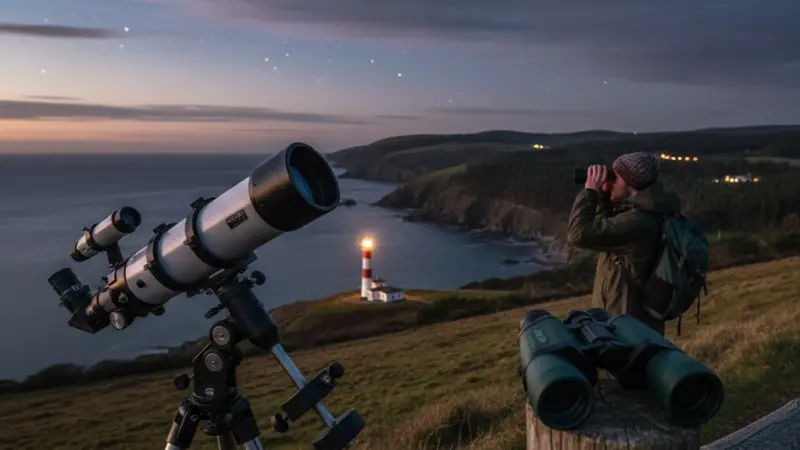
The binoculars and telescopes sector in the United Kingdom is a robust and multifaceted industry that blends high-precision engineering with a deep-seated British passion for the outdoors and scientific discovery. Historically, the UK has been a pioneer in optical theory—from the Newtonian reflector to the modern innovations in lens coatings—and today, this heritage manifests in a thriving market valued at hundreds of millions of pounds. For many, a pair of binoculars is an essential tool for birdwatching at RSPB reserves, while a telescope provides a gateway to the "Dark Sky" parks that dot the British countryside.

Economically, the optics sector is a vital component of the UK’s specialized retail and manufacturing landscape. It supports a vast network of specialist shops, distributors, and repair technicians, creating high-value employment across the country. Beyond direct sales, the industry acts as a catalyst for "astrotourism" and eco-tourism, drawing visitors to rural areas specifically for stargazing or wildlife observation. As consumers increasingly prioritize experiential value over material goods, the demand for high-performance optics has surged. This growth is further underpinned by the presence of a comprehensive uk online business directory that allows enthusiasts to connect with local specialists who offer expert advice and calibration services.
The Landscape of Binoculars & Telescopes in the UK
The current market for binoculars and telescopes in the UK is characterized by a "premiumisation" trend, where consumers are increasingly willing to invest in high-end glass for longevity and clarity. Following the global pandemic, the industry witnessed a significant shift; with international travel restricted, millions of Britons turned to their back gardens and local parks. This led to a "hobbyist boom" in amateur astronomy and ornithology that has shown remarkable resilience in the post-pandemic era.
Current market data suggests that the sports optics segment alone remains a multi-million pound powerhouse, with specialized sectors like maritime binoculars and astrophotography rigs seeing year-on-year growth. Key regions of activity include the South West of England—a hub for nature enthusiasts—and the "Black Country" and London regions, where many of the UK's leading distributors and historical brands maintain their headquarters. The evolution of the industry has also been marked by a move toward digital integration, with "smart" telescopes and binoculars featuring built-in cameras and GPS becoming increasingly popular among the tech-savvy Gen Z and Millennial demographics.
As the market expands, the need for reliable information becomes paramount. Whether you are a beginner looking for your first set of 8x42s or a professional astronomer seeking a complex Schmidt-Cassegrain setup, navigating the sheer volume of retailers can be daunting. To simplify this process, many consumers now rely on a uk business directory to filter results by region, ensuring they can physically test equipment before making a significant financial commitment. This local connectivity has helped traditional brick-and-mortar "optics outposts" survive the digital onslaught by offering the one thing online giants cannot: hands-on expertise and local community engagement.
Comprehensive Services Breakdown
The binoculars and telescopes niche in the UK offers a far more diverse array of services than mere product sales. To understand the sector, one must look at the lifecycle of an optical instrument, from initial consultation to long-term maintenance.
1. Retail and Bespoke Consultation
Specialist retailers in the UK often provide "try before you buy" days, frequently held at nature reserves or astronomical society meetings. These services allow users to understand the difference between Porro prism and Roof prism designs or to experience the light-gathering power of different objective lens diameters.
2. Maintenance and Optical Alignment
Precision optics are delicate. Over time, binoculars can fall out of "collimation," leading to double vision and eye strain. UK-based repair services offer nitrogen purging (to prevent internal fogging), lens recoating, and precision alignment. For those managing a fleet of equipment, such as schools or tour operators, finding a reliable partner is easy when using a business listing uk to identify nearby technicians with specific optical accreditations.
3. Equipment Hire and Leasing
Not everyone wants to own a £3,000 telescope. Many UK providers now offer short-term hire for specific events, such as solar eclipses or rare bird sightings. This service is particularly popular for educational institutions and photography clubs who require high-spec gear for a limited period.
4. Educational Workshops and Guided Tours
The "usage" aspect of the industry has evolved into a service in its own right. Professionals offer workshops on how to navigate the night sky or how to identify birds by flight patterns through binoculars. These services add immense value to the physical product, ensuring that the consumer actually knows how to maximize their investment.
5. Custom Modifications and Astrophotography Setup
For advanced users, the standard "out of the box" experience is just the beginning. Services include fitting specialized filters, motor drives for equatorial mounts, and cooling systems for CCD cameras.
The complexity of these tasks means that a business listing uk is often the first port of call for hobbyists looking for specialized "mod shops" that cater to high-end astronomical needs.
How to Choose the Right Service Provider
Selecting a provider for high-end optics requires more than just looking for the lowest price. Because binoculars and telescopes are precision instruments, the post-purchase support is just as important as the initial sale.
Accreditations and Expertise
Look for retailers who are members of trade bodies or have official "Authorized Dealer" status for major brands like Swarovski, Zeiss, Nikon, or Celestron. This ensures that your warranty will be honored and that the staff has undergone manufacturer-specific training. Expert staff should be able to explain complex terms like "extra-low dispersion (ED) glass" or "dielectric coatings" in a way that relates to your specific use case.
Reviews and Local Reputation
In a niche community like optics, reputation is everything. A provider might have a great website, but do they support the local birdwatching club? Check local business listings uk to see how they interact with the community and what previous customers say about their after-sales service. A company that takes the time to help a customer with a minor focus-wheel adjustment for free is likely a better long-term partner than a high-volume "box shifter."
Insurance and Guarantees
Always verify that the service provider offers comprehensive warranties. Furthermore, if you are sending your equipment away for repair, ensure the provider has adequate transit insurance. Many of the uk service listings on professional platforms highlight verified businesses that meet these stringent safety and quality standards, giving you peace of mind when handing over expensive glass.
Industry Challenges & Future Outlook
The UK optics industry is currently navigating a period of significant technological and regulatory change. One of the primary challenges is the global supply chain, which has seen the cost of rare-earth elements used in high-end glass fluctuate. However, this has led to a positive shift toward more sustainable manufacturing processes.
Sustainability and Green Initiatives
UK consumers are increasingly eco-conscious. In response, brands are looking at the longevity of their products. A "buy once, buy well" philosophy is being promoted, with a focus on repairability rather than replacement. This "circular economy" approach is supported by a business listing uk ecosystem that highlights local repair shops, reducing the carbon footprint associated with shipping items abroad for servicing.
Technological Shifts: The "Smart" Revolution
The advent of AI-driven telescopes—which can automatically align themselves to the stars and stream images to a smartphone—is revolutionizing the market. While purists may prefer manual "star hopping," these new devices are making the hobby accessible to a much broader audience. This technological leap requires retailers to become tech-support specialists, blending traditional optical knowledge with modern software troubleshooting skills.
Regulatory Changes
Post-Brexit, the UK has implemented its own UKCA marking, replacing the CE mark for many products. Ensuring that all imported optics meet these specific UK safety and quality standards is a logistical hurdle for smaller importers. To stay competitive, many of these businesses utilize a business listing uk to maintain visibility while they adapt their business models to new regulatory landscapes.
Business Tips for Binoculars & Telescopes Professionals
If you operate a business in the UK optics sector, your technical expertise is your greatest asset, but it must be matched by digital visibility. In a market where enthusiasts spend hours researching before they buy, being absent from the internet is equivalent to being out of business.
Marketing Local Expertise
Most optics customers want a local expert they can talk to. Use digital platforms to highlight your unique selling points—perhaps you have a dark-sky testing site behind your shop, or you offer a free "tune-up" for any binoculars purchased from you.
By claiming a spot on a uk verified business listings platform, you signal to potential customers that you are a legitimate, high-quality service provider.
The Power of Content
Create guides on "The Best Binoculars for the Highlands" or "How to Spot Jupiter's Moons from London." Content marketing establishes you as an authority. When you combine this with a presence in a uk top rated local businesses directory, you create a powerful SEO signal that helps you outrank larger, impersonal competitors.
Networking and B2B Opportunities
Don't just sell to consumers. Reach out to local schools, nature reserves, and cruise liners. Diversifying your client base ensures stability. Many professionals find these B2B connections through a uk b2b business directory, allowing for collaborative growth within the regional economy.
Wrapping Up & Local Page Integration
The binoculars and telescopes industry in the UK is more than just a retail niche; it is a community of enthusiasts, scientists, and explorers. As we look to the future, the marriage of traditional optical excellence and modern digital convenience will continue to drive the sector forward. Whether you are a consumer seeking the perfect view or a business owner looking to grow your reach, the key to success lies in connection.
For businesses, the most effective way to ensure you are found by the growing number of UK enthusiasts is to leverage the power of the uk local business directory. In a crowded digital marketplace, Local Page UK provides the essential infrastructure for local businesses to thrive. By integrating your services into a trusted platform, you bridge the gap between your physical expertise and the digital search habits of the modern consumer.
Boost Your Visibility with Local Page UK
For professionals in the binoculars and telescopes sector, digital presence is no longer optional—it is the foundation of your growth. Customers are actively searching for your expertise, your products, and your repair services. By choosing to business listing uk on our platform, you ensure that your business appears exactly where local customers are looking. Don't let your expertise go unnoticed; claim your profile today and reach the heart of the UK optics community.
15 Frequently Asked Questions (FAQs)
1. What is the most versatile binocular size for UK wildlife?
The 8x42 configuration is widely considered the "Gold Standard" for the British climate. The 8x magnification provides a steady image without the need for a tripod, while the 42mm objective lens gathers enough light for use in the overcast conditions often found in the UK. This balance makes them ideal for everything from woodland birding to coastal scanning.
2. Can I use a telescope in a light-polluted city like London?
Yes, you certainly can. While deep-sky objects like faint nebulae may be difficult, the Moon and planets like Jupiter and Saturn are bright enough to cut through urban light pollution. Using high-quality filters can also help. Many urban astronomers find community and equipment advice by searching for a find local businesses uk specialist who understands urban viewing challenges.
3. How often should I have my binoculars serviced?
For heavy users, a professional check-up every 2-3 years is recommended. This involves checking the collimation, cleaning the internal prisms, and replacing any worn seals.
Regular maintenance extends the life of your optics significantly and ensures you aren't suffering from undetected eye strain caused by slight misalignment.
4. What is the difference between "Waterproof" and "Weather-resistant"?
Waterproof optics are typically O-ring sealed and nitrogen-purged, allowing them to be submerged for short periods. Weather-resistant models can handle light drizzle but may fail in heavy UK downpours. Given the British weather, it is always worth investing in a fully waterproof model for peace of mind.
5. Why should I use a business directory to find an optics shop?
A dedicated directory like Localpage allows you to find verified specialists who offer more than just a product. You can find shops that provide hands-on testing, expert calibration, and local community events, ensuring you get a level of service that generic online retailers simply cannot provide.
6. Are "Smart Telescopes" worth the investment for beginners?
Smart telescopes, such as those from Unistellar or Vaonis, are excellent for those who want to see results quickly. They handle the "finding" and "tracking" automatically. However, they are more expensive than traditional manual scopes. They are perfect for tech enthusiasts who want to integrate their hobby with their digital life.
7. What should I look for in a telescope for a child?
Avoid "department store" telescopes, which are often unstable and frustrating. Look for a small "Tabletop Dobsonian." They are intuitive to use, very sturdy, and provide excellent views of the Moon's craters. They are the perfect entry point for a budding young scientist.
8. Is "ED Glass" really necessary for binoculars?
Extra-low Dispersion (ED) glass minimizes "chromatic aberration"—the purple or green fringing you see around high-contrast objects. While more expensive, it provides a much sharper, more color-accurate image. If you are serious about bird identification, ED glass is a significant advantage.
9. Can I do astrophotography with a standard DSLR camera?
Yes, with the right adapters (T-rings and T-adapters), you can attach a DSLR to most telescopes. However, for long-exposure shots of galaxies, you will need a tracking mount. Local specialists found via uk home services directory can often help with the initial setup and wiring.
10. What are the best brands for professional-grade optics?
In the UK, the "Big Three" are generally considered to be Swarovski, Leica, and Zeiss. These brands offer world-class glass and lifetime warranties. However, mid-range brands like Nikon, Bushnell, and Vortex offer exceptional value for money and are highly regarded by many professionals.
11. How do I clean my lenses without scratching them?
Never use your shirt or a paper towel. Use a dedicated lens blower to remove grit, followed by a soft lens brush, and finally a microfiber cloth with a drop of specialized lens cleaning fluid. Most specialist shops sell "Optics Cleaning Kits" that contain everything you need.
12. Do I need a tripod for my binoculars?
If your magnification is 10x or higher, a tripod is highly recommended to eliminate "shake." For 8x magnification, most people can hold them steady enough for general viewing. High-magnification "Observation Binoculars" (like 20x80) essentially require a tripod for any meaningful use.
13. What is "Eye Relief" and why does it matter?
Eye relief is the distance from the eyepiece to your eye where you can still see the full field of view. This is critical for spectacle wearers. Look for an eye relief of at least 15mm-18mm if you plan to wear your glasses while using your binoculars or telescope.
14. Is it better to buy a reflector or a refractor telescope?
Refractors (using lenses) are low-maintenance and great for planets. Reflectors (using mirrors) offer more "aperture" (light gathering) for your money, making them better for faint deep-sky objects.
For most beginners, a Dobsonian reflector offers the best "bang for your buck."
15. Where can I find a community of like-minded optics enthusiasts?
The UK has hundreds of local astronomical societies and birdwatching clubs. Joining one is the best way to learn. You can often find these organizations and the local businesses that support them by checking the listings on Local page, your premier hub for UK community connections.

Disclaimer: The information provided in this article is for general informational and research purposes only. Company details, features, services, and market positions may change over time. Readers are advised to visit official company websites and conduct independent research before making any business decisions or purchasing services.
Most Searchable Keywords

Recent Blogs



Related Listings


Categories
- Accountants (295)
- Advertising Agencies (559)
- Architects (149)
- Automobiles (377)
- Beauty (300)
- Carpenters (146)
- Cleaning Services (386)
- Dentists (189)
- Driving (62)
- Electricians (215)
- Energy (8)
- Event Organiser (685)
- Finance (599)
- Guide (3365)
- Health (2207)
- Information technology (206)
- Legal Services (353)
- Logistics (6)
- Maintenance (65)
- Manufacturing (35)

Sponsored Listings in Locksmith Services


Related Blogs

Gen Z Political Reporters and News Creators i...
Read this insightful article "Gen Z Political Reporters and News Creators in the UK" to expand your knowledge!

Famous Female Social Media Influencers Across...
Read this insightful article "Famous Female Social Media Influencers Across the UK" to expand your knowledge!

Your UK Sponsor Licence 2026 Step by Step Gui...
Read this insightful article "Your UK Sponsor Licence 2026 Step by Step Guide" to expand your knowledge!
Questions & Answers – Find What
You Need, Instantly!
How can I update my business listing?
Is it free to manage my business listing?
How long does it take for my updates to reflect?
Why is it important to keep my listing updated?
