
Boatbuilders UK: Custom Builds, Materials & Repair Services Directory
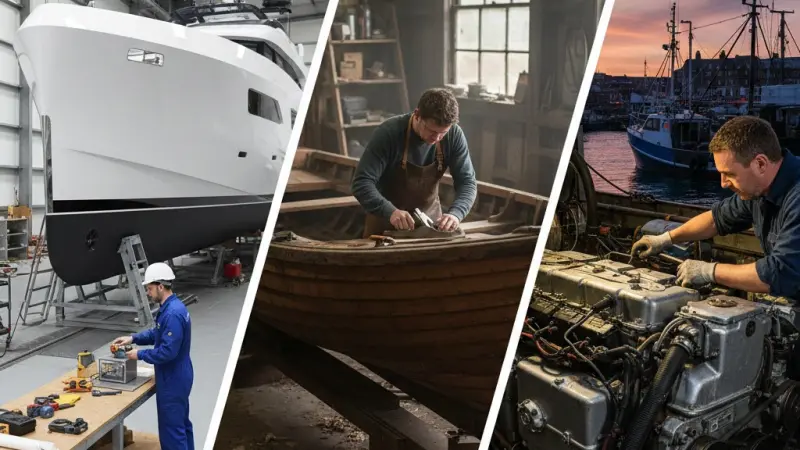
The British maritime tradition is not merely a chapter of history; it is a living, breathing powerhouse of modern engineering and craftsmanship. The boatbuilding and repairers sector in the United Kingdom represents a cornerstone of the nation’s blue economy, blending centuries-old artisanal skills with cutting-edge aerospace-grade technology. From the historic dockyards of Portsmouth to the innovative hubs in Norfolk and the Solent, the industry supports thousands of high-skilled jobs and contributes billions to the national GDP.

The UK’s geographic position as an island nation has naturally fostered a robust ecosystem of maritime professionals. Today, this sector is highly diverse, encompassing the construction of luxury superyachts, bespoke wooden riverboats, high-performance racing dinghies, and essential commercial vessels. Parallel to the builders are the repairers—the unsung heroes who ensure the longevity and safety of the UK's fleet. Whether it is routine anti-fouling, complex structural osmosis treatment, or modernising an antique schooner with electric propulsion, the technical proficiency of UK workshops is globally renowned.
As we navigate a post-Brexit and post-pandemic landscape, the importance of domestic manufacturing and local service provision has surged. For yacht owners and commercial operators alike, finding a reliable specialist is paramount. Navigating this niche market requires access to an authoritative uk online business directory that can bridge the gap between skilled craftsmen and the clients who require their expertise. In this guide, we explore the intricate landscape of the UK boatbuilding industry, the breadth of services available, and the future of maritime excellence on British shores.
The Landscape of Boatbuilders & Repairers in the UK
The current market for boatbuilding and repair in Britain is characterised by a unique "barbell" structure. At one end, we have the global giants—the luxury marques that export 90% of their output to international markets. At the other end, a vibrant community of small-to-medium enterprises (SMEs) and sole traders focus on custom commissions, restoration, and local maintenance. Recent data suggests that the UK leisure, superyacht, and small commercial marine industry has reached a turnover exceeding £4 billion, with the "maintenance and repair" sub-sector showing remarkable resilience during economic fluctuations.
Geographically, the South East and South West of England remain the epicentres of activity. The Solent, often dubbed the "Silicon Valley of Sailing," hosts a dense concentration of naval architects, riggers, and composite specialists. However, regional growth is also evident in the North West and Scotland, where commercial fishing support and renewable energy vessel maintenance are booming. Post-pandemic, the industry saw a significant "staycation" effect; with international travel restricted, many UK residents turned to local waterways, leading to a surge in second-hand boat sales and a subsequent massive demand for refit and repair services.
This evolution has transformed the industry from a traditional "word-of-mouth" trade into a digitally-driven marketplace. Modern boatyards are no longer just sheds on the water; they are sophisticated businesses requiring high-level management and marketing. To stay competitive, many of these specialists ensure they are featured in a uk business directory to maintain a steady stream of inquiries from the growing number of new boat owners who rely on digital search to find trusted services.
Comprehensive Services Breakdown
The sheer variety of services offered within the UK maritime niche is staggering. To understand the directory landscape, one must look at the specific technical specialisms that define the trade:
Custom New Builds
This is the pinnacle of the craft. Custom builders work with diverse materials, from traditional larch-on-oak for classic replicas to infusion-moulded carbon fibre for competitive offshore racing. The process involves a collaborative journey between the naval architect, the builder, and the client.
Composite and GRP Repairs
Glass Reinforced Plastic (GRP) remains the most common material for modern hulls. Specialists in this field handle everything from minor gelcoat chips to major structural repairs following a collision. High-end workshops now utilise vacuum bagging and pre-preg carbon techniques to ensure repairs are stronger and lighter than the original layup.
Engineering and Propulsion
Marine engines operate in one of the harshest environments on earth. Specialist engineers offer services ranging from routine oil changes and winterisation to full engine swaps and the increasingly popular conversion to hybrid or fully electric drivetrains.
Interior Refit and Joinery
Often referred to as "cabinetry on water," marine joinery requires an understanding of how wood behaves in high-humidity environments. Top-tier refit yards provide bespoke interior design, replacing outdated teak with sustainable alternatives or modern synthetic finishes.
For businesses offering these highly specific skills, visibility is key to survival. Listing on a business listing uk allows even the smallest workshop to showcase its niche expertise
to a national audience, ensuring that a canal boat owner in the Midlands can find a specialist welder or a bespoke sailmaker with ease.
How to Choose the Right Service Provider
Selecting a boatbuilder or repairer is a high-stakes decision. Unlike a standard car repair, maritime work involves complex safety regulations and significant financial investment. Consumers are advised to follow a strict vetting process:
Accreditations: Look for membership in trade bodies like British Marine. This indicates a commitment to a code of conduct and professional standards.
Portfolio of Work: A reputable builder will have a documented history of previous projects. Ask for photos of "work in progress" to see the quality of the structural elements, not just the finished paintwork.
Insurance: Ensure the yard has comprehensive Ship Repairers' Liability (SRL) insurance. This protects your asset while it is in their care.
Local Reputation: While digital presence is vital, the "pontoon telegraph" still carries weight. Cross-reference digital reviews found on local business listings uk with local feedback from yacht club members.
Verifying a business's credentials has become significantly easier thanks to platforms that provide uk verified business listings. These directories act as a first line of defence for the consumer, filtering for legitimate, established businesses that take their reputation seriously.
Industry Challenges & Future Outlook
The UK boatbuilding sector is currently at a crossroads, facing both significant challenges and unprecedented opportunities. The primary challenge is the "skills gap." As a generation of master shipwrights approaches retirement, the industry is racing to train apprentices in both traditional skills and modern composite technology.
Sustainability is the second major driver of change. The "Green Blue" initiative and tightening regulations on emissions are forcing a shift toward sustainable materials, such as flax fibres and bio-resins, and the adoption of "end-of-life" recycling programs for GRP hulls. Furthermore, the UK government's maritime 2050 strategy places a heavy emphasis on decarbonisation, which is creating a massive market for retrofitting existing vessels with cleaner technology.
To adapt, businesses must be agile. Many small yards are finding that they need to pivot their service offerings to include "eco-audits" and electric conversion. Marketing these new services requires reaching a broader, more environmentally conscious demographic. Utilising a business listing uk can help these innovative firms highlight their green credentials to a market that is increasingly searching for "sustainable boat repair" or "electric marine propulsion specialists."
Business Tips for Boatbuilders & Repairers Professionals
In the modern economy, technical brilliance is only half the battle; the other half is visibility. Many of the UK’s finest boatbuilders are "hidden gems" located in remote coastal villages. Without a strong digital footprint, these businesses risk losing out to larger, more visible competitors.
Local SEO and Digital Presence
For a boat repairer, "local" is often defined by the coastline. Ensuring that your business appears when a user searches for "marine welder near me" is crucial.
This involves optimizing your Google Business Profile and, more importantly, ensuring consistent citations across authoritative platforms. A uk local trades directory is an essential tool for this, providing the "NAP" (Name, Address, Phone number) consistency that search engines crave.
Content Marketing
Documenting a restoration project through video or photography not only proves your skill but also engages potential clients. Share these updates on social media and link back to your profile on a uk professional services listings page to build authority.
Networking and Partnerships
Collaborating with local marinas, yacht brokers, and insurance surveyors can provide a steady stream of referrals. However, ensure these partners can easily find your contact details and a summary of your services on a reputable uk b2b business directory.
Wrapping Up & Local Page Integration
The UK boatbuilding and repair industry remains a beacon of British industrial pride. It is an industry built on the pillars of quality, innovation, and a profound respect for the sea. Whether we are discussing the luxury yacht builders of the south or the artisan restorers of the north, the common thread is a commitment to excellence.
However, in an increasingly crowded digital landscape, even the most talented craftsman needs a platform to be heard. For the consumer, the challenge is no longer a lack of service providers, but the difficulty in identifying the right one. This is where Local Page UK steps in as the definitive solution. By centralizing the UK’s maritime talent into a searchable, verified, and user-friendly platform, it serves both the business owner looking for growth and the boat owner looking for reliability.
As the industry continues to evolve toward a greener, more tech-driven future, the connection between local expertise and digital discoverability will only become more vital. By ensuring your business is represented on the premier uk business directory website, you are not just listing a service; you are claiming your place in Britain’s prestigious maritime future.
Boost Your Visibility with Local Page UK
In the competitive world of maritime services, staying under the radar is a recipe for stagnation. Whether you specialize in bespoke wooden hulls, modern composite repair, or marine engineering, your customers are looking for you online. Local Page UK provides the bridge you need.
By claiming your business listing uk, you instantly increase your digital footprint, improve your local SEO, and place your business in front of boat owners and industry professionals actively seeking your expertise. Don't let your craftsmanship go unnoticed—join the UK's most trusted directory today.
FAQ
1. What are the most common materials used by UK boatbuilders today?
While traditional timber is still used for classic restorations and bespoke river craft, the majority of modern UK boatbuilding utilizes Glass Reinforced Plastic (GRP) or "fibreglass." For high-performance racing yachts and luxury superyachts, advanced composites like carbon fibre and Kevlar are preferred due to their incredible strength-to-weight ratio. Aluminum is also popular for commercial workboats and "expedition" style yachts due to its durability and ease of repair in remote areas.
2. How much does a custom boat build typically cost in the UK?
The cost of a custom build varies wildly depending on the size, material, and level of fit-out. A small, high-quality wooden rowing boat might start from £5,000, while a bespoke 40-foot sailing yacht can easily exceed £500,000.
Superyacht projects are in the tens of millions. It is important to remember that with a custom build, you are paying for naval architecture, specialized labour, and premium materials, all tailored to your specific requirements.
3. How do I verify if a boat repairer is qualified?
Check for memberships in professional organizations such as British Marine or the Yacht Brokers, Designers and Surveyors Association (YBDSA). Look for specific manufacturer certifications if you have a certain engine brand (e.g., Volvo Penta or Yanmar). Additionally, verify their insurance coverage and check their reputation on a verified directory to ensure they have a history of satisfied clients.
4. What is osmosis in GRP boats and can it be repaired?
Osmosis, often called "hull blisters," occurs when water penetrates the gelcoat and reacts with the resin inside the laminate. While it sounds daunting, it is a common issue in older GRP boats. Specialists can treat it by stripping the gelcoat, drying out the hull in a controlled environment, and applying new epoxy coatings. If caught early, it is entirely repairable and does not necessarily compromise the structural integrity of the vessel.
5. Why is a local business directory important for maritime services?
Maritime services are inherently local; you need a repairer who is near your mooring or shipyard. Using Localpage allows boat owners to find specialized skills within a specific geographic radius. For the business, it ensures that their services are visible to the exact demographic that can actually use them, rather than wasting marketing efforts on a global audience that cannot bring their boats to the yard.
6. Can I convert my existing diesel boat to electric propulsion?
Yes, "re-powering" is a growing trend in the UK. Many specialists now offer kits to replace diesel engines with electric motors and lithium battery banks. This is particularly popular for inland waterway craft and day boats. However, it requires a significant specialist knowledge of marine electrical systems and weight distribution, so it should always be handled by a professional marine engineer.
7. What is the "staycation effect" on the UK boating industry?
During and after the pandemic, the inability to travel abroad led to a massive increase in people buying boats for use in the UK. This resulted in a shortage of moorings and a huge backlog for repair yards. While the initial surge has levelled off, it has left a lasting legacy of a larger, more active domestic boating community, which continues to drive demand for maintenance and refit services.
8. What insurance do I need while my boat is being repaired?
While the repair yard should have their own liability insurance, you should notify your marine insurance provider that the vessel is "undergoing major works." Some policies have specific clauses regarding hot work (welding) or when the boat is "ashore." Always ensure there is a clear agreement on who is responsible for the vessel at each stage of the repair process.
9. How often should a boat be taken out of the water for maintenance?
For most GRP boats in salt water, an annual "haul-out" is recommended. This allows for the hull to be pressure washed, the anti-fouling paint to be refreshed, and the sacrificial anodes (which prevent corrosion) to be replaced. It is also the only time to properly inspect the sterndrive, propellers, and through-hull fittings for wear or damage.
10. Are there specific regulations for boatbuilders in the UK?
Yes, all recreational craft placed on the UK market must comply with the Recreational Craft Regulations (RCR), which replaced the EU's RCD post-Brexit. This ensures the boat meets essential safety, environmental, and construction standards. Builders must provide a Declaration of Conformity and a UKCA mark to prove the vessel is legal to sell and use in UK waters.
11. What is the difference between a shipwright and a boatbuilder?
Traditionally, a shipwright worked on large, commercial or naval ships, often in timber. A boatbuilder typically works on smaller, recreational vessels. However, in modern parlance, the terms are often used interchangeably to describe any highly skilled professional involved in the structural construction or repair of watercraft.
12. Can I find traditional wooden boat specialists in the UK?
Absolutely. The UK has some of the finest wooden boat specialists in the world, particularly in areas like the Norfolk Broads, the Thames, and the Cornish coast. These craftsmen use techniques passed down through generations, often combined with modern epoxy bonding to create wooden boats that are easier to maintain than their ancestors.
13. What are the benefits of buying a UK-built boat?
Buying British often means easier access to the factory for progress inspections, lower transport costs, and a better understanding of the conditions the boat will face (such as North Sea chop). Furthermore, the UK has some of the strictest quality control standards in the world, meaning a "Made in Britain" hull often holds its value better on the second-hand market.
14. How do I market my boat repair business on a budget?
The most cost-effective way is to focus on local SEO. Claiming a free listing on an authoritative directory, encouraging happy customers to leave reviews, and posting regular photos of your work
on social media can generate significant leads without a large advertising spend. Word of mouth is powerful, but a digital presence validates that word of mouth.
15. Where can I find a comprehensive list of UK boatbuilders?
The most efficient way to find a wide range of professionals is to use a dedicated platform like Local page. This allows you to filter by service type and location, ensuring you find a provider that matches your specific needs and budget, backed by the transparency of a professional directory environment.

Disclaimer: The information provided in this article is for general informational and research purposes only. Company details, features, services, and market positions may change over time. Readers are advised to visit official company websites and conduct independent research before making any business decisions or purchasing services.
Most Searchable Keywords

Recent Blogs



Related Listings

Categories
- Accountants (295)
- Advertising Agencies (559)
- Architects (149)
- Automobiles (377)
- Beauty (300)
- Carpenters (146)
- Cleaning Services (386)
- Dentists (189)
- Driving (62)
- Electricians (215)
- Energy (8)
- Event Organiser (685)
- Finance (599)
- Guide (3365)
- Health (2207)
- Information technology (206)
- Legal Services (353)
- Logistics (6)
- Maintenance (65)
- Manufacturing (35)

Sponsored Listings in Locksmith Services


Related Blogs

Gen Z Political Reporters and News Creators i...
Read this insightful article "Gen Z Political Reporters and News Creators in the UK" to expand your knowledge!

Famous Female Social Media Influencers Across...
Read this insightful article "Famous Female Social Media Influencers Across the UK" to expand your knowledge!

Your UK Sponsor Licence 2026 Step by Step Gui...
Read this insightful article "Your UK Sponsor Licence 2026 Step by Step Guide" to expand your knowledge!
Questions & Answers – Find What
You Need, Instantly!
How can I update my business listing?
Is it free to manage my business listing?
How long does it take for my updates to reflect?
Why is it important to keep my listing updated?
