
BOI Reporting What Every Business Owner Must Know
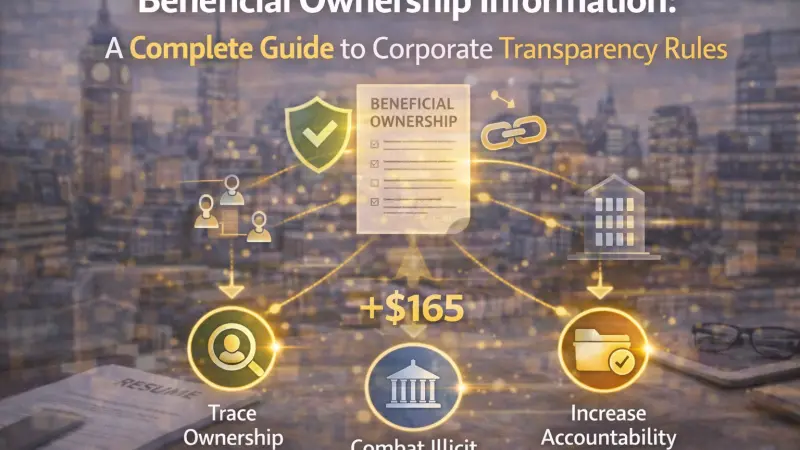
If you run a business, you've likely heard about the new requirements around beneficial ownership information reporting. These rules are reshaping how companies disclose who truly controls them — and understanding them is no longer optional. Whether you're a small business owner, an attorney, or a compliance professional, this guide walks you through everything you need to know, from the basics to best practices.

Why Corporate Transparency Matters Now
For decades, shell companies and anonymous business structures made it easy for bad actors to hide money, evade taxes, and commit fraud. The Financial Crimes Enforcement Network (FinCEN) estimates that illicit financial activity costs the U.S. economy hundreds of billions of dollars annually.
In response, the U.S. Congress passed the Corporate Transparency Act (CTA) in 2021, laying the groundwork for a national beneficial ownership registry. According to FinCEN, approximately 32.6 million existing businesses were expected to file BOI reports under the initial rollout — a massive compliance undertaking for American businesses.
The goal is simple: make it harder for criminals to hide behind legal entities and easier for law enforcement to follow the money.
What Is Beneficial Ownership Information?
Beneficial ownership information refers to details about the real individuals who own or control a company. A "beneficial owner" is any person who:
- Exercises substantial control over a reporting company, or
- Owns or controls at least 25 percent of the company's ownership interests
This goes beyond who is listed on paper. Even someone who isn't a named officer or director could qualify as a beneficial owner if they're calling the shots behind the scenes.
Each beneficial owner must be identified with:
- Full legal name
- Date of birth
- Current residential address
- A unique identifying number from an acceptable document (like a passport or driver's license)
- An image of that identifying document
Who Must File a BOI Report?
Under the Corporate Transparency Act, "reporting companies" are required to file. These generally include:
- Domestic corporations
- Limited liability companies (LLCs)
- Any entity created by filing a document with a state or tribal authority
However, there are 23 categories of exemptions. Large operating companies (those with more than 20 full-time employees, over $5 million in annual revenue, and a physical U.S. office) are exempt. So are regulated entities like banks, credit unions, insurance companies, and publicly traded corporations.
A key stat to keep in mind: more than 90 percent of entities expected to file are small businesses with fewer than five employees. That means the burden falls disproportionately on America's smallest companies.
The Role of FinCEN and the National Registry
FinCEN, a bureau of the U.S. Department of the Treasury, maintains the Beneficial Ownership Secure System (BOSS) — the database where all BOI reports are stored. This is not a public database. Access is restricted to:
- Federal, state, local, and tribal law enforcement agencies
- Financial institutions (with consent from the reporting company)
- Federal regulatory agencies
- Foreign law enforcement (under certain treaty conditions)
This restricted access is important. It means that while your information is being collected for government oversight, it won't show up in public records or search engines.
Filing Deadlines You Need to Know
Missing a BOI deadline can lead to serious penalties. Here's the breakdown:
- Companies formed before January 1, 2024: Were originally required to file by January 1, 2025
- Companies formed in 2024: Had 90 days from formation to file
- Companies formed after January 1, 2025: Have 30 days from formation to file
It's worth noting that FinCEN has updated deadlines and guidance multiple times due to litigation. In early 2025, federal courts temporarily blocked enforcement of the CTA before the Supreme Court lifted the injunction.
As of mid-2025, reporting requirements were reinstated for most entities, but businesses should always check the latest FinCEN guidance because the regulatory environment around BOI reporting has been unusually fluid.
What Happens If You Don't File?
Non-compliance carries stiff penalties. Under the CTA:
- Civil penalties can reach $591 per day for willful non-compliance (adjusted for inflation)
- Criminal penalties can include fines up to $10,000 and imprisonment for up to two years
Willful failure to report, willfully filing false information, and unauthorized disclosure of BOI are all separate violations — each carrying their own penalties.
A recent FinCEN advisory noted that the agency would focus early enforcement on willful violators rather than businesses making good-faith compliance efforts, but that doesn't mean procrastination is safe.
How to File a BOI Report: Step-by-Step
Filing isn't complicated if you're prepared. Here's a straightforward process:
- Determine if your company is a reporting company. Review the 23 exemptions carefully. If you're unsure, consult a legal professional.
- Identify all beneficial owners. Look at your ownership structure. Anyone with 25 percent or more ownership interest or substantial control must be included.
- Gather required information. Collect full legal names, dates of birth, current addresses, and government-issued ID numbers for each beneficial owner.
- Determine if a company applicant must be reported. Companies formed on or after January 1, 2024 must also report the individuals who filed the formation documents.
- Submit through FinCEN's BOSS system. Filing is free and done through FinCEN's online portal at fincen.gov.
- Update your report when information changes. Any change to beneficial ownership information must be reported within 30 days of the change.
Common Mistakes Businesses Make
Even well-intentioned businesses trip up on BOI reporting. Here are the most frequent errors:
Misidentifying beneficial owners. Many companies only report named officers or directors and miss indirect owners or those with informal control.
Ignoring the company applicant requirement. If your company was formed after January 1, 2024, you must also report the person who filed your formation documents — even if they're a third-party attorney or service provider.
Failing to update reports. BOI isn't a one-time filing. Any change — new owner, address change, change in controlling interest — triggers a 30-day update requirement.
Assuming exemption applies. Some businesses assume they're exempt without fully checking the criteria. Partial compliance isn't compliance.
Special Situations and Edge Cases
Some scenarios require extra attention:
Trusts: Beneficial ownership through a trust is complex. Trustees, beneficiaries with substantial control, and grantors may all need to be reported depending on the structure.
Minors: If a minor is a beneficial owner, a parent or guardian's information may be reported instead, until the minor reaches adulthood.
Foreign companies: Foreign entities registered to do business in the U.S. are also reporting companies and must comply.
Multi-layered ownership structures: When ownership runs through holding companies or layers of LLCs, you
must trace through to the actual human beings at the top.
Benefits of the BOI Reporting System
While compliance has costs, the broader system offers real advantages for legitimate businesses and the economy:
- Levels the playing field. Businesses that have always operated transparently benefit when anonymous competitors can no longer hide behind shell companies.
- Reduces fraud risk. Financial institutions with access to BOI data can conduct faster, more accurate due diligence.
- Builds trust. Customers, partners, and investors increasingly value transparency. A company that voluntarily maintains clean ownership records signals integrity.
- Supports global compliance. Many international jurisdictions now require similar disclosures. U.S. alignment reduces friction for companies doing business abroad.
According to the Global Financial Integrity organization, trade-based money laundering alone costs the global economy between $800 billion and $2 trillion annually. BOI registries are one of the most effective tools to combat this.
Practical Tips for Staying Compliant
Here are actionable steps to make BOI compliance easier:
- Create a compliance calendar. Set reminders for initial filing deadlines and 30-day update windows.
- Designate a compliance officer. Even a small business benefits from having one person responsible for tracking beneficial ownership changes.
- Maintain an internal ownership ledger. Keep a current, organized record of all owners and their information.
- Consult a professional for complex structures. Attorneys and CPAs familiar with the CTA can save you from costly errors.
- Monitor FinCEN updates. Given the litigation history around the CTA, regulations can shift. Stay subscribed to FinCEN news.
Future Trends in Beneficial Ownership Reporting
Beneficial ownership transparency is a global trend, not just a U.S. phenomenon. The EU's Anti-Money Laundering Directives (AML5 and AML6) require member states to maintain publicly accessible ownership registries. The UK's Companies House already publishes beneficial ownership data.
In the U.S., expect FinCEN to expand access to the BOSS system over time and potentially increase the scope of what's reportable. There's also growing congressional interest in making portions of the registry searchable by the public — a significant shift from the current model.
Technology will also play a bigger role. Automated compliance platforms are emerging that connect directly to corporate formation data and alert businesses to required BOI updates in real time.
Small businesses that build transparent ownership practices now will be far better positioned as reporting requirements likely expand and tighten in coming years.
Beneficial ownership information reporting is one of the most significant compliance developments for U.S. businesses in recent decades. The Corporate Transparency Act requires millions of companies to disclose their real human owners to FinCEN, with penalties for non-compliance reaching thousands of dollars per day. Understanding who qualifies as a beneficial owner, what information must be reported, and how to stay current with updates is essential for any business operating in today's regulatory environment. The system exists to fight financial crime, and for legitimate businesses, compliance is both a legal obligation and a competitive advantage.
Things People Want to Know
1. What is beneficial ownership information reporting? It is the process of disclosing to FinCEN the real individuals who own or control a company. The Corporate Transparency Act mandates this for most U.S. business entities to combat money laundering and financial fraud.
2. Who qualifies as a beneficial owner? Anyone who owns at least 25 percent of a company's interests or exercises substantial control over the company qualifies.
This includes senior officers like CEOs and CFOs, even if they hold no ownership stake.
3. What companies are exempt from BOI reporting? There are 23 exemption categories, including large operating companies, publicly traded corporations, banks, credit unions, insurance companies, and certain regulated entities. Each exemption has specific criteria.
4. Is filing a BOI report free? Yes. Filing through FinCEN's BOSS online system is completely free of charge. Third-party services may charge fees, but the government filing itself costs nothing.
5. How often do I need to update my BOI report? Any change to your beneficial ownership information must be reported within 30 days. This includes changes in ownership, addresses, or identification documents.
6. What are the penalties for not filing? Willful non-compliance can result in civil penalties of up to $591 per day, criminal fines up to $10,000, and up to two years in prison. Each violation is treated separately.
7. What is a company applicant? A company applicant is the person who filed the documents to create or register your company. Businesses formed on or after January 1, 2024 must also report this individual's information.
8. Is the BOI registry public? No. The FinCEN beneficial ownership database is not publicly accessible. Access is restricted to law enforcement, financial institutions (with consent), and certain regulatory agencies.
9. Can a minor be listed as a beneficial owner? Yes, but a parent or legal guardian's information may be reported in place of the minor's until they reach adulthood.
10. What if my company's structure involves a trust? Trust structures are complex under BOI rules. Trustees, beneficial owners with control, and grantors may all need to be identified. It's advisable to consult a legal professional.
11. Do foreign companies need to file? Yes. Foreign entities that are registered to do business in the U.S. are also considered reporting companies and must comply with BOI requirements.
12. What identification documents are acceptable? Acceptable documents include a U.S. passport, state driver's license, other state-issued ID, or a foreign passport. An image of the document must also be submitted.
13. What is FinCEN's BOSS system? The Beneficial Ownership Secure System (BOSS) is FinCEN's secure online database where all BOI reports are submitted and stored. It is accessed through fincen.gov.
14. Can I file on behalf of my business myself? Yes. Business owners can file directly through the FinCEN portal without needing an attorney or accountant, though professional help is recommended for complex ownership structures.
15. What happens if the rules change after I file? FinCEN issues updated guidance when rules change. If a regulatory update affects your obligations, you may need to amend your filing. Monitoring FinCEN communications regularly ensures you stay current.
Beneficial ownership information reporting is no longer a future concern — it's a present-day requirement with real financial and legal consequences. The Corporate Transparency Act has fundamentally changed how U.S. businesses must think about transparency, and the clock is ticking for millions of entities that still need to come into compliance.
The good news is that compliance doesn't have to be overwhelming. With the right information, a clear process, and up-to-date guidance, any business can meet its reporting obligations confidently.
Start by reviewing your ownership structure, identifying your beneficial owners, and filing through FinCEN's secure portal. Then build a system to monitor and report future changes.
Corporate transparency isn't just about following the law — it's about building a business others can trust. Take the time to get it right, and your business will be better positioned for whatever regulatory developments come next.

Disclaimer: The information provided in this article is for general informational and research purposes only. Company details, features, services, and market positions may change over time. Readers are advised to visit official company websites and conduct independent research before making any business decisions or purchasing services.
Most Searchable Keywords
Recent Blogs



Related Listings


Categories
- Accountants (295)
- Advertising Agencies (559)
- Architects (149)
- Automobiles (377)
- Beauty (300)
- Carpenters (146)
- Cleaning Services (386)
- Dentists (189)
- Driving (62)
- Electricians (215)
- Energy (8)
- Event Organiser (685)
- Finance (599)
- Guide (3365)
- Health (2207)
- Information technology (206)
- Legal Services (353)
- Logistics (6)
- Maintenance (65)
- Manufacturing (35)

Sponsored Listings in Locksmith Services


Related Blogs

Gen Z Political Reporters and News Creators i...
Read this insightful article "Gen Z Political Reporters and News Creators in the UK" to expand your knowledge!

Famous Female Social Media Influencers Across...
Read this insightful article "Famous Female Social Media Influencers Across the UK" to expand your knowledge!

Your UK Sponsor Licence 2026 Step by Step Gui...
Read this insightful article "Your UK Sponsor Licence 2026 Step by Step Guide" to expand your knowledge!
Questions & Answers – Find What
You Need, Instantly!
How can I update my business listing?
Is it free to manage my business listing?
How long does it take for my updates to reflect?
Why is it important to keep my listing updated?
