
Boiler Manufacturers UK: Efficiency Ratings, Fuels & Installation Specs
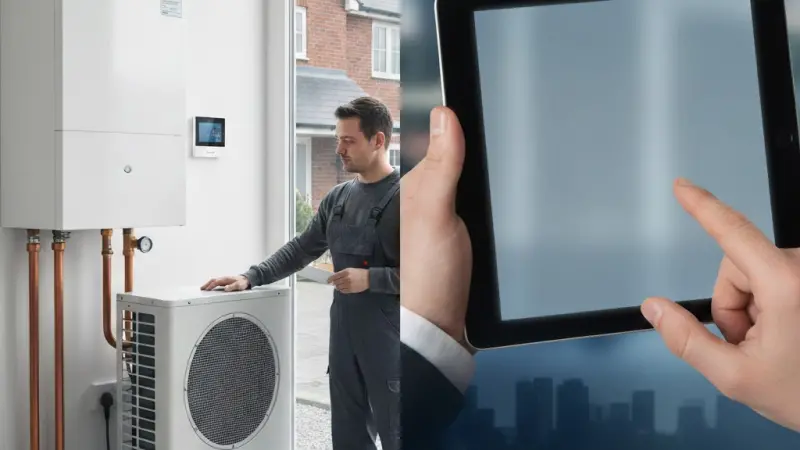
The boiler manufacturing sector is a cornerstone of the United Kingdom’s industrial heritage and a vital component of its modern infrastructure. As a nation where approximately 90% of the 28 million domestic properties rely on central heating systems, the demand for high-performance, reliable, and energy-efficient boilers remains incredibly high. This sector does not merely provide warmth; it is a significant driver of economic stability, employing thousands of skilled engineers, researchers, and factory workers across the country.

From a business perspective, the industry is currently navigating one of its most transformative periods. The UK government’s legal commitment to achieving Net Zero by 2050 has placed boiler manufacturers at the forefront of the "Green Industrial Revolution." Consequently, the sector's importance has shifted from purely mechanical manufacturing to high-tech innovation. Today’s manufacturers are tasked with balancing the immediate need for affordable gas heating with the urgent requirement for low-carbon alternatives.
For professionals operating in this space, visibility within a uk online business directory has become essential. As the industry becomes more technical, consumers are looking for verified expertise. Whether it is a traditional combi boiler installation or the integration of a hybrid heat pump system, the reputation of the manufacturer and the installer is paramount. This guide provides a comprehensive overview of the current landscape, the technical benchmarks of modern boilers, and the strategic business moves required to thrive in this competitive British market.
The Landscape of Boiler Mnfrs in the UK
The UK boiler market is one of the largest in Europe, with annual domestic sales often exceeding 1.7 million units. Historically, the industry has been dominated by a "Big Four" – Worcester Bosch, Vaillant, Ideal, and Baxi – who collectively hold a substantial share of the residential market. However, the landscape has evolved significantly post-pandemic. The COVID-19 era initially saw a slump in installations due to lockdown restrictions, but this was followed by a massive "home improvement" boom as residents invested in long-term property efficiency.
Geographically, the heart of UK boiler manufacturing remains concentrated in the Midlands and the North of England. Worcester Bosch operates extensively in Worcester and Derbyshire, while Ideal Boilers has been a staple of Hull’s industrial landscape for over a century. These regions serve as hubs for research and development, particularly in the race to develop "Hydrogen Ready" boilers. Post-pandemic, the industry has seen a shift toward more resilient supply chains, with many manufacturers moving away from "just-in-time" delivery models to larger UK-based stockholdings to prevent the delays experienced in 2021.
As the market decentralises and digital-first consumers become the norm, a presence in a uk local business directory is no longer optional for local installers and regional manufacturers. The evolution of the industry is also reflected in the growth of the commercial sector. Industrial boilers for hospitals, schools, and large-scale residential blocks are seeing a CAGR of approximately 10.7%, driven by the need to replace ageing, inefficient plant rooms with modular, condensing technology. This shift represents a broader trend: the industry is no longer just selling a product; it is selling "thermal comfort as a service," backed by long-term warranties and digital monitoring.
Comprehensive Services Breakdown
The modern boiler manufacturer offers a sophisticated array of products designed to meet diverse British architectural needs, from Victorian terraces to modern high-rise apartments.
1. Domestic Boilers
Combi Boilers: The most popular choice in the UK, accounting for nearly 80% of sales. They provide heat and hot water directly from the mains without the need for a storage tank.
System Boilers: Ideal for homes with multiple bathrooms, these require a cylinder for storing hot water but have the major heating components built into the boiler itself.
Regular (Heat Only) Boilers: Often found in older properties, these work alongside a separate
hot water cylinder and a cold water storage tank in the loft.
2. Fuel Types and Efficiency Efficiency is the primary metric for modern manufacturers. Under the ErP (Energy-related Products) directive, all new boilers must have a minimum efficiency of 92%. Most premium models from leading brands now achieve 94% to 98% efficiency by utilising condensing technology, which captures heat that would otherwise be lost through the flue. While natural gas remains the dominant fuel, manufacturers are rapidly diversifying. There is a significant push for business listing uk listings among companies specialising in oil-fired boilers for the 4 million UK homes off the gas grid, as well as LPG and biomass solutions.
3. Future-Proofing Services Manufacturers are now offering "Hydrogen-Ready" boilers, capable of running on a 20% hydrogen blend today and being fully converted to 100% hydrogen in the future. Additionally, the rise of hybrid systems—where a gas boiler works in tandem with an air-source heat pump—is becoming a key service offering. These installations require specialised specifications, including weather compensation sensors and advanced OpenTherm controls, ensuring the system operates at the lowest possible flow temperature to maximise the condensing effect.
How to Choose the Right Service Provider
For the British consumer, selecting a boiler is only half the battle; choosing the right service provider for installation and maintenance is equally critical. A poorly installed boiler, regardless of its manufacturer, will never reach its rated efficiency.
Accreditations and Legal Requirements The first port of call for any consumer is ensuring the provider is on the Gas Safe Register. It is illegal for anyone to work on gas appliances in the UK without this accreditation. Furthermore, for those looking at oil boilers, OFTEC registration is the equivalent standard. When searching through uk verified business listings, consumers should look for "Manufacturer Accredited Installers." These are professionals who have undergone specific training by brands like Worcester Bosch or Vaillant, often allowing them to offer extended warranties of up to 12 years.
Reputation and Insurance In the digital age, local reputation is quantified through reviews and case studies. Consumers are advised to check local platforms to find providers with a history of transparent pricing and reliable aftercare. Public liability insurance is a non-negotiable requirement, protecting the homeowner against accidental damage during the installation of heavy components like unvented cylinders or cast-iron radiators. By using a curated uk home services directory, homeowners can filter through verified local tradespeople who have been vetted for quality and compliance, reducing the risk of "cowboy" installations that could void the manufacturer's warranty.
Industry Challenges & Future Outlook
The UK boiler industry is currently at a crossroads. The primary challenge is the "Heat Transition." The government’s Future Homes Standard, set to be implemented in 2025, effectively bans gas boilers in new-build properties. This has forced manufacturers to pivot toward electric heat pumps and heat networks. While this is a positive step for sustainability, the challenge lies in the existing housing stock. Many British homes have "leaky" insulation and small radiators, making them unsuitable for low-temperature heat pumps without significant and expensive upgrades.
Sustainability initiatives are now the core focus of R&D budgets. Manufacturers are looking at the "circular economy," ensuring that boiler components are recyclable and that manufacturing plants in the UK are carbon-neutral. Regulatory changes, such as the Clean Heat Market Mechanism, are placing pressure on manufacturers to sell a certain percentage of heat pumps relative to their boiler sales, a policy that has sparked significant debate within the industry.
To navigate these changes, professionals must stay informed. Many are turning to a business listing uk to find partners in the renewable sector for sub-contracting heat pump installations. The future outlook remains optimistic for those who embrace hybrid technology. The transition will likely be a "multi-technology" approach where hydrogen, electricity, and green gases all play a role in heating the UK’s diverse building stock.
Business Tips for Boiler Mnfrs Professionals
For local heating businesses and boiler specialists, the market is no longer just about who has the best wrench; it’s about who has the best digital footprint. In a world where "near me" searches dominate consumer behaviour, local visibility is the lifeblood of a service business.
1. Digital Presence and Local SEO Your business must appear where the customers are looking. This means having a fully optimised website and, more importantly, being listed in a uk local trades directory.
High-quality images of neat pipework, "before and after" shots of plant room upgrades, and clear explanations of efficiency ratings can set a business apart from competitors who only provide a phone number.
2. Marketing Local Expertise Content marketing is a powerful tool. By writing blog posts about "How to bleed a radiator" or "Understanding ErP ratings," you establish authority. Furthermore, leveraging a uk b2b business directory can help local installers build relationships with property developers and letting agents. The importance of verified reviews cannot be overstated; encouraging happy customers to leave feedback on a reputable platform creates a "social proof" loop that drives organic growth without the high costs of traditional advertising.
Wrapping Up & Local Page Integration
The UK boiler manufacturing industry is a testament to British engineering resilience. As we move toward a greener future, the expertise of these manufacturers and the skill of local installers will be the primary factors in reducing the nation's carbon footprint while keeping homes warm and safe. The transition from fossil fuels to renewables is complex, but it offers a once-in-a-generation opportunity for businesses to lead the way in sustainable home technology.
For any professional in this sector, from a sole-trader Gas Safe engineer to a regional distributor, being part of the digital conversation is essential. Local Page UK offers the premier solution for businesses looking to cement their place in the local market. By joining a comprehensive uk b2c business directory, you ensure that your services are visible to the millions of UK homeowners currently looking to upgrade their heating systems.
Boost Your Visibility with Local Page UK
In the competitive landscape of UK heating and plumbing, staying ahead of the curve means being found exactly when a customer’s boiler breaks down or when a developer plans a new eco-friendly project. Digital visibility is no longer a luxury; it is a fundamental business requirement.
We encourage all boiler manufacturers, installers, and heating specialists to claim their business listing uk on Local Page. Our platform is designed to connect high-quality British service providers with the local communities that need them most. Don't let your expertise go unnoticed—join the UK’s most trusted directory today.
Frequently Asked Questions
1. What is the most efficient type of boiler available in the UK?
The most efficient boilers currently available on the UK market are condensing gas boilers, which typically achieve an ErP (Energy-related Products) rating of 'A'. These systems work by capturing the latent heat from waste exhaust gases that would otherwise escape through the flue. High-end models from manufacturers like Viessmann or Worcester Bosch can reach efficiency levels of up to 98%. This means that for every £1 spent on gas, 98p is converted into usable heat for your home. Transitioning to a high-efficiency model can save the average household between £200 and £300 per year on energy bills compared to an older G-rated non-condensing unit.
2. Will gas boilers be banned in the UK by 2025?
There is a common misconception regarding the "gas boiler ban." From 2025, the Future Homes Standard will prohibit the installation of traditional gas boilers in brand-new build properties to ensure they are "zero-carbon ready." However, there is currently no ban on installing a replacement gas boiler in an existing home. The government originally proposed a phase-out date of 2035 for all fossil-fuel boiler sales in existing homes, though this remains a target rather than a strict ban for many households. For the foreseeable future, gas boilers remain a legal and primary heating solution for the vast majority of the UK's existing housing stock.
3. What does "Hydrogen-Ready" actually mean for a boiler?
A "Hydrogen-Ready" boiler is a gas-fired heating system that can operate on the current natural gas network but is designed to be easily converted to run on 100% hydrogen gas in the future. Currently, most modern boilers are certified to run on a blend of 20% hydrogen and 80% natural gas without any modifications.
A fully "Hydrogen-Ready" model is essentially a future-proofed investment; if the UK gas grid switches to 100% hydrogen to meet net-zero targets, a local engineer can convert these boilers with a simple kit (usually taking about an hour) rather than the homeowner needing to purchase a brand-new heating system.
4. How often should a commercial boiler be serviced compared to a domestic one?
While domestic boilers should be serviced annually to maintain the manufacturer's warranty and ensure safety, commercial boilers often require more frequent inspections due to their complexity and higher usage rates. Depending on the size of the installation and the specific industry regulations (such as those for schools or care homes), a commercial system might require a service every six months. Regular maintenance is vital for identifying issues like scale build-up or burner degradation early, which prevents costly downtime. Commercial providers often list their maintenance packages on a uk business directory to help facility managers find accredited local engineers.
5. What are the benefits of listing my heating business on Localpage?
Listing your business on Localpage provides immediate benefits in terms of local SEO and lead generation. When homeowners search for "boiler repair near me" or "new boiler installation," search engines prioritise businesses that are listed in reputable, high-authority directories. By creating a profile, you can showcase your Gas Safe credentials, display customer reviews, and provide clear contact information. This builds trust before the customer even picks up the phone. In an industry where trust is everything, having a verified presence on a platform dedicated to UK businesses helps you stand out from unverified competitors and ensures you are visible to your local target demographic.
6. What is the difference between a Combi, System, and Regular boiler?
A Combi (combination) boiler provides both heating and hot water directly from the unit, eliminating the need for tanks. A System boiler requires a cylinder to store hot water but has the major pumps and valves built-in, making it suitable for homes with high hot water demand. A Regular (or Heat Only) boiler requires both a hot water cylinder and a cold water storage tank, usually located in the loft. Choosing the right one depends on your property size, the number of bathrooms, and your existing pipework. Manufacturers provide detailed installation specs for each type to ensure they are fitted in the most efficient configuration possible.
7. How long does a typical boiler installation take?
A straightforward "like-for-like" boiler swap, where a new combi boiler replaces an old one in the same location, usually takes one day. However, more complex installations—such as converting from an old regular system with tanks to a modern combi system—can take between two and three days. This is because the engineer must remove old tanks, upgrade the gas pipework (often to a larger 22mm diameter), and flush the entire central heating system to remove sludge. It is always recommended to get a detailed quote from a professional found in a local directory to understand the specific timelines for your home's requirements.
8. What is a Power Flush and do I need one with a new boiler?
A Power Flush is a deep cleaning process that uses high-velocity water and chemicals to remove magnetite (black sludge) and limescale from your radiators and pipework. Most major UK boiler manufacturers, such as Baxi and Ideal, make a system flush a mandatory condition of their warranty. If a new boiler is installed onto an old, dirty system, the sludge can quickly block the new heat exchanger, leading to a breakdown that won't be covered by the manufacturer. While it adds to the initial cost of installation, it ensures your new boiler operates at peak efficiency and protects your long-term investment.
9. Are electric boilers a viable alternative to gas in the UK?
Electric boilers are an excellent solution for small flats or properties where gas is not available and a heat pump isn't feasible. They are 100% efficient at the point of use and require no flue, meaning they can be installed almost anywhere. However, the main drawback is the running cost. In the UK, electricity is currently significantly more expensive per kilowatt-hour (kWh) than natural gas. While an electric boiler is cheaper to install and requires less maintenance, the monthly energy bills will be substantially higher. They are best suited for well-insulated, smaller homes where the total heat demand is relatively low.
10. What is "Boiler Plus" legislation?
Introduced in 2018, Boiler Plus is a set of regulations designed to maximise the energy efficiency of heating systems in England. It mandates that all new gas boiler installations must have a minimum ErP efficiency of 92% and must include time and temperature controls. For combi boilers specifically, installers must also fit one of four additional energy-saving measures: Weather Compensation, Load Compensation, a Flue Gas Heat Recovery system, or a Smart Thermostat with automation and optimisation features. These regulations ensure that the boiler doesn't just work, but works in the most economical way possible for the homeowner.
11. Can I install my own boiler if I am competent at DIY?
No. In the United Kingdom, it is a legal requirement under the Gas Safety (Installation and Use) Regulations 1998 that anyone working on a gas appliance must be Gas Safe registered. Even if you are a competent DIYer, you cannot legally connect a boiler to the gas supply or commission the appliance. Doing so is not only extremely dangerous and can lead to carbon monoxide poisoning or explosions, but it will also void your home insurance and the manufacturer's warranty. Always hire a professional listed in a verified directory to ensure the work is safe, legal, and correctly notified to local building control.
12. What is an LPG boiler and who uses them?
LPG (Liquid Petroleum Gas) boilers are very similar to standard natural gas boilers but are fuelled by gas stored in a bottle or a large tank on the property. These are primarily used by the 4 million homes in the UK that are "off-grid" and not connected to the national gas network. Most modern gas boilers can be converted to LPG with a simple manufacturer-approved conversion kit. While LPG is more expensive than mains gas, it is a cleaner-burning fuel than heating oil and allows homeowners in rural areas to enjoy the benefits of a modern, highly efficient condensing boiler system.
13. Why is my boiler losing pressure?
A drop in boiler pressure usually indicates one of two things: a leak in the system or a fault with the expansion vessel. Even a tiny leak in a radiator valve or a pinhole in a pipe can cause the pressure to drop over several days. If you can't see any visible leaks, the issue might be internal, such as a failing pressure relief valve. Most modern boilers operate between 1.0 and 1.5 bar. If yours consistently drops below 0.5 bar, it will likely shut down for safety. You can find local repair specialists who offer emergency call-outs by searching a uk verified business listings platform.
14. What are the advantages of a Magnetic System Filter?
A magnetic system filter is a small device installed on the return pipework of your boiler. It is designed to catch black iron oxide (sludge) before it can enter the boiler's delicate internal components. As water circulates through your radiators, it can cause internal corrosion; the filter uses a powerful magnet to pull these metallic particles out of the water.
Many manufacturers will extend their warranty by an extra year or two if a magnetic filter is installed alongside the boiler. It is a simple, cost-effective way to maintain system health and ensure the boiler remains efficient for its entire 12-15 year lifespan.
15. How do I find a reliable local boiler engineer?
Finding a reliable engineer involves checking for three main things: legal accreditation, manufacturer training, and genuine local reviews. Start by using a trusted to search for heating engineers in your specific postcode. Check that they are Gas Safe registered and look for badges indicating they are "Accredited Installers" for major brands. Reading recent reviews from other local residents will give you an idea of their punctuality, cleanliness, and transparency regarding costs. Using a structured directory ensures you are dealing with legitimate businesses rather than unverified individuals found on social media, providing peace of mind for such a critical home investment.

Disclaimer: The information provided in this article is for general informational and research purposes only. Company details, features, services, and market positions may change over time. Readers are advised to visit official company websites and conduct independent research before making any business decisions or purchasing services.
Most Searchable Keywords

Recent Blogs



Related Listings


Categories
- Accountants (295)
- Advertising Agencies (559)
- Architects (149)
- Automobiles (377)
- Beauty (300)
- Carpenters (146)
- Cleaning Services (386)
- Dentists (189)
- Driving (62)
- Electricians (215)
- Energy (8)
- Event Organiser (685)
- Finance (599)
- Guide (3365)
- Health (2207)
- Information technology (206)
- Legal Services (353)
- Logistics (6)
- Maintenance (65)
- Manufacturing (35)

Sponsored Listings in Locksmith Services


Related Blogs

Gen Z Political Reporters and News Creators i...
Read this insightful article "Gen Z Political Reporters and News Creators in the UK" to expand your knowledge!

Famous Female Social Media Influencers Across...
Read this insightful article "Famous Female Social Media Influencers Across the UK" to expand your knowledge!

Your UK Sponsor Licence 2026 Step by Step Gui...
Read this insightful article "Your UK Sponsor Licence 2026 Step by Step Guide" to expand your knowledge!
Questions & Answers – Find What
You Need, Instantly!
How can I update my business listing?
Is it free to manage my business listing?
How long does it take for my updates to reflect?
Why is it important to keep my listing updated?
