
Boris Suggests UK Could Be Better Off Outside EU
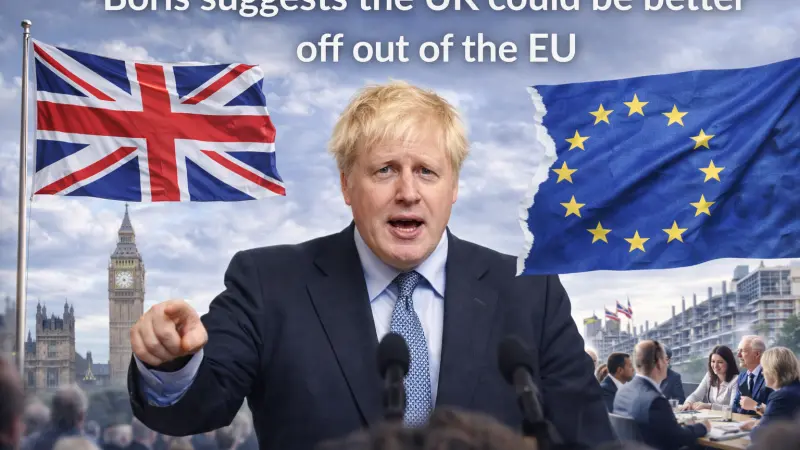
Debate over the UK’s relationship with the European Union continues to shape political and economic discussions years after Brexit. Comments suggesting that the UK could be better off outside the EU have reignited conversations about the long term impact of leaving the bloc.

Supporters argue that independence allows greater control over laws, trade, and regulation, while critics highlight challenges such as trade barriers and economic uncertainty. Understanding these arguments helps businesses and individuals interpret the ongoing debate and its implications.
In this article, we explore the context behind the suggestion that the UK could be better off outside the EU, the arguments on both sides, and what it could mean for the economy and businesses.
Context Behind the Comments
Since the UK formally left the European Union, political leaders and commentators have continued to assess the impact of Brexit. Statements suggesting the UK could be better off outside the EU often focus on sovereignty, regulatory freedom, and trade flexibility.
The discussion reflects ongoing evaluation of whether leaving the EU has delivered expected benefits or created new challenges.
Political perspectives vary widely depending on economic priorities and policy goals.
Understanding context helps interpret the debate.
Arguments Supporting the View
Supporters of the view that the UK could be better off outside the EU often highlight increased control over domestic laws and regulations.
They argue that the UK can tailor policies to suit its own economy without needing approval from EU institutions.
Independent trade agreements with countries around the world are also seen as opportunities to expand global trade.
Supporters believe regulatory flexibility can encourage innovation and investment.
Trade Independence and Global Opportunities
Leaving the EU allows the UK to negotiate its own trade deals, which some argue provides greater flexibility in global markets.
Supporters say this independence can open new opportunities for growth and international partnerships.
Trade diversification may help reduce reliance on regional markets.
Global trade strategy remains a key focus.
Regulatory Freedom
Regulatory independence is often cited as a benefit, allowing the UK to set its own standards and policies.
This flexibility may help industries adapt more quickly to new technologies and market conditions.
Supporters argue that lighter regulation could boost competitiveness.
Policy autonomy is a central argument.
Arguments Highlighting Challenges
Critics argue that leaving the EU has created trade friction, increased costs, and reduced market access for some industries.
They point to economic data showing slower trade growth with EU partners compared to previous years.
Businesses facing additional paperwork and regulatory checks may experience higher operational costs.
Challenges remain part of the ongoing debate.
Impact on Trade With the EU
The EU remains one of the UK’s largest trading partners, so changes in trade relationships can have significant economic effects.
New customs procedures and regulatory differences may create barriers for exporters and importers.
Some sectors have reported increased complexity in cross border trade.
Maintaining strong trade links remains important.
Economic Performance Since Brexit
Economic performance since leaving the EU has been influenced by multiple factors including global economic conditions, inflation, and energy prices.
Some analysts argue that it is difficult to isolate Brexit’s impact from other global challenges.
The debate continues over whether long term benefits will outweigh short term disruptions.
Economic outcomes remain mixed.
Political Reactions
Comments suggesting the UK could be better off outside the EU often generate strong reactions across the political spectrum.
Supporters view them as reaffirming the benefits of Brexit, while critics argue they overlook economic challenges.
Political debate continues to shape public opinion.
Different perspectives reflect broader policy priorities.
Impact on Businesses
Businesses must navigate changes in trade rules, regulations, and market conditions regardless of political debate.
Some companies have adapted by diversifying markets or adjusting supply chains.
Others continue to face challenges related to trade complexity and costs.
Flexibility and planning are important for businesses operating internationally.
Impact on Investment
Investment decisions can be influenced by economic stability and regulatory clarity.
Some investors see opportunities in regulatory flexibility, while others remain cautious due to uncertainty.
Clear policy direction can support investment confidence.
Economic stability remains a key factor.
Public Opinion
Public opinion on Brexit remains divided, with views shaped by economic conditions, political perspectives, and personal experiences.
Ongoing debate reflects the complexity of assessing Brexit’s impact.
Public sentiment continues to evolve.
Understanding perspectives helps inform discussion.
Long Term Outlook
The long term impact of Brexit will likely continue to unfold over many years as policies evolve and economic conditions change.
Future outcomes will depend on trade relationships, domestic policy decisions, and global economic trends.
Adaptability will be important for businesses and policymakers alike.
Long term evaluation remains ongoing.
The suggestion that the UK could be better off outside the EU highlights the ongoing debate about Brexit’s impact on the economy and society. While supporters emphasise sovereignty and global opportunities, critics point to trade challenges and economic uncertainty.
The true long term effects will continue to develop as the UK adapts to its new economic and political landscape.
Understanding both perspectives helps businesses and individuals navigate the changing environment and make informed decisions.
FAQs
1 Why do some say the UK is better off outside the EU Supporters highlight sovereignty, trade independence, and regulatory freedom.
2 What are the main criticisms of Brexit Trade barriers, increased costs, and economic uncertainty are common concerns.
3 Has Brexit affected trade Yes trade rules and procedures have changed, affecting some industries.
4 Can the UK negotiate its own trade deals Yes the UK can independently negotiate global trade agreements.
5 How does Brexit affect businesses Businesses must adapt to new regulations and trade processes.
6 Is the EU still a major trading partner Yes the EU remains one of the UK’s largest trading partners.
7 Has Brexit improved the economy Opinions vary and economic impacts are still being evaluated.
8 What industries are most affected Manufacturing, agriculture, and financial services are often discussed.
9 How does Brexit affect investment Uncertainty and regulatory changes can influence investor confidence.
10 Is public opinion divided Yes views on Brexit remain mixed across the UK.
11 What are the long term effects of Brexit They will depend on policy decisions and global economic conditions.
12 Does Brexit affect regulations Yes the UK now sets many of its own regulations.
13 How can businesses adapt By diversifying markets and staying informed about policy changes.
14 Is the debate about Brexit ongoing Yes political and economic discussions continue.
15 What is the key takeaway Brexit’s impact is complex with both opportunities and challenges.

Disclaimer: The information provided in this article is for general informational and research purposes only. Company details, features, services, and market positions may change over time. Readers are advised to visit official company websites and conduct independent research before making any business decisions or purchasing services.
Most Searchable Keywords

Recent Blogs


Related Listings


Categories
- Accountants (295)
- Advertising Agencies (559)
- Architects (149)
- Automobiles (377)
- Beauty (300)
- Carpenters (146)
- Cleaning Services (386)
- Dentists (189)
- Driving (62)
- Electricians (215)
- Energy (8)
- Event Organiser (685)
- Finance (599)
- Guide (3365)
- Health (2207)
- Information technology (206)
- Legal Services (353)
- Logistics (6)
- Maintenance (65)
- Manufacturing (35)

Sponsored Listings in Locksmith Services


Related Blogs

Gen Z Political Reporters and News Creators i...
Read this insightful article "Gen Z Political Reporters and News Creators in the UK" to expand your knowledge!

Famous Female Social Media Influencers Across...
Read this insightful article "Famous Female Social Media Influencers Across the UK" to expand your knowledge!

Your UK Sponsor Licence 2026 Step by Step Gui...
Read this insightful article "Your UK Sponsor Licence 2026 Step by Step Guide" to expand your knowledge!
Questions & Answers – Find What
You Need, Instantly!
How can I update my business listing?
Is it free to manage my business listing?
How long does it take for my updates to reflect?
Why is it important to keep my listing updated?
