
Bottle Manufacturers UK: Glass vs Plastic, Capacities & Custom Moulding
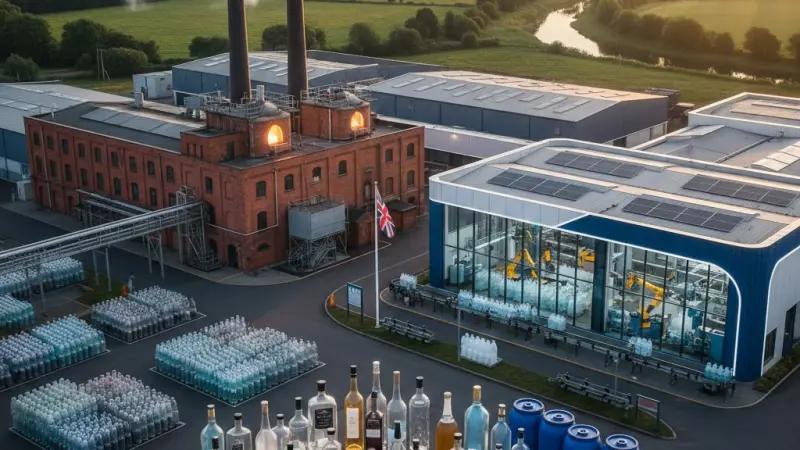
The United Kingdom’s bottle manufacturing and supply sector stands as a silent titan of the national economy, acting as the literal vessel for billions of pounds in retail and industrial trade. From the iconic glass bottles of the Scottish whisky industry to the high-tech, lightweight polymers used in the pharmaceutical hubs of the South East, the industry is a cornerstone of British manufacturing. As of 2024, the packaging sector contributes significantly to the UK's GDP, supporting approximately 120,000 jobs across the supply chain. This sector is not merely about containment; it is about brand identity, consumer safety, and, increasingly, environmental stewardship.

The importance of uk online business directory platforms cannot be overstated when navigating this complex landscape. For businesses ranging from artisanal gin distilleries to multinational soft drink conglomerates, finding a reliable manufacturer is the first step in a long-term strategic partnership. The UK market is unique in its rigorous adherence to safety standards and its rapid pivot toward a circular economy. Whether a business requires a standard 500ml PET bottle for a new health tonic or a bespoke, embossed glass container for a luxury perfume, the British manufacturing base offers unparalleled expertise.
Economically, the sector has shown remarkable resilience. Despite the volatility of energy prices and global supply chain disruptions, UK bottle manufacturers have invested heavily in automation and energy-efficient kilns and extruders. This investment ensures that "Made in Britain" remains a badge of quality and reliability. As we delve into the specifics of materials, capacities, and custom moulding, it becomes clear that the industry is at a pivotal crossroads, balancing centuries-old traditions of glassmaking with the cutting-edge chemistry of sustainable polymers.
The Landscape of Bottle Mnfrs & Suppliers in the UK
The current landscape of bottle manufacturing in the UK is characterized by a mix of massive multinational operations and specialized, agile SMEs. The glass packaging market alone was valued at approximately £2.5 billion in 2023, while the plastic bottle market continues to see robust demand, particularly in the fast-moving consumer goods (FMCG) sector. Geographically, the industry is concentrated in regions with historic manufacturing ties and proximity to distribution hubs. Yorkshire, for instance, remains a heartland for glass production, while the Midlands and the North West host significant clusters of plastic blow-moulding facilities.
Post-pandemic, the industry has undergone a structural evolution. The "just-in-time" delivery models that once dominated have been replaced by a focus on supply chain resilience. Many UK brands that previously looked to overseas suppliers in Eastern Europe or Asia have repatriated their packaging needs to avoid shipping delays and rising freight costs. This "near-shoring" trend has revitalized local factories and increased the demand for a uk business directory that can connect brands with domestic producers quickly.
Moreover, the shift in consumer behavior during the pandemic—marked by a surge in e-commerce and home delivery—has necessitated packaging that is both durable and lightweight. Manufacturers have responded by developing "right-weighted" glass and high-performance recycled plastics (rPET). The industry is also seeing a "premiumization" trend; as consumers drink less but better quality alcohol, the demand for high-end, heavy-base glass bottles has surged. This evolution is supported by a robust network of service providers that can be found via a uk local business directory, ensuring that even small startups can find the right manufacturing scale for their needs.
Comprehensive Services Breakdown: Glass vs Plastic, Capacities & Custom Moulding
Choosing between glass and plastic is the most fundamental decision a brand owner faces. Each material offers distinct advantages and serves specific market niches.
1. Glass Manufacturing: The Premium Standard
Glass remains the gold standard for beverages, particularly in the alcoholic and premium soft drink sectors. It is chemically inert, meaning it does not react with the contents, preserving the flavour and integrity of the product.
Capacities: Standard UK glass production covers everything from 5ml essential oil vials to 3-litre magnum bottles for the sparkling wine industry. The most common capacities remain the 330ml, 500ml, and 750ml formats.
Sustainability: Glass is 100% and infinitely recyclable. UK manufacturers like Encirc and Beatson Clark are leading the world in using recycled cullet (crushed glass) to reduce energy consumption during the melting process.
Service Tip: Businesses looking for high-end glass options often start their search with a business listing uk to identify specialists in "flint" (clear), amber, or green glass.
2. Plastic Manufacturing: Efficiency and Versatility
Plastic bottles, primarily made from PET (Polyethylene Terephthalate) or HDPE (High-Density Polyethylene), dominate the water, carbonated soft drink, and household chemical markets.
Advantages: They are shatterproof, lightweight (reducing transport emissions), and highly versatile in terms of shape.
Capacities: Range from small 30ml travel containers to 25-litre industrial jerry cans.
rPET Revolution: Most UK plastic bottle manufacturers now offer 30%, 50%, or even 100% recycled content to align with the UK Plastic Packaging Tax. Brands can find these eco-conscious suppliers by browsing a business listing uk.
3. Custom Moulding and Tooling
For many brands, a stock bottle isn't enough. Custom moulding allows for unique shapes, embossed logos, and specific neck finishes.
The Process: It begins with CAD (Computer-Aided Design), followed by the creation of a physical mould (tooling). In plastic, this involves injection blow moulding or extrusion blow moulding. In glass, it involves the "blow and blow" or "press and blow" methods.
The Cost: Custom moulding requires a significant upfront investment in tooling, which is why it’s often reserved for high-volume products or luxury goods where the packaging is a primary marketing tool.
How to Choose the Right Service Provider
Selecting a manufacturing partner is a high-stakes decision. A failure in the packaging line can lead to product recalls, financial loss, and brand damage. When vetting a supplier, use the following criteria:
Accreditations: Look for ISO 9001 (Quality Management) and BRCGS (Global Standard for Packaging and Packaging Materials). If you are in the food and drink sector, BRCGS is non-negotiable.
Capacity and Lead Times: Does the manufacturer have the scale to grow with you? Some manufacturers have minimum order quantities (MOQs) of 100,000 units, while others specialize in small-batch "craft" runs.
Sustainability Credentials: Ask for their Environmental Product Declaration (EPD). Modern manufacturers should be able to tell you the carbon footprint of each bottle they produce.
Local Reputation: Reviews and case studies are vital. Using local business listings uk allows you to see how other businesses in your region have fared with a particular supplier.
Insurance: Ensure the manufacturer has robust product liability insurance and can provide certificates of conformity for every batch delivered.
Finding a partner that offers a "full-service" approach—design, moulding, production, and decoration (printing/sleeving)—can significantly simplify your supply chain. Utilizing a uk service listings portal can help you filter for these comprehensive providers.
Industry Challenges & Future Outlook
The UK bottle industry is currently navigating a period of unprecedented regulatory change. The introduction of the Extended Producer Responsibility (pEPR) scheme in 2025 is the most significant shift in a generation. This policy moves the full cost of managing packaging waste from local authorities to the producers themselves. Heavier materials, like glass, may face higher levies, which is driving a new wave of "lightweighting" innovation.
Technology is also playing a massive role. "Smart packaging" is on the horizon, where bottles are embedded with NFC tags or QR codes to provide consumers with traceability data or interactive brand experiences.
In manufacturing plants, AI-driven inspection systems are now capable of detecting microscopic defects in glass or plastic at speeds of 1,000 bottles per minute, virtually eliminating waste.
Sustainability remains the overarching theme. The "Deposit Return Scheme" (DRS), while subject to political delays, remains a goal for the UK government to increase collection rates for plastic and glass bottles. Forward-thinking manufacturers are already listing their green credentials on a business listing uk to attract brands that are under pressure from environmentally conscious consumers. The future will likely see a hybrid model where re-use and refill schemes sit alongside traditional recycling, supported by advanced logistics and tracking.
Business Tips for Bottle Mnfrs & Suppliers Professionals
If you are a professional operating in this space—whether as a manufacturer, a wholesaler, or a specialist decorator—your digital visibility is your most valuable asset. In the B2B world, the "digital handshake" happens long before a physical meeting.
Optimize Your Online Presence: B2B buyers now behave like B2C consumers; they research online. Ensure your business is featured in uk verified business listings to build trust.
Showcase Your Niche: Don't just say you "make bottles." Specify if you specialize in pharmaceutical-grade HDPE, cobalt blue glass, or rapid prototyping for custom moulds.
Content Marketing: Publish white papers on sustainability or videos of your manufacturing process. This establishes you as an authority.
Local SEO: Many buyers prefer to source locally to reduce their carbon footprint. Being prominent in a uk top rated local businesses search for your specific county can lead to high-value inquiries.
Networking: Use industry-specific business directories to find upstream partners (raw material suppliers) and downstream clients (bottling plants).
In an industry where contracts are often worth six or seven figures, being easy to find and verify online is the difference between growth and stagnation.
Wrapping Up & Local Page Integration
The UK bottle manufacturing industry is a testament to British engineering and adaptability. As the world moves toward more sustainable consumption, the sector is leading the way with innovative materials, energy-efficient production, and a commitment to the circular economy. For a brand, the choice of bottle is more than a logistical detail—it is a statement of intent.
To navigate this thriving industry, businesses need reliable data and easy access to the best suppliers. This is where Local Page comes in. As the premier find local businesses uk platform, Local Page provides a comprehensive, verified, and easy-to-navigate ecosystem for UK manufacturers and their clients. Whether you are looking for a niche glassblower in the Cotswolds or a massive PET production facility in the Midlands, our directory simplifies the search process, fostering local growth and national excellence.
Boost Your Visibility with Local Page UK
For professionals in the Bottle Mnfrs & Suppliers sector, digital visibility is no longer optional—it is a requirement for survival. Your potential clients are searching for you right now. By claiming your business listing uk on Local Page, you put your business in front of the people who matter most.
Don't let your competitors take the lead; join the most trusted local businesses list uk today and start building the partnerships that will define your future.
Frequently Asked Questions (FAQs)
1. What are the main differences between PET and HDPE plastic bottles?
PET (Polyethylene Terephthalate) is clear, strong, and has excellent gas barrier properties, making it ideal for carbonated drinks. HDPE (High-Density Polyethylene) is opaque, more rigid, and has better chemical resistance, which is why it is preferred for milk bottles, detergents, and industrial chemicals.
2. Is glass really better for the environment than plastic?
Glass is infinitely recyclable without losing quality, but it is heavier and requires more energy to manufacture and transport. Plastic is lighter and has a lower initial carbon footprint for transport but poses greater challenges in terms of ocean pollution and long-term degradation. Both have a place in a sustainable circular economy.
3. What is the typical lead time for custom bottle moulding in the UK?
For plastic bottles, the design and tooling phase usually takes 6 to 12 weeks. For glass, it can take 12 to 20 weeks due to the complexity of the moulds. Once the tooling is complete, production lead times generally range from 2 to 4 weeks depending on the manufacturer's schedule.
4. What is the minimum order quantity (MOQ) for UK bottle manufacturers?
MOQs vary wildly. Large-scale manufacturers may require 50,000 to 100,000 units per run. However, there are many "small-batch" specialists in the UK who cater to the craft industry with MOQs as low as 1,000 to 5,000 units. You can find these flexible suppliers on Localpage.
5. How does the UK Plastic Packaging Tax affect my business?
The tax applies to plastic packaging produced in or imported into the UK that contains less than 30% recycled plastic. As of April 2024, the rate is £217.85 per tonne. This has incentivized manufacturers to increase the rPET and rHDPE content in their bottles to avoid the levy.
6. Can I get custom colours for my glass bottles?
Yes, glass can be coloured during the melting process (forehearth colouring) or through secondary processes like spraying or acid etching. Common stock colours include flint (clear), amber, and green. Custom colours like cobalt blue or black usually require higher MOQs.
7. What are "right-weighted" or "lightweighted" bottles?
This is a manufacturing technique that reduces the amount of material used in a bottle without compromising its structural integrity. Lightweighted glass bottles can be up to 30% lighter than traditional versions, significantly reducing shipping costs and carbon emissions.
8. What neck finishes are standard in the UK?
Common neck finishes include the PCO 1810/1881 for carbonated drinks, 28mm screw caps for water and juices, and the ROPP (Roll-On Pilfer-Proof) finish for spirits and wine. Always ensure your closure (cap) supplier and bottle manufacturer are using the same technical specifications.
9. Are there UK manufacturers that offer bio-plastic bottles?
Yes, some UK suppliers now offer PLA (Polylactic Acid) or "Bio-PE" made from sugarcane. While these are renewable, it is important to check if they are industrially compostable or if they can be recycled in standard UK waste streams to avoid contaminating the recycling process.
10. How do I verify if a bottle manufacturer is legitimate?
Always check for their BRCGS or ISO certifications. Furthermore, cross-reference their business details on a reputable directory like Local Page to see if they have verified listings and a physical presence in the UK.
11. What is "Embossing" in bottle manufacturing?
Embossing is a process where a logo or pattern is raised on the surface of the bottle during the moulding process. It provides a tactile, premium feel and is a permanent form of branding that cannot be peeled off like a label.
12. Can I use the same mould for both glass and plastic?
No. The manufacturing processes are entirely different. Glass requires metal moulds that can withstand temperatures over 1,000°C, while plastic moulds are designed for lower temperatures and different expansion pressures. Each material requires its own dedicated tooling.
13. Does the UK produce its own glass, or is it all imported?
The UK has a very strong domestic glass manufacturing base, with major plants in Yorkshire, Cheshire, and Scotland. While some specialty glass is imported, the majority of volume glass used in the UK food and beverage sector is produced domestically.
14. What are the benefits of sourcing bottles locally within the UK?
Sourcing locally reduces lead times, lowers your transport-related carbon footprint, and eliminates the risks associated with international shipping and fluctuating exchange rates.
It also makes it easier to visit the factory for quality audits and design meetings.
15. Where is the best place to find a list of UK bottle suppliers?
The most efficient way to find a comprehensive and verified list of UK-based bottle manufacturers and suppliers is to use the Local Page directory, which allows you to filter by location and specific service type.

Disclaimer: The information provided in this article is for general informational and research purposes only. Company details, features, services, and market positions may change over time. Readers are advised to visit official company websites and conduct independent research before making any business decisions or purchasing services.
Most Searchable Keywords

Recent Blogs


Related Listings


Categories
- Accountants (295)
- Advertising Agencies (559)
- Architects (149)
- Automobiles (377)
- Beauty (300)
- Carpenters (146)
- Cleaning Services (386)
- Dentists (189)
- Driving (62)
- Electricians (215)
- Energy (8)
- Event Organiser (685)
- Finance (599)
- Guide (3365)
- Health (2207)
- Information technology (206)
- Legal Services (353)
- Logistics (6)
- Maintenance (65)
- Manufacturing (35)

Sponsored Listings in Locksmith Services


Related Blogs

Gen Z Political Reporters and News Creators i...
Read this insightful article "Gen Z Political Reporters and News Creators in the UK" to expand your knowledge!

Famous Female Social Media Influencers Across...
Read this insightful article "Famous Female Social Media Influencers Across the UK" to expand your knowledge!

Your UK Sponsor Licence 2026 Step by Step Gui...
Read this insightful article "Your UK Sponsor Licence 2026 Step by Step Guide" to expand your knowledge!
Questions & Answers – Find What
You Need, Instantly!
How can I update my business listing?
Is it free to manage my business listing?
How long does it take for my updates to reflect?
Why is it important to keep my listing updated?
