
Bottling Machinery UK: Automation Levels, Speeds & Supplier Evaluation
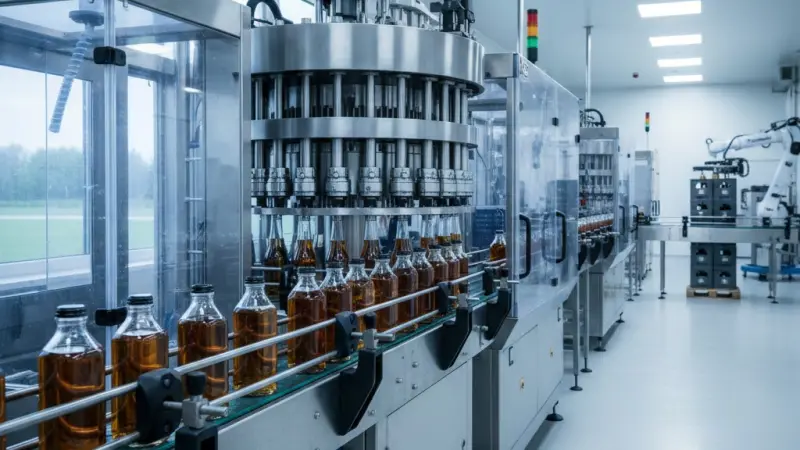
The bottling machinery and equipment sector serves as the backbone of the United Kingdom’s robust food and beverage industry. As a nation that prides itself on its manufacturing heritage, the UK has developed a sophisticated ecosystem of engineers, designers, and consultants dedicated to liquid packaging. This sector’s economic importance cannot be overstated; it facilitates the distribution of everything from artisan gins and craft ales to essential pharmaceuticals and household cleaning agents. In an era where supply chain resilience is paramount, the ability of British manufacturers to access high-quality, locally supported bottling solutions is a strategic advantage.

For any business involved in liquid production, the choice of equipment is a defining factor in profitability and scalability. The UK market is characterized by a blend of long-standing engineering firms and innovative startups, all contributing to a sector that ensures British products reach global markets in pristine condition. Whether it is a small-scale distillery in the Highlands or a high-volume soft drink plant in the Midlands, the reliance on a uk online business directory to find the right technical expertise is a common thread among successful enterprises. This guide explores the intricacies of automation, speed, and the critical criteria for evaluating the suppliers that keep the UK’s liquid economy flowing.
The Landscape of Bottling Machinery & Equipment in the UK
The current landscape of the UK bottling machinery market is one of rapid technological convergence. Post-pandemic, the industry has shifted away from a reliance on overseas turnkey solutions toward a more "near-shored" approach, with UK-based OEMs (Original Equipment Manufacturers) gaining significant ground. Market data suggests that the sector is experiencing a steady compound annual growth rate (CAGR), driven largely by the explosion of the "craft" movement and the necessity for flexible, modular systems that can handle smaller batch runs without sacrificing quality.
Key regions of activity include the traditional industrial heartlands of the West Midlands and Northern England, but a significant cluster of specialists has emerged in the South West, catering specifically to the dairy and cider industries. These regional hubs are supported by a vast network of service providers. To navigate this complex web of manufacturers and maintenance experts, savvy procurement managers often turn to a local page uk business directory to identify nearby partners who can offer rapid response times—a critical factor when a production line goes down. The evolution of the industry has also seen a "digital-first" approach to maintenance, where IoT-enabled machines now provide real-time data to UK-based support centers, ensuring that the legacy of British engineering remains at the cutting edge of global standards.
Comprehensive Services Breakdown
Navigating the world of bottling machinery requires an understanding of the diverse range of equipment and services available. The process is rarely a one-size-fits-all scenario; it is a carefully choreographed sequence of mechanical actions.
Rinsing and Cleaning Systems: Before a single drop is dispensed, bottles must be sanitized. UK suppliers offer everything from simple air-rinse units to complex rotary wet-rinse systems that ensure zero contamination.
Filling Technologies: This is the heart of the line. Options range from gravity fillers for thin liquids to vacuum-assisted fillers for spirits and piston fillers for viscous products like honey or sauces.
Capping and Closing: Whether it is a screw cap, a cork, or a crown, the integrity of the seal is paramount. Modern UK machinery now utilizes servo-driven capping heads that provide precise torque control to prevent breakage.
Labelling and Sleeve Application: In the competitive UK retail market, shelf appeal is everything. High-speed pressure-sensitive labellers and shrink-sleeve applicators are essential for modern branding.
Conveying and End-of-Line: Moving the product through the plant efficiently requires smart conveyor systems and palletisers.
For businesses looking to enter this space or upgrade their current facilities, finding a business listing uk can provide a shortlist of specialized consultants who offer feasibility studies and bespoke line designs.
These professionals help bridge the gap between a conceptual product and a high-speed production reality.
How to Choose the Right Service Provider
Selecting a supplier in the bottling machinery sector is a long-term commitment. Unlike a simple purchase of consumer electronics, an industrial bottling line requires a decades-long relationship for parts, service, and upgrades. When evaluating a potential partner, one should look for:
Accreditations: Ensure the provider adheres to ISO standards and, if applicable, pharmaceutical or food-grade certifications (such as EHEDG).
Reviews and Case Studies: A reputable supplier will have a portfolio of successful installations across the UK. Do not hesitate to ask for references.
Insurance and Liability: Heavy machinery installation carries inherent risks. Ensure the provider has comprehensive public and product liability insurance.
Local Reputation: Does the company have a history of supporting the UK manufacturing sector?
Utilizing uk professional services listings can help filter providers by their specific expertise and geographical proximity. A local supplier is often more beneficial than a cheaper international one when you consider the cost of downtime; having an engineer who can reach your site within hours rather than days is an insurance policy in itself.
Industry Challenges & Future Outlook
The UK bottling sector faces a "perfect storm" of challenges and opportunities. The most significant shift is the move toward sustainability. The UK’s Plastic Packaging Tax and the focus on circular economies have forced machinery manufacturers to adapt. We are seeing a surge in demand for equipment that can handle "lightweighted" glass, 100% rPET (recycled plastic), and even innovative paper-based bottles.
Furthermore, the "Smart Factory" or Industry 4.0 revolution is no longer a buzzword—it is a requirement. Machines are becoming more autonomous, using AI to predict failures before they happen. However, this tech shift brings a challenge: a shortage of multi-disciplinary engineers who understand both the mechanical and the software aspects of the line. For those entering the field, listing their skills on a business listing uk is a great way to connect with manufacturers looking for specialized talent to navigate these regulatory and technological changes.
Business Tips for Bottling Machinery Professionals
For the professionals and companies that build and maintain these machines, visibility in a crowded B2B market is essential. The buying cycle for bottling equipment is long—often spanning six to eighteen months. Therefore, being present at every stage of the buyer’s journey is vital.
Content Marketing: Publish technical whitepapers on "Efficiency per Nozzle" or "Reducing Product Giveaway." This establishes authority.
SEO and Local Visibility: When a plant manager searches for "capping machine
repair near me," your business needs to appear.
Digital Footprint: Ensure your business is listed in the right places. Managing your presence on local business listings uk ensures that procurement teams find verified, accurate information about your services.
Video Demos: Show the machines in action. A 30-second clip of a high-speed rotary filler is worth more than a 20-page brochure.
Digital visibility isn't just about sales; it's about trust. In the industrial world, a "ghost" company with no online presence is a major red flag for investors and clients alike.
Wrapping Up & Local Page Integration
The bottling machinery industry is a testament to the UK's enduring spirit of innovation and precision engineering. From the liquids we consume to the medicines that keep us healthy, this sector touches every aspect of British life. As we look toward a future defined by automation and green initiatives, the collaboration between equipment suppliers and producers will only grow more intense.
To succeed in this landscape, connectivity is the key. Whether you are a manufacturer looking to source a new line or a service provider looking for your next contract, having a central hub for discovery is essential. Local Page serves as the premier solution for bridging this gap. By providing a comprehensive, verified uk local business directory, it ensures that the best of British industry is always just a click away, fostering a stronger, more connected local economy.
Boost Your Visibility with Local Page UK
In the high-stakes world of industrial manufacturing, being invisible is equivalent to being out of business. For professionals in the Bottling Machinery & Equipment sector, the competition is fierce and the clients are discerning. By claiming your business listing uk on Local Page, you put your brand in front of decision-makers exactly when they are searching for your expertise. Don't leave your digital presence to chance; join the community that powers the UK's local trade and professional services.
FAQ
What are the different automation levels available for bottling machinery in the UK?
Bottling machinery generally falls into three categories: manual, semi-automatic, and fully automatic. Manual systems are ideal for laboratory work or very small startups, where every bottle is handled by hand. Semi-automatic systems require an operator to place the bottle or trigger the fill, making them perfect for growing craft businesses. Fully automatic systems are integrated lines where bottles move via conveyors through rinsing, filling, capping, and labelling stations without human intervention. These high-speed lines are designed for 24/7 operation in large-scale industrial plants. Choosing the right level depends on your current production volume and your three-year growth forecast.
How do I calculate the production speed required for my bottling line?
To determine the required speed, you must work backward from your monthly or annual sales targets. If you need to produce 100,000 units per month and your plant operates 20 days a month for 8 hours a day, you need a line capable of at least 625 bottles per hour. However, it is wise to factor in a 20% "buffer" for cleaning, changeovers, and unexpected downtime. UK suppliers often rate machines in "Bottles Per Minute" (BPM). Ensuring your filler, capper, and labeller are all synchronized to the same speed is crucial to avoid "bottlenecks" that can stall your entire production process.
What is the average cost of a semi-automatic bottling machine in the UK?
The cost of semi-automatic equipment can vary wildly based on the liquid's properties (e.g., flammable, corrosive, or food-grade) and the required precision. A basic two-head desktop liquid filler might start around £2,000 to £5,000, while a more robust, floor-standing semi-automatic "monoblock" (filler and capper in one) can range from £15,000 to £40,000.
It is important to consider not just the purchase price, but the "Total Cost of Ownership," which includes maintenance, spare parts, and the energy consumption of the unit over its lifespan in your UK facility.
Can one machine handle different bottle sizes and shapes?
Most modern UK bottling machines are designed with "changeover" capabilities. This means that by swapping out specific parts—known as "change parts" or "format parts"—the machine can be adjusted to handle different bottle heights, widths, and neck diameters. Fully automatic lines often feature "tool-less" changeovers, allowing operators to switch products in under 15 minutes. However, if your bottle shapes are highly irregular (e.g., square or flask-shaped), you may require bespoke engineering. Always discuss your full range of packaging with your supplier before finalizing a purchase to ensure the machinery is sufficiently versatile.
How do I find a reputable maintenance engineer for bottling equipment in my area?
Maintenance is the lifeblood of production. To find a qualified engineer, you should look for specialists who have experience with your specific type of machinery (e.g., vacuum fillers vs. pressure fillers). Using a verified directory like Localpage is the most efficient way to find local tradespeople and engineering firms with a proven track record. Local engineers are generally preferred because they can offer faster emergency response times, reducing the massive costs associated with unplanned production halts. Always check for certifications and insurance before allowing a third-party contractor to work on your high-value assets.
What are the latest sustainability trends in UK bottling machinery?
Sustainability is currently the biggest driver of innovation in the UK packaging sector. Machinery is being redesigned to handle thinner, "lightweighted" glass and recycled plastics (rPET), which can be more brittle or prone to deformation. There is also a significant move toward "energy-efficient" motors and air-free filling systems to reduce carbon footprints. Some UK companies are even pioneering "refill" stations and machinery that facilitates the cleaning and reuse of glass bottles, aligning with the circular economy goals set by the government to reduce overall industrial waste and environmental impact.
What is a "Monoblock" bottling system and is it right for my business?
A monoblock system integrates several stages of the bottling process—typically rinsing, filling, and capping—into a single, compact machine frame. The primary advantage is the significantly smaller footprint, making it ideal for UK facilities where floor space is at a premium. Because the bottles are transferred between stations by a synchronized star-wheel, the risk of contamination and bottle tipping is greatly reduced. While they can be more expensive than individual "inline" machines, the efficiency gains and reduced labor requirements often result in a faster return on investment for medium-to-high volume producers.
Do UK bottling machines need to comply with specific health and safety regulations?
Yes, any machinery operated in the UK must comply with the "Provision and Use of Work Equipment Regulations" (PUWER) and carry the appropriate UKCA (or CE) marking. For food and beverage production, the equipment must also meet strict hygiene standards, such as those set by the FSA (Food Standards Agency). This includes using "316L" pharmaceutical-grade stainless steel for any parts that come into contact with the product and ensuring the machine is designed for "CIP" (Clean-In-Place) cycles to prevent bacterial growth and ensure consumer safety.
What is "Clean-In-Place" (CIP) and why is it important for bottling?
Clean-In-Place (CIP) is a method of cleaning the interior surfaces of pipes, vessels, and filling heads without disassembling the machinery. It involves circulating hot water and specialized cleaning chemicals through the system at high velocities. For UK beverage and dairy producers, CIP is essential for maintaining food safety and preventing cross-contamination between different product batches. Modern automated bottling lines feature integrated CIP programs that can be scheduled and monitored, providing a digital audit trail that is often required by retailers and health inspectors to prove compliance with safety standards.
How has Brexit affected the sourcing of bottling machinery in the UK?
Brexit has led to a significant shift in the supply chain. While importing machinery from the EU now involves more paperwork and potential tariffs, it has spurred a "renaissance" in British engineering. Many UK manufacturers have increased their production capacity to meet domestic demand, offering the benefit of "no-duty" purchases and easier access to local spare parts. However, some specialized electronic components still come from abroad, leading to longer lead times. As a result, many UK businesses now prioritize suppliers who maintain a significant stock of components within the UK to avoid border delays.
What is the difference between a gravity filler and a vacuum filler?
A gravity filler is the simplest type of filling machine, where the liquid flows from an overhead tank into the bottle using only the force of gravity. It is best suited for free-flowing, non-carbonated liquids like water or thin oils. A vacuum filler, on the other hand, creates a low-pressure environment inside the bottle to "pull" the liquid in. This is ideal for spirits or glass bottles where an exact "fill level" is visually important, as it prevents dripping and ensures a consistent look on the shelf. The choice depends entirely on your product's viscosity and your packaging material.
Can I use a bottling machine for non-liquid products like gels or pastes?
While "bottling" usually refers to liquids, many machines are adaptable. For thick gels, creams, or pastes, a "piston filler" is required. This uses a high-precision cylinder to measure and "push" a specific volume of product into the container. Many UK manufacturers produce "hybrid" lines that can handle both thin liquids and thicker substances with a simple change of the nozzle or pump type. If your business produces a range of textures, such as a distillery that also makes hand sanitizer or a food company that makes both sauces and oils, a versatile piston-driven system is usually the best investment.
What role does "Leasing" play in acquiring bottling machinery?
Industrial machinery represents a significant capital expenditure (CAPEX). To manage cash flow, many UK businesses opt for asset finance or leasing arrangements. This allows them to spread the cost over three to seven years, often with the tax-deductible benefits of "capital allowances." Leasing also makes it easier to upgrade to newer, more efficient technology as the business grows, rather than being stuck with an obsolete machine. Many UK-based equipment suppliers have partnerships with specialized finance houses to offer "all-in-one" packages that include the machine, installation, and a multi-year service contract.
How do I ensure my bottling line is "Future-Proof"?
Future-proofing involves choosing modular equipment that can grow with you. Instead of buying a "fixed" machine, look for systems that allow you to add more filling heads or add an automatic capper later. Additionally, ensure the control systems (PLCs) are "open architecture," meaning they can be easily updated and integrated with other software.
Investing in a machine that can handle eco-friendly materials like rPET or plant-based plastics is also vital, as consumer and regulatory pressure toward sustainable packaging will only increase in the coming decade.
Why is digital visibility so important for small UK machinery manufacturers?
In the B2B world, most buyers start their search on a search engine. If a small, high-quality British engineering firm doesn't have a strong digital presence, they lose out to larger international conglomerates with massive marketing budgets. By maintaining an active profile on a Local page, these specialized UK businesses can level the playing field. It allows them to be discovered by local factories and distilleries who would prefer to "buy British" and enjoy the benefits of local support, but simply didn't know a world-class manufacturer was operating right in their neighbouring county.

Disclaimer: The information provided in this article is for general informational and research purposes only. Company details, features, services, and market positions may change over time. Readers are advised to visit official company websites and conduct independent research before making any business decisions or purchasing services.
Most Searchable Keywords

Recent Blogs



Related Listings


Categories
- Accountants (295)
- Advertising Agencies (559)
- Architects (149)
- Automobiles (377)
- Beauty (300)
- Carpenters (146)
- Cleaning Services (386)
- Dentists (189)
- Driving (62)
- Electricians (215)
- Energy (8)
- Event Organiser (685)
- Finance (599)
- Guide (3365)
- Health (2207)
- Information technology (206)
- Legal Services (353)
- Logistics (6)
- Maintenance (65)
- Manufacturing (35)

Sponsored Listings in Locksmith Services


Related Blogs

Gen Z Political Reporters and News Creators i...
Read this insightful article "Gen Z Political Reporters and News Creators in the UK" to expand your knowledge!

Famous Female Social Media Influencers Across...
Read this insightful article "Famous Female Social Media Influencers Across the UK" to expand your knowledge!

Your UK Sponsor Licence 2026 Step by Step Gui...
Read this insightful article "Your UK Sponsor Licence 2026 Step by Step Guide" to expand your knowledge!
Questions & Answers – Find What
You Need, Instantly!
How can I update my business listing?
Is it free to manage my business listing?
How long does it take for my updates to reflect?
Why is it important to keep my listing updated?
