
Buying from Commercial Vehicle Dealers: New, Used & Finance Options
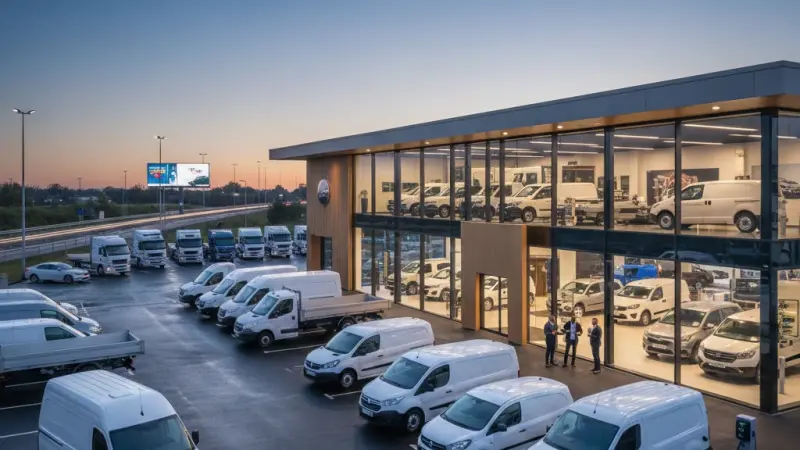
The commercial vehicle sector is the lifeblood of the British economy. From the "White Van Man" delivering essential parcels to 44-tonne HGVs keeping supermarket shelves stocked, the movement of goods and services relies entirely on a robust network of commercial vehicle dealers. In the United Kingdom, this sector is not merely a retail niche; it is a critical infrastructure component that sustains the logistics, construction, and service industries. As of the current fiscal year, there are over 4 million vans and nearly half a million heavy goods vehicles (HGVs) registered on UK roads, representing a significant portion of the total vehicular population.

The economic importance of commercial vehicle dealers cannot be overstated. They act as the primary interface between global manufacturers and local enterprises. Whether it is a multinational haulage firm or a local plumber appearing on a uk local business directory, the quality of the vehicle and the reliability of the dealer's aftersales support directly impact business continuity. A delayed delivery or a broken-down fleet vehicle isn't just an inconvenience—it's a loss of revenue and a disruption to the supply chain.
For buyers, navigating the world of commercial vehicle dealers requires a blend of mechanical knowledge, financial acumen, and an understanding of the regulatory landscape. The transition toward electrification, the introduction of Clean Air Zones (CAZ) across major UK cities, and the fluctuating costs of fuel have made the decision-making process more complex than ever. This guide serves as a comprehensive roadmap for businesses of all sizes, ensuring they make informed decisions when acquiring their next workhorse.
The Landscape of Commercial Vehicle Dealers in the UK
The UK commercial vehicle market has shown remarkable resilience over the last few years. Following the unprecedented disruptions of the pandemic and subsequent semi-conductor shortages, the industry has undergone a significant evolution. Today, the landscape is defined by a shift toward more sustainable fleet solutions and a digital-first approach to sales. Commercial vehicle dealers are no longer just showrooms; they are consultants helping businesses transition to a low-carbon future.
Geographically, the activity is concentrated around major logistical hubs. The "Golden Triangle" in the East Midlands remains a powerhouse for HGV dealerships due to its proximity to the M1 and major distribution centres. Similarly, areas surrounding London, Birmingham, and Manchester see high volumes of light commercial vehicle (LCV) sales as urban delivery demands soar. For many small enterprises looking to upgrade their fleet, using a uk business directory is often the first step in identifying reputable local dealers who understand the specific geographic and regulatory requirements of their region, such as London's Ultra Low Emission Zone (ULEZ).
Post-pandemic, we have seen a "flight to quality." Buyers are increasingly looking for dealers that offer more than just a competitive price. They want transparency in lead times, robust warranties, and evidence of financial stability. The used vehicle market, in particular, saw a massive surge in value when new vehicle production stalled, leading to a professionalisation of used commercial vehicle sales that rivals the new car market in terms of presentation and consumer protection.
Market size remains substantial, with annual registrations for vans often exceeding 300,000 units in a healthy year. The evolution of the industry is also marked by the rise of "transit centres" and specialist commercial hubs that operate outside of standard car dealership hours to accommodate the needs of businesses that cannot afford daytime downtime.
Comprehensive Services Breakdown
A modern commercial vehicle dealer offers a multifaceted suite of products designed to support a vehicle throughout its entire lifecycle. Understanding these services is vital for any business owner.
New Vehicle Sales and Customisation
The primary offering is, of course, the latest models featuring the newest technology. However, commercial vehicles are rarely "off-the-shelf." Dealers provide extensive bespoke services, including ply-lining, racking systems, refrigeration conversions, and branding. For businesses listed on a business listing uk, a professionally liveried vehicle serves as a mobile billboard, making the customisation service a key marketing investment.
Certified Pre-Owned (CPO) and Used Stock
Used vehicles offer a more accessible entry point for start-ups. High-quality dealers run rigorous multi-point inspections and provide "approved used" status, which often includes a manufacturer-backed warranty. This reduces the risk traditionally associated with buying second-hand machinery.
Maintenance and Repair Contracts
The true value of a dealer is often found in the workshop. Service Level Agreements (SLAs) are common, offering fixed-price servicing and guaranteed turnaround times. Many dealers now offer "while-you-sleep" servicing, allowing tradespeople to drop off their van at 6 PM and pick it up at 6 AM, ready for the next day's work.
Finance and Leasing Solutions
Finance is the engine that drives fleet acquisition. Dealers offer various products:
Contract Hire: Fixed monthly payments with no ownership at the end.
Finance Lease: Similar to contract hire but with potential for a "balloon" payment.
Hire Purchase: Traditional financing leading to full ownership.
Lease Purchase: Lower monthly payments with a final lump sum.
Each option has different VAT and tax implications, and a professional dealer will guide the client through the best choice for their cash flow.
How to Choose the Right Service Provider
Selecting a dealer is as important as selecting the vehicle itself. A poor relationship with a dealer can lead to maintenance headaches and financial strain. When searching through local business listings uk, business owners should look for several key indicators of quality.
Accreditations and Standards
Check if the dealer is a member of the Society of Motor Manufacturers and Traders (SMMT) or the Retail Motor Industry Federation (RMI). For heavy vehicles, look for dealers who are familiar with the DVSA’s "Earned Recognition" scheme. These memberships indicate a commitment to industry best practices and legal compliance.
Local Reputation and Reviews
In the digital age, a dealer's reputation is visible to all. Look for consistent feedback regarding aftersales support. It is easy to be helpful during a sale; the real test is how the dealer handles a warranty claim or an emergency breakdown. Verified reviews on platforms like Local Page UK can provide insights into the experiences of other local businesses.
Range of Support Services
Does the dealer offer courtesy vehicles? If your van is your livelihood, being without it for three days while it’s in the shop is not an option. A top-tier dealer will have a fleet of replacement vehicles to keep you on the road. Furthermore, check their parts availability; a dealer that stocks a high volume of parts on-site will always be faster than one that has to order everything from a central warehouse.
Industry Challenges & Future Outlook
The commercial vehicle industry is currently navigating its most significant transformation since the invention of the internal combustion engine. The primary driver is the UK government’s commitment to banning the sale of new petrol and diesel vans by 2030 (with some allowances for hybrids until 2035).
The Electric Transition
Range anxiety and charging infrastructure remain the biggest hurdles for commercial operators. Dealers are increasingly taking on the role of "energy consultants," advising clients on home-charging versus depot-charging and helping them calculate the Total Cost of Ownership (TCO) for electric vehicles (EVs). While the initial purchase price of an EV is higher, the lower running costs and exemption from many CAZ charges make them an attractive long-term proposition.
Sustainability and Green Initiatives
Beyond just the tailpipe emissions, there is a push for more sustainable practices across the board. This includes the use of recycled materials in vehicle interiors and more efficient manufacturing processes. Many forward-thinking dealers are listing themselves on a business listing uk to highlight their "green" credentials to an increasingly eco-conscious customer base.
Regulatory Changes
The Direct Vision Standard (DVS) in London and the proliferation of Low Emission Zones nationwide are forcing many operators to upgrade their fleets sooner than planned.
Dealers must stay ahead of these regulations to ensure they don't sell a vehicle to a customer that will be "fined out" of their primary working area within two years.
Business Tips for Commercial Vehicle Dealers Professionals
For those operating within the dealership space, the competition is fierce. Digital visibility is no longer optional; it is the cornerstone of a successful sales strategy.
Dominating Local Search
Most commercial vehicle searches begin with a local intent—for example, "Transit van for sale in Manchester." To capture this traffic, dealers must ensure their data is accurate across all online platforms. Being present on a uk local trades directory allows dealers to connect with the very tradespeople who need their services most.
Content Marketing and Education
As the industry moves toward EVs, customers have many questions. Dealers who produce educational content—videos on charging, blogs on finance options, or guides on payload capacities—build trust. This positioning as an "expert" rather than just a "salesman" is highly effective in the B2B space.
Leveraging B2B Directories
Professionalism is key. Listing your dealership on a uk b2b business directory helps in networking with fleet managers and corporate procurement officers. It establishes a level of legitimacy that social media alone cannot provide.
Data-Driven Inventory Management
The most successful dealers use data to understand which models are moving fastest in their specific region. If there is a local surge in construction, stocking more tippers and dropsides is a logical move. This responsiveness to local market conditions is what separates the market leaders from the laggards.
Wrapping Up & Local Page Integration
The UK’s commercial vehicle dealers are the unsung heroes of the economy. They provide the tools that allow thousands of businesses to operate every single day. As the market shifts toward electrification and digitisation, the relationship between the dealer and the business owner will only become more integrated.
Whether you are a sole trader looking for a reliable used van or a fleet manager planning a transition to electric HGVs, the first step is always finding a partner you can trust. In an era of information overload, the uk online business directory serves as an essential filter, helping you connect with verified, reputable professionals in your area.
For businesses looking to grow, the solution is clear: visibility is the key to viability. Local Page stands as the premier solution for UK businesses, providing a platform where service providers and customers can meet with confidence. By bridging the gap between local expertise and digital reach, it ensures that the wheels of British industry keep turning.
Boost Your Visibility with Local Page UK
In the competitive world of commercial vehicle sales and services, your online presence is your shop window. If customers can't find you, they can't buy from you. Whether you are an independent dealer or a large-scale service centre, claiming your business listing uk on Local Page UK is a critical step in your digital marketing journey. Don't let your competitors take your spot on the grid—get listed today and connect with thousands of local customers searching for your expertise.
Frequently Asked Questions
1. What is the difference between Hire Purchase and Contract Hire?
Hire Purchase is a path to ownership where you pay for the vehicle in instalments and own it at the end of the term.
Contract Hire is essentially a long-term rental where you pay for the use of the vehicle and return it at the end, often including maintenance packages.
2. Are electric vans suitable for long-distance motorway driving?
While range is improving, electric vans are currently most efficient for urban "last-mile" deliveries. For long-distance motorway work, diesel remains the most practical choice for many, though newer models with 200+ mile ranges are beginning to bridge that gap.
3. What should I check when buying a used commercial vehicle?
Beyond the standard mechanical checks, verify the service history, check for "stop-start" wear and tear, and ensure there are no outstanding finance agreements. Always check the payload capacity to ensure it meets your specific business needs.
4. How does the Ultra Low Emission Zone (ULEZ) affect my van choice?
If you drive within a ULEZ area, your vehicle must meet specific emission standards (usually Euro 6 for diesel). If it doesn't, you will face daily charges that can quickly outweigh the cost of upgrading to a compliant vehicle.
5. Where can I find a list of reputable local dealers?
The most efficient way to find verified professionals is to consult a dedicated directory like Localpage, which allows you to filter by region and service type to find the best match for your business.
6. Can I claim VAT back on a commercial vehicle purchase?
In most cases, if you are a VAT-registered business and the vehicle is used primarily for business purposes, you can claim the VAT back. However, rules vary for "double-cab" pickups and certain car-derived vans, so always consult an accountant.
7. What is a "balloon payment" in van finance?
A balloon payment is a large lump sum due at the end of a finance agreement. It allows for lower monthly payments during the term but requires you to pay a significant amount at the end if you wish to own the vehicle.
8. Is it better to buy or lease a fleet of vehicles?
Buying offers long-term equity but carries the risk of depreciation. Leasing provides predictable monthly costs and allows you to upgrade to newer, more efficient models every few years without the hassle of selling old stock.
9. What are the benefits of "approved used" commercial vehicles?
Approved used vehicles usually come with a multi-point inspection, a guaranteed service history, and a comprehensive warranty. This provides peace of mind that a standard private sale cannot offer.
10. How often should a commercial vehicle be serviced?
Intervals vary by manufacturer, but most modern vans require servicing every 12 to 24 months or every 10,000 to 20,000 miles. High-usage vehicles may require more frequent "safety checks" to stay compliant.
11. What is the "Golden Triangle" in UK logistics?
It is an area in the East Midlands defined by its proximity to the M1, M6, and M42. It is home to a high concentration of distribution centres and, consequently, some of the UK’s largest commercial vehicle dealerships.
12. Can I customise a leased commercial vehicle?
Most leasing companies allow "reversible" customisations like racking or ply-lining, provided the vehicle is returned in its original condition. Permanent alterations usually require explicit permission from the funder.
13. What is the benefit of a "Transit Centre"?
Transit Centres are specialist hubs designed specifically for commercial users. They offer extended opening hours, specialised technicians, and a deeper stock of commercial parts compared to standard passenger car dealerships.
14. Are there grants available for switching to electric vans?
Yes, the UK government currently offers the "Plug-in Van Grant," which can reduce the purchase price of an eligible low-emission vehicle.
The amount depends on the size and weight of the vehicle.
15. How can I improve my dealership's online visibility?
The best strategy is to ensure your business is listed accurately across major platforms. A high-quality profile on Local page is a proven way to reach local customers and improve your search engine rankings.

Disclaimer: The information provided in this article is for general informational and research purposes only. Company details, features, services, and market positions may change over time. Readers are advised to visit official company websites and conduct independent research before making any business decisions or purchasing services.
Most Searchable Keywords

Recent Blogs



Related Listings


Categories
- Accountants (295)
- Advertising Agencies (559)
- Architects (149)
- Automobiles (377)
- Beauty (300)
- Carpenters (146)
- Cleaning Services (386)
- Dentists (189)
- Driving (62)
- Electricians (215)
- Energy (8)
- Event Organiser (685)
- Finance (599)
- Guide (3365)
- Health (2207)
- Information technology (206)
- Legal Services (353)
- Logistics (6)
- Maintenance (65)
- Manufacturing (35)

Sponsored Listings in Locksmith Services


Related Blogs

Gen Z Political Reporters and News Creators i...
Read this insightful article "Gen Z Political Reporters and News Creators in the UK" to expand your knowledge!

Famous Female Social Media Influencers Across...
Read this insightful article "Famous Female Social Media Influencers Across the UK" to expand your knowledge!

Your UK Sponsor Licence 2026 Step by Step Gui...
Read this insightful article "Your UK Sponsor Licence 2026 Step by Step Guide" to expand your knowledge!
Questions & Answers – Find What
You Need, Instantly!
How can I update my business listing?
Is it free to manage my business listing?
How long does it take for my updates to reflect?
Why is it important to keep my listing updated?
