
Car Supermarkets Explained: Convenience vs Traditional Dealerships
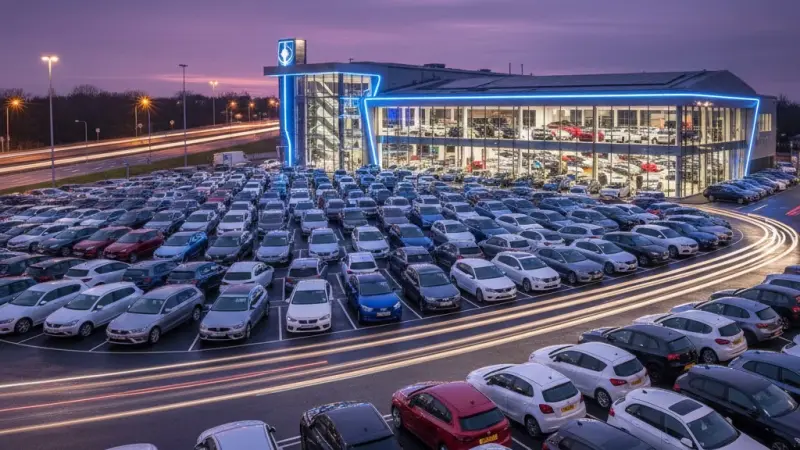
The automotive retail landscape in the United Kingdom has undergone a seismic shift over the last decade, transitioning from a fragmented market of small independent garages to a sophisticated, multi-billion pound industry. At the heart of this evolution is the "Car Supermarket"—a high-volume, multi-brand retail model that has challenged the supremacy of traditional franchised dealerships. For the British consumer, the car supermarket represents the "one-stop-shop" philosophy, offering thousands of vehicles under one roof, often at prices that undercut traditional showrooms by a significant margin.

Economically, the used car sector is a powerhouse of the UK’s retail economy. In 2024, the used car market saw over 7.6 million transactions, a testament to its resilience and importance to national GDP. Car supermarkets play a pivotal role here, acting as the primary engine for high-turnover sales. Unlike the local "main dealer" who might focus on a single marque like Ford or BMW, the supermarket model relies on massive inventory, lean margins, and a focus on finance and add-on services. This sector is a vital component of the uk online business directory ecosystem, providing jobs for thousands and driving innovation in digital retail.
As we move into 2026, the distinction between convenience and tradition has never been more relevant. Buyers are increasingly divided: do they want the expert brand knowledge and premium aftercare of a traditional dealership, or the sheer choice and efficiency of a supermarket? This guide explores every facet of this comparison, providing an authoritative look at how these giants operate and how consumers can navigate the modern car-buying journey.
The Landscape of Car Supermarkets in the UK
The current market for car supermarkets in the UK is characterized by consolidation and digital integration. Industry giants such as Motorpoint, Cargiant, and Arnold Clark have established a presence that dominates the "nearly new" and high-quality used vehicle segments. Following the pandemic, the industry had to evolve rapidly. The "stock crunch" caused by semiconductor shortages meant that used car prices spiked by as much as 30% in some cases, forcing supermarkets to refine their sourcing strategies.
Geographically, car supermarkets are strategically located near major arterial roads and motorways—places like Derby, London, and Glasgow are hubs for these massive sites. These locations are chosen for maximum accessibility, allowing a customer from 50 miles away to visit, browse, and drive away in a single day. This accessibility is a cornerstone of the uk business directory as it highlights how physical presence remains critical even in an increasingly digital world. Post-pandemic, the "click and collect" and home delivery models pioneered by online-only players like Cinch and Cazoo forced traditional supermarkets to upgrade their web interfaces, leading to a hybrid model that blends a massive physical forecourt with a seamless online experience.
The market size is staggering. With the UK used car market projected to reach a value of nearly £100 billion by the end of the decade, car supermarkets are claiming an ever-larger slice of the pie. Their ability to stock 1,000+ cars from 30+ different manufacturers gives them a competitive edge over franchised dealers who are restricted by manufacturer agreements. As a result, the "brand-agnostic" salesperson has become a common figure, focused more on finding a car that fits the customer's budget than pushing a specific badge.
Comprehensive Services Breakdown
To understand the value proposition of a car supermarket, one must look beyond the price tag on the windscreen. The modern supermarket is a financial and service hub. Because the margins on the metal itself are razor-thin, these businesses have perfected the art of upselling essential services.
High-Volume Vehicle Sourcing: Supermarkets often buy in bulk from fleet disposal companies or car hire firms. This allows them to pass on savings to the customer.
On-Site Financing: Almost every car supermarket acts as a credit broker. They offer Personal Contract Purchase (PCP) and Hire Purchase (HP) deals, often with "no-haggle" pricing that simplifies the process for the buyer.
Part-Exchange Valuations: Using real-time data, supermarkets provide instant valuations, allowing customers to trade in their old vehicle and drive away in a new one within hours.
Warranties and Protection: Since they are not "main dealers," their warranties are often third-party. They also sell GAP insurance, paint protection (like GardX or Supagard), and service plans.
Preparation and Inspection: Most reputable sites run 100+ point checks. While not as intensive as a "Manufacturer Approved" inspection, they provide a baseline of safety and reliability.
For any business operating in this niche, appearing in a business listing uk is essential to capture the high-intent traffic searching for these varied services. The complexity of these offerings means that consumers often require a guide to differentiate between a "deal"
and a "distraction." Traditional dealerships, by contrast, focus more on the "ownership experience," offering manufacturer-backed warranties that can be used at any franchised site in the country—a level of convenience car supermarkets struggle to match.
How to Choose the Right Service Provider
For the consumer, the choice of provider is fraught with anxiety. The "used car salesman" trope still lingers, making it imperative to use tools like local business listings uk to verify the reputation of a site before visiting. When choosing between a supermarket and a dealership, consider the following:
Accreditations: Look for the Financial Conduct Authority (FCA) badge, which is mandatory for anyone offering car finance. Membership in the Motor Ombudsman or the Retail Motor Industry Federation (RMI) provides an extra layer of protection should a dispute arise.
Reviews and Transparency: Don't just look at the star rating; read the recent "negative" reviews. How does the business respond to complaints? A company that handles problems professionally is often safer than one with a suspiciously perfect record.
Insurance and History Checks: Ensure every car comes with a clean HPI or Experian check. This confirms the vehicle hasn't been stolen, written off, or has outstanding finance.
Local Reputation: Sometimes the biggest supermarket isn't the best. Smaller regional groups often offer a more personal touch while maintaining the price benefits of a larger inventory.
The importance of finding uk top rated local businesses cannot be overstated in an industry where the product—a car—is usually the second most expensive purchase a person will make.
Industry Challenges & Future Outlook
The road ahead for car supermarkets is not without its potholes. The primary challenge is the "Green Revolution." As the UK government pushes toward the 2035 ban on new petrol and diesel sales, car supermarkets are having to rapidly adapt their stock. Electric Vehicles (EVs) present a unique challenge: their resale value (residual value) has been volatile, making it risky for supermarkets to hold large volumes of used EVs.
Furthermore, the technology shift is not just in the cars, but in how they are sold. Augmented Reality (AR) tours of vehicle interiors and AI-driven chatbots are becoming standard. Regulatory changes from the FCA regarding "Consumer Duty" have also forced supermarkets to be much more transparent about how they earn commission on finance deals. To stay ahead, many of these businesses are seeking a business listing uk presence to ensure their digital footprint matches their physical scale.
Sustainability is also moving from a "nice to have" to a business requirement. Many supermarkets are installing solar-powered showrooms and EV charging hubs to appeal to the environmentally conscious buyer. The future belongs to those who can master the data—predicting exactly which cars will sell in which region and pricing them with surgical precision.
Business Tips for Car Supermarkets Professionals
If you are a professional or an owner in the automotive retail sector, digital visibility is your most potent weapon. The days of relying on a "sign on the road" are over. To compete with the multi-million pound marketing budgets of national brands, local and regional providers must leverage uk service listings to capture local search intent.
Optimize for Local SEO: Ensure your business name, address, and phone number (NAP) are consistent across all platforms.
High-Quality Visuals: In the car world, the first "test drive" happens on a smartphone screen.
360-degree photography is now a requirement, not a luxury.
Content is King: Write about local driving conditions, the best family SUVs for your specific county, or how to navigate local ULEZ zones. This establishes authority.
Leverage Directories: Listing your business in a uk local business directory helps build "backlink" authority, which tells Google that your website is a trusted source of information.
Marketing in this sector requires a blend of trust-building and aggressive pricing. By appearing in a uk verified business listings section, you immediately separate yourself from the "shady" independent lots that consumers fear.
Wrapping Up & Local Page Integration
The choice between a car supermarket and a traditional dealership ultimately comes down to a trade-off between "Choice & Price" vs. "Brand Expertise & Aftercare." Car supermarkets offer an unparalleled level of convenience for the modern, busy consumer who wants to see 50 Volkswagens in one afternoon. However, the industry’s success depends entirely on the transparency and digital accessibility of these businesses.
For UK business owners in this sector—whether you run a massive supermarket or a specialized local garage—the competition is fierce. Navigating the digital landscape can be daunting, but it is essential for survival. This is where Local Page provides the ultimate solution. As the premier uk business directory website, it allows businesses to bridge the gap between their physical forecourt and the digital consumer.
By integrating your business into a trusted network, you ensure that when a local customer searches for their next vehicle, your name is the one that stands out. The UK automotive industry is moving fast; make sure your business has the visibility to keep up.
Boost Your Visibility with Local Page UK
In the highly competitive world of automotive retail, being "just another dealership" isn't enough. You need to be the dealership that people find first. Digital visibility is the fuel that drives footfall to your forecourt. Whether you are offering high-end luxury vehicles or budget-friendly city cars, your potential customers are searching for you online right now.
Don't leave your success to chance. By joining Local Page UK, you position your business in front of a targeted, local audience. Claim your business listing uk today and start building the trust and authority your business deserves. From SEO benefits to increased customer enquiries, Local Page is the engine that powers UK small and medium enterprises.
Frequently Asked Questions (FAQs)
1. What exactly is a car supermarket?
A car supermarket is a large-scale vehicle retailer that stocks hundreds or even thousands of cars from various manufacturers in a single location. Unlike a traditional franchised dealership, which usually specializes in one brand (like Vauxhall or Audi) and sells both new and used cars, a car supermarket focuses almost exclusively on used or "nearly new" vehicles.
They operate on a high-volume, low-margin business model, meaning they aim to sell a high number of cars quickly by offering very competitive prices. This model provides consumers with the convenience of comparing different makes and models side-by-side without having to travel between multiple brand-specific showrooms.
2. Is it cheaper to buy from a supermarket than a traditional dealer?
Generally, yes. Because car supermarkets buy vehicles in massive bulk—often from leasing companies, rental firms, or fleet disposals—they can achieve significant economies of scale. These savings are passed on to the buyer in the form of lower sticker prices. Furthermore, supermarkets often have lower overheads per vehicle compared to premium "main dealers" who invest heavily in luxury showroom environments and manufacturer-mandated branding. However, it is important to look at the total cost of ownership, including finance rates and add-on products, as supermarkets often make their profit on these secondary services rather than the car itself.
3. Do car supermarkets offer warranties on their vehicles?
Yes, all car supermarkets provide some form of warranty, but they differ from traditional "Manufacturer Approved" warranties. While a main dealer offers a warranty backed by the brand (e.g., a BMW Approved Used Warranty), a supermarket usually provides a third-party warranty. These can vary in quality and coverage. Some include 90 days of "free" cover with the option to extend to three years for an additional fee. It is crucial to check what is included; some third-party warranties have caps on claim amounts or exclude certain "wear and tear" items that a manufacturer-backed warranty might cover.
4. Can I part-exchange my old car at a supermarket?
Absolutely. In fact, part-exchange is a fundamental part of the car supermarket business model. They use sophisticated software to provide an instant valuation based on current market trends and the condition of your vehicle. The convenience of driving your old car to the site and driving a "new" one home the same day is one of the primary reasons consumers choose supermarkets. However, be aware that because they need to make a profit when they resell or auction your old car, you might get a slightly lower offer than if you sold the vehicle privately.
5. How do I know if a car supermarket is reputable?
You should look for several key indicators of trust. First, check if they are authorized and regulated by the Financial Conduct Authority (FCA). Second, look for memberships in trade bodies like the Retail Motor Industry Federation (RMI). Thirdly, consult digital resources like Localpage to see how they are listed and what their local standing is. Reading independent reviews on platforms like Trustpilot or Google is also essential. A reputable supermarket will be transparent about a car's history, provide a full HPI check, and won't pressure you into a sale with "today only" tactics.
6. Are the cars at supermarkets inspected before sale?
Reputable car supermarkets perform multi-point inspections on all vehicles before they reach the forecourt. These usually range from 100 to 150 individual checks covering safety, mechanics, and electronics. While these are generally robust, they are often less intensive than the rigorous "Approved Used" checks carried out by main dealers who must adhere to strict manufacturer standards. It is always a good idea to ask for the inspection report and, if you are spending a significant amount, consider an independent RAC or AA inspection for total peace of mind.
7. Why do supermarket sales staff seem more "brand-neutral"?
Unlike a salesperson at a Ford dealership who is trained (and incentivized) to tell you why a Focus is better than a Golf, a car supermarket salesperson is usually "brand-agnostic." Their goal is to find a car that fits your specific needs, budget, and lifestyle from their vast inventory. This can be a major advantage for buyers who aren't sure which brand they want. The salesperson’s priority is often the "unit sale" and the associated finance package rather than the specific badge on the bonnet, leading to a more varied and less biased shopping experience.
8. Can I get finance at a car supermarket?
Yes, car supermarkets are essentially finance hubs. They work with a panel of lenders to offer various products, including Personal Contract Purchase (PCP), Hire Purchase (HP), and sometimes Personal Loans. Because they deal in such high volumes, they can sometimes negotiate competitive rates with lenders. However, always compare the Annual Percentage Rate (APR) offered by the supermarket against what you could get from your bank or an independent online lender. Sometimes the "low price" of the car is offset by a higher interest rate on the finance deal.
9. What are "pre-registered" cars often found at supermarkets?
A "pre-registered" car is a vehicle that has been registered to the dealership or the manufacturer rather than a private individual. These cars technically have "one previous owner" on the logbook (V5C), but they often have delivery mileage only (under 100 miles). They are essentially brand-new cars sold at a significant discount because they are technically "used." This is a common way for manufacturers to hit sales targets, and car supermarkets are the primary outlet for these bargains. The only downside is that the manufacturer warranty starts from the date of first registration, not the date you buy it.
10. Do car supermarkets offer "no-haggle" pricing?
Many large car supermarkets, such as Motorpoint, operate a "Fixed Price" or "No-Haggle" policy. They use data-mining tools to ensure their cars are priced at or below the market average from the start. This removes the stress of negotiation, which many buyers find unappealing. While this means you likely won't get further money off the sticker price, it also means you aren't paying a "hidden" premium that only gets discounted if you're a tough negotiator. In contrast, traditional dealers often expect a bit of "back and forth" on the price.
11. What is the main disadvantage of a car supermarket?
The main disadvantage is often the "aftersales" experience. While a main dealer wants to build a 10-year relationship with you for servicing, MOTs, and your next three car purchases, a supermarket is often focused on the one-time transaction. If you have a mechanical issue six months later, you might find the process of getting it fixed under a third-party warranty more cumbersome than if you had a manufacturer-backed guarantee. Additionally, the high-pressure environment for selling add-ons (like GAP insurance) can be off-putting for some customers.
12. Are electric cars (EVs) available at car supermarkets?
Yes, the stock of used EVs at car supermarkets is growing rapidly. As more electric cars enter the second-hand market from three-year leasing cycles, supermarkets are becoming a great place to compare different EVs like the Tesla Model 3, Nissan Leaf, and Hyundai Ioniq side-by-side. However, because EV technology is evolving so fast, you should pay close attention to the battery health report and the specific charging capabilities of the car you are looking at, as these can vary significantly even within the same model year.
13. How long does the buying process take?
Efficiency is a hallmark of the car supermarket. Many offer a "drive away the same day" service. If you have your driving license, proof of address, and your old car's logbook for part-exchange, the entire process—from test drive to signing the finance documents—can be completed in two to four hours. Traditional dealerships can sometimes take longer, especially if they need to source a specific car from another site or perform a more lengthy "prep" process before delivery.
14. Should I buy an older car from a supermarket?
Most car supermarkets focus on vehicles that are under five or six years old with reasonable mileage. If you are looking for a "budget runaround" that is 10+ years old, you are less likely to find it at a major supermarket site; those cars are usually sent to auction or sold by smaller
independent "car lots." Supermarkets prefer "prime" stock that they can easily attach a warranty and finance package to. If you do find an older car at a supermarket, it has likely passed a decent inspection, making it a safer bet than a private sale.
15. Is it worth using a directory to find a car supermarket?
Yes, using a directory is highly beneficial for several reasons. It allows you to see all the providers in your specific region at once, helping you plan a day of viewing. Furthermore, platforms like Local page provide verified information, ensuring you are dealing with a legitimate business rather than a "pop-up" site. In an age of digital scams and cloned websites, using a trusted directory to find the official contact details and location of a car supermarket adds a vital layer of security to your car-buying journey.

Disclaimer: The information provided in this article is for general informational and research purposes only. Company details, features, services, and market positions may change over time. Readers are advised to visit official company websites and conduct independent research before making any business decisions or purchasing services.
Most Searchable Keywords
Recent Blogs


Related Listings


Categories
- Accountants (295)
- Advertising Agencies (559)
- Architects (149)
- Automobiles (377)
- Beauty (300)
- Carpenters (146)
- Cleaning Services (386)
- Dentists (189)
- Driving (62)
- Electricians (215)
- Energy (8)
- Event Organiser (685)
- Finance (599)
- Guide (3365)
- Health (2207)
- Information technology (206)
- Legal Services (353)
- Logistics (6)
- Maintenance (65)
- Manufacturing (35)

Sponsored Listings in Locksmith Services


Related Blogs

Gen Z Political Reporters and News Creators i...
Read this insightful article "Gen Z Political Reporters and News Creators in the UK" to expand your knowledge!

Famous Female Social Media Influencers Across...
Read this insightful article "Famous Female Social Media Influencers Across the UK" to expand your knowledge!

Your UK Sponsor Licence 2026 Step by Step Gui...
Read this insightful article "Your UK Sponsor Licence 2026 Step by Step Guide" to expand your knowledge!
Questions & Answers – Find What
You Need, Instantly!
How can I update my business listing?
Is it free to manage my business listing?
How long does it take for my updates to reflect?
Why is it important to keep my listing updated?
