
Carpet Planning & Fitting Guide from Measurement to Installation
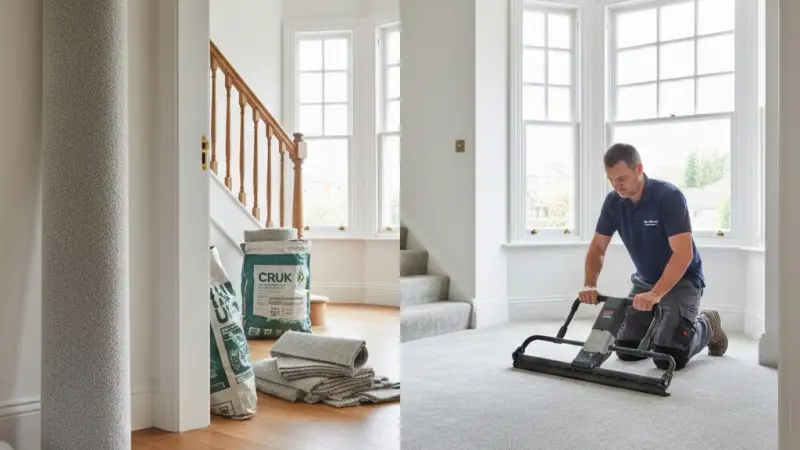
The UK floor covering market is a cornerstone of the domestic home improvement sector, representing a multi-billion pound industry that bridges the gap between high-end interior design and essential home maintenance. Within this landscape, the "Carpet Planning & Fitting" niche stands out as a high-skill, service-oriented vertical that demands precision, technical knowledge, and a deep understanding of British consumer trends.

The economic importance of this sector cannot be overstated. According to recent trade analyses, the floor covering industry contributes significantly to the UK’s GDP, driven by both the buoyant residential property market and a robust commercial renovation sector. From the Victorian terraces of London to the modern developments in Manchester and Birmingham, the demand for high-quality carpet solutions remains constant. For consumers, a new carpet is often one of the most significant investments made in a home, influencing both property value and thermal efficiency. For the professional, it represents a livelihood built on reputation, word-of-mouth, and increasingly, digital visibility through an uk online business directory.
Planning and fitting are the dual pillars of success in this industry. A carpet is only as good as its installation; even the most expensive Axminster or Wilton will underperform if the subfloor preparation is inadequate or the stretching is uneven. This guide explores the intricate journey from the initial site survey to the final trim, providing an authoritative look at how the industry operates in the current British economic climate.
The Landscape of Carpet Planning & Fitting in the UK
The post-pandemic era has reshaped the UK flooring industry in profound ways. Following the lockdowns of 2020 and 2021, there was a documented "home improvement boom" as homeowners redirected holiday budgets into their living spaces. This resulted in a surge in demand for professional carpet fitters, though it also highlighted a significant skills gap in the trade.
Currently, the market size for floor coverings in the UK is estimated to be over £2 billion annually. Key regions of activity include the South East, where high property turnovers drive frequent renovations, and the North West, which has seen a massive influx of urban regeneration projects. However, the industry has evolved. We are no longer in an era where a fitter can rely solely on a phone book. Today’s consumers use an uk business directory website to vet specialists, compare quotes, and verify credentials before a single measurement is taken.
The evolution of the industry is also marked by a shift toward professionalisation. Trade bodies like the National Institute of Carpet and Floorlayers (NICF) have seen increased interest as fitters seek to differentiate themselves in a crowded market. Post-pandemic, there is also a greater emphasis on "hygienic flooring" and high-durability carpets suitable for home offices—a trend that has fundamentally changed the types of products fitters are planning for.
Comprehensive Services Breakdown
Professional carpet planning and fitting involves a suite of technical services that extend far beyond simple unrolling. A modern UK flooring specialist typically offers:
Site Survey & Precise Measurement: This is the foundation of any project. Using laser measures and CAD software, professionals calculate the exact meterage required, accounting for "wastage" in complex room shapes.
Subfloor Preparation: Perhaps the most critical service. Fitters assess the condition of the floorboards or screed, often applying ply-lining or self-levelling compounds to ensure a perfectly flat surface.
Underlay Consultation: The UK market offers a range of underlays, from recycled foam to heavy-duty rubber. Choosing the right TOG rating is essential for homes with underfloor heating.
Installation Techniques: This includes "stretch-fit" on grippers for most domestic carpets and "dual bond" or "direct glue-down" for commercial high-traffic areas.
Specialist Finishing: High-end fitters offer bespoke stair runners with "whipped" edges or
brass stair rods, catering to the luxury market.
To find these specialized technicians, many homeowners now turn to a business listing uk to identify local experts who have the specific tools for unique carpet types like natural sisal or seagrass.
How to Choose the Right Service Provider
For the consumer, choosing a fitter is a high-stakes decision. A poor installation can void the manufacturer’s warranty on an expensive carpet. When searching through local business listings uk, consumers should look for four key markers of quality:
Accreditations: Look for NICF (National Institute of Carpet and Floorlayers) or FITA (Flooring Industry Training Association) memberships.
Insurance: A professional must have Public Liability Insurance. This protects the homeowner in the event of accidental damage to the property during the fitting process.
Reviews and Portfolio: Don’t just read the stars; look for photos of "seams" and "door bars." A good fitter is proud of their invisible joins.
Local Reputation: While national chains offer convenience, local independent fitters often provide a higher level of personal care and a deeper understanding of the local housing stock.
By using an uk local trades directory, you can filter for providers who have been vetted by the community, ensuring that your investment is in safe hands.
Industry Challenges & Future Outlook
The UK flooring industry is currently navigating a "Green Revolution." Sustainability is the primary challenge and opportunity for the next decade. The Carpet Recycling UK (CRUK) initiative is pushing for a circular economy, as currently, thousands of tonnes of carpet waste go to landfill each year. Professionals are now expected to offer "take-back" schemes and recommend carpets made from recycled nylon (such as Econyl) or organic wool.
Technology is also playing a role. Augmented Reality (AR) apps allow customers to visualize carpets in their rooms before buying, but this puts pressure on fitters to match the digital perfection in real life. Furthermore, Brexit-related supply chain shifts have made it more important than ever for fitters to have a business listing uk presence to find new suppliers and maintain a steady flow of local leads when material costs fluctuate.
Regulatory changes regarding VOC (Volatile Organic Compounds) in adhesives and the fire rating of carpets in high-rise buildings (following updated building safety acts) mean that continuous professional development is no longer optional—it is a business necessity.
Business Tips for Carpet Planning & Fitting Professionals
If you are an independent fitter or a small flooring firm, your technical skill is only half of the equation. In the modern UK market, you are a digital marketer as well as a craftsman.
Claim Your Digital Real Estate: You must appear where your customers are looking.
Ensure you have a profile in an uk business directory to build local SEO authority.
Visual Proof: Carpet fitting is a visual trade. Before-and-after photos of a difficult hallway or a perfectly pattern-matched stair runner are your best sales tools.
Customer Experience: In a world of automated bots, a professional who answers the phone, provides a written quote, and shows up on time will always win the contract.
Networking: Connect with other trades. Carpenters and painters are often asked for flooring recommendations. Listing your services in an uk service listings helps these other professionals find and recommend you easily.
The importance of digital visibility cannot be overstated; most UK homeowners now start their journey with a search for "carpet fitter near me," and if you aren't in the top local businesses list uk, you don't exist to them.
Wrapping Up & Local Page Integration
The carpet planning and fitting industry remains a vital part of the UK’s trade economy. As we move further into the 2020s, the blend of traditional craftsmanship and modern digital presence will define the market leaders. Whether you are a homeowner seeking a flawless finish or a professional looking to expand your reach, the infrastructure of the industry is built on trust and accessibility.
For UK businesses, the most effective way to bridge the gap between their workshop and the customer’s living room is through Local Page UK. As the premier solution for local visibility, it provides the platform needed to thrive in an increasingly digital world.
Boost Your Visibility with Local Page UK
In the competitive world of UK home services, being "good at your job" is no longer enough; you have to be "found" first. For businesses in the Carpet Planning & Fitting sector, local search dominance is the key to a full diary. We encourage every flooring professional to claim their business listing uk today. By joining the local page uk business directory, you place your business in front of high-intent local customers who are actively looking for your expertise. Don't let your competitors take the floor—secure your spot on the map.
FAQ
1. How do I accurately measure a room for carpet?
Measuring for a carpet requires more than just a quick wall-to-wall check. You must measure into the furthest point of any doorways and add a minimum of 10cm (approx. 4 inches) to both the length and width for trimming margins. If the room has alcoves or bay windows, measure into the deepest part of these recesses. Professional planners often draw a floor plan to identify where joins will fall, aiming to keep them away from high-traffic areas or natural light sources which can highlight seams. For stairs, measure the "rise" (height) and "tread" (depth) of a single step, multiply by the number of steps, and add extra for the "winders" (turning steps).
2. What is the best type of underlay for a UK home?
The best underlay depends on the room's usage and your subfloor. In the UK, PU (Polyurethane) foam is the most popular choice as it is often made from recycled materials and provides excellent thermal insulation and comfort. For high-traffic areas like hallways or stairs, a high-density rubber underlay is often recommended as it resists compression better over time.
If you have underfloor heating, you must choose a "low-tog" underlay (typically below 1.0 TOG) to allow heat to pass through efficiently. Always check the manufacturer's recommendations to ensure your underlay choice doesn't void your carpet warranty.
3. How long should I wait before moving furniture back onto a new carpet?
Generally, you can walk on a new carpet immediately after it has been fitted. However, if adhesives were used (as in a "glue-down" or "dual-bond" installation common in commercial settings or over certain screeds), you should wait at least 24 hours for the bond to set fully. For standard domestic stretch-fits, it is wise to wait a few hours to allow the carpet to settle into the grippers. When moving heavy furniture back, try to use "gliders" or avoid dragging items to prevent "stress ripples" or pulling the carpet off the grippers at the edges of the room.
4. Can I install new carpet over an old one?
Technically, it is possible, but it is highly discouraged by professional fitters. Installing new carpet over old ones can cause several issues: the old carpet acts as a breeding ground for dust mites and bacteria, the new carpet will not sit flat, and the "pile" of the old carpet will cause the new one to shift and stretch unevenly, leading to premature wear. Furthermore, the old carpet provides zero structural support compared to a fresh underlay. For a professional finish that lasts, always strip the floor back to the subfloor and install new underlay and grippers.
5. Why is professional carpet fitting better than DIY?
Professional fitting ensures that the carpet is stretched correctly using a "power stretcher" or "knee kicker," which prevents the carpet from developing ripples and buckles over time. Professionals also have the skills to create near-invisible seams using heat-seaming tape and can expertly trim the carpet around complex obstacles like radiator pipes and door frames. A DIY attempt often results in visible joins, frayed edges, and wasted material due to cutting errors. To find a qualified expert, you can search a verified Localpage listing to ensure you are hiring someone with the right tools and experience.
6. What is "pilling" and how do I fix it on a new carpet?
"Pilling" refers to the small balls of fibre that can appear on the surface of a carpet shortly after installation, particularly with wool blends. This is a natural occurrence where short fibres work their way to the surface. It is not a defect. The best way to manage pilling is to vacuum the carpet regularly with a high-quality vacuum cleaner. For stubborn pills, you can carefully snip them off with sharp scissors, being careful not to cut into the carpet backing. Pilling usually subsides after a few weeks of regular use and maintenance.
7. How do I choose between wool and synthetic carpets?
Wool is a natural insulator, flame retardant, and has excellent "memory," meaning the pile springs back after being walked on. It is ideal for living rooms and bedrooms but can be more expensive. Synthetic carpets (like Polypropylene or Nylon) are often "bleach cleanable" and highly resistant to staining, making them perfect for families with young children or pets. However, they can flatten more quickly than wool in high-traffic areas. Consider the "traffic" of the room and your budget when making the choice between natural luxury and synthetic durability.
8. What should I do about the "new carpet smell"?
The "new carpet smell" is caused by VOCs (Volatile Organic Compounds) being released from the carpet backing and adhesives. While modern UK-sold carpets must meet strict safety standards, the smell can be bothersome to some. To dissipate the odour quickly, keep the room well-ventilated by opening windows and doors for 48 to 72 hours after installation. Using a fan to circulate air can also help. Most of the VOCs are released within the first few days, after which the smell should disappear entirely.
9. What are "carpet grippers" and are they always necessary?
Carpet grippers are thin strips of wood with sharp zinc-coated pins that are nailed or glued to the perimeter of the floor. They "grip" the carpet backing, allowing the fitter to stretch the carpet tight across the room. They are necessary for almost all "stretch-fit" installations. However, they are not used in "glue-down" methods or for certain types of natural flooring like seagrass which requires a different installation technique. If your existing grippers are in good condition and not rusted or damaged, a fitter may reuse them, but new ones are usually recommended for the best grip.
10. How do I prepare my home for the carpet fitters?
To ensure a smooth installation, you should remove all small items, breakables, and electronics from the room. Most fitters expect the room to be clear of furniture, although some offer a "furniture moving" service for an additional fee. You should also ensure that the old flooring has been removed and the subfloor is clean and swept. If you are having new skirting boards fitted, it is often better to do this after the carpet is installed to ensure a perfect "tuck" at the edges, although this is a matter of preference.
11. What is a "TOG rating" in carpets?
In the context of carpets and underlay, the TOG rating measures thermal resistance. A higher TOG rating means the carpet is a better insulator and will keep heat in the room. This is excellent for cold ground floors. However, if you have underfloor heating, a high TOG rating is a disadvantage as it acts as a barrier, preventing the heat from warming the room. In such cases, a combined TOG (carpet + underlay) of 2.5 or less is usually recommended. Always check these figures if you are planning a renovation with modern heating systems.
12. How do I hide the joins in a carpet?
Joins (or seams) are often inevitable in large or L-shaped rooms. A professional fitter will plan the layout so that joins run away from the main entrance of the room and do not sit directly under foot-fall if possible. They use "seaming tape" and a "seaming iron" to melt the adhesive and bond the two pieces together. When done correctly, the pile of the carpet hides the join. Pattern-matched carpets require even more skill, as the fitter must ensure the design lines up perfectly across the seam, which often requires purchasing extra material.
13. What is the difference between "Cut Pile" and "Loop Pile"?
"Cut Pile" carpets have the fibre ends cut off, resulting in a soft, plush feel like "Saxony" or "Twist" carpets. They are generally more comfortable for bedrooms. "Loop Pile" (often called Berber) leaves the fibres in loops. These are incredibly durable and hide footprints well, making them ideal for hallways and stairs. However, loop piles are not recommended for homes with cats or dogs, as their claws can get caught in the loops and pull the fibres out, causing "runs" in the carpet.
14. How often should a carpet be professionally cleaned?
While regular vacuuming is essential, a professional deep clean is recommended every 12 to 18 months. Professional cleaners use "hot water extraction" (often called steam cleaning) which removes deep-seated dirt, allergens, and oily residues that domestic vacuums cannot reach.
This not only improves the hygiene of your home but also extends the life of the carpet by preventing the fibres from being "ground down" by grit and dirt. Regular professional cleaning is often a requirement of many long-term carpet warranties.
15. Where can I find a reliable local carpet fitter in the UK?
Finding a reliable fitter involves checking local directories and asking for recommendations. A high-quality fitter will be happy to provide a free estimate and show you samples of their previous work. You should always verify that they are insured and check their standing in the community. For the most up-to-date and verified information on local tradespeople, you should consult a professional Local page entry, which allows you to see business details and contact information for specialists in your specific area.

Disclaimer: The information provided in this article is for general informational and research purposes only. Company details, features, services, and market positions may change over time. Readers are advised to visit official company websites and conduct independent research before making any business decisions or purchasing services.
Most Searchable Keywords

Recent Blogs



Related Listings


Categories
- Accountants (295)
- Advertising Agencies (559)
- Architects (149)
- Automobiles (377)
- Beauty (300)
- Carpenters (146)
- Cleaning Services (386)
- Dentists (189)
- Driving (62)
- Electricians (215)
- Energy (8)
- Event Organiser (685)
- Finance (599)
- Guide (3365)
- Health (2207)
- Information technology (206)
- Legal Services (353)
- Logistics (6)
- Maintenance (65)
- Manufacturing (35)

Sponsored Listings in Locksmith Services


Related Blogs

Gen Z Political Reporters and News Creators i...
Read this insightful article "Gen Z Political Reporters and News Creators in the UK" to expand your knowledge!

Famous Female Social Media Influencers Across...
Read this insightful article "Famous Female Social Media Influencers Across the UK" to expand your knowledge!

Your UK Sponsor Licence 2026 Step by Step Gui...
Read this insightful article "Your UK Sponsor Licence 2026 Step by Step Guide" to expand your knowledge!
Questions & Answers – Find What
You Need, Instantly!
How can I update my business listing?
Is it free to manage my business listing?
How long does it take for my updates to reflect?
Why is it important to keep my listing updated?
