
Catalogue Showrooms Guide for Easy Browsing & Purchasing
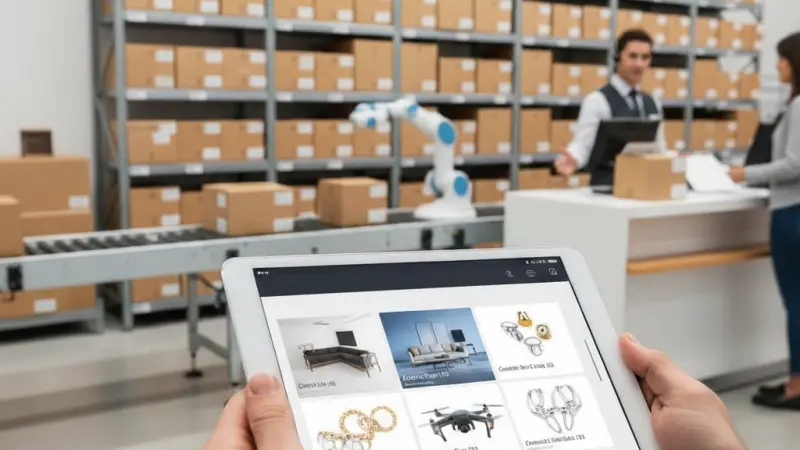
The British retail landscape has long been defined by its ability to blend tradition with innovation. Among the most resilient and unique segments of this market is the catalogue showroom sector. Once dominated by the heavy, glossy paper books found in almost every household, the industry has undergone a radical digital transformation. Today, catalogue showrooms represent a vital bridge between the convenience of digital browsing and the immediate gratification of physical retail. For millions of consumers across the UK, these establishments offer a streamlined way to access thousands of products—from high-end electronics to essential household furniture—under one roof.

The economic importance of this sector cannot be overstated. As a multibillion-pound industry, it supports thousands of jobs and acts as a major anchor for retail parks and high streets. Unlike traditional "browsing" shops where items are displayed on sprawling shelves, catalogue showrooms utilise a "back-room" stock model. This allows for higher inventory density and lower operational costs, savings that are frequently passed on to the consumer. In an era of rising inflation, the value proposition of these showrooms remains incredibly strong. Furthermore, for those looking to verify the credentials of various outlets, consulting a uk business directory website is the modern equivalent of checking the yellow pages, ensuring that consumers are engaging with legitimate, reputable retailers.
As we move deeper into the 2020s, the role of the catalogue showroom has evolved. It is no longer just about the "Laminated Book of British Dreams"; it is about omnichannel excellence. Customers might browse on a smartphone during their commute, reserve an item online, and collect it from a local showroom within minutes. This synergy of physical presence and digital speed is what keeps the sector competitive against pure-play e-commerce giants.
The Landscape of Catalogue Showrooms in the UK
The current landscape of catalogue showrooms in the UK is a fascinating study in retail endurance. While the number of physical stores has consolidated in recent years, the footprint of the major players remains significant, particularly in secondary towns and suburban retail parks where footfall is driven by convenience. Post-pandemic, the industry has seen a shift in consumer behaviour. The "bricks and clicks" model has become the standard, with showrooms serving as local hubs for "Click and Collect" services.
Market data suggests that while the "catalogue" itself is now more likely to be a tablet or a website than a physical book, the showroom's function as a fulfilment centre is more important than ever. Geographically, there is a high concentration of activity in the Midlands and the North of England, where retail park accessibility is high. However, the South East and London remain critical markets for premium electronics and home office equipment. The post-pandemic recovery was marked by a surge in demand for home improvement goods, a trend that catalogue showrooms were uniquely positioned to exploit due to their robust supply chains.
The evolution of the industry has also been marked by increased transparency and competition. For entrepreneurs and consumers alike, finding reliable outlets has been simplified by the presence of a uk online business directory, which categorises these showrooms alongside other vital local services. This digital visibility allows even smaller, independent showrooms to compete for local attention, ensuring that the "big players" do not hold a complete monopoly over the market.
Comprehensive Services Breakdown
The modern catalogue showroom is far more than a simple pick-up point; it is a multi-functional service centre. The product range typically spans several key categories:
Home & Garden: Including furniture, white goods, and power tools.
Technology: From the latest smartphones and gaming consoles to smart home devices.
Jewellery & Watches: A staple of the traditional catalogue model that remains highly profitable.
Toys & Leisure: Seasonal peaks in this category often define the financial year for these businesses.
Beyond product sales, these showrooms offer sophisticated financial services, including credit facilities and extended warranties. Delivery services have also become highly specialised, with "Same Day" delivery options becoming increasingly common for larger items like washing machines or sofas. This level of service requires a complex logistical backbone that manages inventory in real-time.
For businesses operating within this niche, showcasing their full range of services—such as assembly help or tech support—is essential for attracting a broader customer base. To help professionals in this field gain the exposure they need, many now utilise a business listing uk to highlight their specific service specialities and store locations. This type of digital footprint ensures that when a customer searches for a specific appliance, the local showroom appears as a viable, immediate solution compared to waiting for a standard courier.
How to Choose the Right Service Provider
For the consumer, choosing a catalogue showroom is about more than just finding the lowest price. Reliability, stock availability, and after-sales support are paramount. When evaluating a provider, customers should look for clear evidence of accreditations, particularly regarding data protection for online orders and consumer credit licenses for hire-purchase agreements.
Reviews and local reputation play a massive role in the decision-making process. A showroom might have great prices, but if their collection process is disorganized or their returns policy is restrictive, the customer experience suffers. Insurance is another factor; reputable showrooms will have comprehensive transit and public liability insurance, protecting the consumer from the moment an order is placed until it is safely in their home.
To facilitate this search, savvy shoppers often rely on local business listings uk to compare different retailers. These platforms provide verified data, allowing users to see which showrooms are top-rated by their peers. A "local reputation" in the digital age is built through consistent, positive interactions documented online. Checking these listings ensures that you are dealing with a business that values customer service and maintains high operational standards.
Industry Challenges & Future Outlook
The catalogue showroom sector faces several significant challenges, primarily driven by technology shifts and the urgent need for sustainability. The move away from paper catalogues was the first step, but the industry must now tackle the environmental impact of its supply chain. "Green initiatives" are no longer optional; they are a regulatory requirement and a consumer expectation. This includes reducing plastic packaging, optimising delivery routes to lower carbon emissions, and implementing robust recycling programmes for electronic waste (WEEE).
Regulatory changes in the UK, particularly regarding consumer credit and data privacy (UK GDPR), require constant vigilance. Showrooms must ensure their digital platforms are secure and their marketing practices are transparent. Furthermore, the rise of "Artificial Intelligence" in inventory management is changing the workforce, requiring employees to be more tech-savvy than ever before.
Despite these hurdles, the future outlook is positive. The integration of augmented reality (AR) in digital catalogues—allowing customers to "see" a piece of furniture in their room before ordering—is a game-changer. For businesses looking to stay ahead of these trends, staying connected with the wider retail community via a business listing uk can provide insights into how competitors are adapting and what new services are becoming industry standards.
Business Tips for Catalogue Showroom Professionals
For professionals in this sector, marketing a local business requires a dual-pronged approach: physical presence and digital dominance. While a well-located store is a great start, it is no longer enough to wait for footfall. Digital visibility is the cornerstone of modern retail success. This involves local SEO, active social media engagement, and participation in community-focused platforms.
One of the most effective ways to boost local visibility is to ensure your business is listed where customers are actually looking. Being part of a uk top rated local businesses list can significantly increase trust and click-through rates.
Professionals should also focus on "Google My Business" optimization and local citations. Ensure that your "NAP" (Name, Address, Phone Number) data is consistent across all platforms.
Content marketing is another powerful tool. By providing guides on "how to choose the best dishwasher" or "the latest trends in home gaming," you position your showroom as an authority. This builds a relationship with the customer before they even step foot in the store. Finally, never underestimate the power of a well-maintained local directory entry to drive high-intent traffic to your website or physical location.
Wrapping Up & Local Page Integration
The catalogue showroom remains a cornerstone of the British retail experience, offering a unique blend of efficiency, variety, and value. As the industry continues to innovate, the importance of being able to find and verify these businesses becomes even more critical. In a crowded marketplace, consumers need a reliable way to distinguish between mediocre services and top-tier providers.
For both the consumer looking for the best deal and the business owner looking to expand their reach, Local Page serves as the premier solution. By offering a comprehensive and easy-to-navigate uk local business directory, it ensures that the best of British retail is only a click away. Whether you are searching for a niche electronics provider or a major furniture showroom, the right directory makes the process seamless.
Boost Your Visibility with Local Page UK
In the competitive world of catalogue showrooms, being invisible is equivalent to being closed. To reach your full potential and connect with local customers who are ready to buy, you must claim your business listing uk today. Join a network of verified professionals and take control of your digital reputation with Local Page UK.
FAQ
1. What exactly is a catalogue showroom?
A catalogue showroom is a retail outlet where products are not typically displayed on open shelves for browsing. Instead, customers browse a physical or digital catalogue, select the items they wish to purchase, and then request them at a counter. The items are then brought out from an on-site warehouse or "back-room" stock area. This model allows for a massive variety of goods to be held in a relatively small retail footprint, making it highly efficient for both the retailer and the customer.
2. Are paper catalogues still used in showrooms?
While the traditional, thick paper catalogue was a staple for decades, most UK showrooms have transitioned to digital versions. These are often accessed via in-store tablets, touch-screen kiosks, or the customer's own smartphone. The shift to digital allows for real-time stock updates, price changes, and a significantly lower environmental impact, although some retailers still produce smaller, seasonal "look-books" or flyers for home distribution.
3. How has the pandemic affected this sector?
The pandemic accelerated the adoption of "Click and Collect" and "Check and Reserve" services. Catalogue showrooms were well-positioned for this shift because their business model already revolved around a central stockroom. Many stores implemented "contactless" collection points and improved their mobile apps to allow customers to complete the entire browsing and payment process without interacting closely with staff or physical catalogues.
4. Can I return items to a catalogue showroom?
Yes, most major catalogue showrooms in the UK have robust returns policies that align with standard consumer rights. If an item is faulty or not as described, you are entitled to a refund or replacement.
For "change of mind" returns, policies vary; many allow returns within 14 to 30 days, provided the item is in its original packaging. Always check the specific terms on the retailer's website or in the directory listing.
5. Where can I find a list of local showrooms?
To find a comprehensive list of retailers in your area, you should use a reputable Localpage directory. These platforms allow you to search by location and category, providing you with contact details, opening hours, and often customer reviews to help you make an informed choice. It is the most efficient way to see all your local options in one place.
6. Are prices lower in catalogue showrooms?
Generally, yes. Because these stores do not need large, expensive "front-of-house" display areas and can store items more densely in a warehouse format, their overheads are often lower than traditional department stores. These savings are frequently passed on to customers in the form of competitive pricing and frequent "clearance" events for older stock.
7. Do showrooms offer credit or financing?
Most large-scale catalogue showrooms offer various financing options, ranging from "Buy Now, Pay Later" schemes to monthly instalment plans. These are subject to credit checks and are regulated by the Financial Conduct Authority (FCA). It is a popular way for consumers to manage the cost of larger purchases like electronics or home appliances.
8. What is "Check and Reserve"?
"Check and Reserve" is a popular service where a customer checks the stock of a specific item at their local showroom via a website or app. If available, they can "reserve" the item for a set period (usually until the end of the next working day) without paying upfront. This ensures the item is waiting for them when they arrive at the store.
9. Can I get large items delivered from a showroom?
Yes, almost all showrooms offer home delivery for items that are too large or heavy for a customer to transport themselves. Depending on the retailer, this can range from standard 3-5 day delivery to "next-day" or even "same-day" services in certain urban areas. Some also offer "room of choice" delivery and packaging removal.
10. Are the products in showrooms brand new?
Unless explicitly stated as "refurbished" or "clearance/ex-display," all products sold in catalogue showrooms are brand new and in their original packaging. Refurbished items are usually clearly marked and come with a specific warranty to ensure consumer protection and transparency.
11. How do I know if a showroom is reputable?
Checking for independent customer reviews is the best way to gauge reliability. Look for the business on a verified listing site where users leave honest feedback about their experiences. Also, verify that they have a clear physical address and working customer service phone number, which are signs of a legitimate operation.
12. Do showrooms sell jewellery?
Jewellery and watches have been a core part of the catalogue showroom model for many years. Because these items are small and high-value, storing them in a secure back-room warehouse is safer and more efficient than displaying them in open cases. You can often find a wide range of gold, silver, and branded watches at very competitive prices.
13. Is it faster to buy in-store or online?
The "Check and Reserve" model is often the fastest way to get a product. While online delivery takes at least 24 hours, reserving an item in-store means you can often collect it within minutes of making the reservation, provided you can travel to the showroom location.
14. What happens if an item is out of stock?
If an item is out of stock at your local branch, most showrooms can "ship to store" from a central distribution centre or another nearby branch.
This usually takes 24 to 48 hours. Alternatively, they may offer to deliver the item directly to your home once it becomes available.
15. How can I list my own showroom business?
If you own or manage a showroom and want to increase your local reach, you can register your business on a professional platform like Local page. This allows you to create a profile, list your services, and connect with customers in your specific geographic area who are actively searching for your products.

Disclaimer: The information provided in this article is for general informational and research purposes only. Company details, features, services, and market positions may change over time. Readers are advised to visit official company websites and conduct independent research before making any business decisions or purchasing services.
Most Searchable Keywords

Recent Blogs


Related Listings

Categories
- Accountants (295)
- Advertising Agencies (559)
- Architects (149)
- Automobiles (377)
- Beauty (300)
- Carpenters (146)
- Cleaning Services (386)
- Dentists (189)
- Driving (62)
- Electricians (215)
- Energy (8)
- Event Organiser (685)
- Finance (599)
- Guide (3365)
- Health (2207)
- Information technology (206)
- Legal Services (353)
- Logistics (6)
- Maintenance (65)
- Manufacturing (35)

Sponsored Listings in Locksmith Services


Related Blogs

Gen Z Political Reporters and News Creators i...
Read this insightful article "Gen Z Political Reporters and News Creators in the UK" to expand your knowledge!

Famous Female Social Media Influencers Across...
Read this insightful article "Famous Female Social Media Influencers Across the UK" to expand your knowledge!

Your UK Sponsor Licence 2026 Step by Step Gui...
Read this insightful article "Your UK Sponsor Licence 2026 Step by Step Guide" to expand your knowledge!
Questions & Answers – Find What
You Need, Instantly!
How can I update my business listing?
Is it free to manage my business listing?
How long does it take for my updates to reflect?
Why is it important to keep my listing updated?
