
CD & DVD Duplication Services for Reliable Media Production
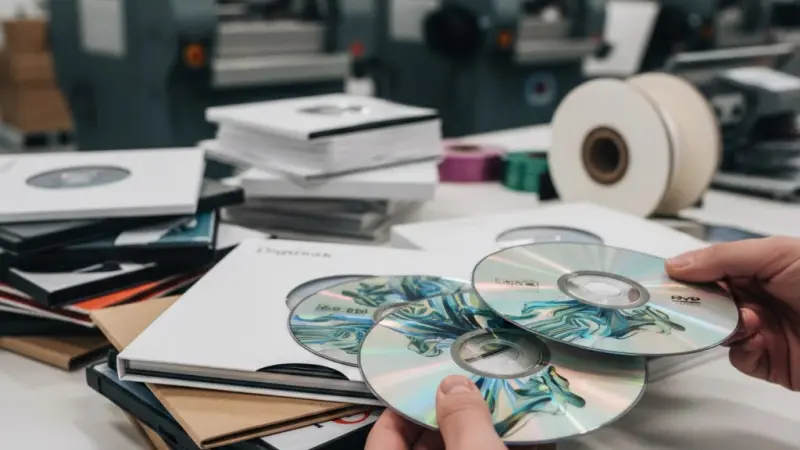
The media production landscape in the United Kingdom is a fascinating study in resilience and niche expertise. While the digital revolution has undeniably shifted how the average consumer accesses music, film, and data, the sector for CD & DVD Duplication Services remains a cornerstone of the UK’s creative and corporate economies. Far from being a relic of the past, physical media serves as a tangible, high-quality, and secure method for distributing content that streaming services simply cannot replicate. From independent musicians in London needing short-run album releases to multinational law firms in Manchester requiring secure data backups, the demand for professional duplication remains robust.

In the UK, the economic importance of this sector is often underestimated. It supports a vast ecosystem of graphic designers, mastering engineers, and logistical providers. For many businesses, physical media represents a brand’s physical footprint—a "leave-behind" that carries more weight than a fleeting email link. As we navigate a post-digital era, the importance of a reliable uk business directory becomes evident for those seeking to connect with these specialised service providers. The industry provides thousands of jobs and contributes significantly to the UK's manufacturing output within the creative industries, ensuring that high-fidelity audio and high-definition video are accessible in a format that the end-user truly owns.
The Landscape of CD & DVD Duplication Services in the UK
The current market for optical media services in Britain is characterised by high-speed, high-quality "duplication" for small runs and "replication" for mass-market production. Post-pandemic, the industry has seen a surprising resurgence. As live events returned to the UK, the need for merchandise—specifically CDs for bands and DVDs for educational seminars—surged. Market analysis suggests that while the "mass-market" retail sales of DVDs have declined, the bespoke, professional sector has stabilised, finding a home in sectors like medical imaging, software distribution, and archival storage.
Key regions of activity remain concentrated in traditional industrial and creative hubs. The M4 corridor, Greater London, and the West Midlands host some of the UK’s most advanced facilities. These regions benefit from excellent logistical links, allowing for next-day delivery across the British Isles. The evolution of the industry has seen a shift toward "on-demand" services. Facilities that once required minimum orders of 1,000 units have adapted their workflows to accommodate orders as small as 50 units, thanks to advancements in digital inkjet and thermal printing technology. To find these regional specialists, many procurement officers rely on a local page uk business directory to identify verified facilities within their immediate vicinity. This hyper-local approach ensures reduced shipping costs and a smaller carbon footprint, aligning with the modern UK business ethos.
Comprehensive Services Breakdown
A professional duplication house offers far more than just burning data onto a disc. The services are multifaceted, catering to aesthetic, functional, and security requirements.
1. CD Duplication and Replication
Duplication involves burning data onto pre-manufactured write-once discs (CD-R), ideal for runs under 500 units with fast turnaround times. Replication, conversely, involves creating a "glass master" and pressing discs from polycarbonate pellets. This is the gold standard for retail-ready products.
2. DVD and Blu-ray Services
For high-definition video distribution, DVD-9 and Blu-ray replication services are essential. These are heavily utilised by the UK’s independent film industry and corporate training sectors.
3. Professional Packaging and Print
Presentation is paramount. Services include "Jewel Cases," "Digipaks," and "Card Wallets." High-resolution on-body printing—using CMYK offset or silk-screen methods—ensures the product looks professional. Businesses looking for these premium options often consult business listing uk resources to compare the portfolios of different providers before committing to a large order.
4. Authoring and Mastering
Before duplication, the content must be "authored." This includes creating DVD menus, subtitle tracks, and ensuring the audio is mastered to UK broadcast or Red Book standards.
5. Fulfillment and Distribution
Many UK providers now offer "direct-to-fan" or "direct-to-client" fulfillment, where they house the stock and ship individual orders
as they come in, effectively acting as a 3PL (Third Party Logistics) provider for media.
How to Choose the Right Service Provider
Selecting a partner for media production requires more than just looking at the lowest price per unit. In the UK, quality and reliability are the primary currencies.
First, look for Accreditations. A reputable provider should adhere to ISO standards for quality management. Furthermore, check if they are members of trade bodies such as the BPI (British Phonographic Industry). Insurance is another critical factor; ensure the provider has "Goods in Transit" insurance and professional indemnity to protect your intellectual property.
Reviews and Reputation are easily verified in the modern age. However, rather than relying on anonymous snippets, savvy business owners use uk verified business listings to see a history of service excellence. A local reputation is often a strong indicator of reliability; if a local university or council uses a specific duplication house, it’s a high-trust signal. Finally, ask about their Equipment. A provider using professional-grade Rimage or Primera systems will produce a significantly better result than a small outfit using consumer-grade "towers."
Industry Challenges & Future Outlook
The duplication industry faces a dual challenge: the ubiquity of high-speed internet and the rising cost of raw materials. Polycarbonate and lacquer prices have fluctuated due to global supply chain shifts. However, the future is not bleak. The "Retro-Trend" is real; much like the vinyl revival, CDs are seeing a comeback among Gen Z consumers who value physical ownership.
Sustainability is the new frontier. UK duplication houses are increasingly offering "Eco-Wallets"—packaging made from 100% recycled card with vegetable-based inks—and eliminating plastic "shrink-wrap" in favour of biodegradable alternatives. Regulatory changes in the UK, such as the Plastic Packaging Tax, have accelerated this shift.
Technologically, the shift is toward hybrid media—discs that include QR codes or AR (Augmented Reality) triggers that link the physical product to a digital experience. To stay ahead of these trends, many startups in this space are seeking a business listing uk to showcase their innovative, green-certified production methods to an eco-conscious British public.
Business Tips for Duplication Professionals
For those running a duplication business, "Local SEO" is your most powerful tool. Most clients start their search with terms like "CD duplication near me" or "DVD printing [City Name]." Therefore, your digital visibility is non-negotiable.
Ensure your website is mobile-responsive and features high-quality images of your previous work. More importantly, get active in a uk local business search environment. Being listed where your customers are already looking for "professional services" or "trade services" creates a shortcut to conversion.
Content Marketing is also vital. Write blog posts about "How to prepare your master for duplication" or "The benefits of Blu-ray over USB for corporate presentations." This establishes you as an authority, not just a commodity provider.
Networking within the UK’s B2B circles and ensuring your company appears in a uk b2b business directory will open doors to high-volume corporate contracts that provide steady "bread and butter" income between the more sporadic creative projects.
Wrapping Up & Local Page Integration
The CD and DVD duplication industry in the UK is a testament to the enduring value of physical media. It is an industry built on precision, creative flair, and technical reliability. Whether you are a creator looking to immortalise your work or a business professional needing secure data distribution, the right duplication partner is out there.
Finding these experts shouldn't be a chore. In a cluttered digital world, a dedicated uk online business directory provides the clarity and filter needed to find top-tier British service providers. For businesses within this sector, the message is clear: your expertise is valuable, but only if it can be found. By leveraging platforms like Local Page, duplication houses can ensure they are visible to the very clients who need their specialised skills.
Boost Your Visibility with Local Page UK
In the competitive world of media production, standing out is essential. If you operate a CD or DVD duplication service, or any professional service in the UK, you need to be where the eyeballs are. We invite you to claim your business listing uk today. By joining our network, you place your brand in front of a targeted audience of UK consumers and B2B buyers actively seeking reliable, local solutions. Don't let your business be the best-kept secret in the industry—join Local Page UK and grow your digital footprint.
FAQ
1. What is the difference between CD duplication and CD replication?
CD duplication is the process of "burning" data onto pre-made, write-once CD-R discs using lasers. This is highly efficient for small orders, usually under 500 units, and offers very fast turnaround times, often within 24 to 48 hours. CD replication, however, is a manufacturing process where a "glass master" is created from your original data. This master is used to stamp or "press" the data into molten polycarbonate. Replication is the standard for retail-grade products found in shops. While it has a higher initial setup cost and longer lead times, the unit price is significantly lower for large volumes (1,000+ units), and the physical durability of the disc is generally superior to duplicated versions.
2. Is it still worth producing DVDs in the UK given the rise of streaming?
Absolutely. While streaming is dominant for casual consumption, DVDs remain vital for several high-stakes sectors in the UK. In the legal and medical professions, physical discs provide a "frozen" record of data that cannot be edited or deleted accidentally from a cloud server. Educational institutions often prefer DVDs because they do not require high-speed internet to function, ensuring equal access for all students. Furthermore, for independent filmmakers and niche creators, a physical DVD serves as a high-value merchandise item that fans can collect and have signed. The "tactile" nature of a DVD provides a sense of ownership and permanence that a digital file simply cannot match, making it a reliable production choice.
3. How long does a typical duplication project take to complete?
Turnaround times for duplication are remarkably swift. For a standard order of 100 to 300 CDs or DVDs with basic on-body printing and card wallets, most UK providers can complete the work within 2 to 3 working days. Some even offer "same-day" or "24-hour" express services for urgent corporate events. Replication projects take longer because of the glass mastering and industrial setup involved; you should typically allow 10 to 15 working days for these. It is always best to provide your artwork and master files in the correct format early to avoid delays. High-quality providers will often have a "pre-flight" check to ensure your files are ready for the production line immediately upon arrival.
4. What are the environmental options for media packaging?
The UK media production industry has made significant strides in sustainability. Most duplication houses now offer "Plastic-Free" packaging options. Instead of traditional plastic jewel cases, you can opt for Digipaks or card wallets made from FSC-certified recycled board. Many companies use vegetable-based inks for printing, which are far less harmful to the environment than traditional petroleum-based inks.
Some providers have even moved away from plastic shrink-wrap, using biodegradable "tamper-evident" stickers instead. If sustainability is a core value for your brand, look for a provider that explicitly lists their eco-credentials. Choosing a local UK provider also reduces the carbon footprint associated with international shipping and logistics.
5. Where can I find a reliable duplication service near me?
Finding a local provider is best handled through a verified Localpage search. This allows you to filter results by region, ensuring you find a facility that understands the local market and can offer lower shipping costs. By using a dedicated directory, you can view company profiles, check their specific service offerings, and ensure they have the necessary capacity for your project. Working with a local business also allows for easier communication; you might even be able to visit the facility to check samples of their previous work or pick up your finished order in person, which can be a significant advantage for tight deadlines or sensitive data projects.
6. Can duplication services handle copy protection?
Yes, many professional duplication and replication services offer CSS (Content Scramble System) or other proprietary anti-piracy measures for DVDs. While no system is 100% foolproof against determined hackers, these measures prevent the average user from making simple "rip" copies of your content. This is particularly important for software developers, high-value training content creators, and independent film producers who want to protect their intellectual property and revenue streams. When discussing your project with a provider, ask about their encryption options and whether there are additional licensing fees involved. They can advise on the best level of protection based on your target audience and the sensitivity of the data being distributed.
7. What file formats should I provide for the master?
For CD audio projects, a DDP (Disc Description Protocol) image is the industry standard and the most reliable way to ensure your track gaps and metadata (like ISRC codes) are preserved. Alternatively, you can provide high-quality WAV or AIFF files. For DVDs, an ISO image or a formatted DVD-Video folder (VIDEO_TS) is required. It is vital to ensure your master is thoroughly tested before submission; duplication houses "mirror" your master exactly, meaning any errors on your original will be present on every single copy produced. Most professionals recommend using high-quality burning software and performing a "bit-for-bit" verification after creating your master disc or file to ensure total data integrity.
8. What is "on-body" printing?
On-body printing refers to the process of applying artwork directly onto the non-data side of the disc. There are three main methods used in the UK. Inkjet printing is common for short-run duplication and offers vibrant colours and high resolution. Thermal transfer printing uses heat to bond resin to the disc, resulting in a very durable, smudge-proof finish that looks professional. For large-scale replication, Silk-screen or Offset printing is used. Offset printing is best for complex, photographic designs, while Silk-screen is ideal for bold, solid colours (Pantone matching). Professional duplication houses will provide you with a "template" to ensure your artwork fits perfectly around the center hole and the outer edges of the disc.
9. Can I get a single "one-off" copy made?
While duplication services specialise in "runs" (multiple copies), many do offer "bespoke" or "one-off" services, particularly for archival purposes or as a "proof" before a larger production run. However, the cost per unit for a single copy will be significantly higher than if you were ordering 50 or 100 units, due to the labour involved in setting up the artwork and printer. If you only need one copy for personal use, a home computer might suffice, but for a professional "master" or a high-end gift, a professional service is recommended. They use professional-grade "A-grade" media which has a much lower failure rate and a longer shelf life than the cheap discs sold in supermarkets.
10. Do I need to worry about copyright when duplicating discs?
Yes, copyright law in the UK is very strict. A professional duplication company will require you to sign a "Rights Indemnity Form." This document states that you either own the copyright to the material or have obtained the necessary licences (such as MCPS/PRS for music) to reproduce it. They will not duplicate commercially produced movies, music, or software without proof of permission. If your project contains "covers" of famous songs, you must ensure you have paid the mechanical royalty fees. Being honest and transparent with your provider about the content of your discs will prevent legal issues and ensure your project isn't "held up" in production due to copyright concerns.
11. What is a "Glass Master"?
A glass master is a highly precise tool used only in the replication process. It is a glass disc coated with a light-sensitive material. A laser beam recorder "writes" your data onto this coating. After processing, the glass master is used to create a metal "stamper." This stamper is then placed into an injection moulding machine to produce thousands of identical discs. Because of the extreme precision required (it must be done in a "clean room" environment to avoid dust), creating a glass master is the most expensive part of the replication process. However, once made, it allows for the incredibly rapid and cheap production of massive quantities of discs, which is why it is the preferred method for major labels.
12. Are Blu-ray discs still a viable format?
Yes, Blu-ray remains the only way to distribute 4K and high-bitrate 1080p video without the compression issues associated with streaming. In the UK, it is the preferred format for "Special Edition" film releases, high-end corporate presentations, and architectural visualisations. Because Blu-ray discs have a much higher storage capacity (25GB for single-layer, 50GB for dual-layer) than DVDs (4.7GB), they can hold significantly more data and higher quality assets. While the duplication of Blu-rays is more expensive than DVDs, the perceived value to the end-user is much higher. If you are producing content where visual fidelity is the top priority, Blu-ray is the definitive choice for your production.
13. What should I look for in a company's portfolio?
When reviewing a provider’s past work, look for diversity and quality. Have they worked with known brands or institutions? Do their samples show clean, sharp printing and well-aligned packaging? A good portfolio should demonstrate that the company can handle different types of packaging, from simple wallets to complex multi-disc box sets. Pay attention to the "finish" of the products—do they look like something you would be proud to sell or give to a client? Checking their Local Page profile can often give you insights into their standing in the business community and whether they consistently deliver the high standards required for professional media production in the UK market.
14. Can duplication services help with graphic design?
Many UK duplication houses offer "in-house" graphic design services as an add-on. If you have the content but aren't sure how to create the layout for a 4-page booklet or a DVD inlay, their designers can help. They are experts at working within the specific technical templates required for disc packaging, ensuring that text isn't cut off and that "bleed" areas are handled correctly.
Even if you have your own designer, it is often worth paying for a "file check" service. This ensures that your colours are in CMYK format, your resolution is at least 300dpi, and your fonts are embedded, preventing any nasty surprises when you open your boxes of finished discs.
15. Is "Print-on-Demand" available for CDs and DVDs?
Yes, some advanced UK facilities offer a "Print-on-Demand" (POD) service. This is particularly popular for authors or musicians who sell through their own websites but don't want to hold inventory. When a customer places an order, the data is sent to the duplication house, which burns one disc, prints the packaging, and ships it directly to the customer. This model eliminates the risk of "dead stock" and reduces upfront costs. It relies on seamless digital integration between your sales platform and the provider's workflow. To find providers capable of this level of technical integration, searching through a comprehensive Local page directory is the most efficient way to identify modern, tech-forward media partners.

Disclaimer: The information provided in this article is for general informational and research purposes only. Company details, features, services, and market positions may change over time. Readers are advised to visit official company websites and conduct independent research before making any business decisions or purchasing services.
Most Searchable Keywords

Recent Blogs



Related Listings


Categories
- Accountants (295)
- Advertising Agencies (559)
- Architects (149)
- Automobiles (377)
- Beauty (300)
- Carpenters (146)
- Cleaning Services (386)
- Dentists (189)
- Driving (62)
- Electricians (215)
- Energy (8)
- Event Organiser (685)
- Finance (599)
- Guide (3365)
- Health (2207)
- Information technology (206)
- Legal Services (353)
- Logistics (6)
- Maintenance (65)
- Manufacturing (35)

Sponsored Listings in Locksmith Services


Related Blogs

Gen Z Political Reporters and News Creators i...
Read this insightful article "Gen Z Political Reporters and News Creators in the UK" to expand your knowledge!

Famous Female Social Media Influencers Across...
Read this insightful article "Famous Female Social Media Influencers Across the UK" to expand your knowledge!

Your UK Sponsor Licence 2026 Step by Step Gui...
Read this insightful article "Your UK Sponsor Licence 2026 Step by Step Guide" to expand your knowledge!
Questions & Answers – Find What
You Need, Instantly!
How can I update my business listing?
Is it free to manage my business listing?
How long does it take for my updates to reflect?
Why is it important to keep my listing updated?
