
Clock & Watch Sales and Repairs: Buying, Servicing & Restoration Tips
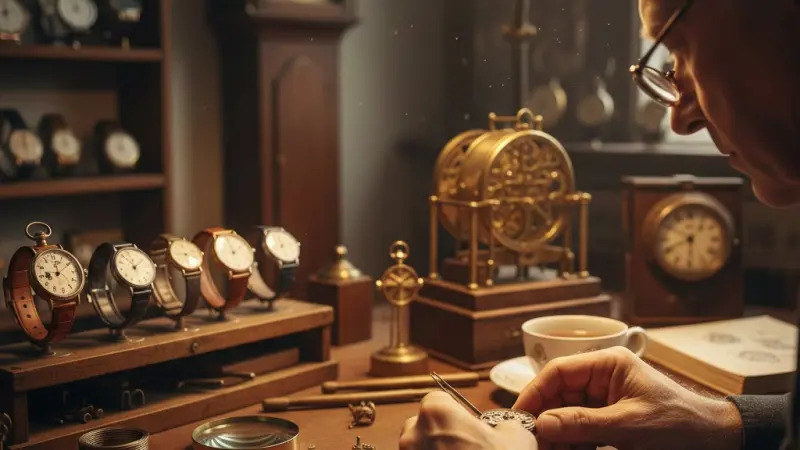
The horological sector in the United Kingdom is a masterclass in the intersection of heritage and high-precision engineering. From the rhythmic ticking of a grandfather clock in a country manor to the silent, intricate movement of a luxury Swiss chronograph on a London professional’s wrist, clocks and watches are more than mere timekeepers; they are stores of value, family heirlooms, and symbols of British craftsmanship. As a British business analyst, one cannot overlook the economic resilience of the Clocks & Watches – Sales & Repair sector. Despite the digital revolution and the ubiquity of smartphones, the demand for mechanical excellence has seen a significant resurgence.

In the UK, this industry contributes substantially to the luxury retail market and the skilled "maker" economy. The sector encompasses everything from high-street retailers and antique clock dealers to highly specialized independent horologists who operate from private workshops. The economic importance of this niche lies in its circularity—it is an industry built on longevity. A well-maintained timepiece can last centuries, necessitating a robust infrastructure for servicing, parts manufacturing, and restoration. For consumers, navigating this world requires an understanding of both the art of the "buy" and the science of the "repair." For the modern horological business, success depends on being visible within a uk online business directory to ensure that heritage skills meet modern demand.
This guide aims to provide an exhaustive overview of the current landscape, offering practical advice for collectors and actionable business strategies for professionals. We will explore the technical nuances of servicing, the importance of choosing accredited providers, and the future of an industry that remains timeless in an increasingly disposable world.
The Landscape of Clocks & Watches – Sales & Repair in the UK
The British horological market is currently experiencing a "mechanical renaissance." While quartz technology dominated the late 20th century, the 21st century has seen a pivot back to traditional movements. Currently, the UK market for luxury watches alone is valued in the billions, with the secondary (pre-owned) and repair markets growing at an even faster rate than new sales. This shift is driven by a growing appreciation for sustainable luxury—the idea that buying one high-quality item and maintaining it is superior to the "fast fashion" alternative.
Geographically, the industry thrives in specific hubs. Clerkenwell in London remains a spiritual home for British watchmaking, while the Jewellery Quarter in Birmingham hosts a dense concentration of specialists. However, the rise of the uk business directory has allowed regional specialists in places like the Cotswolds, Yorkshire, and Edinburgh to reach a national audience. The post-pandemic era has further evolved this landscape. With people spending more time at home, interest in "interiors" led to a spike in antique clock restoration. Simultaneously, the "investment watch" trend saw enthusiasts seeking out discontinued models, which often require immediate servicing to maintain their value.
The evolution of the industry has also been marked by a professionalization of the trade. The British Horological Institute (BHI) and the British Watch & Clock Makers' Guild have seen a surge in interest as consumers become more discerning. In a digital-first world, the most successful horological businesses are those that blend traditional bench skills with an active presence in a uk local business directory, allowing them to bridge the gap between their workshop and the modern collector.
Comprehensive Services Breakdown
Understanding the breadth of services in the horological sector is vital for any owner. Repairs are not a monolith; they range from minor cosmetic adjustments to "ground-up" restorations.
1. Routine Servicing and Overhauls
For a mechanical watch, a service is akin to an MOT for a car. It involves a complete strip-down of the movement. Each component is cleaned in ultrasonic baths, inspected for wear, and reassembled with specific oils. For clocks, particularly those with striking or chiming mechanisms, this process is even more complex due to the scale and number of moving parts.
2. Restoration and Conservation
Restoration aims to return a piece to its original state, whereas conservation focuses on preserving the current state and preventing further decay. Professional restorers use lathes and traditional tools to hand-make obsolete parts. For those looking for these high-level skills, searching via business listing uk can help identify craftsmen who specialize in specific periods, such as 17th-century longcase clocks or early 20th-century trench watches.
3. Case and Dial Refurbishment
Cosmetic integrity is crucial for value. This includes polishing (though often discouraged for vintage pieces), glass replacement (acrylic, mineral, or sapphire), and dial "re-luming" or restoration.
4. Valuation and Sales
Reputable dealers offer appraisal services for insurance or probate. The sales side of the industry has moved heavily into the "boutique" and "certified pre-owned" space, where transparency regarding a watch's service history is a major selling point. Professionals in this space often utilize a business listing uk to showcase their stock to a wider audience.
How to Choose the Right Service Provider
Choosing a horologist is a matter of trust. You are often handing
over an item of significant financial or sentimental value.
Accreditations and Training
Look for members of the British Horological Institute (BHI). A "MBHI" or "FBHI" designation indicates a high level of qualification. Furthermore, for modern luxury watches, check if the workshop is "brand authorized." Brands like Rolex, Omega, and Patek Philippe only supply genuine parts to workshops that meet their stringent equipment and training standards.
Reviews and Local Reputation
In the age of information, a provider’s digital footprint is their modern storefront. Scrutinize local business listings uk to read genuine customer experiences. Pay attention to how they handle complex repairs and their turnaround times.
Insurance and Security
Ensure the business has "Goods in Trust" insurance. Horological workshops are high-value targets; a professional shop will have high-grade safes and alarm systems. If you are sending a watch via post, verify their intake procedures and whether they use secure, tracked couriers.
Transparency
A good service provider will provide a detailed estimate before commencing work. They should be able to explain exactly why a part needs replacing and, in the case of high-value vintage items, discuss how the repair might affect the item's future collectability. Finding these transparent experts is made easier by using a uk verified business listings platform.
Industry Challenges & Future Outlook
The horological trade faces several hurdles in the coming decade. The most significant is the "skills gap." As an older generation of master horologists retires, there is a desperate need for young apprentices to take up the loupe and tweezers.
Technological Shifts
Smartwatches have disrupted the lower-end quartz market, but they have surprisingly bolstered the mechanical sector. Many "tech-native" users eventually crave the soul of a mechanical movement. Additionally, 3D printing and CNC machining are changing how parts are made, allowing restorers to recreate components that haven't been in production for a century.
Sustainability and Green Initiatives
The "repair over replace" ethos is gaining traction. The industry is increasingly focused on sustainable sourcing of materials and reducing the chemical footprint of cleaning solutions. Businesses that highlight these green credentials in their business listing uk often find favor with the modern, eco-conscious consumer.
Regulatory Changes
Post-Brexit, the movement of luxury goods for repair between the UK and the EU has become more complex regarding VAT and customs. Professional horologists must now be experts in logistics as well as mechanics. Despite these challenges, the outlook remains positive. The appetite for British-made watches—led by brands like Roger Smith and Christopher Ward—is at an all-time high, ensuring that the business listing uk will continue to be populated by world-class British talent.
Business Tips for Clocks & Watches – Sales & Repair Professionals
For the independent watchmaker or clock shop owner, craftsmanship is only half the battle; the other half is marketing.
Digital Visibility
Most customers now begin their search for a repairer on their smartphone. If your business isn't listed, you don't exist. Claiming your spot in a uk top rated local businesses guide is the most cost-effective way to generate leads.
Content Marketing
Horology is inherently visual. Sharing "before and after" photos of a rusted movement being brought back to life is powerful marketing.
Use social media to drive traffic back to your profile on a uk service listings platform.
Customer Education
Write blog posts or newsletters about when to service a watch or how to wind a grandfather clock. Positioning yourself as an authority builds the trust necessary for a customer to leave a £10,000 watch in your care.
Networking and B2B
Many jewelry shops do not have in-house watchmakers. By listing your workshop in a uk professional services listings directory, you can attract B2B contracts, providing a steady stream of trade work alongside your private commissions.
Wrapping Up & Local Page Integration
The world of clocks and watches is a testament to human ingenuity and the enduring value of mechanical art. Whether you are a collector looking to preserve a piece of history or a service provider keeping the gears of the industry turning, the need for a central, reliable connection point is clear. The UK’s horological tradition is safe as long as the skilled professionals behind the bench are accessible to those who value their work.
In a crowded digital marketplace, finding a specialist shouldn't be like finding a needle in a haystack. For those asking how to find local businesses uk, the answer lies in structured, authoritative platforms. The industry thrives on local trust backed by national standards. By utilizing a comprehensive local businesses list uk, consumers can ensure their cherished timepieces are in the best hands.
As we look to the future, the marriage of ancient skills and modern visibility will define the success of the UK horological sector. Businesses must embrace the digital tools available to them, ensuring that when a customer searches for "watch repair near me," they find a professional capable of delivering excellence.
Boost Your Visibility with Local Page UK
For professionals in the Clocks & Watches – Sales & Repair sector, your expertise is your greatest asset, but your online presence is your greatest salesman. In an era where 90% of consumers search for local services online, being invisible is no longer an option. Local Page UK offers a premier platform for you to showcase your workshop, share your accreditations, and connect with local collectors. By securing a business listing uk, you can ensure that your business stands out in your community. Whether you specialize in Rolex servicing or 18th-century turret clock restoration, let Local Page UK help you bridge the gap between your bench and your next loyal customer.
FAQ
How often should I have my mechanical watch serviced?
Most manufacturers and independent horologists recommend a full service every 3 to 5 years. Even if the watch is keeping perfect time, the synthetic oils inside can dry out or become contaminated with microscopic metal dust. Running a watch with dry lubricants is like running a car engine without oil; it causes accelerated wear on the pivots and jewels, potentially leading to a much more expensive repair bill in the future.
Why is it so expensive to repair a vintage clock?
Vintage clock repair is incredibly labor-intensive. Unlike modern items, you cannot simply "order" a part for a clock made in 1850. A horologist must often manufacture the part from scratch using a lathe and traditional hand tools.
This requires hours of precision engineering, plus the time taken to clean, assemble, and "test" the clock for several weeks to ensure its striking and timing mechanisms are perfectly synchronized.
Can I change a watch battery myself?
While it is physically possible, it is rarely advisable for high-quality or water-resistant watches. Opening the case back requires specific tools to avoid scratching the metal. More importantly, when a professional changes a battery, they also inspect the gaskets and perform a pressure test to ensure the watch remains water-resistant. A DIY battery change often leads to a compromised seal and subsequent water damage.
What is the difference between "water-resistant" and "waterproof"?
In the horological world, no watch is truly "waterproof." They are rated for "water resistance" at specific depths (e.g., 30m, 100m). These ratings are based on static pressure tests in a laboratory. For example, a "30m" watch is only splash-proof and should not be worn while swimming. Always consult a professional listed on a uk home services directory to check your watch’s seals before taking it into the water.
How do I know if a watch repairer is reputable?
Check for professional memberships such as the BHI (British Horological Institute). A reputable repairer will provide a clear, written estimate and offer a warranty (usually 12–24 months) on their work. You can also look for verified reviews and detailed business profiles on Localpage to see how they have handled similar repairs for other customers in the UK.
My grandfather clock has stopped. Is it definitely broken?
Not necessarily. Large clocks are very sensitive to being "in beat." If the clock is slightly tilted to one side, the pendulum cannot swing evenly, and it will stop. Listen for an even "tick-tock" sound. If it sounds irregular (a "limping" sound), the clock is out of beat. If adjusting the level doesn't work, it likely requires a professional cleaning, as old oil may have turned into a sticky paste that is blocking the gears.
Is it worth restoring a watch that has a lot of sentimental value but low market value?
From a purely financial standpoint, no. However, horology is often about emotion. If a watch belonged to a late relative, the cost of restoration is an investment in a family heirloom. A professional horologist can perform a "sympathetic restoration" which preserves the character and "soul" of the watch while making it functional again for the next generation to wear.
What is a "COSC" certified watch?
COSC stands for Contrôle Officiel Suisse des Chronomètres. It is an independent Swiss testing institute that verifies the accuracy of watch movements. To earn the title of "Chronometer," a mechanical watch must stay within -4 to +6 seconds of deviation per day across various temperatures and positions. This certification is a hallmark of high-precision engineering and often adds to the resale value of a timepiece.
Why does my automatic watch stop if I don't wear it for a couple of days?
Automatic watches rely on the movement of your wrist to wind the mainspring. Most have a "power reserve" of 38 to 70 hours. If you leave it on your bedside table longer than this, the energy runs out and the watch stops. You can either wind it manually (usually 20–30 turns of the crown) or use a watch winder box to keep it running while not in use.
Can a cracked sapphire crystal be repaired?
No. Unlike acrylic (plastic) crystals, which can be polished to remove light scratches, sapphire and mineral glass crystals must be replaced if they are cracked or deeply scratched. A cracked crystal is a major risk, as tiny shards of glass can fall into the movement, causing catastrophic damage to the delicate gears and hairspring.
Should I polish my vintage Rolex?
Most serious collectors advise against polishing. Every time a watch is polished, a microscopic layer of metal is removed. Over time, this rounds off the sharp edges of the case and lugs, which can significantly decrease the watch's market value. Collectors prefer a "sharp" case with some scratches (patina) over a shiny, over-polished watch that has lost its original factory lines.
What is a "complication" in a watch?
A complication is any function on a watch that goes beyond telling the hours, minutes, and seconds. Common complications include date displays, chronographs (stopwatch functions), GMT (second time zone), and moon phases. The more complications a watch has, the more complex it is to service and repair, as the part count increases significantly.
My clock strikes the wrong hour. How do I fix it?
This is often a simple synchronization issue. Most clocks allow you to move the hour hand independently to match the number of strikes. However, you should never turn the hands backward on a striking clock unless the manufacturer specifically states it is safe, as this can damage the delicate striking cams and levers.
Why do some watches use "jewels"?
The "jewels" in a watch movement are usually tiny, synthetic rubies. They are used as bearings for the rotating gears. Because rubies are incredibly hard and smooth, they reduce friction
and wear on the metal pivots, allowing the watch to run more accurately and last for decades without the metal-on-metal parts grinding each other down.
How can I find a local clock specialist in a rural area?
Finding specialized trades in rural parts of the UK can be challenging. The best approach is to use a dedicated search tool like Local page. These directories allow you to filter by specific trade and location, helping you find master craftsmen who may work from home-based workshops or small village premises that aren't immediately visible on the high street.

Disclaimer: The information provided in this article is for general informational and research purposes only. Company details, features, services, and market positions may change over time. Readers are advised to visit official company websites and conduct independent research before making any business decisions or purchasing services.
Most Searchable Keywords

Recent Blogs



Related Listings


Categories
- Accountants (295)
- Advertising Agencies (559)
- Architects (149)
- Automobiles (377)
- Beauty (300)
- Carpenters (146)
- Cleaning Services (386)
- Dentists (189)
- Driving (62)
- Electricians (215)
- Energy (8)
- Event Organiser (685)
- Finance (599)
- Guide (3365)
- Health (2207)
- Information technology (206)
- Legal Services (353)
- Logistics (6)
- Maintenance (65)
- Manufacturing (35)

Sponsored Listings in Locksmith Services


Related Blogs

Gen Z Political Reporters and News Creators i...
Read this insightful article "Gen Z Political Reporters and News Creators in the UK" to expand your knowledge!

Famous Female Social Media Influencers Across...
Read this insightful article "Famous Female Social Media Influencers Across the UK" to expand your knowledge!

Your UK Sponsor Licence 2026 Step by Step Gui...
Read this insightful article "Your UK Sponsor Licence 2026 Step by Step Guide" to expand your knowledge!
Questions & Answers – Find What
You Need, Instantly!
How can I update my business listing?
Is it free to manage my business listing?
How long does it take for my updates to reflect?
Why is it important to keep my listing updated?
