
Coins & Medals Guide: Collecting, Valuation & Authentication
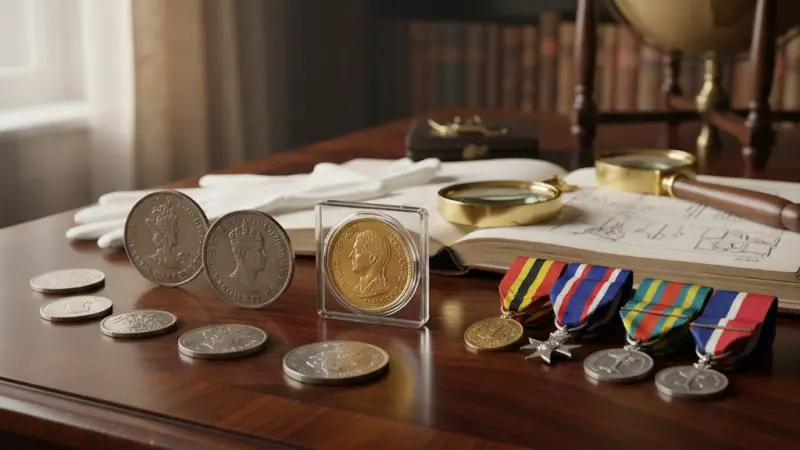
The numismatic landscape in the United Kingdom is a fascinating intersection of historical preservation, artistic appreciation, and shrewd financial investment. For centuries, the British Isles have been at the heart of the global coin trade, a legacy cemented by the Royal Mint’s long-standing reputation for excellence and the UK’s status as a primary hub for international auction houses. Collecting coins and medals is far more than a mere hobby; it is a sophisticated sector of the British economy that supports a vast network of specialist dealers, auctioneers, professional valuers, and restoration experts.

In the current economic climate, tangible assets have seen a resurgence in popularity. With traditional financial markets experiencing volatility, many investors are turning to "alternative" assets. Rare British coinage—from hammered gold nobles of the medieval period to the iconic sovereigns of the Victorian era—and military medals representing the nation's valorous history, offer a unique combination of intrinsic metal value and historical scarcity. This sector contributes significantly to the UK’s "Passion Investment" market, which is estimated to be worth billions.
The importance of this sector extends beyond the purely financial. It serves as a custodian of British heritage. Each coin reflects the political, social, and economic state of the era in which it was struck. Similarly, British military medals provide a tangible link to the personal stories of those who served in the Armed Forces, making the authentication and valuation of these items a matter of national historical record.
As the market grows more complex, the need for authoritative guidance becomes paramount. Whether you are a seasoned numismatist or a novice looking to protect a family heirloom, understanding the nuances of authentication, the drivers of market value, and how to navigate the professional landscape is essential. To find reputable professionals in this niche, many enthusiasts rely on a uk business directory to verify the credentials of local experts and ensure they are dealing with established British firms.
The Landscape of Coins & Medals in the UK
The UK numismatic and militaria market has undergone a significant transformation over the last decade. Historically centered around physical shops in London’s West End and regional hubs like York and Edinburgh, the industry has rapidly adapted to a digital-first world. Current estimates suggest the UK market for rare coins and medals remains one of the most robust in Europe, characterized by a high volume of transactions ranging from entry-level collectables to multi-million pound rarities.
Post-pandemic, the evolution of the industry has been marked by two distinct trends: the "democratisation" of collecting through online platforms and a heightened focus on high-quality, high-grade specimens. During the lockdowns, many Britons rediscovered their interest in history, leading to a surge in demand for Victorian-era coinage and Great War medals. This period also saw the definitive shift towards online auctions, which now account for a substantial portion of the sector's annual turnover. The convenience of digital bidding has opened the UK market to international collectors from the US, China, and the Middle East, further driving up prices for premium British assets.
Geographically, London remains the undisputed capital for high-end numismatic activity, hosting major events like the Coinex international fair. However, significant pockets of activity exist across the Midlands and the North, where long-standing family-run dealerships continue to thrive. These regional experts provide vital services to local communities, often acting as the first point of contact for individuals who discover "hoards" or inherit collections. In an era where trust is the primary currency, being listed on a uk online business directory has become a vital way for these regional specialists to signal their legitimacy to a national audience.
Furthermore, the integration of technology has improved the transparency of the market. Databases of past auction results, high-resolution digital imaging, and third-party grading services (such as NGC and PCGS) have become standard tools. This technological adoption has made the industry more resilient, allowing it to maintain momentum even when physical footfall at brick-and-mortar stores declined. The British market is now a hybrid model, combining the prestige of traditional horology and numismatics with the efficiency of modern e-commerce.
Comprehensive Services Breakdown
The world of coins and medals is diverse, requiring a wide array of professional services to ensure the integrity and value of collections. For the serious collector, understanding these services is the difference between a successful investment and a costly mistake.
1. Professional Valuation and Appraisal This is the cornerstone of the industry. Accurate valuation requires a deep understanding of the 'Three Cs': Condition, Content, and Context. Professional valuers assess the grade of a coin (its physical state of preservation) and the provenance of a medal (its history of ownership and the actions it commemorates). In the UK, many professionals offer valuation services for probate, insurance, or sale purposes. Finding a qualified expert via a business listing uk allows collectors to access specialists who adhere to the Royal Institution of Chartered Surveyors (RICS) or the British Numismatic Trade Association (BNTA) standards.
2. Authentication and Counterfeit Detection With the rise in high-quality counterfeits, authentication has become a high-tech discipline. Experts use X-ray fluorescence (XRF) to determine metal purity, microscopic analysis to identify "struck" versus "cast" characteristics, and weight verification to the milligram. For military medals, authentication involves checking the naming on the rim against official medal rolls held at the National Archives.
3. Conservation and Restoration Unlike cleaning—which often destroys the value of a coin—conservation involves the professional removal of harmful contaminants like "PVC damage" or active corrosion.
Professional conservators use reversible, non-invasive methods to stabilize the piece, ensuring its longevity for future generations.
4. Portfolio Management and Brokering High-net-worth individuals often treat coins as a specific asset class. Specialized brokers provide bespoke advice on acquiring "key dates" or rare types that are likely to appreciate in value. They also facilitate private treaty sales, keeping high-value transactions confidential and out of the public auction arena.
5. Supplies and Storage Solutions Protecting the "luster" of a coin or the ribbon of a medal is critical. This niche service provides acid-free capsules, mahogany cabinets, and moisture-controlled environments. Safety is also a major concern; many providers offer advice on secure display and high-security safes. For more information on where to find these physical assets, one might consult a business listing uk to locate specialist equipment suppliers.
How to Choose the Right Service Provider
Navigating the numismatic market requires a discerning eye, not just for the coins, but for the professionals who handle them. Given the high value of these assets, choosing a service provider is a decision that should be governed by rigorous criteria.
Firstly, accreditation is non-negotiable. In the UK, the "Gold Standard" is membership in the British Numismatic Trade Association (BNTA). Members must adhere to a strict code of ethics, which includes a lifelong guarantee of authenticity on all items they sell. If you are looking for military medal specialists, look for those associated with the Orders and Medals Research Society (OMRS).
Secondly, transparency in pricing is vital. Reputable auction houses and dealers will clearly outline their "Buyer's Premium," "Seller's Commission," and any additional fees for photography or insurance. Avoid any provider who is vague about the costs associated with the sale or appraisal of your collection.
Thirdly, local reputation and reviews play a significant role. In a specialized field like this, word-of-mouth remains powerful, but digital verification is now equally important. Checking local business listings uk can provide insights into how a dealer interacts with their community and whether they have a history of fair dealing. Look for "verified" status and consistent positive feedback regarding their valuation accuracy.
Insurance and security are the final pieces of the puzzle. A professional service provider should have comprehensive "Goods in Trust" insurance to cover your items while they are in their possession. Furthermore, their physical premises should have adequate security measures, especially if they are performing on-site valuations of high-value gold collections. Using uk top rated local businesses ensures that you are working with established entities that take these security obligations seriously.
Industry Challenges & Future Outlook
The coins and medals sector faces several contemporary challenges, primarily revolving around regulation and the ethical sourcing of items. The UK’s implementation of the 5th Anti-Money Laundering Directive (5AMLD) has placed stricter reporting requirements on "Art and Antique" dealers, which includes numismatics. This means that for transactions over a certain threshold, collectors must provide proof of identity and the source of funds. While this adds a layer of bureaucracy, it is essential for the long-term legitimacy and "cleanliness" of the market.
Sustainability is also becoming a talking point. While the items themselves are inherently sustainable (being recycled precious metals or historical artifacts), the industry is looking at ways to reduce its carbon footprint. This includes moving toward digital-only auction catalogues to save paper and optimizing shipping routes for international deliveries.
Technology continues to be a double-edged sword. While it provides better tools for collectors, it also allows for the creation of more sophisticated fakes. The future outlook likely involves the integration of Blockchain technology to create "digital twin" certificates of authenticity. This would allow a coin’s provenance and grading history to be recorded on an unalterable digital ledger, virtually eliminating the risk of fraud.
For professionals in this space, staying ahead of these shifts is mandatory. Many are now listing their services on a business listing uk to ensure that tech-savvy, younger collectors can find them. As the "silver economy" (older collectors) begins to pass their collections down to the "digital natives" (Millennials and Gen Z), the ability of a business to present itself professionally online will determine its survival.
Business Tips for Coins & Medals Professionals
For the independent numismatist or local medal dealer, marketing has moved far beyond the "Yellow Pages." Digital visibility is now the primary driver of customer acquisition.
In a niche market, you are not just selling a product; you are selling expertise and trust.
1. Content is King Establish yourself as a thought leader. Writing blogs about specific historical events (e.g., "The History of the Waterloo Medal") or guides on "How to Spot a Fake Sovereign" can drive organic traffic to your website. This content proves your knowledge and builds a relationship with the collector before they even contact you.
2. Leverage Local SEO Most collectors will start their journey by searching for "coin dealers near me." Ensuring your business appears in uk service listings is critical for capturing this local intent. Make sure your name, address, and phone number (NAP) are consistent across the web.
3. Social Proof and Community Engagement Engage with forums and Facebook groups dedicated to numismatics. Provide free advice and help identify coins for beginners. This altruistic approach builds a "brand" of helpfulness that eventually converts into paid valuation or brokerage services.
4. Professional Networking The numismatic world is small. Building relationships with other dealers and auctioneers can lead to "referral" business. If you specialize in medals and someone brings you a rare Roman coin, having a trusted partner to refer them to—and vice versa—creates a healthy ecosystem. Listing your business in a uk verified business listings directory can help other professionals find and vet you for partnership opportunities.
Wrapping Up & Local Page Integration
The British coins and medals industry is a testament to the nation's enduring love for its history. From the intricate designs of the Royal Mint to the storied gallantry medals of the World Wars, these items represent the physical soul of the UK. As the market evolves with new technologies and regulatory landscapes, the fundamental need for expertise, authentication, and trust remains unchanged.
For the collector, the journey of discovery is made safer and more rewarding by engaging with verified professionals. For the business owner, success in this competitive niche requires a blend of traditional expertise and modern digital strategy. The UK’s small businesses are the backbone of this sector, providing the specialized knowledge that large-scale global platforms often lack.
To bridge the gap between these expert service providers and the public, Local Page UK serves as the premier solution. By offering a comprehensive, easy-to-navigate platform, it ensures that high-quality British businesses are visible to those who need them most. Whether you are searching for an appraiser in Cornwall or a restoration expert in Cumbria, this uk local business directory is the essential tool for navigating the British service economy.
Boost Your Visibility with Local Page UK
In the specialized world of numismatics and militaria, your reputation is your most valuable asset. However, even the most knowledgeable expert cannot grow a business if they cannot be found. Digital presence is no longer an optional luxury; it is a business necessity. We encourage all UK-based coin and medal professionals to claim their business listing uk. By joining our directory, you place your business in front of an engaged, local audience actively seeking your specific expertise. Don't let your history be forgotten—make your business a visible part of the UK's future.
FAQ
1. How is the value of a British coin determined?
The value of a British coin is primarily determined by its scarcity, its condition (or 'grade'), and the current market demand. Numismatists use a grading scale that ranges from 'Fine' to 'Uncirculated' or 'Proof'. A single scratch or signs of improper cleaning can significantly reduce a coin’s market value.
Additionally, coins with historical significance or those from 'key dates' where mintage was low command much higher prices. Investors often monitor bullion prices for gold and silver coins, but for rare numismatic items, the 'collector value' far exceeds the metal content. It is always advisable to seek a professional valuation from an expert listed in a reputable directory.
2. What is the difference between a commemorative medal and a military medal?
Commemorative medals are issued to mark specific events, such as a monarch's jubilee, the opening of a bridge, or a national exhibition. They are generally available for public purchase. Military medals, conversely, are official awards granted by the State to members of the Armed Forces for bravery, distinguished service, or participation in specific campaigns. Military medals often carry a higher financial and historical value because they are 'named' to a specific individual, allowing for the research of that person's service history. Authenticating the naming on a military medal is a crucial step in valuation, as 'renamed' or 'erased' medals are worth significantly less.
3. Is it legal to sell British military medals?
Yes, it is perfectly legal to buy and sell British military medals in the United Kingdom. There are no legal restrictions on the private ownership or trade of these items, including those from the First and Second World Wars. However, it is considered best practice within the industry to handle these items with the respect they deserve, given what they represent. Collectors are encouraged to keep any accompanying documents, such as 'death plaques' or original award certificates, with the medals to preserve the recipient's history. When selling, using a professional who understands the ethical considerations of the militaria market is highly recommended.
4. How can I tell if my gold sovereign is real?
Authenticating a gold sovereign requires checking several specific physical characteristics. A genuine full sovereign should weigh exactly 7.98 grams and have a diameter of 22.05mm. Many counterfeits are made of base metal and plated in gold, which usually results in the coin being too thick or too light. You should also examine the 'milling' (the ridges) on the edge of the coin; on genuine sovereigns, this should be sharp and consistent. Finally, the detail in St. George and the Dragon should be crisp. Because high-quality fakes do exist, the only way to be 100% certain is to have the coin tested by a professional using XRF technology.
5. Where can I find a reliable coin dealer in my area?
Finding a reliable dealer involves checking for professional affiliations and verified customer feedback. You should look for dealers who are members of the British Numismatic Trade Association (BNTA), as they provide a guarantee of authenticity. To find local experts who have been vetted by their peers and customers, you can use the Localpage directory to search for numismatic specialists in your specific county or town. This allows you to compare different service providers, read reviews, and ensure you are visiting a legitimate place of business. Dealing locally also reduces the risks associated with posting high-value items for valuation.
6. Should I clean my old coins before having them valued?
No, you should never clean old coins. This is perhaps the most important rule in numismatics. Cleaning a coin with chemicals, polishes, or even a soft cloth can leave microscopic scratches known as 'hairlines' and remove the 'patina' or 'toning' that collectors look for. A cleaned coin can lose up to 90% of its potential market value. If a coin has dirt or 'PVC green' on it, it should be taken to a professional conservator who uses specialized, non-invasive methods to stabilize the coin without damaging its surface. Let the expert valuer see the coin in its original, untouched state.
7. What are 'Proof' coins and why are they more expensive?
Proof coins are not intended for general circulation. They are struck using specially polished dies and blanks, often being struck multiple times to ensure the highest possible level of detail and a mirror-like finish. They are produced in limited quantities specifically for collectors. Because of the extra labor required and their limited mintage, they are sold at a premium. Proof sets from the Royal Mint are highly sought after, but their value depends heavily on the condition of the original packaging and the absence of 'toning' or spots on the coins. They represent the pinnacle of the minting craft.
8. How do I start a medal collection?
Starting a medal collection usually begins with a specific area of interest, such as a particular regiment, a specific battle (like the Somme), or medals awarded to people from your hometown. It is wise to start by purchasing a few 'common' medals, such as the Great War 'Pair' (The British War Medal and Victory Medal), to familiarize yourself with the look and feel of genuine strikes. Investing in reference books is also essential. Joining the Orders and Medals Research Society (OMRS) can provide you with access to a wealth of knowledge and a community of fellow enthusiasts who can help you avoid common pitfalls and fakes.
9. What is a 'mule' coin?
A 'mule' is a type of mint error where the obverse (heads) of one coin is paired with the reverse (tails) of another. This usually happens by accident at the Mint when the wrong die is fitted to the press. Because they are unintended and usually caught before leaving the Mint, mules are incredibly rare and highly prized by collectors. A famous example is the 1983 'New Pence' 2p coin, where the old 'New Pence' reverse was used instead of the 'Two Pence' reverse. If you believe you have found a mule, it is vital to have it authenticated by a professional immediately.
10. Can I include coins and medals in my SIPP or ISA?
In the UK, gold coins that meet certain purity criteria (such as Sovereigns and Britannias) can be held within a Self-Invested Personal Pension (SIPP) and are exempt from Value Added Tax (VAT). Furthermore, most British gold sovereigns struck after 1837 are considered legal tender and are therefore exempt from Capital Gains Tax (CGT) when sold. However, 'collectable' or numismatic coins where the value is based on rarity rather than metal content generally cannot be held in these tax-advantaged accounts. Always consult with a qualified financial advisor and a numismatic expert to understand the tax implications of your specific collection.
11. What is 'provenance' and why does it matter for medals?
Provenance is the documented history of an item's ownership. For military medals, provenance is incredibly important because it adds a layer of 'human interest' and verification to the piece. A medal that comes with the original box of issue, the recipient's discharge papers, photographs of them in uniform, or letters from the front line is worth significantly more than a 'loose' medal. This 'paper trail' proves that the medal is genuine and allows collectors to tell the story of the individual's service. Extensive provenance can turn a standard medal into a museum-quality historical archive.
12. How should I store my collection to prevent damage?
Coins should be stored in PVC-free plastic 'flips', acid-free cardboard holders, or inert plastic capsules. Standard PVC sleeves can emit gasses that cause a green, sticky residue to form on coins, which eventually eats into the metal. For medals, they should be kept in a dry environment away from direct sunlight, which can fade the ribbons. Many collectors use mahogany cabinets with felt-lined drawers, as mahogany is a stable wood that does not outgas harmful chemicals. For high-value collections, a fireproof and waterproof safe is recommended, along with silica gel packets to control humidity and prevent tarnish.
13. What is third-party grading (TPG)?
Third-party grading involves sending a coin to an independent company (such as NGC or PCGS) where experts authenticate it and assign it a numeric grade on the 70-point Sheldon scale. The coin is then sealed in a tamper-proof plastic holder, often called a 'slab'. This process provides a guarantee of authenticity and an objective opinion on the grade, which makes the coin much easier to sell, especially in the international market. While there is a cost associated with TPG, it often adds significantly more to the resale value of a rare coin by removing the subjectivity of grading.
14. Are modern 'limited edition' coins from the Royal Mint a good investment?
Modern limited editions can be a good investment, but they are subject to different market forces than historical coins. Their value is driven by the popularity of the theme (e.g., Harry Potter, David Bowie, or Royal Weddings) and the mintage figures.
While some sell out and increase in value on the secondary market, others may only retain their metal value. It is important to distinguish between 'bullion' coins (bought for the metal) and 'collector' coins (bought for the design). As an investor, you should look for low mintage numbers and ensure you keep all original certificates and packaging in pristine condition.
15. What should I do if I find a 'hoard' of coins?
If you find a group of coins (or any gold or silver object) that appears to be old, you are legally required to report it under the Treasure Act 1996. You must contact your local Finds Liaison Officer (FLO) within 14 days of the discovery. The items will be appraised by the British Museum, and if declared 'Treasure', they may be acquired by a museum, with a fair market value reward split between the finder and the landowner. Failure to report treasure is a criminal offense. For advice on the process, you can find contact details for heritage experts and legal advisors on the Local page website.

Disclaimer: The information provided in this article is for general informational and research purposes only. Company details, features, services, and market positions may change over time. Readers are advised to visit official company websites and conduct independent research before making any business decisions or purchasing services.
Most Searchable Keywords

Recent Blogs


Related Listings


Categories
- Accountants (295)
- Advertising Agencies (559)
- Architects (149)
- Automobiles (377)
- Beauty (300)
- Carpenters (146)
- Cleaning Services (386)
- Dentists (189)
- Driving (62)
- Electricians (215)
- Energy (8)
- Event Organiser (685)
- Finance (599)
- Guide (3365)
- Health (2207)
- Information technology (206)
- Legal Services (353)
- Logistics (6)
- Maintenance (65)
- Manufacturing (35)

Sponsored Listings in Locksmith Services


Related Blogs

Gen Z Political Reporters and News Creators i...
Read this insightful article "Gen Z Political Reporters and News Creators in the UK" to expand your knowledge!

Famous Female Social Media Influencers Across...
Read this insightful article "Famous Female Social Media Influencers Across the UK" to expand your knowledge!

Your UK Sponsor Licence 2026 Step by Step Gui...
Read this insightful article "Your UK Sponsor Licence 2026 Step by Step Guide" to expand your knowledge!
Questions & Answers – Find What
You Need, Instantly!
How can I update my business listing?
Is it free to manage my business listing?
How long does it take for my updates to reflect?
Why is it important to keep my listing updated?
