
Common Home Automation Myths Debunked Separating Fact from Fiction
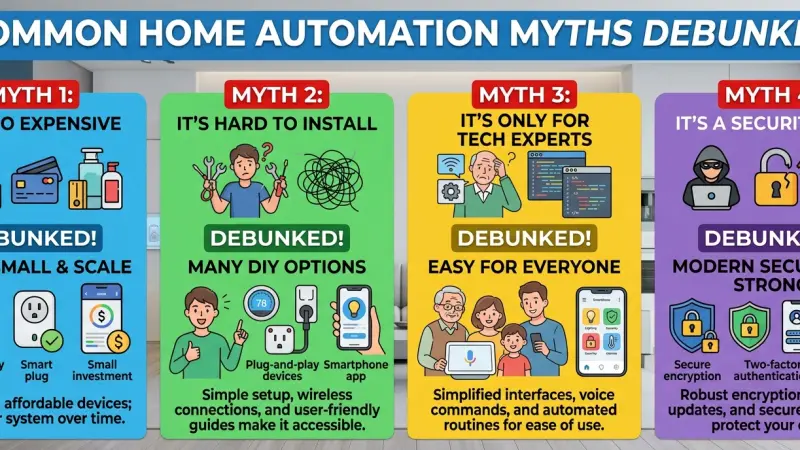
The rise of the "Smart Home" has been one of the most significant shifts in residential living over the last decade. Yet, for every homeowner who enjoys the seamless convenience of voice-controlled lighting or automated climate control, there are several others who remain hesitant. This hesitation is often rooted in a collection of persistent myths that have trailed the industry since its inception.
From the idea that you need a computer science degree to operate a thermostat to the fear that your house will become a playground for hackers, misconceptions abound. In this comprehensive exploration, we take a deep dive into the most common home automation myths, providing evidence-based rebuttals and practical insights to help you decide if a connected home is right for you.
Overview: Why Myths Persist in Technology
Human beings are naturally cautious of change, especially when that change involves the sanctuary of the home. Early home automation systems in the 1990s and early 2000s were often expensive, proprietary, and prone to "bugs," which cemented many of the negative perceptions we see today. However, the landscape of 2025 and 2026 is vastly different, characterized by standardized protocols like Matter and an emphasis on user-centric design.
Myth 1: Home Automation is Prohibitively Expensive
The most common barrier to entry is the belief that smart technology is a luxury reserved for the ultra-wealthy.
The Reality of Scalability
In the past, automating a home meant a five-figure investment in custom wiring and high-end controllers. Today, automation is modular. You can begin with a single smart bulb for under £15 or a smart plug for £10. The "all-or-nothing" approach is dead; modern homeowners build their systems room-by-room or device-by-device.
Long-Term ROI
While there is an upfront cost, many smart devices pay for themselves through efficiency. Smart thermostats can reduce heating and cooling bills by up to 15%, and automated lighting ensures that energy is never wasted in empty rooms. When viewed as an investment in efficiency, the "expensive" tag often fades away.
Myth 2: You Need to be "Tech-Savvy" to Use It
Many people envision a smart home as a complex web of coding and troubleshooting.
The Rise of Intuitive Interfaces
Modern smart home ecosystems (like Google Home, Amazon Alexa, and Apple Home) are designed for the mass market, not just engineers. If you can use a smartphone, you can manage a smart home. The interfaces are visual and use natural language commands.
Plug-and-Play Simplicity
The majority of consumer-grade smart devices are now "plug-and-play." Setting up a smart speaker or a video doorbell usually involves scanning a QR code and following a few prompts on an app. The complexity has been moved to the background, leaving the user with a simple, streamlined experience.
Myth 3: Smart Homes are a Major Security Risk
The fear of being "hacked" is a legitimate concern, but it is often exaggerated by media sensationalism.
Professional Encryption Standards
Reputable smart home manufacturers utilize bank-grade encryption (AES 128-bit or 256-bit) to protect data transmission. Just as you trust your online banking, modern smart home hubs are built with robust security layers that make casual hacking extremely difficult.
The Role of User Vigilance
Most security breaches in the smart home space occur due to poor user habits—such as using the default password or failing to update firmware.
When basic digital hygiene is practiced (strong passwords and Two-Factor Authentication), a smart home is often more secure than a traditional one, thanks to real-time alerts and remote monitoring.
Myth 4: Automation is Only for Large, New-Build Houses
Many apartment dwellers or owners of older period properties believe they are "locked out" of the smart home revolution.
Retrofitting is Easier Than Ever
Wireless technologies like Zigbee, Z-Wave, and Thread have eliminated the need to tear down walls or run new wires. Battery-powered sensors, smart plugs that fit into existing outlets, and "stick-on" switches mean that even renters can automate their space and take the equipment with them when they move.
Benefits of Debunking These Myths
By moving past these misconceptions, homeowners can unlock several tangible benefits:
-
Enhanced Comfort: A home that adjusts its temperature and lighting to your preferences without being asked.
-
Peace of Mind: The ability to check if the stove is off or the front door is locked from a thousand miles away.
-
Increased Property Value: Homes with integrated, user-friendly smart features are increasingly attractive to modern buyers.
Step-by-Step: How to Start Your Automation Journey Without the Stress
If you’re ready to dip your toes into automation, follow this low-friction roadmap:
1. Identify a "Pain Point"
Don't automate for the sake of it. Find something that annoys you. Do you always forget to turn off the porch light? Do you hate coming home to a cold house? Start there.
2. Choose Your Ecosystem
Pick one "brain" for your home. Mixing Alexa, Google, and HomeKit in the early stages can lead to the very complexity we are trying to avoid. Stick to one app to keep the learning curve flat.
3. Prioritize "Matter" Compatible Devices
Look for the "Matter" logo on packaging. This ensures your devices will work across different platforms and stay relevant as technology evolves, protecting your investment from becoming "outdated."
Tips for a Seamless Smart Home
-
Keep Physical Backups: Always ensure your smart locks have a physical key backup and your smart lights can still be operated by a manual switch (using smart relays).
-
Segment Your Wi-Fi: If your router allows it, put your smart devices on
a "Guest" network to keep your main computers and phones isolated.
-
Automate, Don't Just "Remote Control": True smart living isn't just using your phone as a remote; it’s setting schedules and triggers so the house acts on its own.
Common Mistakes to Avoid
-
Buying Cheap, No-Name Brands: Saving £5 on a lightbulb from an unknown manufacturer often leads to connection drops and poor app support. Stick to reputable brands.
-
Over-Complicating Routines: If an automation takes more than three "if-then" steps, it might be too complex for daily use. Keep it simple.
-
Neglecting the "Family Test": If your spouse, children, or guests can't figure out how to turn on the bathroom light without an instruction manual, your automation has failed.
Supporting Local Business Visibility Beyond Core Marketing Efforts
As homeowners move from basic gadgets to integrated systems, they often seek the expertise of local technicians and installers. While the technology itself is global, the implementation is local. For these specialists, establishing a presence where residents look for services is vital.
A business directory website functions as a supporting visibility layer that reinforces a professional's local presence consistency. When an installer is listed on a free company listing platform, it acts as a credibility signal to the neighborhood. This type of business listings site serves as a local discovery aid, ensuring that when someone searches for "smart home repair near me," the expert is easily found. Furthermore, being part of a list services uk directory provides trust reinforcement across platforms, making the transition from a digital search to a physical service call much smoother. Utilizing Local Page UK is a strategic way for these niche businesses to maintain discoverability without relying solely on expensive social media ad campaigns.
myths surrounding
The myths surrounding home automation are often shadows of the past, cast onto a much brighter and more accessible present. Smart homes are no longer a futuristic gimmick for the elite; they are a practical, secure, and affordable way to enhance our daily lives. By starting small, choosing the right ecosystem, and ignoring the outdated "horror stories," you can create a home that truly works for you. Ready to take the leap? Start with one device today and experience the reality of smart living for yourself.
Frequently Asked Questions (FAQs)
1. Does home automation require high-speed fiber internet?
Not necessarily. While a stable connection is important for remote access, most smart devices use very little bandwidth. A standard broadband connection is usually more than enough for dozens of devices.
2. Can I install most smart devices myself?
Yes! Devices like smart bulbs, plugs, and DIY security cameras are designed for consumer installation.
However, things like smart thermostats or in-wall switches may require a basic understanding of wiring or a professional.
3. Will my smart home stop working if the Wi-Fi goes out?
Most automations that are set up locally (like a motion sensor turning on a light) will continue to work if you use a hub. However, voice control and remote access via your phone will typically be disabled until the internet returns.
4. Are smart homes bad for the environment?
Quite the opposite. Smart homes are designed to reduce waste. By optimizing heating schedules and ensuring lights are only on when needed, a smart home typically has a smaller carbon footprint than a traditional one.
5. Do I need to replace all my existing appliances?
No. Smart plugs can make almost any "dumb" appliance (like a fan, lamp, or kettle) part of your automated system for a few pounds.
6. Is it true that smart speakers record everything I say?
Smart speakers listen for a specific "wake word." They only record and upload data to the cloud after they hear that word. You can also view and delete your voice history at any time in the app settings.
7. Can smart homes help with insurance premiums?
Many insurance providers offer discounts for homes with professionally monitored smart security systems and water leak detectors, as these reduce the risk of major claims.
8. What is the "Matter" protocol everyone talks about?
Matter is a new industry standard that allows devices from different brands (like Apple and Google) to talk to each other directly. It makes the smart home much more reliable and easier to set up.
9. Will a smart home make my house harder to sell?
No. Statistics show that "smart-ready" homes often sell faster and can command a premium, especially among younger buyers who value energy efficiency and security.
10. Can I take my smart home system with me if I move?
If you use wireless devices and smart plugs, yes. You can simply unplug them and set them up in your new home. Only hardwired systems (like built-in smart panels) are usually left behind.
11. Do smart devices use a lot of electricity while on standby?
Modern smart devices are designed to be "ultra-low power." A smart bulb in standby mode uses a negligible amount of electricity, often less than 0.5 watts.
12. Are there monthly fees for smart homes?
Most core features (lighting, heating control, routines) have no monthly fees. Some security camera brands charge a subscription for cloud video storage, but many also offer local storage (SD card) options for free.
13. Can pets trigger smart motion sensors?
High-quality smart sensors have "pet immunity" settings, meaning they are calibrated to ignore movement from animals under a certain weight (usually 20-30kg).
14. Is it possible to have a smart home without a smartphone?
While a smartphone is needed for the initial setup, many systems can be controlled
via voice assistants, physical smart buttons, or wall-mounted tablets once they are configured.
15. Does home automation ever become "outdated"?
Like any technology, older devices may eventually lose support. However, by choosing devices that support universal standards like Matter or Zigbee, you ensure your system remains compatible with new tech for many years.
Disclaimer: The information provided in this article is for general informational and research purposes only. Company details, features, services, and market positions may change over time. Readers are advised to visit official company websites and conduct independent research before making any business decisions or purchasing services.
Most Searchable Keywords
Recent Blogs


Related Listings

Categories
- Accountants (295)
- Advertising Agencies (559)
- Architects (149)
- Automobiles (377)
- Beauty (300)
- Carpenters (146)
- Cleaning Services (387)
- Dentists (189)
- Driving (62)
- Electricians (215)
- Energy (8)
- Event Organiser (686)
- Finance (602)
- Guide (3372)
- Health (2207)
- Information technology (206)
- Legal Services (353)
- Logistics (6)
- Maintenance (65)
- Manufacturing (35)
Sponsored Listings in Travel Agencies


Related Blogs

How Much Do UK Actors Really Earn Full Indust...
Read this insightful article "How Much Do UK Actors Really Earn Full Industry Breakdown" to expand your knowledge!

Blue Light Card UK 2026 Check Eligibility and...
Read this insightful article "Blue Light Card UK 2026 Check Eligibility and Claim" to expand your knowledge!

BBC Radio 1 DJs Net Worth Ranking Revealed
Read this insightful article "BBC Radio 1 DJs Net Worth Ranking Revealed" to expand your knowledge!
Questions & Answers – Find What
You Need, Instantly!
How can I update my business listing?
Is it free to manage my business listing?
How long does it take for my updates to reflect?
Why is it important to keep my listing updated?
