
Director vs Shareholder Differences Explained UK
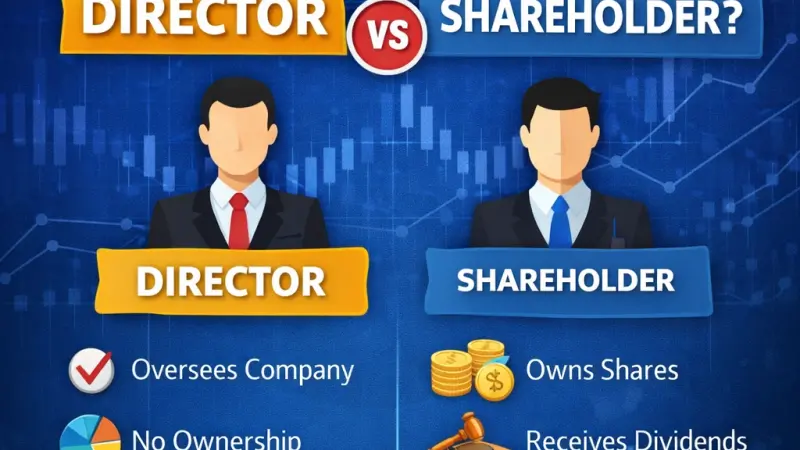
When starting or running a limited company in the UK, two key roles often come up directors and shareholders. While they are closely connected and sometimes the same person can hold both positions, they serve very different purposes within a company.
Understanding the distinction between directors and shareholders is essential for company owners, entrepreneurs, and investors. It helps clarify who manages the business, who owns it, and how decisions are made.
This guide explains the major differences between directors and shareholders in a clear and practical way within a UK context.
What Is a Director
A director is a person appointed to manage the day to day operations of a company. Directors are legally responsible for running the company and making strategic and operational decisions.
They must act in the best interests of the company and comply with legal duties set out in the Companies Act 2006. Directors can be employees of the company and may receive a salary.
What Is a Shareholder
A shareholder is an individual or organisation that owns shares in a company. Shares represent ownership, meaning shareholders own a portion of the business.
Shareholders typically do not manage daily operations but have certain rights such as voting on major decisions and receiving dividends if the company distributes profits.
Ownership vs Control
One of the biggest differences is that shareholders are owners of the company, while directors control and manage how the company operates.
Shareholders invest money into the company by buying shares, whereas directors use that investment to run and grow the business.
Roles and Responsibilities
Directors are responsible for managing company activities, setting strategies, ensuring legal compliance, maintaining records, and preparing financial reports.
Shareholders are responsible for investing capital and making key decisions such as appointing or removing directors and approving major changes.
Legal Duties
Directors have strict legal duties under UK law. They must act in good faith, avoid conflicts of interest, promote the success of the company, and exercise reasonable care and skill.
Shareholders generally do not have the same legal obligations. Their liability is usually limited to the amount unpaid on their shares.
Decision Making Powers
Directors make operational decisions such as hiring staff, entering contracts, and managing finances.
Shareholders vote on major matters such as changing the company name, altering the articles of association, approving large structural changes, or winding up the company.
Financial Benefits
Directors usually earn a salary or fees for their work managing the company.
Shareholders earn dividends if the company distributes profits. The amount depends on the number of shares they hold.
Risk and Liability
Directors can be held personally liable if they fail to meet their legal duties or engage in wrongful trading.
Shareholders have limited liability, meaning their personal assets are usually protected beyond their investment.
Appointment Process
Directors are appointed during company formation or by shareholders after incorporation.
Shareholders become owners by purchasing or being issued shares.
Can a Person Be Both
In many small UK companies, especially owner managed businesses, the same person is both a director and a shareholder.
This means they both own and manage the company.
However, legally these roles are still separate and carry different responsibilities.
Role in Company Meetings
Directors attend board meetings to discuss operational matters and strategy.
Shareholders attend general meetings such as the Annual General Meeting where they vote on major decisions.
Control Over Profits
Directors decide whether to recommend dividends based on company performance.
Shareholders approve dividends and receive them according to their shareholding.
Removing a Director
Shareholders usually have the power to remove a director by passing a resolution.
This ensures that shareholders retain ultimate control over company leadership.
Importance of Understanding the Difference
Understanding the distinction helps avoid confusion about responsibilities and authority. It also ensures compliance with UK company law and supports better governance.
For startups and small businesses, knowing who makes decisions and who owns
the business helps maintain clear communication and accountability.
Directors and shareholders play different but equally important roles in a UK company. Directors manage and run the business, ensuring it operates legally and effectively. Shareholders own the company and influence major decisions through voting rights.
While the same person can be both, understanding the difference is essential for proper company management, compliance, and governance. Clear roles help businesses operate smoothly and build trust with investors and stakeholders.
FAQs
What is the main difference between a director and a shareholder A director manages the company while a shareholder owns part of the company.
Can a director also be a shareholder Yes, especially in small companies, one person often holds both roles.
Who has more power directors or shareholders Directors control daily operations, but shareholders have ultimate control over major decisions.
Do shareholders run the company No, they usually do not manage daily operations unless they are also directors.
Can a shareholder remove a director Yes, shareholders can remove a director by passing a resolution.
Are directors personally liable for company debts Generally no, but they can be liable if they breach legal duties or trade wrongfully.
Do shareholders receive a salary No, shareholders receive dividends rather than salaries.
Do directors get paid Directors may receive a salary or fees depending on company arrangements.
Who appoints directors Shareholders usually appoint directors.
What rights do shareholders have They have voting rights, dividend rights, and rights to company information.
Is a director an employee A director can also be an employee but is primarily an office holder.
What happens if there are no shareholders A company must have at least one shareholder to exist.
Can a company operate without directors No, a UK company must have at least one director.
Do shareholders attend board meetings No, they attend general meetings rather than board meetings.
Why is it important to understand these roles It helps ensure proper governance, legal compliance, and clear decision making.
Disclaimer: The information provided in this article is for general informational and research purposes only. Company details, features, services, and market positions may change over time. Readers are advised to visit official company websites and conduct independent research before making any business decisions or purchasing services.
Most Searchable Keywords
Recent Blogs


Related Listings

Categories
- Accountants (295)
- Advertising Agencies (559)
- Architects (149)
- Automobiles (377)
- Beauty (300)
- Carpenters (146)
- Cleaning Services (387)
- Dentists (189)
- Driving (62)
- Electricians (215)
- Energy (8)
- Event Organiser (686)
- Finance (602)
- Guide (3372)
- Health (2207)
- Information technology (206)
- Legal Services (353)
- Logistics (6)
- Maintenance (65)
- Manufacturing (35)
Sponsored Listings in Travel Agencies


Related Blogs

How Much Do UK Actors Really Earn Full Indust...
Read this insightful article "How Much Do UK Actors Really Earn Full Industry Breakdown" to expand your knowledge!

Blue Light Card UK 2026 Check Eligibility and...
Read this insightful article "Blue Light Card UK 2026 Check Eligibility and Claim" to expand your knowledge!

BBC Radio 1 DJs Net Worth Ranking Revealed
Read this insightful article "BBC Radio 1 DJs Net Worth Ranking Revealed" to expand your knowledge!
Questions & Answers – Find What
You Need, Instantly!
How can I update my business listing?
Is it free to manage my business listing?
How long does it take for my updates to reflect?
Why is it important to keep my listing updated?
