
Fight Against Crossword Clue Answer Solution Guide Filmography Career Highlights
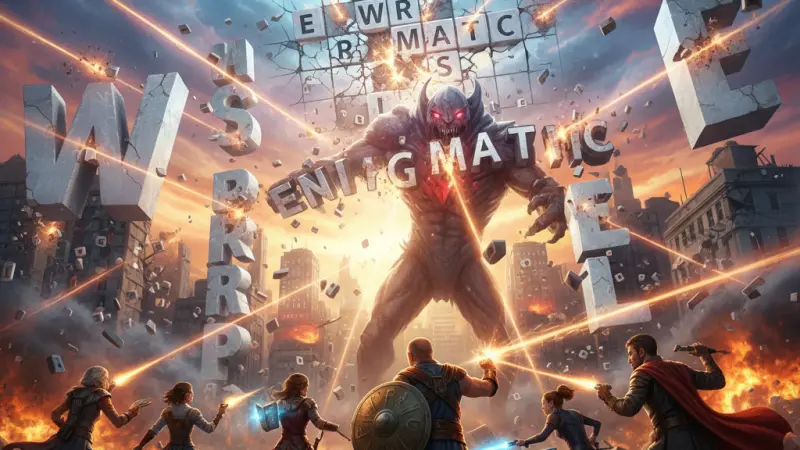
There’s a peculiar thrill in staring down a stubborn crossword clue—the kind that refuses to yield until, suddenly, it does. “Fight against,” for instance, is one of those deceptively simple prompts that can spiral into a dozen possibilities: oppose, resist, counter, combat. But every so often, a clue like this opens a door into something larger than wordplay. It becomes a cultural breadcrumb. A hint. A reminder of how language, storytelling, and public figures intersect in unexpected ways.

And if there’s an actor whose career feels like a living embodiment of “fighting against”—against typecasting, against expectation, against the easy road—it’s Andrew Garfield.
From the early days of British television to global franchise fame and back into deeply human indie performances, Garfield’s trajectory reads like a crossword grid filled with surprising answers. Each role intersects with another, forming a pattern that only becomes clear when you step back and take in the whole picture. In an era dominated by streaming buzz, viral series, and ever-churning entertainment news, Garfield remains something rare: an actor who resists being solved too quickly.
The Clue Behind the Clue “Fight Against” and Cultural Language
Crossword clues are tiny time capsules. “Fight against” might seem purely functional, but its synonyms reflect a broader cultural mood—resistance, resilience, persistence. These aren’t just words; they’re narratives. They echo through films, performances, and the kinds of stories audiences gravitate toward in any given trend cycle.
In recent years, especially amid the rise of prestige streaming platforms, audiences have leaned toward stories of internal struggle and moral complexity. The heroes aren’t always victorious. The villains aren’t always obvious. The “fight against” is often inward.
Garfield’s roles have mirrored this shift almost uncannily. Whether portraying a conflicted Jesuit priest in Silence or a grief-stricken composer in Tick, Tick... Boom!, his characters rarely fight external enemies alone. They wrestle with doubt, faith, identity—forces that don’t fit neatly into crossword boxes.
It’s no coincidence that his performances frequently spark conversation across social media and dominate streaming charts. In a landscape saturated with spectacle, Garfield leans into vulnerability. And that, paradoxically, is his greatest strength.
Early Career Quiet Beginnings and Sharp Edges
Before the global spotlight, Garfield honed his craft in British television and theater, building a reputation for intensity and emotional precision. His breakout moment came with Boy A, where he played a young man grappling with a haunting past. The performance was raw, almost unsettling in its honesty—an early signal of the emotional depth he would bring to later roles.
There’s a story often recounted from that period: a casting director reportedly described Garfield as “impossible to ignore once he starts speaking.” It’s the kind of anecdote that feels small until you realize how often it repeats across his career. Directors, co-stars, critics—they all circle back to the same idea. Presence.
In The Social Network, Garfield’s portrayal of Eduardo Saverin offered a masterclass in restrained fury. While Jesse Eisenberg’s Mark Zuckerberg operated with icy detachment, Garfield’s Eduardo burned with quiet betrayal. The now-iconic deposition scene—where years of friendship collapse into a few sharp exchanges—remains one of modern cinema’s most replayed moments.
It’s here that the “fight against” motif begins to crystallize. Garfield’s characters aren’t always the loudest voices in the room, but they carry the emotional weight. They resist in ways that feel deeply human: through silence, through heartbreak, through the refusal to simply walk away.
The Spider-Man Era: Fame, Pressure, and Reinvention
When Garfield stepped into the role of Peter Parker in The Amazing Spider-Man, he inherited more than a costume. He inherited expectations—massive, relentless, and often unforgiving. Superhero franchises, after all, are their own kind of crossword puzzle, with fans eager to fill in every blank.
Garfield brought a different energy to the character. His Peter Parker was awkward yet defiant, introspective yet impulsive.
It was a portrayal that divided audiences at the time but has since undergone a cultural reassessment, especially in the age of nostalgia-driven streaming trends.
The real turning point came years later with Spider-Man: No Way Home. Garfield’s surprise return wasn’t just fan service—it was redemption. Social media erupted. Clips went viral. Suddenly, the narrative shifted. What was once criticized became celebrated.
In interviews, Garfield has spoken candidly about the pressures of that period. “I was trying to find myself within something that was already so defined,” he once reflected. That tension—between individuality and expectation—is a recurring theme in his career.
And perhaps that’s why his return resonated so deeply. It wasn’t just about revisiting a role; it was about reclaiming it. About fighting against the version of the story that had been written for him.
Artistic Reinvention Risk, Range, and Emotional Truth
If the superhero era was about visibility, Garfield’s post-franchise work has been about depth. He gravitated toward projects that demanded transformation—physically, emotionally, spiritually.
In Hacksaw Ridge, directed by Mel Gibson, Garfield portrayed Desmond Doss, a conscientious objector who served as a medic during World War II. It’s a role that could have easily slipped into cliché, but Garfield anchored it with sincerity. His performance earned him an Academy Award nomination and reaffirmed his ability to carry a film on emotional conviction alone.
Then came Tick, Tick... Boom!, where he surprised audiences yet again—this time with his singing. The film, directed by Lin-Manuel Miranda, became a streaming sensation, fueling viral series-adjacent conversations about artistic struggle and creative urgency.
Garfield’s portrayal of Jonathan Larson felt deeply personal. There’s a moment in the film—quiet, almost fragile—where Larson questions whether his work will ever matter. It’s a sentiment that resonates far beyond the screen. Anyone who’s ever chased a dream, faced rejection, or wondered if they’re running out of time can see themselves in that moment.
This is where Garfield’s career transcends performance. It becomes connection.
Current Trends, Streaming Buzz, and Cultural Impact
In today’s entertainment ecosystem, relevance is often measured in clicks, streams, and trending hashtags. But Garfield’s appeal operates on a different frequency. Yes, his projects generate streaming buzz. Yes, they dominate entertainment news. But they also linger.
Take the renewed interest in character-driven storytelling across platforms like Netflix and Amazon Prime Video. Audiences are increasingly drawn to narratives that prioritize emotional authenticity over spectacle. Garfield’s filmography fits seamlessly into this shift.
Even when he’s not attached to a new release, his past work continues to circulate, recontextualized by changing audience tastes. Clips resurface. Performances are re-evaluated. The conversation evolves.
There’s also a broader cultural aspect at play. Garfield has become something of a symbol for artistic integrity in an industry often driven by commercial imperatives. He chooses projects carefully, speaks thoughtfully in interviews, and maintains a sense of distance from the relentless churn of celebrity culture.
In a way, he embodies the very idea of “fighting against” the system—not through rebellion, but through intention.
The Crossword Solved: A Career That Defies Easy Answers
So what is the answer to “fight against”? In a crossword, it might be resist or oppose. But in the context of Andrew Garfield’s career, the answer feels more expansive.
It’s about resisting complacency. Opposing typecasting. Challenging expectations.
It’s about choosing roles that ask questions rather than provide answers.
There’s an anecdote from a theater director who once worked with Garfield early in his career. After a particularly intense rehearsal, Garfield reportedly stayed behind, not to rehearse lines, but to sit quietly on stage. When asked what he was doing, he simply said, “Trying to understand what this moment needs.”
That instinct—to listen, to feel, to respond—is what sets him apart.
In an industry that often rewards certainty, Garfield thrives in ambiguity. He embraces the unresolved, the unfinished, the uncertain. And in doing so, he invites audiences to do the same.
Because sometimes, the most compelling stories aren’t the ones that fit neatly into boxes. They’re the ones that spill over the edges, refusing to be contained.
Like a crossword clue that lingers long after the puzzle is complete, Andrew Garfield’s career doesn’t just offer answers—it leaves you with better questions. And in a world obsessed with quick solutions, that might be the most powerful kind of resistance of all.
1. What is a common answer for “fight against” in crosswords? Common answers include resist, oppose, and counter, depending on clue length.
2. Why is Andrew Garfield trending in entertainment news? Due to ongoing
streaming popularity, past role resurgence, and continued cultural relevance.
3. What are Andrew Garfield’s most प्रसिद्ध films? The Social Network, Hacksaw Ridge, Tick, Tick... Boom!, and Spider-Man: No Way Home.
4. Did Andrew Garfield win an Oscar? He has been nominated but has not yet won.
5. What made Tick, Tick... Boom! go viral? Its emotional storytelling and Garfield’s surprising musical performance.
6. Is Andrew Garfield returning as Spider-Man? No confirmed announcements, though fan demand remains high.
7. Which streaming platforms feature his movies? Primarily Netflix and Amazon Prime Video.
8. What defines Garfield’s acting style? Emotional depth, vulnerability, and character immersion.
9. What was his breakout role? Boy A and later The Social Network.
10. Why is his Spider-Man performance re-evaluated? Changing audience perspectives and nostalgia trends.
11. What genres does he excel in? Drama, biographical films, and character-driven narratives.
12. Who are frequent collaborators? Directors like Martin Scorsese and Lin-Manuel Miranda.
13. What awards has he won? Golden Globe for Tick, Tick... Boom!.
14. What is his latest project? Varies by release cycle; check current entertainment news updates.
15. Why is he popular in streaming trends? His films resonate with modern audiences seeking emotional authenticity.
16. What makes his career unique? His consistent reinvention and selective project choices.

Disclaimer: The information provided in this article is for general informational and research purposes only. Company details, features, services, and market positions may change over time. Readers are advised to visit official company websites and conduct independent research before making any business decisions or purchasing services.
Most Searchable Keywords

Recent Blogs



Related Listings


Categories
- Accountants (295)
- Advertising Agencies (559)
- Architects (149)
- Automobiles (377)
- Beauty (300)
- Carpenters (146)
- Cleaning Services (386)
- Dentists (189)
- Driving (62)
- Electricians (215)
- Energy (8)
- Event Organiser (685)
- Finance (599)
- Guide (3365)
- Health (2207)
- Information technology (206)
- Legal Services (353)
- Logistics (6)
- Maintenance (65)
- Manufacturing (35)

Sponsored Listings in Locksmith Services

Related Blogs
Gen Z Political Reporters and News Creators i...
Read this insightful article "Gen Z Political Reporters and News Creators in the UK" to expand your knowledge!

Famous Female Social Media Influencers Across...
Read this insightful article "Famous Female Social Media Influencers Across the UK" to expand your knowledge!

Your UK Sponsor Licence 2026 Step by Step Gui...
Read this insightful article "Your UK Sponsor Licence 2026 Step by Step Guide" to expand your knowledge!
Questions & Answers – Find What
You Need, Instantly!
How can I update my business listing?
Is it free to manage my business listing?
How long does it take for my updates to reflect?
Why is it important to keep my listing updated?
