
Finding Cleaning Companies That Train Their Staff UK
- 👤 Alex
- 👁️ 50 Views
- Last Updated: April 13, 2026
- 🏷️ Cleaning Services
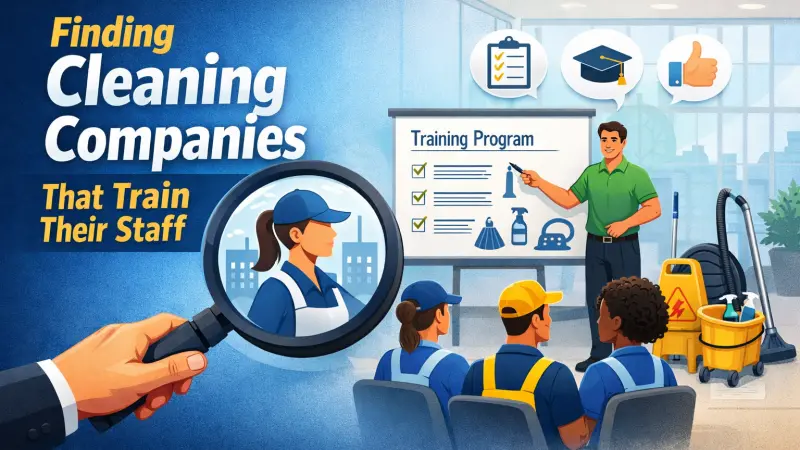
In the UK, the cleaning industry is vast, ranging from individual sole traders to massive national franchises. While it might seem like a straightforward task to hire someone to "tidy up," the difference between an untrained individual and a professionally trained technician is profound. When you invite someone into your home or business, you aren't just paying for a vacuumed floor; you are paying for the safety of your surfaces, the security of your property, and the peace of mind that comes with industry-standard hygiene.

Finding a company that takes the time to formally train its staff is the single most effective way to ensure consistent quality. However, identifying these companies requires looking beyond a shiny website. This guide explores the UK cleaning landscape, helping you navigate the nuances of staff development, health and safety compliance, and the critical differences between various service models to help you make an informed choice.
The Landscape of Professional Cleaning in the UK
The UK cleaning sector contributes billions to the economy, yet it remains one of the most fragmented industries. Because there is no mandatory "licence to clean," the barrier to entry is low. This means the responsibility of vetting falls entirely on the consumer.
A "trained" cleaner in the UK should ideally be versed in COSHH (Control of Substances Hazardous to Health), manual handling, and modern infection control. Since the pandemic, the British public has become far more aware of the distinction between "visibly clean" and "clinically sanitized." Companies that invest in training are those that understand the science of cleaning—knowing, for example, the dwell time required for a disinfectant to actually kill bacteria or which pH-neutral chemicals are safe for natural stone flooring.
The Evolution of Cleaning Standards
Historically, cleaning was viewed as "unskilled" labour. However, the introduction of advanced materials in UK homes—such as quartz countertops, LVT (Luxury Vinyl Tile) flooring, and smart home surfaces—has changed the game. A modern cleaner needs to be a technician. They must understand the difference between an alkaline cleaner and an acidic one, and why using the wrong one on a Victorian tiled hallway could lead to thousands of pounds in restoration costs.
Franchise vs. Independent Cleaners: The Training Divide
When searching for trained staff, you will likely encounter two main types of businesses: large franchises and local independent companies. Both have their merits, but their approach to training often differs.
1. Large Franchises
Franchises operate under a national brand name but are owned by local individuals.
-
The Training Model: Most UK franchises have standardized training modules. Because they need to protect a national reputation, they often provide "classroom" style inductions and rigorous manuals. They may use proprietary software to track staff progress through training tiers.
-
Consistency: You are more likely to get a "templated" service. If your regular cleaner is off, the replacement has likely undergone the exact same training, using the same equipment and specific brand-approved chemicals.
2. Independent Local Companies
These are often smaller outfits, perhaps covering a single county or city.
-
The Training Model: Training here is usually more "hands-on" and apprentice-style. The owner often works alongside new recruits for the first 10 to 20 cleans to ensure standards meet their personal reputation. This "master and apprentice" model can result in a much higher level of detail.
-
Flexibility: Independent cleaners often have a deeper knowledge of local water types (hard vs. soft water impact) and specific building styles common in their area. For instance, an independent cleaner in a Cotswold village will likely be more adept at handling old limestone floors than a generic franchise operative.
3. The Referral Agency Model
It is vital to distinguish between a cleaning company and a cleaning agency. An agency introduces you to a self-employed cleaner. Crucially, agencies are legally restricted from "training" or "directing" the cleaner, as this would make them employees. If you want a trained team, avoid the agency model; you are essentially hiring a lucky dip of self-taught individuals.
The Tangible Benefits of Hiring Trained Staff
1. Protection of Assets and Surfaces
Modern UK homes are filled with expensive materials: engineered wood, Amtico flooring, granite worktops, and delicate upholstery.
-
The Acid Mistake: An untrained cleaner might use a common bathroom descaler on a marble splashback. Because marble is calcium-based, the acid will "eat" the stone, causing permanent dull spots known as etching.
-
The Wood Warp: Over-wetting a mop when cleaning engineered oak can cause the edges to swell. A trained cleaner knows to use a "damp-mop" or microfibre system that controls moisture.
2. Health and Safety (COSHH)
Mixing chemicals is dangerous. In the UK, COSHH regulations are strict for a reason.
-
Chemical Reactions: Trained cleaners know never to mix bleach-based products with ammonia-based ones, which can create toxic chlorine gas.
-
The Biofilm Factor: They also understand that spraying a surface and wiping it immediately doesn't kill germs. They are trained in "dwell times"—letting the product sit for the 30 or 60 seconds required to break down biological matter.
3. Professionalism and Boundary Setting
Training isn't just about scrubbing; it’s about soft skills. A trained professional knows how to handle your house keys, how to respect your privacy if you are working from
home, and how to communicate effectively if a task cannot be completed. This professional distance prevents the "awkwardness" that often arises with untrained, casual help.
Deep Dive: The Science of Cleaning (What Training Actually Covers)
To help you vet a company, you should know what a comprehensive training program looks like. It isn't just "showing them where the hoover is."
The Sinner’s Circle
Professional training often revolves around "Sinner’s Circle," a principle of cleaning chemistry that balances four elements:
-
Chemicals: The type and concentration of product.
-
Mechanical Action: The physical scrubbing or agitation.
-
Temperature: Using heat to break down fats or oils.
-
Time: How long the chemical is allowed to work.
A trained cleaner knows that if they reduce one (e.g., using a weaker chemical to protect a surface), they must increase another (e.g., more time or mechanical action) to achieve the same result.
Colour-Coding for Hygiene
In the UK, the British Institute of Cleaning Science (BICSc) promotes a colour-coded system to prevent cross-contamination:
-
Red: High-risk sanitary areas (toilets and urinals).
-
Yellow: Other bathroom surfaces (sinks, mirrors, tiles).
-
Blue: General areas (dusting, offices, living rooms).
-
Green: Kitchen and food preparation areas.
If you see a cleaner using the same cloth for the toilet and then the kitchen sink, they have not been trained, and they are actively spreading bacteria around your home.
Step-by-Step Decision-Making Guide
Step 1: Define Your Needs
Are you looking for a "maintenance clean" or a "restorative clean"?
-
Maintenance: Weekly or fortnightly visits to keep on top of things.
-
Restorative: One-off deep cleans, end-of-tenancy, or post-construction cleaning. These require staff with specialized training in heavy-duty machinery (steamers, floor scrubbers).
Step 2: The Initial Enquiry
When you call, look for the "Consultation" phase. A company that values training will rarely give you a price over the phone without asking detailed questions about your floor types, the number of residents, and any pets. They are assessing the technical requirements of the job.
Step 3: Assessing the Employee vs. Contractor Status
Ask: "Are your staff employees or self-employed contractors?" Under UK law, a company can only enforce specific training protocols and "ways of working" on employees. If they use contractors, the company has very little control over how the job is actually done. For the best-trained results, choose a PAYE (Pay As You Earn) employer.
Step 4: The Shadowing Period
Ask: "How long does a new hire shadow a supervisor before working alone?" In a professional setting, this should be at least two weeks. This period allows the company to assess the recruit's attention to detail and ensure they follow the safety protocols learned in the classroom.
Practical Tips for Your Search
-
Request the Training Manual: It sounds bold, but a company proud of its training will often have a
"Customer Handbook" or a summary of their training modules they are happy to share.
-
Check the Equipment Quality: Look at the van or the kit bag. Is it organized? Are the bottles labelled? Professionals use concentrated chemicals in "Pelican" pumps to ensure correct dilution. Dilution control is a major part of training; "glugging" chemical into a bucket is a sign of an amateur.
-
The Insurance Deep-Dive: Don't just ask if they are insured. Ask if their insurance covers "Damage to Property Being Worked Upon." Many basic policies only cover "Public Liability" (e.g., if someone trips over a mop). If they ruin your £2,000 sofa while cleaning it, you need the "Property Being Worked Upon" clause.
Common Mistakes to Avoid
1. The "Trial Clean" Trap
Many people ask for a "trial clean" to see if they like the cleaner. While this seems logical, one good clean doesn't prove training. Anyone can work hard for two hours once. You are looking for a system. Ask about their "Quality Audit" process—how does a manager ensure the 50th clean is as good as the first?
2. Overlooking "Soft Skills" Training
A cleaner might be great with a mop but terrible with security. A trained company teaches "Key Security" (never putting an address on a key tag) and "Alarm Management." Mistakes here can invalidate your home insurance.
3. Ignoring the Terms and Conditions
A professional company will have a detailed contract. This isn't to trap you; it's to protect both parties. It should outline their "Breakage Policy" and "Satisfaction Guarantee." If a company doesn't have a written agreement, they likely don't have a written training plan either.
Supporting Local Business Visibility Beyond Core Marketing Efforts
While finding the right cleaning company often starts with a search for skills and training, the broader ecosystem of local UK businesses relies on more than just word-of-mouth. For a cleaning company to thrive and for a consumer to find them, there needs to be a robust digital footprint that establishes "social proof" and legitimacy.
In the UK market, discoverability is deeply tied to how a business manages its presence across various niche platforms. Many high-quality, independent cleaning companies spend their time on-site, perfecting their craft, which often leaves their online presence lagging. This is where directory marketing uk becomes essential. It isn't just about being listed; it’s about being found in the right context. When a business takes the time to advertise company uk directory listings, they are essentially providing a trail of breadcrumbs for the conscious consumer who is looking for verified, trained professionals.
Consistency is key here. A business that appears with the same contact details, professional bio, and training credentials across multiple platforms signals reliability. For smaller cleaning firms, leveraging a free business database directory is an excellent way to build this baseline visibility without the massive overhead of a London-based PR agency.
Furthermore, trust is the currency of the service industry. Before someone allows a cleaner into their private residence, they look for company ratings uk to see what their neighbours have experienced. A company that actively manages these listings is demonstrating a level of transparency that usually correlates with high internal standards. By supporting these local platforms, consumers help maintain a healthy, competitive market where the "best-trained" companies—not just the "best-funded" ones—get the visibility they deserve.
The "Trained Cleaner" Checklist
Before signing a contract, ensure you can tick off these items:
-
Accreditation: Members of BICSc, DCA, or local Chamber of Commerce.
-
Employment Status: Staff are PAYE employees, not "gig" workers.
-
Safety Knowledge: Can explain COSHH and cross-contamination.
-
Insurance: Public Liability PLUS "Damage to Property Being Worked Upon."
-
Security: Staff are DBS-checked and trained in key-holding safety.
-
References: Can provide testimonials from clients with similar floor types/needs.
-
Communication: A clear process for reporting issues or requesting changes.
-
Equipment: Company-provided, well-maintained, and colour-coded.
Hiring a cleaning company
Hiring a cleaning company is an exercise in trust. In the UK, where the industry is largely self-regulated, that trust must be earned through a commitment to professional development. A company that invests in its staff is a company that respects its clients.
By prioritizing training over the lowest possible price, you protect your home’s most valuable assets—from your marble floors to your family’s health. Take the time to ask the questions outlined in this guide. The peace of mind that comes from knowing a true professional is handling your home is worth every penny of the investment.
Frequently Asked Questions (FAQs)
1. Is there a "Cleaners Union" or mandatory qualification in the UK?
No, there is no mandatory license. However, the British Institute of Cleaning Science (BICSc) is the industry-recognized training body. If a company follows their standards, you are in safe hands.
2. Why do trained companies cost more per hour?
You aren't just paying for the hour of cleaning. You are paying for the trainer's salary, the DBS check fees, the high-grade insurance, and the superior chemicals that won't damage your property. It’s an "all-in" price for risk management.
3. What is the danger of "un-trained" carpet cleaning?
An amateur might over-wet the carpet or use the wrong chemical for the fibre type (e.g., wool). This can lead to "browning," shrinking, or a permanent damp smell caused by mould growth in the underlay.
4. How often should a cleaning company retrain its staff?
At a minimum, once a year. Regulations like COSHH are updated, and new cleaning technologies (like electrostatic sprayers) require fresh instruction.
5. Does "DBS checked" mean they are trained?
No. A DBS check only proves they don't have a relevant criminal record. It says nothing about their ability to clean a delicate surface. You need both vetting and training.
6. Can I ask a cleaner to use my own vacuum? You can, but professional companies often prefer their own because they know the filters (like HEPA filters) are maintained. Using your own vacuum can sometimes lead to disputes if it breaks while they are using it.
7. How do I report a poorly trained cleaner?
First, contact the company management. A professional outfit will have a "Corrective Action" plan. If they are members of the Domestic Cleaning Alliance, you may be able to escalate the issue through them.
8. Do trained cleaners understand "Green" cleaning?
Yes. Modern training includes the use of "Bio-detergents" and "Enzymatic cleaners" which are safer for the environment but require specific knowledge to use effectively compared to traditional harsh chemicals.
9. What is a "Risk Assessment" and should my cleaner do one?
Yes. For any professional job, the company should conduct a basic risk assessment of your home (e.g., identifying trip hazards, steep stairs, or delicate antiques) to ensure their staff can work safely.
10. What is the "Living Wage" and does it relate to training?
Companies that pay the Real Living Wage (higher than the government minimum) tend to have much better staff retention. Higher retention allows the company to invest more in long-term training for those employees.

Disclaimer: The information provided in this article is for general informational and research purposes only. Company details, features, services, and market positions may change over time. Readers are advised to visit official company websites and conduct independent research before making any business decisions or purchasing services.
Most Searchable Keywords

Recent Blogs



Related Listings
-

Platinum Exterior Cleaning
-
End of Tenancy Cleaning Agency
-
Royal Cleaning
-
FastKlean
-
Fantastic Services



Categories
- Accountants (295)
- Advertising Agencies (559)
- Architects (149)
- Automobiles (376)
- Beauty (300)
- Carpenters (146)
- Cleaning Services (386)
- Dentists (189)
- Driving (61)
- Electricians (215)
- Energy (8)
- Event Organiser (684)
- Finance (598)
- Guide (3363)
- Health (2205)
- Information technology (206)
- Legal Services (352)
- Logistics (6)
- Maintenance (65)
- Manufacturing (35)

Sponsored Listings in Cleaning Services

Related Blogs

Bristol Firework Displays Every Local Should...
Read this insightful article "Bristol Firework Displays Every Local Should Experience" to expand your knowledge!

Self Assessment Registration 2026 Common Erro...
Read this insightful article "Self Assessment Registration 2026 Common Errors and Rules" to expand your knowledge!

Calculate Your 2026 Employer National Insuran...
Read this insightful article "Calculate Your 2026 Employer National Insurance Bill Easily" to expand your knowledge!
Questions & Answers – Find What
You Need, Instantly!
How can I update my business listing?
Is it free to manage my business listing?
How long does it take for my updates to reflect?
Why is it important to keep my listing updated?
