
From Idea to Investment: Why Your Startup Needs a Viable Prototype to Scale
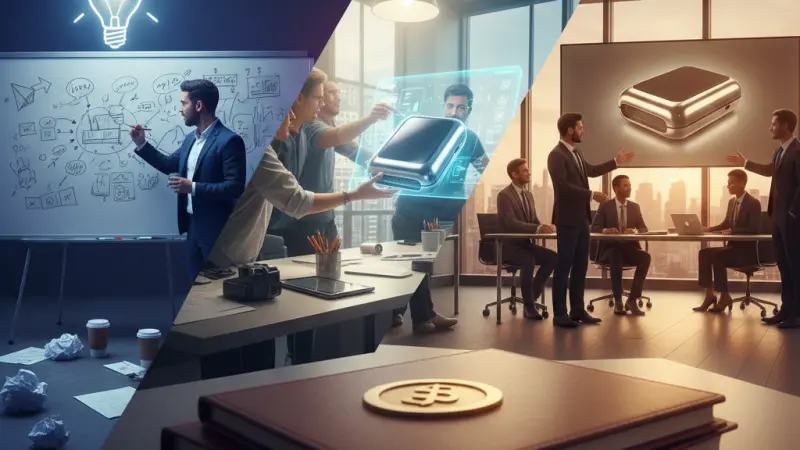
In the modern entrepreneurial landscape, ideas are a dime a dozen. Every day, thousands of "disruptive" concepts are born in coffee shops and co-working spaces. However, the graveyard of failed startups is filled with founders who had great ideas but no tangible proof of concept. To transition from a dreamer to a business owner, you need more than a pitch deck—you need a prototype.

Understanding the Prototype: More Than Just a Model
A prototype is a preliminary version of your product built to test a concept or process. It acts as a physical or digital manifestation of your vision, approximating the functions and features of the final product.
While many associate prototypes with high-tech hardware, they come in various forms:
Low-Fidelity: Paper sketches or basic wireframes.
High-Fidelity: Interactive digital models or 3D-printed physical units.
Proof of Concept (PoC): A version focused solely on proving that a specific technical feature is possible.
Why Prototyping is the Pulse of Your Startup
1. Design Validation and Risk Mitigation
The most dangerous assumption a founder can make is that they know exactly what the customer wants. Prototyping allows your design team to run user flow tests. By identifying friction points early, you can pivot your strategy before you’ve spent thousands on final manufacturing or backend coding.
2. Drastic Cost Reduction
Fixing a mistake in the "blueprints" is cheap; fixing a mistake in a finished product is an existential threat to a startup. As noted in classic software engineering studies (like those by IBM), the cost of fixing a bug post-release can be up to 6 times higher than resolving it during the design phase. For hardware, this disparity is even more extreme.
3. Unified Team Vision
Miscommunication is a "silent killer" of startups. When your engineers, marketers, and designers are looking at a physical prototype, they are on the same page. It eliminates the ambiguity of verbal descriptions and ensures everyone is rowing in the same direction.
4. Real-World User Feedback
A prototype allows you to engage in "guerrilla testing." By putting a version of your product in the hands of real people, you gather raw, unfiltered data. This feedback loop is essential for refining the User Experience (UX) and ensuring the product solves a genuine pain point.
5. The Ultimate Investor Magnet
Investors are risk-averse. They don’t just invest in ideas; they invest in execution. A working prototype demonstrates that you have the technical capability to build what you’ve promised. It transforms a theoretical "what if" into a tangible "when."
Strategic Principles of Building a Prototype for Funding
I. Define Your Intent and User Persona
Before a single line of code is written or a single piece of material is cut, you must define the "Who" and the "Why."
Who is the user? What are their demographics and digital habits?
What is the core intent? Is this prototype meant to test durability, usability, or aesthetic appeal?
II. The Power of "Low-Fi" Iterations
Don’t jump straight to expensive materials. Start with paper, cardboard, or simple digital wireframes. This "fail fast" approach allows you to iterate daily. If a feature doesn't work on paper, it certainly won't work in steel or software.
III. Prioritize Function Over Aesthetics
In the early stages, "pretty" is the enemy of "done." Investors care about the mechanics. Does the engine run? Does the app connect to the database? You can hire a UI/UX designer to make it look beautiful once you have the seed money. For now, focus on the core value proposition.
IV. Equipping Your Team with Professional Tools
The quality of your prototype is limited by your toolkit. Whether you are using Figma for digital design, SolidWorks for mechanical engineering, or Python for data processing, ensure your team has the resources they need to create a high-performance model.
Scaling Beyond the Prototype: Visibility is Key
Once your prototype is refined and you are ready to launch your business, your focus must shift from development to visibility. Even the most innovative product will fail if customers cannot find it.
Maximize Your UK Market Reach with Local Page UK
Building a business in the UK requires a strong local presence. To ensure your startup gains the traction it deserves, you should leverage the power of a uk online business directory. By listing your company on a reputable uk business directory, you improve your local SEO and make it easier for partners to find local businesses uk.
Whether you are a startup looking for a uk small business directory or a service provider seeking a uk service providers directory, having a presence on a uk local business directory is non-negotiable. For those in the B2B sector, being found in a uk b2b business directory or a uk b2c business directory can bridge the gap between you and your next big client.
Getting started is easy and cost-effective. You can secure a business listing uk today to jumpstart your online footprint. Using a business listing uk or a business listing uk allows you to test the waters of digital marketing without upfront costs.
As your brand grows, ensure you appear in local business listings uk and uk service listings. High-quality platforms like the local page uk business directory offer uk verified business listings, helping you rank among the uk top rated local businesses. From a uk home services directory to uk professional services listings, being part of a business directory uk online ensures your uk business listings online are working for you 24/7.
Don't miss out on the benefits of a business listing uk. Join the local businesses list uk today and ensure your uk business directory website presence is solid through local page uk listings.
What Professionals Often Want to Know
What is the main difference between a prototype and an MVP?
A prototype is a preliminary model used for testing and internal feedback. An MVP (Minimum Viable Product) is a functional version of the product with enough features to be sold to early customers.
How much does it cost to build a prototype?
Costs vary wildly. A digital app prototype can cost $500–$5,000, while a complex hardware prototype can reach six figures.
Do I need a prototype to get a patent?
In most jurisdictions, no. However, a prototype helps you describe the invention accurately in your patent application.
Can I use a prototype for crowdfunding (like Kickstarter)?
Yes, most crowdfunding platforms actually require a functional prototype to prove the project is feasible.
What is "feature creep" in prototyping?
This occurs when you keep adding new features to a prototype, causing delays and budget overruns. Stick to the core problem you are solving.
Should I show my prototype to everyone?
Show it to target users and investors, but ensure you have an NDA (Non-Disclosure Agreement) if the technology is proprietary.
How long does it take to build a prototype?
Depending on complexity, it can take anywhere from a few days (software) to several months (robotics/hardware).
What if my prototype fails during an investor pitch?
Focus on what you learned from the failure and how you plan to fix it. Investors value resilience and problem-solving skills.
Can a PowerPoint be a prototype?
Yes, for digital products, a "clickable" slide deck is considered a low-fidelity prototype.
Is 3D printing good for prototyping?
Absolutely. It is the gold standard for rapid hardware prototyping today.
When should I stop prototyping?
Stop when you have validated your core assumptions and have enough data to build the final version or secure funding.
What is a "Wizard of Oz" prototype?
It’s a prototype where the front end looks functional, but a human is manually performing the "automated" tasks behind the scenes.
Do investors keep the prototypes?
No, prototypes usually stay with the startup, but investors may request a demonstration unit for due diligence.
How do I find people to test my prototype?
Use social media, local community groups, or specialized user-testing platforms.
Can I build a prototype without technical skills?
Yes, using "no-code" tools or simple physical materials, you can create a "conceptual prototype."

Disclaimer: The information provided in this article is for general informational and research purposes only. Company details, features, services, and market positions may change over time. Readers are advised to visit official company websites and conduct independent research before making any business decisions or purchasing services.
Most Searchable Keywords
Recent Blogs




Categories
- Accountants (295)
- Advertising Agencies (559)
- Architects (149)
- Automobiles (375)
- Beauty (300)
- Carpenters (146)
- Cleaning Services (386)
- Dentists (189)
- Driving (61)
- Electricians (215)
- Energy (6)
- Event Organiser (683)
- Finance (595)
- Guide (3357)
- Health (2205)
- Information technology (206)
- Legal Services (352)
- Logistics (6)
- Maintenance (65)
- Manufacturing (35)
Sponsored Listings in Event Organiser

Related Blogs
Learn Everything About Your UK Tax Code and U...
Read this insightful article "Learn Everything About Your UK Tax Code and Updates for 2026" to expand your knowledge!

Explore Guildford Date Night Ideas Fully Upda...
Read this insightful article "Explore Guildford Date Night Ideas Fully Updated for 2026" to expand your knowledge!
National Insurance Number Explained Eligibili...
Read this insightful article "National Insurance Number Explained Eligibility and Benefits" to expand your knowledge!
Questions & Answers – Find What
You Need, Instantly!
How can I update my business listing?
Is it free to manage my business listing?
How long does it take for my updates to reflect?
Why is it important to keep my listing updated?
