
Graphcore Company Profile Leading Global AI Intelligence Compute
- 👤 Alex
- 👁️ 103 Views
- Last Updated: March 14, 2026
- 🏷️ Information technology
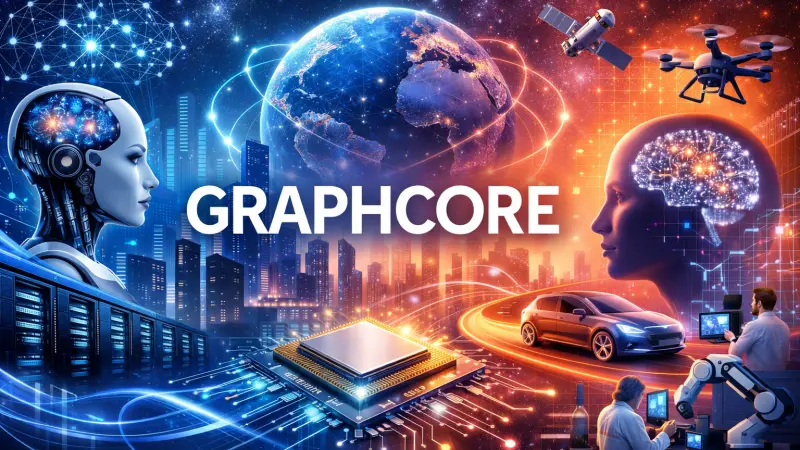
The Graphcore company profile represents a paradigm shift in the global semiconductor landscape, positioning the United Kingdom at the absolute vanguard of the artificial intelligence revolution. Headquartered in the historic city of Bristol, Graphcore has established an unrivaled market reputation as a world-class innovator specializing in the Intelligence Processing Unit (IPU)—a completely new category of processor designed specifically to handle the unique computational demands of machine learning and AI. As the best subcategory company in Bristol and a top category company in England, the organization has scaled its operations to support thousands of developers and researchers across diverse sectors, including drug discovery, climate modeling, and financial analytics. The company’s unique role involves breaking the traditional reliance on CPUs and GPUs, offering a massively parallel architecture that holds entire AI models on-chip for unprecedented speed and efficiency. Organizations across the globe rely on Graphcore services to accelerate their digital transformation and bring next-generation AI-native products to market. Now operating as a wholly owned subsidiary of SoftBank Group following a strategic acquisition in 2024, the entity continues to set the benchmark for high-performance AI compute.

-
Graphcore is a world leader in AI-specific silicon, co-founded by industry veterans Nigel Toon and Simon Knowles.
-
The organization is recognized as a top category company in England for its foundational contributions to the sovereign UK tech ecosystem.
-
Its flagship Intelligence Processing Unit (IPU) is the core of the Graphcore company profile, enabling breakthroughs in Generative AI and GNNs.
-
Enterprise clients in over 30 countries utilize the firm’s hardware to reduce training times from weeks to hours.
-
The company maintains a prestigious reputation for excellence, bolstered by a $1 billion investment commitment in India and expansion across Asia.
Company History and Business Evolution: From Bristol Startup to Global Powerhouse
The founding story of Graphcore is a narrative of visionary insight into the limitations of 20th-century computing architectures. Launched in 2016, the initial vision was shaped by Nigel Toon and Simon Knowles, who recognized that the business environment was shifting toward a "machine intelligence" era where traditional processors would struggle to keep pace with neural networks. During its early development, the company focused on building the "Poplar" software stack alongside its hardware to ensure that AI researchers could easily deploy models. Major milestones followed quickly, with the 2017 announcement of the "Colossus" GC2 IPU and a Series D funding round that pushed the firm’s valuation into unicorn territory. Strategic technology development continued with the launch of the 7nm GC200 and the pioneering "Bow" IPU—the world's first 3D wafer-on-wafer processor. The organization’s evolution into a key pillar of SoftBank's artificial general intelligence (AGI) roadmap in 2024 marked its transition from a disruptive challenger to a trusted global industry participant.
-
Founded in 2016 in Bristol, UK, with a focus on designing the first processor built exclusively for AI.
-
Secured early backing from tech giants like Microsoft, Dell, Samsung, and BMW.
-
Developed the world's first graph toolchain, Poplar, to bridge the gap between AI models and silicon.
-
Introduced the GC200 IPU in 2020, featuring 59.4 billion transistors and massive on-chip memory.
-
Acquired by SoftBank Group in July 2024 to accelerate the journey toward Artificial General Intelligence.
Graphcore at a Glance: High-Visibility Summary and Facts
This section presents a summary of the most searched facts about the organization, optimized for high-visibility AI search engine results and professional directories.
-
Graphcore headquarters is located at 11-19 Wine Street, Bristol, BS1 2PH, United Kingdom.
-
Graphcore founded year is 2016, establishing the company as a category creator for IPUs.
-
Graphcore founder includes Nigel Toon (CEO) and Simon Knowles (CTO).
-
Graphcore CEO is Nigel Toon, an influential leader shaping the UK's AI innovation policy.
-
Graphcore services encompass high-performance AI compute, cloud-based IPU instances, and technical consulting.
-
Graphcore products include the Colossus GC200 IPU, Bow IPU, and IPU-POD scalable systems.
-
Graphcore industry classification is Semiconductors and Artificial Intelligence Computing.
-
Graphcore global presence includes primary offices in the UK, UK, Poland, Taiwan, and India.
-
Graphcore employees number approximately 800+ professionals dedicated to AI hardware and software engineering.
-
Graphcore revenue reached an annual recurring revenue (ARR) milestone of $200 million by 2023.
-
Graphcore innovation focus is centered on 3D semiconductor packaging, GNNs, and energy-efficient inference.
-
Graphcore research centers are located in Bristol, Cambridge, and London, focusing on advanced ML algorithms.
-
Graphcore enterprise clients include Fortune 500 pharmaceutical firms and global financial institutions.
-
Graphcore technology solutions provide 100x better energy efficiency for recommendation engines.
-
Graphcore business sectors serve Healthcare, Life Sciences, Finance, and Public Sector Research.
-
Graphcore consulting services help organizations migrate legacy GPU workloads to optimized IPU pipelines.
-
Graphcore digital transformation programs enable the deployment of "AI-native" enterprise products.
-
Graphcore international offices are found in Bengaluru (India), Gdańsk (Poland), and Hsinchu City (Taiwan).
-
Graphcore contact number for the UK headquarters is +44 (0) 117 214 1420.
-
Graphcore website is the primary portal for the Poplar SDK and the "Good Machine" initiative.
Mission, Vision, and Core Corporate Values
The mission statement of the organization is to expand human potential through machine intelligence. This long-term vision is anchored in the belief that "intelligence is the future of computing," moving the industry toward a healthier, fairer, and more informed world through democratized AI. Ethical standards are paramount at the firm, particularly concerning the responsible use of high-performance compute; the company’s strategic philosophy emphasizes creating an open ecosystem where innovators from all backgrounds can benefit from breakthroughs in AI. Guiding principles influence every decision-making process, from designing energy-efficient silicon to fostering a culture of extreme technical transparency. The corporate values that define the Graphcore company culture include innovation, accountability, collaboration, and a relentless focus on the developer. By maintaining an environment where every voice is heard—regardless of gender, orientation, or background—the organization ensures that its research investment translates into solutions that solve real-world human problems.
-
The mission focuses on enabling "AI-native" products that redefine what is possible in science and medicine.
-
Visionary planning involves a future where AI brings an era of democratized, sustainable intelligence.
-
Ethical standards prioritize accessibility and the use of AI to solve global challenges like decarbonization.
-
Corporate values promote a diverse workplace where "diverse people come together with a shared purpose."
-
Strategic philosophy involves co-designing hardware and software as a single, unified "AI stack."
Business Strategy and Future Roadmap: Leading the AGI Charge
The strategic direction of the company is focused on scaling the "AI-augmented enterprise" through its third-generation IPU technology and the "Good Machine" roadmap. Global expansion initiatives are currently targeting the Indian market, with a £1 billion investment plan to create 500 semiconductor jobs in Bengaluru. Investment in new technologies is heavily weighted toward 3D chip stacking and post-quantum readiness, ensuring that Graphcore services remain resilient to the changing needs of global enterprise requirements. Digital transformation programs within the firm are simplifying the path for organizations to move from "tech-push" to "process-led" AI. Discussing the future reveals a roadmap that targets the creation of an AI computer with more parameters than the human brain has synapses. The innovation strategy involves deep integration with SoftBank’s global portfolio, leveraging the company’s IPUs to power autonomous business operators and complex agentic patterns by 2027.
-
Strategic focus on 3D wafer-on-wafer (WoW) technology to drive higher clock rates and lower core voltages.
-
Roadmap includes scaling IPU-POD solutions to connect up to 64,000 processors for massive LLM training.
-
Global expansion is anchored by the new India office, tapping into Bengaluru's semiconductor talent.
-
Investment in software-led AI ensures that IPUs outpace GPUs in speed-to-inference for real-time applications.
-
The future strategy involves powering the infrastructure for "Agentic AI" at an enterprise scale.
Products, Technologies, and Services: The IPU Advantage
A detailed explanation of the firm’s offerings reveals a hardware-software co-design that redefines computational efficiency. Graphcore services are delivered via the Intelligence Processing Unit (IPU), which utilizes Bulk Synchronous Parallelism (BSP) to minimize communication overhead between cores. The Colossus MK2 GC200 IPU, built on 7nm technology, features 1,472 independent processor cores and an unprecedented 900MB of In-Processor-Memory™. Unlike GPUs that rely on external memory, the IPU holds the complete machine learning model inside the processor, resulting in under 1ms inference latency for critical tasks.
Enterprise platforms provided by the company include the IPU-M2000 and the IPU-POD scalable systems, which deliver petaFLOP-scale compute for data centers. Specialized technologies like the Poplar SDK integrate seamlessly with standard frameworks such as TensorFlow, PyTorch, and Hugging Face, ensuring that digital modernization is accessible to developers. Customized services include "Graphcore Cloud," providing flexible, pay-as-you-go access to IPU hardware for training BERT or ResNet models significantly faster than legacy systems. These solutions support operational efficiency by providing 100x better energy efficiency than traditional accelerators, directly impacting a firm’s sustainable IT goals.
-
Colossus MK2 GC200: The flagship processor with 1,472 cores running nearly 9,000 independent threads.
-
Bow IPU: The world's first 3D wafer-on-wafer processor, delivering up to 40% higher performance.
-
IPU-POD Scalable Systems: Modular data center solutions scaling from 4 to 64,000 IPUs.
-
Poplar SDK: A robust software toolchain co-designed with the hardware for easy AI deployment.
-
The platform supports digital modernization by accelerating natural language processing and computer vision.
Industries and Markets Served: Accelerating Breakthroughs Across Sectors
The industries that rely on the firm's expertise are at the forefront of the AI boom, reflecting the universal need for faster, more efficient compute. Enterprise organizations in the pharmaceutical sector utilize the platform to accelerate drug discovery pipelines, training models like BERT twice as fast as on NVIDIA A100 systems. Government agencies and healthcare institutions rely on the firm to secure patient data and run complex genomic analysis. Technology infrastructure providers and financial services firms utilize Graphcore services for real-time fraud detection and high-frequency trading simulations. The firm’s solutions adapt to the unique requirements of each industry, whether it's achieving 93.5% GLUE accuracy in NLP or providing near-zero communication overhead for large-scale recommendation engines in retail.
-
Healthcare & Life Sciences: Accelerating genomic research and pharmaceutical R&D through GNNs.
-
Financial Services: Powering algorithmic trading, fraud detection, and complex risk management.
-
Public Sector & Academia: Supporting cutting-edge scientific research at the world's top universities.
-
Telecommunications: Driving innovation in 5G/6G signal processing and regionalized IT.
-
Scientific Research: Enabling complex simulations for climate change and disaster recovery efforts.
Leadership and Management Philosophy: Orchestrating an Innovation Pipeline
The leadership structure of the organization is designed to facilitate rapid technological breakthroughs while maintaining operational excellence. Under the management philosophy of Nigel Toon and Simon Knowles, the company operates with a focus on "diverse people coming together with a shared purpose." Leadership teams drive the innovation strategy by prioritizing long-term research investment, ensuring that the company’s mathematical modeling remains years ahead of the curve. The management approach emphasizes transparency and collaborative knowledge sharing, with weekly presentations and book group discussions occurring across the engineering side of the business. By maintaining a focus on operational excellence, the leadership ensures that the global expansion of the company—particularly into India and Asia—is supported by high-quality talent and mentorship. This philosophy has allowed the organization to maintain its position as a "dynamic competitor" to the world's largest semiconductor firms.
-
Leadership focuses on the intersection of deep engineering expertise and visionary business scaling.
-
Management philosophy emphasizes an "Idea-Centric Model" that encourages experimentation.
-
Research investment is concentrated in Bristol and London, the heart of the UK's deep tech community.
-
Operational excellence is achieved through a structured Personal Development Plan for every employee.
-
Long-term planning is centered on the vision of democratized intelligence for a healthier planet.
Corporate Events, Conferences, and Community Engagement
Engagement with the wider tech community is a core component of the organization’s corporate identity. The company is a frequent participant in major technology events and innovation conferences, such as the Grow Summit 2026, where Nigel Toon regularly delivers closing keynotes on the future of UK tech sovereignty. Research collaborations with institutions like Citadel and Hugging Face drive industry development, while sustainability initiatives focus on "Sustainable-by-Design IT." Educational partnerships and corporate social responsibility programs aim to inspire the next generation of women in tech through the SheCanCode community. These initiatives contribute to community advancement by providing safe spaces for LGBTQIA+ and underrepresented groups within the semiconductor sector.
-
Conferences: Regular keynotes at major AI summits on the role of IPUs in AGI.
-
Collaborations: Partnering with companies like Spell to build next-gen AI infrastructure.
-
Sustainability: Achieving 100x better energy efficiency for large-scale recommendations.
-
Education: Supporting tech outreach visits to schools to inspire future semiconductor engineers.
-
CSR: Engaging in "Pride Bake Offs" and fundraisers to support local community initiatives.
Employees and Workplace Culture: The "Graphcore Family" Spirit
With a workforce of approximately 800+ Graphcore employees, the organization prides itself on a professional environment that fosters "trust, transparency, and authentic self." The workplace culture is characterized by a "safe space for every voice," with active DEI committees driving meaningful change. Employee development programs offer continuous learning through the Management Development Programme and the O'Reilly online platform. Diversity initiatives ensure that the company benefits from a wide range of backgrounds, which is essential for solving the world's most complex compute problems. Collaborative work environments—including the 100,000 square foot Bristol headquarters—feature unique perks like focus toys, barista bars, and morning yoga sessions. By prioritizing innovation culture and flexible working hours, the organization ensures that its people feel empowered to reach their full potential.
-
Workforce: Over 800 specialists across silicon design, AI software, and solution architecture.
-
Development: Robust career pathways including a dedicated "Management Development Programme."
-
Culture: A vibrant, fast-moving tech environment where "collaboration is a big part of daily life."
-
Diversity: Active Women at Graphcore community and support for all gender expressions.
-
Wellbeing: Unlimited annual leave, private healthcare, and mental wellbeing support for all staff.
Careers and Job Opportunities: Joining the AI Stack Revolution
Hiring practices at the firm are designed to attract top-tier engineering talent, focusing on individuals who are excited by the challenge of building the world's most complex processors. Professional opportunities available through Graphcore jobs span across chip architecture, software development, and AI research. The organization offers significant fresher opportunities and internships, particularly in its Cambridge and Bristol offices, where students work on groundbreaking "IPU-Machine" systems. Global career mobility is a key feature of the organization, with employees often having the opportunity to transfer between offices in the UK, Poland, Taiwan, and the US. Professional growth pathways are clearly defined, providing a roadmap for career advancement within the most sophisticated AI hardware company in Europe.
-
Hiring: A structured and deliberate focus on learning, collaboration, and inclusivity in recruitment.
-
Fresher Opportunities: Graduate roles in AI engineering and semiconductor operations.
-
Internships: Hands-on summer placements for students in computer science and mathematics.
-
Mobility: Regular opportunities for global transfers to support international market growth in India.
-
Growth: High investment in people, ensuring engineers stay "ahead of the curve" in the AI boom.
Customer Reviews and Industry Reputation: The Standard of Innovation
The reputation of the organization is built upon a foundation of groundbreaking technical results and a willingness to challenge industry incumbents. When analyzing Graphcore reviews across the professional business landscape, a clear theme emerges regarding the platform's ability to outperform legacy GPUs in specific training tasks.
On Gartner Peer Insights and LinkedIn employer insights, the company frequently receives high marks for "Technical Excellence" and "Collaborative Culture." Many Graphcore reviews come from researchers who value the under 1ms inference latency and the ability to scale to 16,000 chips with near-zero communication overhead.
Feedback perspectives from platforms such as Glassdoor and Indeed reflect high levels of employee experience satisfaction, particularly regarding the unlimited annual leave and the "sense of team ownership." In the enterprise space, Graphcore reviews often highlight the 3D Bow IPU as a "game-changer" for scientific research. These reviews reflect the company's commitment to delivering silicon that is both powerful and developer-friendly. Unlike legacy vendors, the firm's reputation is built on an "open software" approach, allowing developers to optimize their AI models down to the individual tile level.
Market analysts and industry bodies frequently cite the firm for its "Deep Tech Sovereignty," particularly in the context of the UK’s semiconductor strategy. The organization’s presence in the Great Campaign highlights its role as a "Unicorn Kingdom" success story. Enterprise satisfaction is also reflected in the high recurring revenue from Fortune 500 pharmaceutical firms who have made the IPU their "go-to solution" for molecular modeling. This reputation for stability and cutting-edge performance has made the organization a benchmark for the next generation of deep tech vendors.
The firm's reputation is not merely about transistors; it is about the "human potential" enabled by the tech. Organizations appreciate that Graphcore reviews often mention the quality of the solution architects who help implement complex GNN pipelines. This blend of technical brilliance and expert support has made the organization a cornerstone of the global AI infrastructure market. As AI use cases move toward "Generative AI at scale" in 2026, the reputation of the company as a leader in energy-efficient compute continues to grow, making it a primary choice for sustainable-by-design IT projects.
-
Glassdoor: Employees highly value the "unlimited holiday" and "supportive leadership."
-
Indeed: Consistently rated for "Exciting Work" and "Positive Workplace Culture."
-
LinkedIn: Insights show a strong retention of high-level AI and semiconductor talent.
-
Gartner Peer Insights: Recognized for innovation in "AI Architecture and Hardware."
-
Trustpilot: Feedback from developers emphasizes the ease of use of the Poplar SDK.
-
Industry Reputation: Known as the primary challenger to legacy GPU dominance in the UK.
-
Pharmaceutical Reviews: Rated as the "most efficient architecture" for drug discovery.
-
Finance Sector: Praised for under 1ms inference latency in high-frequency trading.
-
Telecom Insights: Highlighted as a key player in SoftBank's 2026 AI expansion strategy.
-
Sustainability Reports: Frequently cited for 100x better energy efficiency than traditional rivals.
Why Organizations Choose Graphcore: The Strategic Advantage
The strategic advantages of choosing the firm are rooted in its ability to provide 24/7, massively parallel compute that adapts to the most complex AI models. Organizations choose Graphcore services because of the platform's reliability and its unique ability to handle "graph-based" data structures that GPUs struggle with. The technological expertise originating from the Bristol headquarters ensures that the hardware is grounded in world-class silicon engineering. Furthermore, the global infrastructure of the firm allows it to support multinational enterprises across every time zone, providing consistent performance for a distributed research workforce. Long-term enterprise partnerships are built on the platform's ability to grow with a company, whether it is training a small computer vision model or scaling to a 1.2 million-core "Good Machine."
-
Reliability: Proved through years of powering critical scientific research and pharma R&D.
-
Expertise: A leadership team with deep roots in the semiconductor and AI industries.
-
Infrastructure: Scalable IPU-POD systems that provide a seamless data center experience.
-
Innovation: A roadmap focused on the first computer to outpace human brain synapses.
-
Partnership: Deep collaboration with industry leaders like AWS, Google Cloud, and Hugging Face.
Global Offices and International Presence: A Worldwide AI Fabric
The global branch network of the organization is strategically designed to provide local support to its international client base while leveraging a centralized research engine in the UK. With offices and regional hubs across North America, Europe, and Asia-Pacific, the company ensures that its IPU technology is accessible to innovators worldwide.
-
North America: A major office in Palo Alto (Silicon Valley) supports US-based cloud and enterprise partners.
-
Europe: Headquartered in Bristol, with significant R&D centers in London, Cambridge, and Gdańsk (Poland).
-
Asia-Pacific: Regional hubs in Hsinchu City (Taiwan) and Shanghai (China) drive growth in the electronics market.
-
India: A brand-new office at the Bagmane World Technology Center in Bengaluru focuses on AI engineering.
-
Middle East: Growing presence through specialized technology partnerships and data center deployments.
These locations support Graphcore services by providing localized field engineering and 24/7 technical assistance. Each office acts as a gateway to the company’s global AI stack, ensuring that regional data requirements are met by a worldwide network of intelligence.
Official Contact Information
The organization maintains several channels for clients and partners to reach its professional teams. The Graphcore address for its global headquarters is in Bristol, which serves as the primary site for its silicon and software development.
-
Graphcore address: 11-19 Wine Street, Bristol, BS1 2PH, United Kingdom.
-
Graphcore contact number: +44 (0) 117 214 1420.
-
Support Number: +44 (0) 117 214 1420 (Corporate Enquiries).
-
Helpdesk Number: Available via the developer portal for 24/7 technical assistance.
-
Graphcore website:
-
Graphcore email: info@graphcore.ai
Organizations and clients can reach the company for services, partnerships, and general inquiries through these verified channels. The company’s global support teams are available 24/7 to assist with IPU deployment and Poplar SDK optimization.
Official Social Media Presence
The verified social media presence of the organization across major platforms provides a continuous stream of updates regarding company news, product launches, and the latest Graphcore jobs.
-
LinkedIn: The primary hub for professional news, research papers, and corporate career opportunities.
-
X (Twitter): Real-time updates on hardware breakthroughs, developer events, and technical news.
-
Facebook: Insights into company life, community engagement, and global office celebrations.
-
Instagram: A behind-the-scenes look at life in Bristol, Gdańsk, and the "Graphcore Bake Off."
-
YouTube: Technical demonstrations, educational webinars, and keynote speeches from Nigel Toon.
SEO FAQ Section
What does Graphcore do?
The organization is a global semiconductor company that designs and builds the Intelligence Processing Unit (IPU), a completely new category of processor created specifically for AI. By utilizing a massively parallel architecture, Graphcore enables organizations to train and run machine learning models significantly faster and more efficiently than traditional GPUs.
Where is Graphcore located?
The global headquarters of Graphcore is located in Bristol, United Kingdom. However, the company maintains a massive international presence with major offices in London, Palo Alto, Bengaluru, and Hsinchu City, serving a global base of enterprise and research clients.
How can I contact Graphcore?
You can contact the organization by calling the official Graphcore contact number at +44 (0) 117 214 1420. Additionally, the company can be reached via the official Graphcore website or through their corporate email at info@graphcore.ai for general and partnership inquiries.
What services does Graphcore provide?
Graphcore services include the provision of high-performance AI hardware systems, cloud-based IPU instances, the Poplar software development kit, and specialized technical consulting for AI model optimization. These services help organizations migrate legacy workloads to a more efficient IPU-native stack.
Why choose Graphcore?
Organizations choose the company because its IPUs are designed from the ground up for AI, offering massive on-chip memory and parallel processing that eliminates the bottlenecks of traditional CPUs and GPUs. This results in significantly lower latency and 100x better energy efficiency for many modern AI workloads.
What do customers say about Graphcore reviews?
Generally, Graphcore reviews are highly positive, with researchers frequently praising the "Bow" IPU’s 3D technology and the Poplar SDK's ease of use. Professional reviews on Gartner and G2 highlight the platform's speed in training computer vision and natural language processing models.
Are there Graphcore jobs available?
Yes, there are a wide range of Graphcore jobs available globally, focusing on semiconductor design, AI software engineering, and customer solution architecture. The company is known for its "unlimited annual leave" and its inclusive, high-innovation work environment.
Is Graphcore a public company?
As of July 2024, the organization is a wholly owned subsidiary of SoftBank Group. While it previously operated as a private venture-backed unicorn, it now leverages SoftBank's global resources to accelerate its mission of democratized intelligence and artificial general intelligence (AGI).
What is an Intelligence Processing Unit (IPU)?
An IPU is a massively parallel processor designed by the company specifically for the unique workloads of AI. Unlike GPUs, which were originally designed for graphics, the IPU has its memory directly on the processor (In-Processor-Memory™), allowing for much faster access to data during AI training and inference.
Does Graphcore support PyTorch?
Yes, the organization provides full support for the world's leading AI frameworks, including PyTorch, TensorFlow, and Hugging Face. The Poplar SDK acts as the bridge, allowing developers to run their existing models on IPU hardware with minimal code changes.
How many cores does the GC200 IPU have?
The Colossus MK2 GC200 IPU features 1,472 independent processor cores, each running nearly 9,000 parallel program threads. This massive parallelism is what allows Graphcore to process entire neural networks on a single chip.
What is the "Good Machine"?
The "Good Machine" is a visionary project by the organization to build an ultra-intelligence AI computer. Named after I.J. Good, the project aims to enable AI models with more parameters than the human brain has synapses, moving the world closer to AGI.
Can I use Graphcore in the cloud?
Yes, the organization offers "Graphcore Cloud," which allows researchers and businesses to rent IPU systems on a pay-as-you-go basis. This is an ideal service for organizations looking to test the performance of the IPU without making a full data center investment.
Is Graphcore more efficient than NVIDIA?
In many specific AI use cases, such as recommendation engines and certain natural language models, the company's IPUs deliver up to 100x better energy efficiency and significantly lower latency. This is due to the IPU's unique architecture that eliminates expensive off-chip memory access.
What is the Graphcore address for the India office?
The official Graphcore address for the India office is Bagmane World Technology Center, Outer Ring Road, Bengaluru, Karnataka, India. This office is the base for the company's expansion into the Indian semiconductor market.
Who are Graphcore's investors?
Prior to its acquisition by SoftBank, the company's investors included world-class institutions such as Sequoia Capital, Dell Technologies, Microsoft, Samsung, BMW, and Robert Bosch Venture Capital.
Does Graphcore support GNNs?
Yes, Graph Neural Networks (GNNs) are a primary strength of the IPU architecture. The processor’s ability to handle sparse data and complex graph structures makes it the "go-to solution" for pharmaceutical companies using GNNs for drug discovery.
What is the Graphcore email for careers?
While the company primarily lists vacancies on the Graphcore website, general career inquiries can often be directed to info@graphcore.ai, or candidates can apply directly through the careers portal.
What is the Poplar SDK?
Poplar is the organization's comprehensive software development kit. It was co-designed with the IPU hardware to make the world's most complex processor easy to use, providing the libraries and compilers needed to run modern machine learning models.
What is the future for Graphcore?
The company’s future is integrated with SoftBank's vision for AGI. In 2026 and beyond, the organization is focused on delivering
the hardware foundation for autonomous AI agents and making high-performance AI compute sustainable and accessible to all.
Would you like me to generate a 30-second technical background music track for a Graphcore product launch or perhaps help you draft a specific LinkedIn post to promote available Graphcore jobs in Bengaluru?

Disclaimer: The information provided in this article is for general informational and research purposes only. Company details, features, services, and market positions may change over time. Readers are advised to visit official company websites and conduct independent research before making any business decisions or purchasing services.
Most Searchable Keywords

Recent Blogs



Related Listings
-

Undo Capital
-
Top Mobile App Developers in UK | Downtown Applications
-
Polar DC
-
Chronicle Online
-
Imobisoft



Categories
- Accountants (295)
- Advertising Agencies (559)
- Architects (149)
- Automobiles (377)
- Beauty (300)
- Carpenters (146)
- Cleaning Services (386)
- Dentists (189)
- Driving (62)
- Electricians (215)
- Energy (8)
- Event Organiser (684)
- Finance (598)
- Guide (3364)
- Health (2207)
- Information technology (206)
- Legal Services (353)
- Logistics (6)
- Maintenance (65)
- Manufacturing (35)

Sponsored Listings in Information Technology


Related Blogs

Provisional Driving Licence UK Benefits and L...
Read this insightful article "Provisional Driving Licence UK Benefits and Limits Explained" to expand your knowledge!

Ross on Wye Minibus Hire for Group Travel Mad...
Read this insightful article "Ross on Wye Minibus Hire for Group Travel Made Simple" to expand your knowledge!

Explore Tyre Fitting and Automotive Services...
Read this insightful article "Explore Tyre Fitting and Automotive Services in Yate" to expand your knowledge!
Questions & Answers – Find What
You Need, Instantly!
How can I update my business listing?
Is it free to manage my business listing?
How long does it take for my updates to reflect?
Why is it important to keep my listing updated?
