
How Artificial Intelligence Enhances Home Automation Personalization
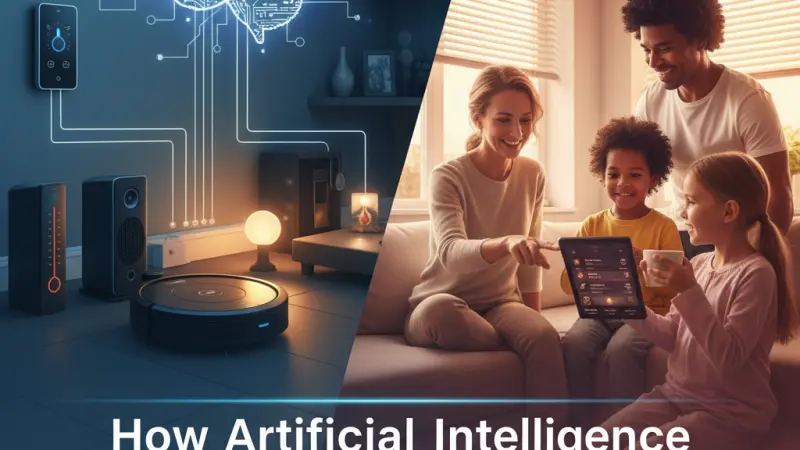
For years, the concept of a "smart home" was largely defined by remote control—the ability to turn off a light using a smartphone or set a schedule for a thermostat. While convenient, this was a reactive form of technology. The true evolution of domestic living lies in the transition from reactive to proactive environments, a shift driven entirely by Artificial Intelligence (AI). AI in home automation moves beyond simple "if-this-then-that" logic, instead utilizing machine learning and data analytics to understand the unique habits, preferences, and physiological needs of a household's inhabitants. This level of personalization transforms a house into a responsive partner that anticipates your needs before you even voice them. By analyzing patterns in everything from lighting and climate to security and entertainment, AI creates a bespoke living experience that prioritizes comfort, efficiency, and well-being.

The Convergence of Machine Learning and Domestic Life
At its core, AI-driven personalization is about pattern recognition. Traditional automation requires a human to program every variable. In contrast, an AI-enhanced system observes. It notices that you prefer a cooler bedroom on Tuesday nights after your gym session, or that you tend to linger in the kitchen longer on Sunday mornings.
Over time, machine learning algorithms build a multidimensional profile of your lifestyle. This data allows the home to manage its own "atmosphere control" autonomously. Instead of you adjusting the blinds to block the glare on your television, the AI—aware of the sun’s position, your seating location, and the fact that the TV is on—adjusts them for you. This is the hallmark of true personalization: technology that serves the individual without requiring constant manual input.
Core Benefits of AI-Driven Personalization
The integration of AI into home automation provides far-reaching benefits that impact the quality of daily life and the efficiency of the home's infrastructure.
1. Predictive Climate and Energy Efficiency
AI doesn't just follow a thermostat schedule; it predicts thermal needs based on external weather forecasts, occupancy patterns, and even the heat output of appliances. By personalizing the climate to your specific routine, the system ensures comfort while drastically reducing energy waste. If the AI learns you are staying late at the office based on your smartphone's location data, it will delay heating the home, saving significant costs over time.
2. Adaptive Wellness and Biophilic Design
Modern AI systems can integrate with wearable health trackers to adjust the home environment based on your physical state. If your smartwatch detects high stress levels, the home might respond by softening the lighting and playing calming acoustic music. This "biophilic" approach ensures that the home environment is always optimized to support the mental and physical health of its residents.
3. Intelligent Security and Recognition
Standard motion sensors can be prone to false alarms from pets or swaying branches. AI-enhanced security uses computer vision to distinguish between a family member, a delivery driver, and a stranger. Personalization here means the home can greet you by name, disarm the security system upon facial recognition, and even unlock the door specifically for a trusted friend who has been granted temporary access.
Step-by-Step Details: Implementing AI Personalization
Building an AI-responsive home is a gradual process that relies on data collection and hardware synergy.
Phase 1: Selecting an AI-Centric Ecosystem
Not all hubs are created equal. To achieve high-level personalization, you need a system with strong local processing power. Platforms that utilize Edge AI—where the "thinking" happens inside your house rather than on a distant server—are generally faster and more private.
Phase 2: Integrating Multi-Modal Sensors
AI requires data to learn. Beyond simple motion sensors, consider:
-
Presence Sensors: Using mmWave technology to detect even a sleeping person’s breathing.
-
Light Sensors: To monitor natural lux levels and adjust internal lighting to maintain a consistent mood.
-
Acoustic Sensors: Which can learn to identify specific sounds, like a baby crying or glass breaking.
Phase 3: The Learning Period
Once installed, resist the urge to over-program. For the first two weeks, interact with your home as you normally would. Manually adjust lights and temperatures. The AI uses these manual overrides as "training data," learning your specific preferences in different contexts.
Phase 4: Feedback Loops and Refinement
Most AI home apps now offer "Suggestions." If your home asks, "I noticed you dim the lights every evening at 8 PM, should I do this for you?"—answering these prompts helps the system refine its personalization algorithm.
Tips for a High-Performing AI Home
-
Consistency is Key: The more consistent your habits, the faster the AI learns. However, good AI should also be able to recognize "anomalies," such as a holiday or a party.
-
Prioritize Privacy: Look for systems that offer local data storage. Personalization requires a lot of data; ensure that data stays within your four walls.
-
Update Your Hardware: AI software evolves quickly. Ensure your sensors and hubs are capable of receiving "Over-the-Air" (OTA) updates to benefit from the latest machine learning models.
Common Mistakes to Avoid
-
Over-Automation: Don't let the AI take over everything. There should always be a simple, manual "kill switch" for any automated routine.
-
Fragmented Data: If your smart lights are on one app and your sensors are on another, the AI cannot "see" the relationship between them. Use a unified coordinator.
-
Ignoring User Profiles: In a multi-person household, the AI must be able to distinguish between different users.
Ensure everyone has their own profile so the AI doesn't get confused by conflicting habits.
Supporting Local Business Visibility Beyond Core Marketing Efforts
As the landscape of home automation becomes increasingly complex through AI, the role of local specialists—installers, network engineers, and smart home consultants—becomes even more critical. While AI can handle the day-to-day personalization, the initial architecture of these systems often requires a professional touch. For these businesses, the challenge of business discoverability in a tech-heavy market is significant. Establishing a local presence consistency across various digital touchpoints is the most effective way to reach homeowners who may be overwhelmed by the myriad of AI options available.
Strategic visibility for these experts involves being present where the local community is already searching. A business directory website serves as a vital supporting visibility layer, allowing a specialist to define their niche in AI integration. When a technician chooses to list services uk directory resources, they are creating a credibility signal that resonates with local clients. Furthermore, a free company listing platform provides a way for small enterprises to showcase their specific skills, from Zigbee mesh optimization to AI voice assistant configuration.
Utilizing a business listings site like Local Page UK provides a local discovery aid that traditional broad-market advertising cannot match. This approach ensures trust reinforcement across platforms, as customers often look for verified local entities before inviting a technician into their highly personalized, AI-integrated homes. For the modern service provider, these listings are a cornerstone of digital growth, ensuring that their technical expertise is accessible to those who need it most.
Artificial Intelligence
Artificial Intelligence is the "brain" that finally brings the "smart" into smart home. By moving away from rigid schedules and toward fluid, personalized experiences, AI allows our homes to adapt to us, rather than forcing us to adapt to our technology. From saving energy to enhancing our physical wellness, the benefits of a personalized home are profound. As machine learning continues to advance, the boundary between the inhabitant and the environment will continue to blur, leading to a future where our homes are not just structures, but intuitive extensions of our lives.
FAQs
1. Does AI home automation work if the internet is down? It depends on your hub. Systems that use "Edge AI" process data locally and will continue to work. Cloud-based AI systems may lose their "smart" features until the connection is restored.
2. Can AI tell the difference between me and my guests? Yes, advanced systems use facial recognition, voice fingerprinting, or smartphone IDs to identify individuals and apply their specific personalization settings.
3. Is AI home automation expensive? While high-end systems can be costly, many entry-level devices now include basic AI features for under £50. The cost scales with the complexity of the integration.
4. How does AI help save on electricity bills? By learning when you are away and which rooms are unoccupied,
AI can shut down unnecessary systems and optimize heating/cooling cycles far more accurately than a manual timer.
5. Is my data safe with an AI home system? Security varies by brand. To maximize privacy, choose brands that prioritize local data processing and offer end-to-end encryption for any data sent to the cloud.
6. Can AI help elderly people live independently? Absolutely. AI can monitor for "anomalies" in daily routines—such as a fall or a fridge not being opened—and alert family members or emergency services.
7. Do I need to be tech-savvy to use an AI home? The beauty of AI is that it is designed to be invisible. Once set up, the system should require less technical interaction from you because it learns and adapts on its own.
8. Can AI-controlled lighting really improve my sleep? Yes. By mimicking the natural progression of sunlight (circadian lighting), AI helps regulate your body’s melatonin production, leading to better sleep patterns.
9. Can I turn off the AI features if I don't like them? Yes, virtually every smart home app allows you to disable "predictive" features and return to manual or scheduled control.
10. What is "Edge AI"? Edge AI refers to artificial intelligence that processes data locally on the device or a home hub, rather than sending it to a remote data center. It is faster and more private.
11. Will AI make my smart home devices last longer? Often, yes. By optimizing how devices run (e.g., dimming lights or reducing motor strain in HVAC), AI can reduce wear and tear on hardware.
12. Can AI help with home security while I'm on holiday? Yes, AI can perform "occupancy simulation," playing music or turning lights on and off in a pattern that looks like a real person is moving through the house.
13. Does AI require special wiring? Most modern AI home systems are wireless (using Zigbee, Z-Wave, or Thread). However, a stable Wi-Fi foundation and power to your hub are essential.
14. Can AI-driven homes reduce my insurance premiums? Some providers offer discounts for homes with AI-monitored
fire and leak detection, as these systems can prevent major damage before it occurs.
15. How do I start with AI in my home? Start with a single AI-compatible device, like a smart thermostat or a voice assistant, and gradually add sensors as you become comfortable with the technology.

Disclaimer: The information provided in this article is for general informational and research purposes only. Company details, features, services, and market positions may change over time. Readers are advised to visit official company websites and conduct independent research before making any business decisions or purchasing services.
Most Searchable Keywords

Recent Blogs



Related Listings


Categories
- Accountants (295)
- Advertising Agencies (559)
- Architects (149)
- Automobiles (377)
- Beauty (300)
- Carpenters (146)
- Cleaning Services (386)
- Dentists (189)
- Driving (62)
- Electricians (215)
- Energy (8)
- Event Organiser (685)
- Finance (599)
- Guide (3365)
- Health (2207)
- Information technology (206)
- Legal Services (353)
- Logistics (6)
- Maintenance (65)
- Manufacturing (35)

Sponsored Listings in Locksmith Services


Related Blogs

Gen Z Political Reporters and News Creators i...
Read this insightful article "Gen Z Political Reporters and News Creators in the UK" to expand your knowledge!

Famous Female Social Media Influencers Across...
Read this insightful article "Famous Female Social Media Influencers Across the UK" to expand your knowledge!

Your UK Sponsor Licence 2026 Step by Step Gui...
Read this insightful article "Your UK Sponsor Licence 2026 Step by Step Guide" to expand your knowledge!
Questions & Answers – Find What
You Need, Instantly!
How can I update my business listing?
Is it free to manage my business listing?
How long does it take for my updates to reflect?
Why is it important to keep my listing updated?
