
How Climate Change Risk Influences Insurance Product Marketing
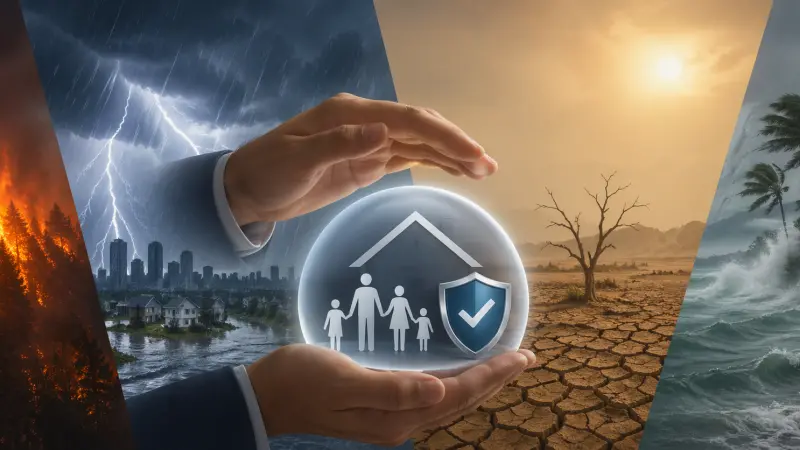
Does the escalating frequency of extreme weather events across the British Isles fundamentally alter how we perceive the value of an insurance policy? As the UK faces increasingly volatile winters marked by severe flooding and summers defined by record-breaking heatwaves, the insurance industry finds itself at a critical juncture. Climate change risk is no longer a peripheral concern for actuaries alone; it has moved to the forefront of insurance product marketing and consumer engagement. In the current landscape, the primary keyword climate change insurance represents a shift from reactive indemnity to proactive risk management. Marketing departments are now tasked with communicating complex environmental data in a way that resonates with both homeowners and commercial enterprises, ensuring that protection remains accessible while reflecting the true cost of environmental instability.

The Evolution of Risk Communication in the UK
For decades, insurance marketing focused primarily on peace of mind and financial security in a general sense. However, the intensification of climate change risk has necessitated a more granular approach to communication. In the UK, this is particularly evident in the marketing of household policies. Modern campaigns frequently utilise sophisticated mapping data to show prospective clients how specific environmental shifts, such as rising sea levels or soil subsidence due to prolonged drought, could impact their specific postcode. This shift toward "data-led storytelling" allows insurers to move away from abstract promises and toward tangible risk education. By positioning the insurer as a knowledgeable partner in climate resilience, brands can build deeper trust with a population that is increasingly anxious about the long-term viability of their properties.
Furthermore, the language used in marketing materials has transitioned from purely legalistic jargon to educational narratives. Insurers are now highlighting their role in the broader ecosystem of environmental protection. For instance, marketing collateral often focuses on "resilience and recovery" rather than just "payouts." This change reflects a strategic move to align the brand with the values of a more environmentally conscious public. Consumers are looking for insurers who not only understand the risks but are actively working to mitigate the systemic causes of climate change. Therefore, marketing strategies now frequently include disclosures about the insurer’s own carbon footprint and investment portfolios, demonstrating a holistic commitment to sustainability that transcends the individual product being sold.
Moreover, the integration of real-time alerts and preventative technology has become a cornerstone of product marketing. Many UK insurers now market "smart home" integrations alongside their policies. These systems can detect early signs of water leaks or provide advance warning of storm surges, allowing policyholders to take action before damage occurs. The marketing of these features emphasizes a "prevention-first" philosophy, which is highly effective in a climate-uncertain world. It reframes the insurance relationship from a once-a-year transaction into a continuous service model. This ongoing engagement is vital for maintaining customer loyalty in a competitive market where price was previously the only differentiator. Now, the quality and utility of climate-related advice serve as the primary competitive advantage.
Parametric Insurance: A New Marketing Frontier
One of the most significant innovations influenced by climate change risk is the rise of parametric insurance. Unlike traditional indemnity insurance, which pays out based on the actual loss incurred after an assessment, parametric insurance triggers a payment based on the occurrence of a specific, measurable event—such as a certain wind speed or rainfall level. Marketing for these products in the UK has gained significant momentum, particularly for agricultural and small business sectors. The value proposition is clear: speed and certainty. In the aftermath of a catastrophic event, the delay in traditional claims processing can be the difference between a business surviving or folding. Marketing teams highlight the "frictionless" nature of these payouts to appeal to time-poor business owners.
The marketing of parametric solutions also leans heavily on the transparency of the technology involved. By using independent satellite data or verified weather stations, insurers can market a product that eliminates the "dispute" element of claims. For a UK audience, this transparency is a powerful marketing tool, especially given the historical scepticism some consumers feel toward large financial institutions. Highlighting that "the data decides the payout" removes the perceived bias of the insurer. This approach is particularly effective for businesses located in high-risk flood zones where traditional cover may be prohibitively expensive or laden with complex exclusions. Parametric marketing offers a simplified, reliable alternative that addresses a specific gap in the market created by climate volatility.
Additionally, the modular nature of parametric cover allows for highly targeted marketing campaigns. Insurers can create "micro-policies" for specific events, such as a festival organiser protecting against excessive rainfall during a bank holiday weekend. This ability to productise specific climate risks allows marketers to reach niche audiences with high conversion potential.
The messaging focuses on the "surgical" protection of revenue, rather than a broad, expensive blanket policy. As climate patterns become more erratic, the demand for this type of agile, event-based coverage is expected to grow, providing fertile ground for creative marketing strategies that emphasize adaptability and precision.
Incentivising Green Behaviour Through Product Design
Climate change risk has also led to the development of "green" insurance products that actively incentivise sustainable choices. Marketing for these products often centres on the concept of the "green premium" or "sustainability discount." For example, motor insurers in the UK are increasingly marketing policies specifically tailored for electric vehicle (EV) owners, offering lower premiums or specialized breakdown services. This marketing strategy taps into the growing segment of the population looking to reduce their carbon footprint. By aligning financial incentives with environmental goals, insurers can attract high-value, forward-thinking customers who are statistically likely to be lower-risk drivers anyway.
In the property sector, marketing now often includes "build back better" clauses. These clauses ensure that if a property is damaged, the insurer will cover the cost of replacing materials with more sustainable, energy-efficient, or flood-resilient alternatives. Marketing this feature is a powerful way to demonstrate a commitment to long-term climate resilience. It moves the conversation beyond returning a property to its "pre-loss state" and toward improving it for a "low-carbon future." This resonates strongly with UK homeowners who are concerned about future-proofing their homes against energy price hikes and environmental threats. The marketing focus here is on "value-add" and "future-readiness," positioning the insurer as a partner in the homeowner's personal sustainability journey.
Commercial insurance marketing has seen a similar shift, with a focus on ESG (Environmental, Social, and Governance) scores. Insurers are increasingly marketing "performance-linked" policies where the premium is tied to the client's success in meeting certain sustainability targets. This approach creates a symbiotic relationship between the insurer and the insured. The marketing narrative emphasizes "collaborative risk reduction," where the insurer provides the tools and financial motivation for the business to become greener. For large UK corporations, this is a highly attractive proposition as it helps them meet their own regulatory reporting requirements while simultaneously reducing their insurance costs. Marketing these complex products requires a high degree of technical expertise and a focus on long-term corporate partnership.
The Role of ESG in Brand Positioning
The broader influence of climate change risk on insurance marketing is perhaps most visible in the realm of brand positioning and corporate social responsibility (CSR). In the UK, the Financial Conduct Authority (FCA) has increased scrutiny on "greenwashing," making it essential for insurance marketing to be underpinned by genuine action. Insurers are now marketing their "divestment strategies"—publicly committing to stop insuring or investing in high-carbon industries like coal or tar sands. This "ethical marketing" is designed to appeal to the "conscious consumer," particularly amongst Millennials and Gen Z, who are beginning to dominate the insurance buying market. The message is clear: your premiums will not be used to fund the destruction of the planet.
Furthermore, insurers are taking a more active role in public policy and community resilience projects, which then becomes a core part of their marketing content. By sponsoring flood defences or participating in reforestation projects, insurers can generate "earned media" and positive brand associations that go far beyond what a traditional advertisement could achieve. In the UK, where community identity is strong, marketing that focuses on "protecting our local environment" is highly effective. It humanises the insurance company and positions it as a stakeholder in the community’s future. This type of marketing builds brand equity that is incredibly resilient, even in a market where price competition remains fierce.
Lastly, the transparency of the supply chain is becoming a marketing asset. Insurers are beginning to market the "circularity" of their claims process. For example, a motor insurer might highlight that they prioritise the use of "green parts" (recycled, original equipment manufacturer parts) in repairs, or a home insurer might promote their partnership with sustainable construction firms.
Marketing these details helps to close the loop on the insurer’s environmental impact. It provides the consumer with tangible evidence that every part of the insurance lifecycle—from the premium they pay to the repair of their property—is handled with a climate-conscious mindset. This level of detail is becoming the new standard for "best-in-class" insurance marketing in the UK.
Summary of Key Marketing Shifts
- From Indemnity to Resilience: Shifting the focus from financial payouts to proactive risk mitigation and property hardening.
- Data-Driven Transparency: Using climate modelling and satellite data to explain risk and trigger automatic payouts in parametric models.
- Incentivised Sustainability: Offering discounts and specialised features for EVs, energy-efficient homes, and businesses with high ESG scores.
- Ethical Investment Narratives: Marketing the insurer's move away from fossil fuel investments to align with consumer values.
- Prevention Technology: Bundling insurance with smart-home tech to offer a continuous, service-based relationship.
Challenges and Ethical Considerations in Marketing
While climate change risk provides many opportunities for innovative marketing, it also presents significant challenges. One of the primary risks is the issue of "insurance deserts"—areas where the climate risk is so high that cover becomes unaffordable or unavailable. Marketing in these regions requires extreme sensitivity. Insurers must balance their need to manage risk with their social responsibility to ensure that vulnerable populations are not left without protection. In the UK, initiatives like Flood Re are often highlighted in marketing to show that cover is still accessible, but the long-term sustainability of these models is a constant topic of debate. Marketers must be careful not to over-promise "certainty" in an environment where systemic risks are fundamentally changing.
Another challenge is the complexity of the data. While using sophisticated climate models is a marketing strength, there is a risk of alienating consumers with "information overload." The role of the marketer is to distill complex scientific data into actionable insights for the consumer. If the marketing makes the risk seem too overwhelming or the product too complicated, consumers may simply disengage. Therefore, the most successful UK insurance marketing focuses on "empowerment" rather than "fear." By providing clear steps that consumers can take to reduce their risk and showing how the insurance product supports those steps, marketers can maintain engagement without causing "climate anxiety."
Ethical considerations also extend to how "green" products are priced. There is a fine line between incentivising good behaviour and penalising those who cannot afford to make sustainable transitions. For example, if premiums for petrol cars rise significantly while EV premiums fall, lower-income households who cannot afford an EV may be unfairly burdened. Marketing teams must work closely with product developers to ensure that "green" initiatives are inclusive. The narrative should focus on "leading the transition" rather than "punishing the laggards." Transparency about how prices are calculated and what factors influence premiums is essential for maintaining a positive brand reputation in the UK's highly regulated financial landscape.
Conclusion: The Future of Insurance Marketing
The influence of climate change risk on insurance product marketing is profound and permanent. We have moved beyond the era of simple risk transfer into a new age of "climate partnership." For insurers in the UK, the challenge is to continue evolving their marketing strategies to keep pace with an accelerating environmental crisis.
This means embracing new technologies like parametric triggers, fostering a deep commitment to ESG principles, and communicating with a level of transparency and empathy that was previously unheard of in the sector. The winners in this new landscape will be the brands that can successfully bridge the gap between financial security and environmental stewardship, making climate resilience a core part of their brand identity.
Frequently Asked Questions
How does climate change affect my home insurance premium in the UK?
Climate change increases the frequency of risks like flooding and subsidence. As insurers pay out more for these claims, the overall cost of providing cover rises, which can lead to higher premiums for properties in high-risk areas. However, many UK insurers offer discounts for homes with flood defences or sustainable features.
What is parametric insurance and why is it becoming popular?
Parametric insurance pays out a pre-agreed amount based on a specific event (like a flood reaching a certain depth) rather than the actual loss. It is popular because it provides much faster payouts and more certainty than traditional claims processes, which is vital during climate-related disasters.
Are there insurance products specifically for electric vehicles?
Yes, many UK insurers now offer specific EV policies that include cover for charging cables, battery health, and specialized breakdown recovery. These are often marketed at competitive rates to encourage the transition to lower-emission transport.
What does "build back better" mean in an insurance context?
It is a policy feature where the insurer agrees to pay for more resilient or sustainable materials when repairing a property after a claim. This helps the homeowner prepare for future climate risks and reduce their environmental impact.
How can I tell if my insurer is truly "green" or just greenwashing?
Check the insurer's annual ESG report and their investment policies. Truly sustainable insurers will have clear targets for reducing their own carbon footprint and will have committed to divesting from fossil fuel industries.
Does the UK government help with climate-related insurance costs?
The UK has an initiative called Flood Re, which is a joint venture between the government and insurers.
It helps keep home insurance affordable for those in high-flood-risk areas by re-insuring the flood portion of the policy.
As the landscape of risk continues to shift, staying informed is essential for both consumers and professionals. For those looking to connect with reputable providers or specialists in the field, utilizing a free business search directory can be an invaluable first step. Whether you are seeking a free company search directory to vet a potential insurer’s credentials or browsing a company directory online for specialized risk consultants, having access to a verified business directory ensures you are making decisions based on accurate data. To improve your own firm's reach in this evolving market, consider listing with Local Page UK. Enhancing your visibility through a verified business directory can help your business stand out as a leader in climate-resilient services and sustainable insurance solutions within your local community.

Disclaimer: The information provided in this article is for general informational and research purposes only. Company details, features, services, and market positions may change over time. Readers are advised to visit official company websites and conduct independent research before making any business decisions or purchasing services.
Most Searchable Keywords

Recent Blogs


Related Listings


Categories
- Accountants (295)
- Advertising Agencies (559)
- Architects (149)
- Automobiles (377)
- Beauty (300)
- Carpenters (146)
- Cleaning Services (386)
- Dentists (189)
- Driving (62)
- Electricians (215)
- Energy (8)
- Event Organiser (685)
- Finance (599)
- Guide (3365)
- Health (2207)
- Information technology (206)
- Legal Services (353)
- Logistics (6)
- Maintenance (65)
- Manufacturing (35)

Sponsored Listings in Locksmith Services


Related Blogs

Gen Z Political Reporters and News Creators i...
Read this insightful article "Gen Z Political Reporters and News Creators in the UK" to expand your knowledge!

Famous Female Social Media Influencers Across...
Read this insightful article "Famous Female Social Media Influencers Across the UK" to expand your knowledge!

Your UK Sponsor Licence 2026 Step by Step Gui...
Read this insightful article "Your UK Sponsor Licence 2026 Step by Step Guide" to expand your knowledge!
Questions & Answers – Find What
You Need, Instantly!
How can I update my business listing?
Is it free to manage my business listing?
How long does it take for my updates to reflect?
Why is it important to keep my listing updated?
