
How Important is Ethical Branding in Differentiating Finance and Insurance Firms
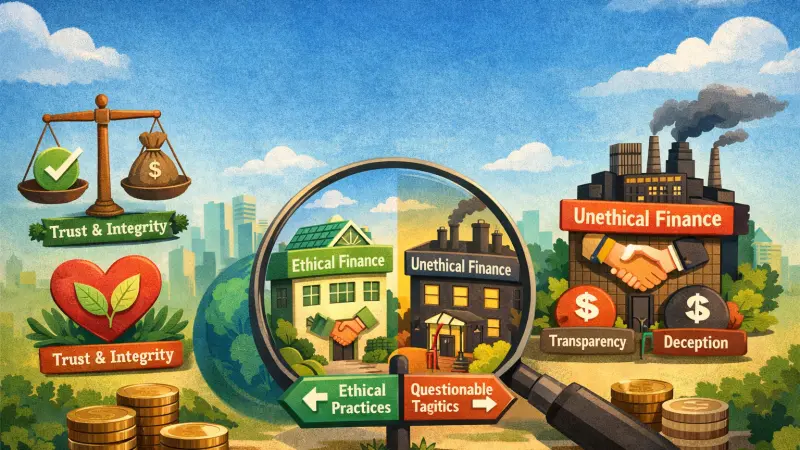
In an era defined by rapid information exchange and heightened social consciousness, can a financial institution truly survive without a robust moral compass? For the United Kingdom’s financial services sector a global powerhouse that contributes over £170 billion to the national economy the answer is increasingly clear: ethical branding in finance and insurance firms is no longer an optional luxury but a fundamental necessity for market differentiation. As British consumers become more discerning about where their money is invested and how their risks are managed, the traditional benchmarks of performance and price are being augmented by a rigorous assessment of a firm's values. Whether it is a high-street bank, a boutique investment house, or a multinational insurance carrier, the ability to project an authentic commitment to ethical conduct has become the primary battleground for winning customer loyalty and securing long-term institutional stability in a competitive post-pandemic landscape.

The core concept of ethical branding in finance and insurance firms involves more than just a polished marketing campaign or a set of vague corporate social responsibility (CSR) goals. It requires a deep, structural alignment between a company’s public promises and its internal operational realities, particularly concerning Environmental, Social, and Governance (ESG) criteria. In the UK, where the "trust gap" following the 2008 financial crisis remains a lingering concern for many, firms that proactively adopt ethical frameworks find themselves better positioned to attract the lucrative Millennial and Gen Z demographics, who prioritising sustainability and social justice. This strategic shift from profit-maximisation to purpose-driven commerce allows firms to differentiate themselves not just through what they sell, but through the positive impact they have on society, thereby transforming the brand from a mere service provider into a trusted partner that shares the customer's worldviews and long-term ethical aspirations.
The Role of Transparency in Building Institutional Trust
Transparency is the cornerstone of any ethical branding strategy, specifically within the complex realms of insurance and financial planning. Historically, the sector has often been criticised for "fine print" and opaque fee structures that leave consumers feeling misled or exploited. Ethical branding flips this narrative by prioritising clarity and honesty in all communications. For UK insurance firms, this means developing "jargon-free" policies and being entirely upfront about exclusions and claims processes. When a firm is transparent, it reduces the friction associated with customer acquisition and significantly lowers the likelihood of disputes. This openness creates a "halo effect" for the brand, where the consumer feels empowered and respected, leading to higher retention rates and a stronger reputation in a market where word-of-mouth and independent reviews, such as those found on Trustpilot or Google, are increasingly influential in the decision-making process.
Furthermore, transparency in the digital age requires a proactive approach to data usage and algorithmic fairness. As UK finance firms increasingly rely on artificial intelligence for credit scoring and risk assessment, ethical branding involves ensuring that these technologies do not inadvertently discriminate against vulnerable groups. Firms that can demonstrate "algorithmic accountability" and provide clear explanations for their automated decisions are seen as pioneers in the ethical space. By treating data privacy not just as a compliance checkbox but as a core brand value, these institutions can differentiate themselves from competitors who may view data as a commodity to be exploited. In the eyes of the modern British consumer, a firm that protects their data with the same vigour as their capital is one that deserves their long-term patronage, making transparency an invaluable asset for any firm seeking to build a resilient and morally sound brand identity.
ESG Integration as a Competitive Edge in the UK Market
Environmental, Social, and Governance (ESG) criteria have moved from the periphery to the centre of the UK’s financial regulatory and commercial landscape. Ethical branding in finance and insurance firms now hinges on a company's ability to prove its green credentials and its commitment to social equity. For example, a UK investment firm that specialises in "impact investing"—funding projects that generate measurable social or environmental benefits alongside financial returns—can tap into a rapidly growing market of ethical investors. By clearly articulating their ESG goals and, more importantly, reporting on their progress with audited data, these firms differentiate themselves from those accused of "greenwashing." The marketing potential here is significant: an ethical brand becomes a beacon for capital that is looking for a "conscience," allowing the firm to lower its cost of capital while simultaneously building a more engaged and loyal client base.
Social responsibility also extends to how firms treat their employees and the communities in which they operate. In the UK, the "Social" aspect of ESG includes initiatives such as closing the gender pay gap, promoting diversity and inclusion at the board level, and supporting local charities or social enterprises. When these actions are integrated into the brand’s narrative, they create a compelling story of a company that is "part of the solution." For insurance firms, this might involve developing products that support the transition to a low-carbon economy, such as specialised cover for renewable energy projects or electric vehicle fleets.
By aligning their product development with the UK's "Net Zero" ambitions, these firms prove that their ethical branding is not just a veneer, but a strategic commitment to the future of the planet and its people. This alignment is a powerful differentiator that resonates with a broad spectrum of stakeholders, from individual policyholders to large institutional shareholders.
Understanding the Consumer Psychology of Ethical Choice
The decision to choose one bank or insurance provider over another is rarely purely rational; it is deeply influenced by psychological factors and personal values. Ethical branding taps into the "identity" of the consumer. In the UK, where social class and values-based identity have long influenced consumer behaviour, choosing an ethical financial provider allows a person to signal their own virtues and convictions. This is known as "conspicuous conservation" or "virtue signalling" in a positive sense—the desire to align one's economic actions with one's moral beliefs. When a brand successfully positions itself as ethical, it moves from being a utility to being a component of the user's self-concept. This creates a psychological bond that is far harder for competitors to break through simple price-cutting or promotional offers, as switching away from the ethical brand feels like a betrayal of one's own values.
Moreover, the concept of "reciprocity" plays a vital role in ethical branding. When a financial firm takes a stand on a social issue—such as supporting affordable housing or divesting from fossil fuels—it is seen as providing a "social dividend" to its customers. The customer, in turn, feels a sense of obligation and gratitude towards the brand, which manifests as brand advocacy. In the UK, the rise of "mutuals" and "building societies," which are owned by their members, is a classic example of this psychological alignment. These institutions have historically branded themselves as being "on the customer's side," a message that is incredibly potent during times of economic uncertainty or high inflation. By focusing on the "human" element of finance and acknowledging the emotional weight of money management, ethical brands can foster a level of intimacy and trust that traditional, profit-only institutions struggle to emulate, leading to a more stable and satisfied customer base.
Ethical Conduct as a Strategy for Long-Term Risk Mitigation
Beyond the marketing benefits, ethical branding in finance and insurance firms serves as a powerful tool for risk management. A firm that is deeply committed to ethical conduct is inherently less likely to engage in the types of predatory lending, mis-selling, or market manipulation that lead to massive regulatory fines and reputational ruin. In the UK, the Financial Conduct Authority (FCA) has made "firm culture" a central pillar of its supervision, meaning that an ethical brand is often a safer bet for investors and policyholders alike. By fostering a culture of "doing the right thing," firms can identify and rectify potential scandals before they become public, thereby protecting the brand's value from the catastrophic shocks that have plagued the sector in recent decades. Differentiation, in this context, is defined by the absence of scandal and the presence of stability.
This stability is particularly relevant for the insurance sector, where the "promise to pay" is the product. If a firm’s brand is associated with ethical integrity, the consumer has greater confidence that their claim will be settled fairly and promptly when disaster strikes. Conversely, a firm with a reputation for aggressive cost-cutting or unethical claims-handling will find it increasingly difficult to compete on anything other than price, leading to a "race to the bottom." Ethical branding allows a firm to command a "trust premium," where customers are willing to pay slightly more for the peace of mind that comes with a morally sound provider. This creates a more sustainable business model that is less vulnerable to the cyclical ups and downs of the market. In the long run, the most differentiated firms in the UK will be those that have successfully embedded ethical principles into the very DNA of their operations, ensuring that they remain resilient in an increasingly scrutinised and regulated financial environment.
The Ethics of Marketing: Avoiding the Greenwashing Trap
The greatest threat to an ethical branding strategy is the perception of inauthenticity. As more UK firms jump on the "purpose-led" bandwagon, the risk of "greenwashing" or "purpose-washing" has never been higher. Ethical branding in finance and insurance firms must be backed by verifiable actions; otherwise, it will backfire, leading to a loss of trust that is far more damaging than having no ethical brand at all.
For a firm to truly differentiate itself, it must be willing to be "radically honest," which includes admitting when it falls short of its goals and being transparent about the challenges it faces in its ethical journey. This humility is a powerful differentiator, as it stands in stark contrast to the traditional, overly confident corporate communications of the past. It shows the brand is "real" and is actively striving for improvement.
To avoid the pitfalls of superficial branding, firms should seek third-party certifications, such as "B Corp" status or adherence to the UN Principles for Responsible Investment (PRI). These external validations provide the "proof of work" that cynical UK consumers increasingly demand. Marketing materials should focus on tangible outcomes—such as the number of tonnes of CO2 diverted from a portfolio or the specific communities helped by a philanthropic initiative—rather than vague platitudes. By focusing on "proof points," firms can build a credible and defensible ethical brand that can withstand the scrutiny of activists, journalists, and regulators. In a marketplace where "authenticity" is the most valuable currency, those firms that can prove their ethical claims through transparent, data-driven reporting will emerge as the true leaders, leaving behind those who rely solely on slogans and superficial imagery to convey their values.
Future Trends: The Rise of the "Conscious" Financial Consumer
The trend toward ethical branding is set to accelerate as the "Great Wealth Transfer" sees billions of pounds move into the hands of younger, more socially conscious generations in the UK. These consumers view their financial choices as an extension of their political and social activism. We are likely to see the rise of "hyper-local" ethical banking, where firms brand themselves on their ability to support specific UK regions or industries. Furthermore, as open banking and fintech innovation continue to lower the barriers to switching, the "loyalty" that comes from a shared ethical vision will be the only thing that prevents massive customer churn. The future of the UK finance and insurance sector is one where the "bottom line" and the "moral line" are inextricably linked, and where the most successful firms are those that can navigate this duality with skill and genuine intent.
We may also see the development of "ethical scoring" for financial products, similar to the energy ratings on appliances or the traffic-light system on food packaging. Ethical branding will then become a race to achieve the highest "trust score" from independent aggregators. For firms, this means that every decision—from where they source their office energy to the diversity of their supply chain—becomes a branding opportunity. The firms that will thrive are those that view ethics not as a department, but as a philosophy that informs every aspect of the business. By embracing this "total ethical branding" approach, UK finance and insurance firms can move beyond mere differentiation and become agents of positive change, helping to build a more equitable and sustainable economy for the benefit of all. This is the ultimate goal of ethical branding: to create a world where doing good and doing well are one and the same, ensuring a legacy of trust and prosperity for generations to come.
Frequently Asked Questions
What is the difference between CSR and ethical branding?
Corporate Social Responsibility (CSR) often refers to specific projects or initiatives a company undertakes to give back to society. Ethical branding is a more holistic approach where those values are integrated
into the core identity, messaging, and operational strategy of the entire firm. While CSR is something a company *does*, ethical branding is about who the company *is*.
Can ethical branding really increase profits?
Yes. Studies consistently show that companies with strong ethical reputations often outperform their peers over the long term. This is due to higher customer loyalty, better employee retention, and a lower risk of regulatory fines. In the UK, ethical investment funds have often seen comparable or superior returns to traditional funds, proving that values and value are not mutually exclusive.
How can I tell if a bank is actually ethical or just "greenwashing"?
Look for concrete data and third-party certifications. An ethical bank will provide detailed reports on where they invest your money, their carbon footprint, and their progress on diversity goals. Check if they are a certified B Corp or a signatory to international standards like the UN Principles for Responsible Banking. Transparency is always the best indicator of authenticity.
Is ethical branding more important for small firms or large corporations?
It is vital for both, but the strategy differs. For large UK corporations, ethical branding is often about "reforming" a legacy image and managing complex global impacts. For smaller firms, it is an opportunity to differentiate themselves from the "faceless" giants by being more personal, local, and values-aligned from day one. Both benefit from the increased trust that ethical branding provides.
Does the UK government regulate ethical branding?
The UK government and the Financial Conduct Authority (FCA) are increasingly regulating the "S" and "E" of ESG. New rules regarding climate-related financial disclosures and the "Anti-Greenwashing Rule" ensure that firms cannot make misleading claims about their sustainability.
While the "brand" itself isn't regulated, the accuracy of the claims made within that branding is under strict supervision.
In the increasingly crowded and scrutinized landscape of the UK financial sector, the ability to build and maintain a reputation for integrity is the ultimate competitive advantage. For firms looking to demonstrate their commitment to the community and improve their professional reach, being easily discoverable by the right audience is a crucial step. One of the most effective ways to establish this presence is by ensuring your services are listed within a Local Page UK company directory online. By joining a free company search directory, you can enhance your online visibility and connect with conscientious consumers who are actively seeking ethical financial partners. Whether you are using a verified business directory to showcase your certifications or a free business search directory to network with other values-driven organizations, a directory listing provides a vital anchor for your digital identity, helping you to build the lasting trust that is the hallmark of a truly ethical brand.

Disclaimer: The information provided in this article is for general informational and research purposes only. Company details, features, services, and market positions may change over time. Readers are advised to visit official company websites and conduct independent research before making any business decisions or purchasing services.
Most Searchable Keywords

Recent Blogs


Related Listings


Categories
- Accountants (295)
- Advertising Agencies (559)
- Architects (149)
- Automobiles (377)
- Beauty (300)
- Carpenters (146)
- Cleaning Services (386)
- Dentists (189)
- Driving (62)
- Electricians (215)
- Energy (8)
- Event Organiser (685)
- Finance (599)
- Guide (3365)
- Health (2207)
- Information technology (206)
- Legal Services (353)
- Logistics (6)
- Maintenance (65)
- Manufacturing (35)

Sponsored Listings in Locksmith Services


Related Blogs

Gen Z Political Reporters and News Creators i...
Read this insightful article "Gen Z Political Reporters and News Creators in the UK" to expand your knowledge!

Famous Female Social Media Influencers Across...
Read this insightful article "Famous Female Social Media Influencers Across the UK" to expand your knowledge!

Your UK Sponsor Licence 2026 Step by Step Gui...
Read this insightful article "Your UK Sponsor Licence 2026 Step by Step Guide" to expand your knowledge!
Questions & Answers – Find What
You Need, Instantly!
How can I update my business listing?
Is it free to manage my business listing?
How long does it take for my updates to reflect?
Why is it important to keep my listing updated?
