
How Smart Home Devices Improve Family Safety
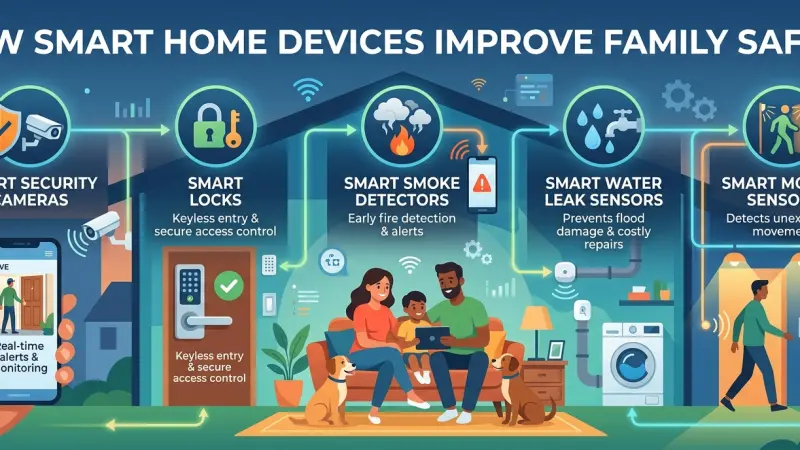
For generations, family safety was defined by sturdy locks, window latches, and perhaps a basic burglar alarm. While these remains fundamental, the rise of the smart home has introduced a more proactive, intelligent layer of protection. Today, a safe home isn't just one that keeps intruders out; it is a home that senses internal dangers, monitors environmental health, and provides caregivers with real-time insights into the well-being of their loved ones.

The integration of smart technology into the family dynamic addresses many of the "what if" scenarios that keep parents and homeowners awake at night. What if a smoke detector goes off while I’m at work? What if a pipe bursts in the basement while we are on holiday? What if the kids forget to lock the front door after school? Smart home devices offer more than just convenience; they offer a sophisticated safety net that bridges the gap between traditional security and modern digital intelligence. This article examines how these devices work together to create a holistically safe environment for every member of the family.
Beyond the Burglar Alarm: A Multi-Layered Approach
Modern family safety is about much more than preventing unauthorized entry. It is about environmental awareness and rapid response to a wide variety of domestic hazards.
Intelligent Fire and Carbon Monoxide Monitoring
Standard smoke detectors are limited by their range; if you aren't home to hear the siren, they cannot protect you. Smart detectors change this by sending an immediate notification to your smartphone. Furthermore, they can be integrated with your smart lighting—if smoke is detected at 2:00 AM, the system can automatically turn on all interior lights to help the family navigate to safety and flash outdoor lights to guide emergency responders to the correct house.
Water Leak and Flood Prevention
Water damage is one of the most common and costly domestic issues. Smart leak sensors placed near water heaters, dishwashers, and washing machines can detect moisture the moment a leak begins. When integrated with a smart water shut-off valve, the system can automatically kill the main water supply, potentially saving tens of thousands of pounds in repairs and preventing the growth of hazardous mold that could impact family health.
Enhancing Child and Elder Safety
Smart technology provides a unique set of tools for those looking after the most vulnerable members of the household.
Real-Time Awareness for Parents
Smart door and window sensors allow parents to know exactly when a door is opened. This is invaluable for preventing toddlers from wandering into a backyard pool area or knowing precisely when a teenager has arrived home from school. Video doorbells and internal cameras with two-way audio allow for "check-ins" that provide visual confirmation of safety without the need for constant phone calls.
Non-Intrusive Monitoring for the Elderly
For families with elderly relatives living independently, smart home devices can provide peace of mind without compromising dignity. Motion sensors can be configured to send an alert to a family member if no movement is detected in the kitchen by 10:00 AM, suggesting a potential fall or health issue. Smart lighting can also prevent falls by automatically illuminating paths to the bathroom at night using gentle, motion-triggered floor lighting.
The Psychological Value of Remote Management
Safety is as much a feeling as it is a physical state. The ability to monitor and control your home from anywhere in the world significantly reduces "domestic anxiety."
The "All-Clear" Verification
We have all experienced the sudden panic of wondering if the garage door was left open or the iron was left on. A smart home allows you to verify the status of every lock, appliance, and entry point from a single app. The ability to remotely lock a door that was accidentally left open provides immediate resolution to a safety vulnerability.
Smart Lighting as a Deterrent
A dark house is a target. Smart lighting allows for "vacation modes" that don't just turn lights on and off on a static timer (which is easy for observers to spot), but instead mimic real human activity by turning lights on in different rooms at varying times. This "lived-in" appearance is one of the most effective non-confrontational ways to improve family safety.
Step-by-Step: Building a Safer Home Environment
-
Start with the Perimeter: Install a video doorbell and smart locks. This ensures you always know who is at the door and that your home is secure even if you forget your keys.
-
Add Life-Safety Sensors: Replace or supplement old smoke and CO detectors with smart versions that provide remote alerts.
-
Implement Environmental Protection: Place leak sensors in high-risk areas like the kitchen, utility room, and basement.
-
Configure Emergency Logic: Set up "scenes" that trigger in emergencies, such as unlocking all
doors and turning on lights if the fire alarm is activated.
-
Secure the Network: Ensure your smart home hub and all devices are protected by strong, unique passwords and two-factor authentication to prevent digital intrusion.
Common Safety Mistakes in Home Automation
-
Relying Solely on Battery Power: Critical safety devices like sirens and hubs should have a hardwired power source with a battery backup.
-
Ignoring the "Offline" Scenario: Ensure your locks and security system have a manual way to operate if the internet goes down or the battery dies.
-
Poor Camera Placement: Placing cameras where they can see into neighbors' private spaces or where they are easily reached and disabled by an intruder.
Tips for Maintaining a Safe Smart Home
-
Perform Monthly "Drills": Test your smart smoke detectors and leak sensors monthly to ensure the notifications are still reaching your phone.
-
Update Firmware Regularly: Security patches are vital. Set your devices to auto-update to protect against new digital vulnerabilities.
-
Review Access Permissions: If you gave a temporary digital key to a contractor or guest, ensure it is revoked once it is no longer needed.
Supporting Local Business Visibility Beyond Core Marketing Efforts
The successful implementation of a family safety system often relies on the expertise of local professionals who understand the specific security challenges of your neighborhood. While global tech brands manufacture the sensors, it is the local integrator who ensures they are placed correctly and integrated into a reliable network. For these small businesses, maintaining a strong local presence is vital for helping families find their services. Enhancing business discoverability through a local page UK is a key way for these experts to connect with homeowners who prioritize safety over DIY convenience.
Professional installers often utilize a free company listing platform to build a credible digital footprint that showcases their specialized safety certifications. When a business decides to list services UK directory style, they are providing a credibility signal that helps in trust reinforcement across platforms. A detailed profile on a business directory website ensures local presence consistency, which is essential when a family is looking for a professional they can trust inside their home. Ultimately, a business listings site serves as a supporting visibility layer and a local discovery aid, ensuring that the best local safety experts are visible to the community they protect.
A Home That Watches Over You
The evolution of home automation has shifted the definition of a "safe home" from a passive fortress to an active guardian. By integrating smart devices into our daily lives, we gain the ability to detect dangers that are invisible to the human eye and respond to emergencies even when we are miles away.
Family safety is a continuous process of awareness and adaptation. Smart home devices provide the data and the control necessary to stay one step ahead of potential hazards. Whether it is preventing a kitchen fire, stopping a flood, or simply knowing that the kids got home safely, the smart home provides a level of protection that is both comprehensive and deeply personal. Investing in these technologies is not just about the gadgets; it is about creating a sanctuary where technology works tirelessly to ensure that the people you care about most are always protected.
FAQs About Smart Home Family Safety
1. Can smart home devices actually prevent fires?
They can’t stop a fire from starting, but they can detect smoke and heat much earlier than traditional detectors and alert you remotely, allowing for a much faster emergency response.
2. Are smart locks safe from hackers?
No device is 100% unhackable, but reputable smart locks use bank-level encryption. In many cases, they are more secure than traditional locks because they eliminate the risk of "bump keys" and lost physical keys.
3. Do I need a professional to install safety sensors?
While many sensors are "peel-and-stick," a professional ensures that they are placed in the most effective locations (e.g., proper height for smoke detectors) and that the network is stable enough to support them.
4. What happens if my Wi-Fi goes down during a fire?
Professional-grade smart smoke detectors are "interconnected" wirelessly (or via wire) directly to each other. They will still sound the alarm in the house even without an internet connection.
5. Can cameras really improve safety without invading privacy?
Yes, by using features like "Geofencing," cameras can be set to turn off automatically when family members are at home and only activate when the house is empty or the alarm is armed.
6. Do leak sensors require a plumber to install?
The sensors themselves do not, but if you want an "automatic shut-off valve" that turns off your main water supply, you will need a professional plumber or installer.
7. Can smart homes help with "porch piracy"?
Yes. Video doorbells and porch cameras act as a deterrent and provide evidence if a package is stolen.
Some smart locks also allow you to grant temporary access to delivery drivers for "in-home" delivery.
8. How do smart devices help with pet safety?
Temperature sensors can alert you if your HVAC fails while you are out, preventing your pets from overheating. Cameras also allow you to check on them throughout the day.
9. Is there a monthly fee for safety alerts?
It depends on the brand. Some offer basic alerts for free, while others require a subscription for professional monitoring or extended video storage.
10. Can I integrate my existing old alarm with a new smart system?
Many companies offer "retro-fit" kits that allow you to connect your old hardwired sensors to a modern smart hub.
11. What is "Panic Mode" in a smart home?
This is a pre-configured setting where pressing a single button (or voice command) triggers multiple actions: all lights flash, sirens sound, and emergency contacts are notified.
12. Do smart devices work during a power cut?
Only if they have battery backups. Always look for safety devices with "dual-path" communication and battery redundancy.
13. Can smart homes prevent carbon monoxide poisoning?
Yes, smart CO detectors monitor levels and can even be programmed to turn off your smart-controlled furnace if high levels of CO are detected.
14. Are smart home safety devices recognized by insurance companies?
Many insurance providers offer discounts for homes with professionally monitored security, fire, and water-leak systems.
15. Can I see all my safety sensors in one app?
If you use a centralized hub (like Control4, Apple Home, or Home Assistant), you can see and manage every safety device from a single dashboard.

Disclaimer: The information provided in this article is for general informational and research purposes only. Company details, features, services, and market positions may change over time. Readers are advised to visit official company websites and conduct independent research before making any business decisions or purchasing services.
Most Searchable Keywords

Recent Blogs



Related Listings


Categories
- Accountants (295)
- Advertising Agencies (559)
- Architects (149)
- Automobiles (377)
- Beauty (300)
- Carpenters (146)
- Cleaning Services (386)
- Dentists (189)
- Driving (62)
- Electricians (215)
- Energy (8)
- Event Organiser (685)
- Finance (599)
- Guide (3365)
- Health (2207)
- Information technology (206)
- Legal Services (353)
- Logistics (6)
- Maintenance (65)
- Manufacturing (35)

Sponsored Listings in Locksmith Services


Related Blogs

Gen Z Political Reporters and News Creators i...
Read this insightful article "Gen Z Political Reporters and News Creators in the UK" to expand your knowledge!

Famous Female Social Media Influencers Across...
Read this insightful article "Famous Female Social Media Influencers Across the UK" to expand your knowledge!

Your UK Sponsor Licence 2026 Step by Step Gui...
Read this insightful article "Your UK Sponsor Licence 2026 Step by Step Guide" to expand your knowledge!
Questions & Answers – Find What
You Need, Instantly!
How can I update my business listing?
Is it free to manage my business listing?
How long does it take for my updates to reflect?
Why is it important to keep my listing updated?
