
How Telephone Answering Service Calls Are Handled
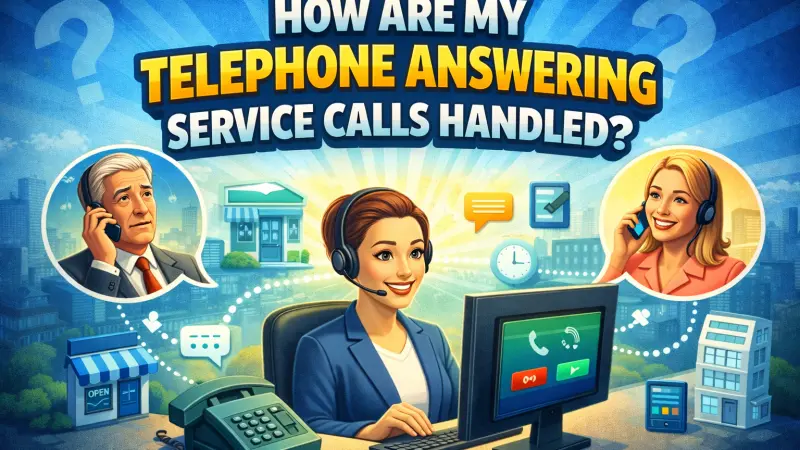
When a business owner decides to partner with a telephone answering service, the primary concern is almost always centered on quality control. You are, after all, handing over the "front door" of your brand to a third party. Understanding the mechanics of how those calls are routed, answered, and processed is essential to ensuring that your customers receive the same level of care they would get if you answered the phone yourself.

The process is far more complex than simply a remote operator picking up a phone. It is a sophisticated blend of telecommunications technology, human psychology, and data management. From the millisecond a caller dials your number to the moment you receive a notification on your smartphone, a series of precise steps occur to ensure professionalism and accuracy.
1. The Technology of Call Routing
The journey begins with how the call reaches the answering service. Most businesses utilize one of two methods: a "Direct Forward" or a "Conditional Forward."
In a direct forward scenario, you manually toggle your phone system to send all incoming traffic to a specific forwarding number provided by the service. In a conditional forward, the call only diverts to the answering service if your primary line is busy or if the phone rings for a predetermined number of seconds without being answered.
When the call arrives at the answering service’s switchboard, a technology known as Dialed Number Identification Service (DNIS) goes to work. This system recognizes exactly which number was dialed. This is crucial because a single call center may handle hundreds of different clients. The DNIS ensures that when your specific number is triggered, the operator’s computer screen instantly "pops" with your account details, including your business name, specific greeting, and FAQs.
2. The Initial Greeting and Brand Alignment
The first three seconds of a call determine the caller's perception of your company. Because of the "screen pop" technology mentioned above, the virtual receptionist knows exactly how to answer.
Professional services don’t just say "Hello"; they follow a customized script developed during your onboarding process. This might be a simple "Thank you for calling Smith Law Firm, how can I help you?" or a more complex intake greeting. The goal here is seamlessness. Ideally, the caller should have no idea they are speaking to someone in a remote facility; they should feel as though they have reached your front office.
3. Information Gathering and Triage
Once the greeting is complete, the operator moves into the data collection phase. This is where the service provides its greatest value by filtering out noise and focusing on substance.
Answering services use a "triage" approach. Not every call is equal. A potential new client with an urgent emergency requires a different path than a solicitor trying to sell office supplies. The operator is trained to identify the intent of the call quickly.
For service-based industries, such as plumbing or medical offices, the operator often follows a "Decision Tree." If the caller says they have a burst pipe, the operator follows the "Emergency" branch of the script.
If the caller wants to schedule a routine quote for next week, they follow the "Non-Urgent" branch. This ensures that the most critical information is gathered based on the specific context of the caller’s needs.
4. Advanced Call Patching and Transfers
One of the most active ways a call is handled is through a "Warm Transfer" or "Patching." If a call meets specific criteria—for instance, a high-value lead or an urgent matter—the answering service doesn't just take a message.
In a warm transfer, the operator puts the caller on a brief, professional hold. They then dial your private cell phone or office line. When you pick up, the operator explains who is on the line and why they are calling. If you are available, they connect the two of you and drop off the line. If you are busy, they go back to the caller and explain that you are currently in a meeting, then proceed to take a detailed message. This level of "gatekeeping" allows you to stay productive while ensuring that urgent opportunities are never missed.
5. Integration with Business Tools
Modern call handling isn't just about voice; it’s about data. Sophisticated answering services integrate directly with your existing software stack.
CRM Integration: As the operator types the caller’s name, phone number, and issue, that data can be pushed directly into systems like Salesforce, Hubspot, or Clio. This eliminates the need for you to manually enter data later.
Calendar Scheduling: If the goal of the call is to book an appointment, the operator can access your live calendar (such as Google Calendar or Calendly) and book the slot in real-time. The caller hangs up with a confirmed appointment, and you see a new entry on your schedule.
Order Processing: For e-commerce businesses, operators can be trained to navigate your website’s backend to help customers place orders or check on shipping statuses.
6. Message Delivery and Notification
For calls that do not require an immediate transfer, the final step is the delivery of the message. The days of waiting for a fax or a phone call at the end of the day are long gone.
Information is typically delivered through a multi-channel approach based on your preferences. You might receive a text message with a short summary for quick reading, followed by a detailed email containing the full transcript of the call. Many services also offer a dedicated mobile app where you can view all call logs, listen to recordings of the conversations, and even respond to the messages directly.
7. Quality Assurance and Training
How a call is handled today is also a reflection of how the service learns for tomorrow. Professional answering services employ Quality Assurance (QA) managers who regularly listen to call recordings. They look for specific metrics:
Tone and Empathy: Did the operator sound genuinely helpful?
Accuracy: Was the caller's name spelled correctly? Was the phone number verified?
Script Adherence: Did the operator follow the specific instructions laid out by the client?
This feedback loop ensures that the operators become more familiar with your business over time, leading to a more "in-house" feel with every passing month.
8. Handling High Volume and After-Hours
A significant part of call handling involves managing the "overflow." During peak business hours, your in-house staff might be overwhelmed. The answering service acts as a safety net, catching the calls that would otherwise go to voicemail.
During after-hours, the service becomes your primary representative. They handle the "night watch," filtering out non-essential calls so you can sleep, while remaining alert for the specific triggers that require waking you up. This 24/7 availability is often what separates a growing business from one that has plateaued.
9. The Role of Bilingual Support
In many markets, handling a call effectively means being able to communicate in the caller’s preferred language. Many services automatically detect if a caller is speaking a different language (most commonly Spanish in the US) and can instantly route the call to a bilingual specialist. This ensures that you aren't just "answering" the call, but actually "servicing" the customer, regardless of language barriers.
10. The Human Element: Empathy in Crisis
Technical routing and CRM syncing are important, but the core of call handling is human connection.
When someone calls a doctor, a lawyer, or a restoration company, they are often in a state of stress.
Professional operators are trained in "Active Listening." This involves validating the caller's concerns, using their name frequently to build rapport, and providing clear expectations of what happens next. A call handled with empathy converts a lead into a client far more effectively than a cold, mechanical recording ever could.
Frequently Asked Questions
Will callers know they are talking to an answering service? If the service is high-quality, usually not. By using your custom greeting and having access to your FAQs, the operator functions as a seamless extension of your office.
Can I change my call handling instructions on the fly? Yes. Most services provide an online portal or app where you can update your status. For example, if you are heading into a two-hour meeting, you can flip a switch to tell the operators to take messages rather than trying to patch calls through.
What happens if two people call my business at the same time? The service is staffed by large teams of operators. They can handle multiple simultaneous calls, ensuring that no one ever hears a busy signal.
Do they handle "junk" calls and solicitors? Yes. One of the primary benefits is "spam filtering." Operators can identify solicitors and politely decline their offers without you ever having to deal with the interruption.
How do I get my messages? Messages can be delivered via email, text message, a secure mobile app, or even through a direct update to your CRM software.
Can they take payments over the phone? Many services are PCI-compliant, meaning they are legally and technically equipped to securely take credit card information and process payments on your behalf.
Is my data secure? Reputable services use encrypted databases and are often HIPAA-compliant (for medical) or otherwise regulated to ensure that caller information is kept strictly confidential.
Do I have to forward my calls all the time? No. You have total control. You can forward your calls 24/7, only after-hours, or only when your lines are busy.
What if an operator can't answer a specific question? During onboarding, you provide a "knowledge base." If a question falls outside of that, the operator is trained to say,
"I want to make sure I give you the most accurate information; let me take your details and have a specialist get back to you."
How long does it take to set up call handling? Basic setups can often be done in 24 to 48 hours. More complex integrations involving CRMs and custom decision trees may take a week of testing to ensure everything is perfect.

Disclaimer: The information provided in this article is for general informational and research purposes only. Company details, features, services, and market positions may change over time. Readers are advised to visit official company websites and conduct independent research before making any business decisions or purchasing services.
Most Searchable Keywords

Recent Blogs


Related Listings


Categories
- Accountants (295)
- Advertising Agencies (559)
- Architects (149)
- Automobiles (377)
- Beauty (300)
- Carpenters (146)
- Cleaning Services (386)
- Dentists (189)
- Driving (62)
- Electricians (215)
- Energy (8)
- Event Organiser (685)
- Finance (599)
- Guide (3365)
- Health (2207)
- Information technology (206)
- Legal Services (353)
- Logistics (6)
- Maintenance (65)
- Manufacturing (35)

Sponsored Listings in Locksmith Services

Related Blogs

Gen Z Political Reporters and News Creators i...
Read this insightful article "Gen Z Political Reporters and News Creators in the UK" to expand your knowledge!

Famous Female Social Media Influencers Across...
Read this insightful article "Famous Female Social Media Influencers Across the UK" to expand your knowledge!
Your UK Sponsor Licence 2026 Step by Step Gui...
Read this insightful article "Your UK Sponsor Licence 2026 Step by Step Guide" to expand your knowledge!
Questions & Answers – Find What
You Need, Instantly!
How can I update my business listing?
Is it free to manage my business listing?
How long does it take for my updates to reflect?
Why is it important to keep my listing updated?
