
How to Bleed Radiators
How to Bleed Radiators in the UK: A Professional Guide for Businesses
Updated: February 2026 | Focus: UK Commercial and Hospitality Sectors | Reading Time: 15 mins
In the current UK economic climate, maintaining operational efficiency is paramount for the 5.6 million private sector businesses operating across the four nations. As energy costs remain a critical variable for UK SMEs, ensuring that heating systems are performing at peak capacity is not merely a matter of comfort, but a strategic financial endeavour. When air becomes trapped in a central heating system, it creates "cold spots" that prevent radiators from emitting heat effectively, forcing boilers to work harder and increasing utility expenditure by as much as 15%.
£2.3 Trillion Small businesses contribute significantly to the UK turnover; however, inefficient energy management remains one of the largest silent costs for hospitality and retail premises in 2026.
Recognising Inefficiency in Commercial Heating Systems
For a business owner, the first sign of a system requiring attention is often a cold patch at the top of a radiator whilst the bottom remains warm. In a busy retail environment in England or a guesthouse in the Scottish Highlands, this inefficiency can lead to customer dissatisfaction and increased "boiler cycling."
Identifying Air Trapped in the Circuit
Air enters systems through various means, including minor leaks, pump malfunctions, or during the initial filling process. In larger commercial premises, particularly those in Northern Ireland where cross-border supply chains for HVAC components are common, ensuring the system is balanced is vital. If a radiator is cold at the top, air has likely displaced the hot water, creating an air lock.
The Financial Impact of Neglected Maintenance
According to the Department for Business and Trade (2025), micro-businesses make up 4.2 million of the UK business population. For these smaller entities, a failing heating system during a winter cold snap in the Midlands or Wales can result in temporary closure. Bleeding radiators is the simplest form of preventative maintenance that protects the lifespan of the heat exchanger and circulation pumps.
Commercial Safety Verification
Before any maintenance is carried out on a commercial premises, ensure your insurance policy permits "self-maintenance" for minor tasks. In many London-based offices, facilities management contracts may dictate that only Gas Safe registered engineers perform these checks.
Essential Equipment and Workplace Safety Protocols
To carry out this task professionally, you must have the correct tools. Whilst domestic users often use makeshift tools, a UK business should endeavour to maintain a dedicated maintenance kit to comply with internal health and safety audits.
Selecting a Radiator Key and Protective Gear
Most UK radiators require a standard clock-key, available from any local hardware merchant or trade supplier. In older Victorian properties common in cities like Edinburgh or Bath, you may encounter "slotted" valves that require a flat-head screwdriver. Always wear protective gloves; the water inside a central heating system can reach 70°C and may contain chemical inhibitors that irritate the skin.
Preparing the Workspace for Minimal Disruption
In a professional services environment, such as an accountancy firm in Cardiff, you must ensure that the work does not damage office carpets or electronic equipment. Use a heavy-duty absorbent cloth and a small container to catch any discharge. Water in commercial systems is often discoloured (black magnetite sludge), which can permanently stain professional environments.
Professional Insight: 82% of UK adults now use smartphones to search for local services. If your business is a hospitality venue, a cold dining room will almost certainly result in a negative online review before the customer has even left the premises.
Step-by-Step Execution for UK Commercial Systems
The process must be methodical to ensure the safety of the individual and the integrity of the boiler system.
UK-wide, the basic principles remain the same, but the scale of the system in larger premises requires additional care.
Switching Off the Central Heating
It is vital that the heating is turned off before you begin. Bleeding a radiator while the pump is running can actually draw more air into the system. In 2026, many UK businesses use smart thermostats; ensure the "Holiday Mode" or "System Off" setting is engaged. Allow the radiators to cool for at least 30 to 60 minutes to avoid scalding.
Operating the Bleed Valve Correctly
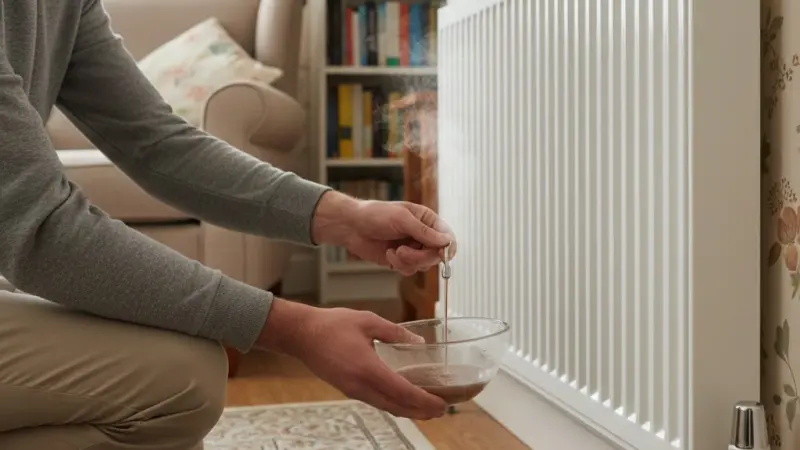
Locate the bleed valve at the top end of the radiator. Insert the key and turn it anti-clockwise—usually a quarter or half turn is sufficient. You will hear a hissing sound as the air escapes. As soon as the first drop of water appears, close the valve securely but do not over-tighten, as this can damage the valve seat, leading to a permanent leak that might require a call-out to a specialist in your local area.
The Sequence of Bleeding
In a multi-storey office block, always start with the radiators furthest from the boiler. In a two-storey building, start with the ground floor radiators before moving upstairs. This follows the natural movement of air through the hydraulic circuit.
Post-Maintenance System Pressure Checks
Removing air reduces the volume of fluid in the system, which invariably leads to a drop in pressure. This is a critical step that many businesses overlook, leading to a "lockout" where the boiler refuses to fire.
Monitoring the Pressure Gauge
Locate your boiler or Heat Interface Unit (HIU). Most modern UK systems should sit between 1.0 and 1.5 bar when cold. If the needle has dropped into the red zone, you must top up the system using the "filling loop"—a silver flexible hose usually located underneath the boiler or in a nearby airing cupboard.
Managing the Filling Loop for Compliance
In England and Wales, Water Regulations (WRAS) require that filling loops are disconnected or turned off after use to prevent backflow into the mains water supply. If you are unsure, consult your local water authority or a qualified plumber to ensure your business remains compliant with environmental and safety standards.
76% of UK consumers research local businesses online before purchasing. A well-maintained premises reflects a professional brand, whereas a noisy, gurgling heating system suggests neglect.
Regional Considerations Across the UK Nations
While the physical act of bleeding a radiator is universal, the regulatory and support framework varies significantly depending on where your business is registered in the UK.
Guidance for Businesses in Scotland and Wales
Scottish Enterprise and Business Wales provide specific grants for energy efficiency. If your radiators frequently require bleeding, it may indicate a larger systemic issue such as "pinhole leaks" caused by internal corrosion. Welsh businesses can access bilingual support to help navigate the Net Zero Wales initiatives which encourage the transition to heat pumps, which operate at lower pressures and different maintenance schedules than traditional gas boilers.
Navigating Northern Ireland and North England Variations
In Northern Ireland, the Windsor Framework affects the procurement of certain chemical inhibitors and parts. Ensure any additives used in your system are compliant with current local regulations. For businesses in the North of England, where winters can be more severe, ONS data suggests that heating systems are under 20% more strain than those in the South West. Regular bleeding should be part of an "Autumn Readiness" checklist to avoid downtime during peak trading periods.
When to Call a Gas Safe Registered Engineer
There are limits to what a business owner or office manager should endeavour to fix themselves. Recognising when a problem requires professional intervention is key to risk management.
Persistent Air and Noisy Pipes
If you find yourself bleeding the same radiator every week, you have a leak. Even a tiny, microscopic leak can draw air in. For hospitality venues in London or Birmingham, where insurance premiums are sensitive to water damage, a persistent leak is a significant liability.
Furthermore, if you hear "banging" or "kettling" noises, this indicates a build-up of limescale or sludge on the boiler heat exchanger.
The Dangers of Hydrogen Build-up
In some systems, the "gas" that escapes isn't air, but hydrogen—a byproduct of internal corrosion. If the gas that comes out is flammable (though you should never test this with a flame), it means your system is literally eating itself from the inside out. This requires a professional power-flush and the addition of high-quality inhibitors to pass ICO or local authority health and safety inspections.
"Hey Google, why is my office radiator cold at the top?"
This is almost always caused by trapped air. In the UK, this is solved by using a radiator key to 'bleed' the air out until water appears. It's a standard maintenance task that helps lower business energy bills and prevents boiler damage.
"Siri, how do I fix a gurgling radiator in my shop?"
Gurgling sounds indicate air bubbles moving through the pipes. You need to turn off the heating, wait for it to cool, and then bleed the radiator. If the gurgling continues after bleeding, your system's pressure may be too low, or the pump speed might need adjusting by an engineer.
Energy Efficiency and Net Zero Goals for 2026
The UK government's commitment to Net Zero means that businesses are under increasing pressure to reduce their carbon footprint. Maintaining a clean heating system is the "low-hanging fruit" of carbon reduction.
The Role of Chemical Inhibitors
After bleeding your radiators, it is often wise to check the concentration of chemical inhibitors. These chemicals prevent the chemical reaction between the water and the metal pipes. For businesses in hard-water areas like the South East of England, limescale can reduce heat transfer by 10% in a single year if not managed correctly.
Upgrading to Automatic Air Vents (AAVs)
For large commercial spaces or retail units with high ceilings where radiators are difficult to reach, consider installing Automatic Air Vents. These components sit on top of the radiator and automatically release air without human intervention. While the initial cost is higher, the ROI in saved labour hours for facilities management is significant for UK SMEs.
Documentation and Compliance for Business Records
In the UK, maintaining a "Building Log Book" (as per Part L of the Building Regulations) is recommended for commercial properties.
Documenting every time you bleed the system or top up the pressure can provide an early warning system for major failures.
HMRC and Tax-Deductible Maintenance
Remember that the costs associated with heating maintenance—including tools, chemical inhibitors, or hiring a Gas Safe engineer—are legitimate business expenses that can be offset against your Corporation Tax. Ensure you keep all receipts from UK suppliers to satisfy HMRC requirements during an audit.
Insurance and Liability Considerations
If a radiator is bled incorrectly and causes a flood in a multi-tenant building, your liability insurance will look for evidence of "due diligence." By following a professional guide and documenting the process, you protect your business against claims of negligence. For businesses in Northern Ireland, ensure your insurance policy accounts for the specific territorial legal variations regarding property damage.
Optimize Your Business Visibility
Is your maintenance business or HVAC consultancy ready for more local customers? Join thousands of UK businesses on LocalPage.uk.
Frequently Asked Questions
Do I need a special license to bleed radiators in my UK shop?
No, you do not need a Gas Safe license to bleed a radiator. It is considered a basic maintenance task. However, if the task requires opening the boiler casing or touching gas pipework, you must hire a qualified professional. Always check your commercial lease agreement, as some landlords in cities like Manchester or London require all maintenance to be logged by an approved contractor.
Why does my radiator keep filling with air every few weeks?
This usually points to a slow leak or a failing expansion vessel. In the UK's ageing building stock, pipework behind walls can develop "weeps." Another common cause is "electrolytic corrosion" if the system hasn't been treated with a chemical inhibitor. If you are constantly bleeding the system, you should call a plumber to prevent long-term damage to your heat exchanger.
What is the black liquid that comes out of the radiator?
That black liquid is called magnetite. It is essentially rusted iron from the inside of your radiators that has broken down into a fine sludge. While a small amount is normal in older UK systems, a large amount can block your pump and boiler. If your radiators have cold spots at the bottom, you likely need a professional "Power Flush" to remove this debris.
Can I bleed radiators while the heating is on?
You should never bleed a radiator while the heating is on. The pump can draw more air into the system, and the water is hot enough to cause serious burns. For a business, this is a health and safety risk. Turn the system off, wait an hour for the water to cool, and then proceed with the maintenance to ensure a safe work environment.
I've bled the radiator but it's still cold at the top. What's wrong?
If no air or water came out, the bleed valve itself might be blocked with paint or debris. If water came out immediately but it's still cold, the problem might be a stuck Thermostatic Radiator Valve (TRV) or a balancing issue within the building. This is common in larger premises in Scotland or Wales where the pipe runs are significantly longer.
Will bleeding my radiators lower my business energy bills?
Yes, significantly. Air in the system prevents the radiator from reaching the temperature set by the thermostat. This causes the boiler to run for longer periods to try and reach the desired ambient temperature. In a typical UK office, maintaining a clear system can reduce annual heating costs by roughly 10-15%, which is vital given current energy price forecasts for 2026.
How do I find my boiler's filling loop?
The filling loop is usually a silver, braided flexible hose located directly underneath the boiler. It will have one or two small black or blue tap handles. In some commercial units, it might be located in a separate plant room. If you cannot find it, consult the manual or look for a local plumber on a directory like LocalPage.uk to show you the location for future use.
What pressure should my commercial boiler be at?
For most UK central heating systems, the pressure gauge should be between 1.0 and 1.5 bar when the system is cold. When the heating is running, the pressure will naturally rise slightly. If the pressure exceeds 3.0 bar, the Pressure Relief Valve (PRV) will likely trigger, discharging water outside the building. Always check the gauge after bleeding your radiators.
Is the process different for a Heat Pump system?
While the radiators are the same, Heat Pump systems (increasingly common in newer UK developments) often operate at lower flow temperatures. This means they are more sensitive to air locks.
The bleeding process is the same, but you must be even more diligent about checking the system pressure afterwards, as Heat Pumps require precise flow rates to remain efficient.
What if I break the bleed valve?
If the valve snaps or the head rounds off, do not attempt to force it. Turn off the water supply to the radiator (using the valves at both bottom ends) if it is leaking. You will need to replace the bleed plug. This is a common issue in older commercial buildings in England and Wales; a plumber can usually replace the plug in minutes without draining the entire system.
Disclaimer: The information provided in this article is for general informational and research purposes only. Company details, features, services, and market positions may change over time. Readers are advised to visit official company websites and conduct independent research before making any business decisions or purchasing services.
Most Searchable Keywords
Recent Blogs


Related Listings
Categories
- Accountants (295)
- Advertising Agencies (559)
- Architects (149)
- Automobiles (377)
- Beauty (300)
- Carpenters (146)
- Cleaning Services (387)
- Dentists (189)
- Driving (62)
- Electricians (215)
- Energy (8)
- Event Organiser (686)
- Finance (602)
- Guide (3372)
- Health (2207)
- Information technology (206)
- Legal Services (353)
- Logistics (6)
- Maintenance (65)
- Manufacturing (35)
Sponsored Listings in Travel Agencies

Related Blogs

How Much Do UK Actors Really Earn Full Indust...
Read this insightful article "How Much Do UK Actors Really Earn Full Industry Breakdown" to expand your knowledge!

Blue Light Card UK 2026 Check Eligibility and...
Read this insightful article "Blue Light Card UK 2026 Check Eligibility and Claim" to expand your knowledge!

BBC Radio 1 DJs Net Worth Ranking Revealed
Read this insightful article "BBC Radio 1 DJs Net Worth Ranking Revealed" to expand your knowledge!
Questions & Answers – Find What
You Need, Instantly!
How can I update my business listing?
Is it free to manage my business listing?
How long does it take for my updates to reflect?
Why is it important to keep my listing updated?
