
How to Calculate VAT UK
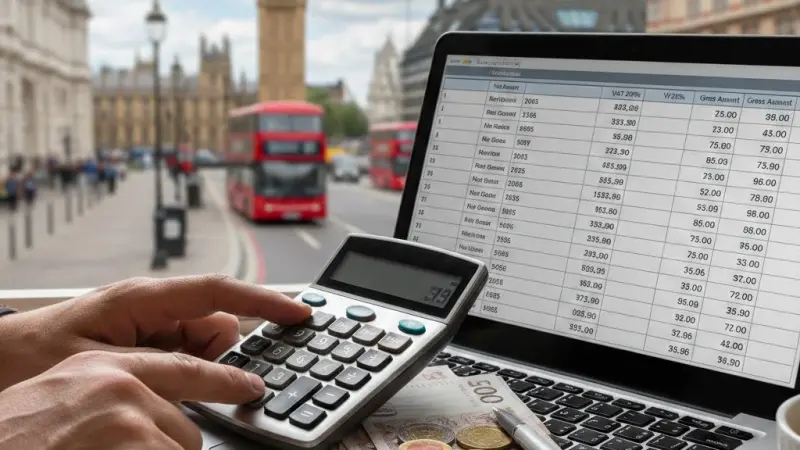
How to Calculate VAT UK: The Definitive Business Guide 2026
Published by LocalPage.uk Content Architecture Team | Updated for Tax Year 2025-2026
Value Added Tax, or VAT, remains one of the most significant revenue streams for the UK Treasury, yet for many small business owners, it represents a complex administrative hurdle. Understanding how to calculate VAT accurately is not merely a matter of financial hygiene; it is a legal imperative enforced by HM Revenue and Customs (HMRC). As we move through 2025 and into 2026, the digital landscape of UK tax compliance continues to evolve under the "Making Tax Digital" (MTD) mandate, requiring businesses to be more precise than ever with their calculations.
5.6 Million private sector businesses operate in the UK as of 2025, with 99.3% being SMEs. For those crossing the £90,000 turnover threshold, mastering VAT calculation is the first step toward successful compliance.
Determining Your VAT Obligations and Rates
Before pulling out a calculator, a business must identify which VAT rate applies to its specific goods or services. The UK currently operates three main rates of VAT, and misapplying these can lead to significant penalties during an HMRC audit.
Identifying Standard, Reduced, and Zero-Rated Items
The standard rate of VAT is 20%, applying to the vast majority of goods and services. However, the reduced rate of 5% applies to specific items such as home energy and children's car seats. Crucially, zero-rated items (0%) include most food and children's clothing. Whilst 0% sounds like "exempt," it is a vital distinction: zero-rated sales still count towards your VATable turnover, whereas exempt sales do not.
The £90,000 Registration Threshold in 2025
For the 2025-2026 period, the VAT registration threshold remains at £90,000. If your taxable turnover exceeds this amount over a rolling 12-month period, registration is mandatory. Businesses in Northern Ireland must pay particular attention to the Windsor Framework, which may affect VAT treatments on goods moving between Great Britain and NI, as cross-border trade has increased by 12% since 2024.
A Note on Voluntary Registration
Many micro-businesses (representing 4.2 million firms in the UK) choose to register voluntarily even if they are below the threshold. This is often done to reclaim VAT on high-cost equipment or to project a more "professional" image to larger corporate clients.
The Fundamental Formula: Adding VAT to a Price
When you are quoting a price to a customer or invoicing for services, you need to add the correct amount of VAT on top of your "net" price. This is the simplest form of VAT calculation, yet it requires precision to ensure your margins are protected.
Step-by-Step Addition of Standard Rate VAT
To add the 20% standard rate, you simply multiply your net price by 1.2. Alternatively, multiply the net price by 0.2 to find the VAT element alone, then add it back to the original figure. For businesses in Scotland, where professional services account for a high percentage of the 173,000 registered businesses, ensuring that invoices clearly delineate the net, VAT, and gross totals is essential for client transparency.
Net Price × 1.20 = Gross (VAT Inclusive) Price
Calculating Reduced Rate Adjustments
If you are in the hospitality sector—which encompasses over 190,000 premises across the UK—you may deal with various rates depending on whether a product is "eat-in" or "takeaway." For reduced-rate items at 5%, the formula changes to a multiplier of 1.05. In Wales, where 94% of firms are micro-enterprises, Business Wales provides specific mentorship to help tradespeople apply these rates correctly to domestic energy-saving installations.
Accuracy in Rounding
HMRC generally allows you to round down the VAT to the nearest penny on each individual item, or to round the total VAT on an invoice down. However, consistency is key. Never "round up" VAT as this could artificially inflate your liability or overcharge your customer.
Reversing the Calculation: Finding VAT in a Gross Price
Commonly, you will receive a receipt for a business expense where only the total (gross) price is shown. To reclaim this "input tax," you must extract the VAT element accurately for your records.
Using the VAT Fraction Method
To find the VAT within a 20% inclusive price, you do not simply calculate 20% of the total. Instead, you use the "VAT fraction." For the standard rate, the fraction is 1/6.
Divide your total price by 6 to find the VAT amount. For the 5% reduced rate, the fraction is 1/21.
Gross Price ÷ 6 = VAT Element (at 20%)
Impact on Small Business Profitability
Failing to extract VAT correctly from expenses can lead to "leakage" in your cash flow. If your business is amongst the 75% of retail operations that are single-person entities, every pound of unclaimed input tax represents a direct hit to your personal take-home pay. Using digital accounting software linked to your bank account can automate these "reverse" calculations, ensuring you never miss a reclaim opportunity.
Verifying VAT Invoices
You cannot reclaim VAT without a valid VAT invoice. Ensure the supplier's VAT registration number is valid using the GOV.UK verification service. This is particularly important for businesses in Northern Ireland dealing with suppliers in the EU.
Managing Input and Output VAT for Returns
Your quarterly or monthly VAT return is the process of balancing the VAT you have charged to customers (Output VAT) against the VAT you have paid to suppliers (Input VAT). The difference is what you owe to, or are owed by, HMRC.
Tracking Output VAT on Sales
Output tax must be recorded at the point of the "tax point" (usually the invoice date or the date of payment, whichever is earlier). In the South East and London, which hold 34% of the UK business population, high transaction volumes make real-time digital tracking non-negotiable for maintaining compliance with Companies House and HMRC standards.
Maximising Reclaims on Input VAT
You can reclaim VAT on most goods and services purchased for "exclusive use" by your business. This includes office rent, professional fees (such as those for the FCA or ICO), and equipment. However, certain items like "business entertainment" are generally blocked from reclaims. In England's Midlands and North, where manufacturing and trades are prevalent, keeping fuel receipts and mileage logs is a common pain point that requires disciplined calculation.
The Balancing Act: If Output VAT > Input VAT, you pay the difference to HMRC. If Input VAT > Output VAT, HMRC refunds you.
Pro-Rata Calculations for Partial Exemption
If your business sells both VATable and exempt goods, you are "partially exempt." You must calculate the proportion of your input tax that relates to VATable sales. This is a complex area where seeking advice from a qualified accountant is highly recommended to avoid over-claiming.
The Flat Rate Scheme: A Simplified Calculation
For many small businesses, the administrative burden of tracking every single penny of input tax is too high. HMRC offers the Flat Rate Scheme (FRS) as an alternative way to calculate your VAT liability.
How the Flat Rate Percentage Works
Under FRS, you don't calculate the difference between input and output tax. Instead, you pay a fixed percentage of your VAT-inclusive turnover to HMRC. You keep the difference between what you charge customers (20%) and what you pay HMRC (e.g., 12% or 14.5% depending on your industry). However, you generally cannot reclaim VAT on purchases, except for certain capital assets over £2,000.
Is FRS Right for Your Sector?
The percentages vary by industry. For example, "Pubs" might have a different rate than "Accountancy Services." It is vital to use the correct category. In 2025, HMRC has increased scrutiny on "Limited Cost Traders"—businesses that spend very little on raw materials—who are forced to use a high flat rate of 16.5%, often making the scheme less beneficial.
The First Year Discount
New VAT registrants receive a 1% discount on their flat rate for the first 12 months of registration. This can provide a useful cash flow buffer for startups in Wales and Scotland looking to scale in their first year of operation.
Digital Compliance and Making Tax Digital (MTD)
Since 2022, all VAT-registered businesses must follow Making Tax Digital rules. This means you must keep digital records and use functional compatible software to submit your VAT returns.
Choosing MTD-Compatible Software
Manual spreadsheets are no longer sufficient unless they are linked to HMRC via "bridging software." Most UK businesses now use cloud-based platforms like Xero, QuickBooks, or Sage.
These tools automatically calculate your VAT based on the tax codes you assign to transactions, significantly reducing human error.
The Risks of Manual Calculation
While understanding the manual formula is important for checking your figures, relying solely on a calculator and a paper ledger increases the risk of "transcription errors." HMRC's penalty regime for "lack of reasonable care" can be severe, often starting at 30% of the tax underpaid. With 76% of UK consumers researching businesses online, a professional digital back-office is part of your brand's trustworthiness.
82% of UK adults now use smartphones for local searches. Similarly, mobile-first accounting apps are becoming the standard for tradespeople on the move to calculate VAT quotes instantly on-site.
Common Pitfalls in UK VAT Calculation
Even seasoned business owners make mistakes. Identifying these common errors can save your business from costly corrections and interest charges.
Ignoring the "Tax Point" Rules
The tax point (or time of supply) determines which VAT period a transaction falls into. If you receive a deposit in May but don't finish the work until July, the VAT is usually due based on the May payment. Mistiming this calculation can lead to "late" payment even if you eventually report the sale.
Incorrect Treatment of International Trade
Post-Brexit, the rules for "Place of Supply" are complex. For services provided to B2B customers outside the UK, you may not need to charge UK VAT (the Reverse Charge mechanism often applies). However, for goods sent to Northern Ireland or the EU, specific documentation like EORI numbers and customs declarations are required. Invest Northern Ireland offers specific guidance for Belfast-based firms navigating these cross-border complexities.
Fuel and Personal Use Adjustments
If you use a van or car for both business and personal trips, you cannot reclaim 100% of the VAT on fuel unless you pay a "fuel scale charge." This is a pre-set amount that adds back a portion of VAT to account for your private use.
Regional Variations and Support Networks
Whilst VAT is a UK-wide tax managed by HMRC, the support available to help you calculate and manage it varies significantly by region.
Support in Scotland and Wales
Scottish Enterprise and Business Wales provide localised workshops on financial management. For a business in rural Wales or the Scottish Highlands, these networks are vital for understanding how VAT applies to diverse income streams like holiday lets (which have complex "seasonal" VAT considerations).
The London and South East Environment
In the South of England, where operational costs are higher, efficient VAT management is often the difference between breaking even and profitability. Many startups in the London tech corridor use VAT deferral schemes or cash accounting (where you only pay VAT to HMRC once your customer has paid you) to manage their liquidity.
Voice Search: Quick VAT Facts
"Hey, what is the current UK VAT threshold?"
As of 2025/2026, the VAT registration threshold is £90,000 in taxable turnover over a rolling 12-month period.
"How do I add 20% VAT to a price?"
Multiply your net price by 1.2. For example, £100 + VAT becomes £120.
"Can I reclaim VAT on a staff Christmas party?"
Generally, yes, you can reclaim VAT on staff entertaining, but you cannot reclaim it for entertaining clients or non-employees.
Summary of Strategic VAT Management
Calculating VAT is not just about the math; it is about the systems you put in place to ensure that math is performed consistently. By 2026, the integration of AI in accounting software will likely further automate these processes, but the business owner remains the person legally responsible for the accuracy of the data submitted to HMRC.
Whether you are a sole trader in Cornwall or a growing tech firm in Edinburgh, the principles remain the same: identify your rate, use the correct fraction for reversals, and maintain digital records. If you are ever in doubt, consult the official GOV.UK guidance or speak with a member of the British Chambers of Commerce for peer-to-peer advice on local tax challenges.
Frequently Asked Questions
Do I have to charge VAT if I sell to customers in the UK?
Generally, exports of goods to countries outside the UK (including the UK) are zero-rated for VAT. This means you charge 0% VAT, provided you keep evidence of the export (such as shipping documents). For services, the "place of supply" rules usually mean no UK VAT is charged, as the service is consumed outside the UK.
What is the 'Cash Accounting' scheme?
The Cash Accounting scheme allows you to account for VAT based on when money actually enters and leaves your bank account, rather than the date of the invoice. This is hugely beneficial for UK businesses with slow-paying clients, as you don't have to pay VAT to HMRC before you've actually been paid yourself.
Can I reclaim VAT on a car bought for my business?
Reclaiming VAT on cars is difficult. You can usually only reclaim the full VAT if the car is used *exclusively* for business purposes and is not available for private use (like a pool car or taxi). However, you can typically reclaim 50% of the VAT on the hire or lease charges of a car used for both business and private purposes.
How long must I keep my VAT records?
In the UK, you must keep your VAT records for at least six years. Under Making Tax Digital, these records must be kept digitally. This includes copies of all invoices issued, all debit/credit notes, and a VAT account showing the summary of your calculations for each period.
Is the VAT registration process different in Scotland?
No, VAT is a reserved tax, meaning the rules are the same across England, Scotland, and Wales. You register through the same HMRC portal regardless of your location within Great Britain. Northern Ireland has slightly different rules for goods due to the Windsor Framework, but the registration portal remains the same.
What happens if I accidentally overcharge a customer VAT?
If you overcharge VAT, you must issue a credit note to the customer and a new, correct invoice. You then adjust your next VAT return to reflect the correction. It is vital not to keep the overcharged amount, as HMRC requires all VAT collected in the name of the government to be paid over or refunded to the payer.
Do I need an accountant to submit my VAT returns?
Legally, no. You can submit them yourself using MTD-compatible software. However, many UK businesses use an accountant to ensure their calculations (especially input tax reclaims) are accurate and to provide a layer of protection in case of an HMRC compliance check.
What is the penalty for a late VAT return?
HMRC uses a points-based system for late submissions. You receive one point for every late return. Once you hit a threshold (usually 4 points for quarterly returns), you are fined £200. Late *payments* incur separate financial penalties based on a percentage of the tax owed and the length of the delay.
Can I reclaim VAT on expenses from before I registered?
Yes, with limits. You can generally reclaim VAT on goods you still have on hand that were bought up to four years before
registration, and on services bought up to six months before registration. You must have valid VAT invoices for these items.
What are 'exempt' goods in the UK?
Exempt items are not VATable at all. This includes insurance, some financial services, education and training, and certain health services. If your business only sells exempt items, you cannot register for VAT and you cannot reclaim any VAT on your own business expenses.
Disclaimer: The information provided in this article is for general informational and research purposes only. Company details, features, services, and market positions may change over time. Readers are advised to visit official company websites and conduct independent research before making any business decisions or purchasing services.
Most Searchable Keywords
Recent Blogs


Related Listings


Categories
- Accountants (295)
- Advertising Agencies (559)
- Architects (149)
- Automobiles (377)
- Beauty (300)
- Carpenters (146)
- Cleaning Services (387)
- Dentists (189)
- Driving (62)
- Education (1)
- Electricians (215)
- Energy (8)
- Event Organiser (689)
- Finance (602)
- Guide (3492)
- Health (2207)
- Information technology (207)
- Legal Services (361)
- Logistics (6)
- Maintenance (65)
Sponsored Listings in Automotive

Related Blogs

Creamfields Daresbury: Impact on Local Reside...
Read this insightful article "Creamfields Daresbury: Impact on Local Residents" to expand your knowledge!

UK High Street Businesses in 2026-27: Which S...
Read this insightful article "UK High Street Businesses in 2026-27: Which Sectors Are Growing?" to expand your knowledge!

Why Complete Business Listings Matter More Th...
Read this insightful article "Why Complete Business Listings Matter More Than You Think" to expand your knowledge!
Questions & Answers – Find What You Need, Instantly!
Connect with local business experts, share verified insights, and find trusted answers across the Local Page UK network.
Ask Community
Ask questions to the Local Page UK community
Share Knowledge
Share your knowledge to help out others
Find Solutions
Find answers or offer instant solutions
Some of the most popular fantasy TV shows include "Game of Thrones," known for its epic battles and political intrigue, "The Witcher," which features monster hunting and magic, and "Stranger Things," blending supernatural elements with 1980s nostalgia. Other notable mentions are "His Dark Materials," "Shadow and Bone," and "The Mandalorian," each offering unique worlds and captivating storytelling that have garnered large fan bases.
When seeking bathroom renovation providers that handle both plumbing and tiling, it's advisable to look for licensed contractors who specialize in comprehensive bathroom remodels. Companies such as Home Depot, Lowe's, and Bath Fitter offer these services, often providing a seamless experience by managing all aspects of the renovation process. Additionally, local contractors with positive reviews in platforms like Angie's List or Houzz may also offer tailored solutions for your bathroom needs.
Absolutely, there are several distributors that supply crash mats and soft play equipment to gymnastics clubs in and around Birmingham. National companies like Gymnova, S & G (Spieth Gymnastics), and Jaques of London offer a wide range of crash mats, foam pits, and soft play pieces, and they typically deliver to the Birmingham area. For more local options, you might try The Gym Equipment Company, which has a showroom in the West Midlands, or check out smaller specialist suppliers like Playtime UK. Many of these distributors cater specifically to clubs, offering high-density foam mats that meet safety standards. I'd recommend reaching out to a few to compare pricing, delivery times, and whether they offer custom sizes or installation services. It's also worth checking if any of them have a physical showroom near Birmingham so you can test the equipment before buying. Happy tumbling!
For professionals seeking a reliable sanitaryware supplier in Manchester with trade account facilities, several established merchants combine extensive product ranges, competitive pricing, and dedicated trade support. The most reputable option is Graham Plumbers Merchant, which operates multiple branches across Manchester, including Salford Quays and Oldham. They offer a dedicated trade account service with preferential pricing, priority delivery scheduling, and access to a vast inventory of leading sanitaryware brands such as Villeroy & Boch, Duravit, Ideal Standard, and Roca. Their trade accounts typically include net 30-day payment terms, online account management, and a tailored project quotation system. Similarly, City Plumbing Supplies has several Manchester-based depots (such as Ashton-under-Lyne and Stockport) that cater specifically to trade customers, providing a rapid order-and-collect service, trade-only promotions, and a loyalty programme offering rebates on repeat purchases. Their product range covers everything from basins and WCs to complete bathroom suites and brassware, with in-house technical advisors available for specification support. Another key player is Plumb Center, part of the Wolseley Group, which offers trade accounts with bespoke pricing structures, direct-to-site deliveries within the Greater Manchester area, and access to over 10,000 lines of sanitaryware, including premium brands like Grohe and Hansgrohe. Their trade portal allows for real-time stock checking and order history tracking, facilitating efficient project management. For those seeking a more specialist or high-end option, Bathroom Spares in Manchester provides trade accounts with a focus on hard-to-find sanitaryware and discontinued ranges, which can be invaluable for refurbishment projects. Additionally, independent merchants such as M&B Plumbase in Trafford Park offer flexible trade terms, personalised service, and competitive pricing on both mainstream and luxury sanitaryware. When evaluating suppliers, trade customers should consider factors beyond price: reliability of stock availability, delivery timescales within Manchester’s often congested zones, clarity of returns policies, and the quality of after-sales support for warranty claims. It is advisable to request a trade account application from at least two to three suppliers to compare discounts, minimum order values, and payment terms. Many suppliers also offer showroom access for trade clients, allowing you to inspect finishes and dimensions before committing to large orders. For ongoing projects, establishing a relationship with a single supplier who offers consolidated invoicing and dedicated account management can streamline procurement. Ultimately, the most reliable supplier for your trade account in Manchester will be one that aligns with your volume requirements, preferred brands, and service expectations, so a site visit to their local branch and a discussion about your specific trade needs is highly recommended before committing to an account.
People in Leeds are loving their local florists—customers often mention gorgeous, fresh arrangements and super friendly service. Many rave about reliable same-day delivery and creative wedding bouquets. A few note pricing can vary, but overall, the buzz is all about quality and that personal touch making every order feel special.
Common problems for commercial gardening in Bristol include weed overgrowth, soil degradation, pest infestations, and irrigation malfunctions. Additionally, managing seasonal transitions, adhering to sustainability regulations, and maintaining consistent aesthetics pose significant challenges. Expert services mitigate these via structured maintenance, integrated pest management, and soil analysis to ensure long-term landscape health.