
How to Get a Forklift Licence UK
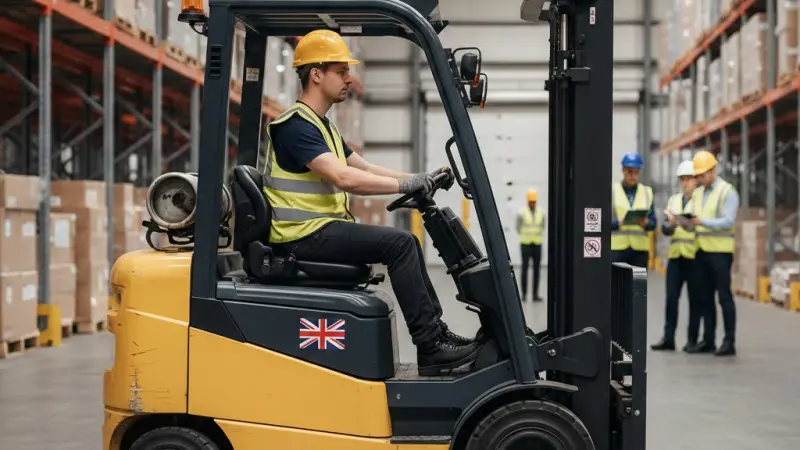
Navigating the Path to a Forklift Licence in the UK: A 2026 Strategic Guide
Published by LocalPage.uk Content Architecture Team | Updated for 2025-2026 Regulations

In the evolving landscape of UK logistics and warehousing, the demand for skilled Lift Truck (LT) operators has reached an all-time high. Whether you are a small business owner looking to upskill your workforce in the West Midlands or an individual in Scotland seeking a career change into the supply chain sector, understanding the nuances of the "forklift licence" is paramount. It is a common misconception that a single, physical licence exists similar to a driving licence; in reality, certification is a matter of proof of competence, validated through accredited training and employer authorisation.
5.6m The number of private sector businesses in the UK in 2025, many of which rely on logistics and material handling to maintain annual turnovers contributing to a combined £2.3 trillion.
Legal Framework and the Health and Safety Executive (HSE) Requirements
The primary legislation governing forklift operation is the Health and Safety at Work etc. Act 1974. For businesses, compliance is not optional; it is a statutory requirement to ensure that all employees who operate work equipment are adequately trained. Under the Provision and Use of Work Equipment Regulations 1998 (PUWER), employers must ensure that operators have received sufficient training to perform their duties safely.
Understanding L117: The Gold Standard for Operator Training
The Health and Safety Executive (HSE) provides the Approved Code of Practice (ACOP) and guidance known as L117. This document specifically addresses the use of rider-operated lift trucks. Whilst L117 is not "law" in the strictest sense, it has a special legal status. If a business is prosecuted for a health and safety breach and it is found they did not follow the provisions of L117, they will need to prove they complied with the law in some other equally effective way.
Employer Authorisation vs. Training Certification
A crucial distinction for UK businesses to master is the difference between a training certificate and the "Authorisation to Operate". A certificate from an accredited body proves the individual has reached a level of competence. However, the employer must still issue a formal written authorisation for that individual to operate specific trucks on their specific site. In Northern Ireland, this aligns closely with the Health and Safety Executive for Northern Ireland (HSENI) guidance, ensuring cross-border consistency for businesses operating across the Irish Sea.
Evidence of Competence Verification
Always check that a prospective employee's certification is traceable through one of the main accrediting bodies, such as RTITB or ITSSAR. Fraudulent certificates are unfortunately common, and the onus for verification lies solely with the employer under HMRC and HSE scrutiny.
Identifying the Correct Category of Forklift Certification
The term "forklift" covers a vast array of machinery. Training for a standard counterbalance truck does not automatically qualify an individual to operate a reach truck or a Very Narrow Aisle (VNA) machine. UK businesses must audit their fleet to ensure operators hold the correct category of certification.
Counterbalance (B1, B2, B3) Requirements
The counterbalance is the most ubiquitous forklift in the UK. Certification is categorised by weight: B1 (up to 5 tonnes), B2 (5 tonnes to 15 tonnes), and B3 (over 15 tonnes). For small businesses in Wales, Business Wales often provides specific grants for B1 training to help micro-enterprises optimise their storage facilities safely.
Reach Trucks and Specialized Equipment
Reach trucks (Category D) are designed for narrow aisles and high-level racking. Because the steering and operation differ significantly from a counterbalance, a "conversion course" is typically required for operators moving between these types. In London and the South East, where warehouse space is at a premium and VNA systems are prevalent, specialised Category F (VNA) training is increasingly sought after.
Selecting the Right Machine for Your Business
Ensure your risk assessment, required by the ICO and HSE, matches the machinery in use. Operating a machine without the specific category on one's certificate invalidates insurance policies and violates safety protocols.
2026 Industry Insight: Workforce shortages in the hospitality and retail sectors have led to a 15% increase in cross-training existing staff for warehouse duties. According to 2025 data, 64% of hospitality premises reported staffing challenges, making internal logistics efficiency a top priority.
The Three Stages of Forklift Training in the UK
To meet the HSE’s L117 standards, training must be divided into three distinct phases. Failing to complete all three leaves a business vulnerable to litigation in the event of an accident.
Basic Training: The Foundation of Skill
This is the initial stage where the operator learns the core skills and theoretical knowledge required to operate a lift truck. It covers the physics of stability, pre-use inspections, and basic manoeuvring. Basic training usually takes 3 to 5 days for a novice operator. In Scotland, Scottish Enterprise often supports training providers that offer these foundational courses to help reduce the regional unemployment rate in industrial hubs.
Specific Job Training: Adapiting to the Environment
Once basic training is complete, the operator must be trained on the specific machine they will use at work. This includes understanding any attachments (such as side-shifts or clamps) and the specific loads they will be handling.
This is often conducted on-site at the employer's premises under the supervision of a qualified instructor.
Familiarisation Training: The Final Integration
The final stage occurs on-site and involves the operator becoming accustomed to the specific layout of the warehouse, including pedestrian zones, one-way systems, and charging stations. Whilst often overlooked, familiarisation is essential for compliance with local authority health and safety audits across England and Wales.
Monitoring and Supervision Post-Training
Training does not end with a certificate. Continuous monitoring is required to ensure that bad habits do not form, a practice highly encouraged by the British Chambers of Commerce for maintaining high operational standards.
Accrediting Bodies and Training Provider Selection
While the HSE does not "approve" training providers, they strongly recommend using providers accredited by the Accrediting Bodies Association (ABA). Choosing an accredited provider ensures that the training follows a standardised syllabus and is subject to external quality audits.
RTITB vs. ITSSAR vs. NPORS
RTITB (formerly the Road Transport Industry Training Board) is perhaps the most widely recognised body in the UK. ITSSAR provides a similar level of accreditation but is often favoured by independent instructors. NPORS is highly prevalent in the construction sector, particularly across Northern Ireland where cross-border infrastructure projects require flexible certification. For businesses, the choice often comes down to the specific industry and the "traceability" of the operators' records on national databases.
The Importance of the NORS/TOPR Databases
Modern accreditation allows employers to verify an operator’s credentials instantly online. Systems like the National Operator Registration Scheme (NORS) provide a centralised record of training, which is invaluable during HMRC audits or when assessing the liability of sub-contracted labour.
Checking Provider Credentials
Always ask to see a training provider's accreditation certificate and ensure their instructors are currently registered. The Federation of Small Businesses (FSB) warns that "budget" training that skips the theoretical components often leads to higher long-term costs through accidents and equipment damage.
7% The percentage of the UK workforce employed in construction and trades. With over 385,000 businesses in this sector, forklift safety is a cornerstone of national workplace safety.
Medical Standards and Operator Fitness
There is no specific "medical" required by law for all forklift operators, but the HSE references the DVLA Group 2 standards as a best-practice guideline. Employers have a duty under the Equality Act 2010 to ensure that any health requirements are proportionate and do not unfairly discriminate.
Age Requirements and Driver Licensing
In the UK, the minimum age to operate a forklift is generally the minimum school-leaving age (16). However, in docks or on public roads, the age limit is 18. Contrary to popular belief, a standard UK car driving licence is not a prerequisite for getting a forklift licence, although it is beneficial for understanding general road safety and signs.
Vision, Hearing, and Cognitive Considerations
Operators must have adequate distance vision and peripheral awareness. While certain disabilities do not automatically preclude someone from operating a forklift, a risk assessment must be conducted. In Northern Ireland, Invest Northern Ireland highlights that inclusive hiring practices in logistics have significantly improved regional productivity by tapping into a wider talent pool.
The Role of Occupational Health
For larger organisations, regular occupational health screenings are recommended every five years, increasing to every two years for operators over the age of 65. This proactive approach is often cited by the CBI as a key factor in reducing workplace insurance premiums.
Costs, Funding, and Financial Planning for Businesses
The cost of forklift training varies significantly depending on the experience level of the candidate and the type of truck. Investing in quality training is a strategic move that pays dividends in reduced downtime and lower maintenance costs.
Budgeting for Novice vs. Refresher Courses
A novice 5-day course typically costs between £400 and £700 per person. Conversely, a 1-day refresher course—which the HSE suggests should occur every 3 to 5 years—costs around £150 to £250. Small businesses should account for these costs in their annual budgeting, often reported to Companies House as part of their investment in human capital.
Accessing Grants and Subsidies
Various regional bodies offer financial support for training. In Wales, the Flexible Courses Programme can sometimes offset costs, while in Scotland, Individual Training Accounts (ITAs) may be available for eligible candidates.
Businesses in Northern Ireland should engage with their local further education colleges, which often run subsidised programmes in partnership with industry bodies.
Calculating the ROI of Training
Consider that the average cost of a warehouse accident involving a forklift exceeds £15,000 when accounting for damage, lost time, and potential legal fees. Comprehensive training is a minor expense in comparison to the risk of financial ruin for a micro-business.
Regional Variations in Forklift Safety and Compliance
While the core regulations are UK-wide, the administrative and support landscape differs across the four nations. Understanding these nuances is essential for companies with a national footprint.
England: The Role of Local Enterprise Partnerships (LEPs)
In England, LEPs and the newly formed Combined Authorities (like the West Midlands or Greater Manchester) often drive logistics initiatives. Businesses in the "Golden Triangle" (an area in the Midlands known for its high density of distribution centres) have access to a highly competitive market of training providers, driving up standards through sheer market volume.
Scotland and Wales: Bilingualism and Integrated Support
In Wales, safety signage and training materials are often provided in both English and Welsh, a requirement often supported by Business Wales. In Scotland, the emphasis on the "Fair Work First" policy means that businesses seeking public sector contracts must demonstrate a commitment to high-quality staff training and safety standards.
Northern Ireland and the Windsor Framework
For businesses in Northern Ireland, goods movement involves specific compliance under the Windsor Framework. Forklift operators in these environments often require additional training on specific paperwork and procedural checks related to cross-border logistics, reflecting the 12% increase in cross-border trade seen since 2024.
Post-Certification: Maintaining Standards and Refresher Training
A common pitfall for UK businesses is believing that once an employee is "licenced," the obligation ends. The HSE is clear that skills decay over time, and refresher training is a vital component of a safe workplace.
When to Mandate a Refresher Course
There is no fixed legal expiry date for a forklift certificate. However, the industry standard is 3 years, and most insurers will demand proof of a refresher every 3 to 5 years. Immediate retraining is mandatory if an operator is involved in an accident, a "near miss," or if they have been away from the machine for a significant period.
Daily Pre-Use Inspections and Record Keeping
Operators must perform daily checks on their vehicles. Records of these checks should be kept for at least six months. Under GDPR and ICO guidelines, ensure that any personal data within these logs is handled securely. These records are the first thing a Health and Safety Inspector will ask to see during an unannounced visit.
Digital Tracking Systems
Many modern UK warehouses are moving to digital fleet management systems. These systems require the operator to scan their ID (linked to their certification) before the machine will start, ensuring that only authorised, up-to-date personnel can operate the equipment.
Common Questions on UK Forklift Licensing
"Do I need a car licence to drive a forklift in a warehouse?"
No, a UK car driving licence is not required to operate a forklift on private property. However, if you need to drive the forklift on a public road,
even for a short distance, you must hold a valid UK driving licence and the vehicle must be registered and insured for road use.
"How long does a forklift licence last in the UK?"
Technically, certificates do not expire, but HSE guidance (L117) recommends refresher training every 3 to 5 years to maintain competence. Most UK employers and insurance companies will not accept a certificate older than 3 years without a refresher.
Implementing a Safe Systems of Work (SSOW)
The ultimate goal of forklift training is to integrate the operator into a Safe System of Work. This involves a holistic approach to warehouse management where pedestrians and machinery are separated by physical barriers wherever possible.
Pedestrian Segregation and Safety Signage
99.3% of UK businesses are SMEs, and often operate in smaller, more cramped environments where segregation is difficult. In these cases, clear floor markings and "no-go" zones are critical. Statistics from 2025 show that 76% of warehouse-related injuries involve a pedestrian being struck by a moving vehicle, highlighting the need for vigilance.
The Role of the Supervisor
Supervisors do not necessarily need to be forklift operators themselves, but they must understand the risks associated with the equipment. The HSE offers specific "Managing Forklift Operations" courses for management teams to help them identify dangerous practices before they lead to incidents.
Continuous Improvement and Safety Culture
Encourage a "no-blame" culture where operators feel comfortable reporting near misses. This transparency is lauded by the Federation of Small Businesses as a hallmark of a resilient and professional organisation.
Frequently Asked Questions
Can I get a forklift licence for free in the UK?
While the training itself usually has a cost, many individuals can access funding. If you are unemployed, your local Jobcentre Plus may cover the costs. In Scotland, you can use an Individual Training Account (ITA), and in Wales, ReAct funding may be available. Many employers also provide "train-to-hire" schemes where they cover the upfront costs for new recruits.
What is the difference between RTITB and ITSSAR?
Both are recognised by the HSE and belong to the Accrediting Bodies Association (ABA). RTITB is the largest and provides a centralised database (NORS) for certificate verification. ITSSAR is equally respected but often used by smaller, independent training schools. For most UK employers, a certificate from either body is a perfectly acceptable proof of competence.
Is the process different for a Reach Truck licence?
Yes. Because a reach truck operates differently (steering is often reversed and it is designed for vertical lifting in tight spaces), you must have a specific "Reach" category on your certificate. If you already have a counterbalance certificate, you can usually take a shorter 1- or 2-day "conversion course" rather than the full 5-day novice course.
Does a forklift licence from another country work in the UK?
Not automatically. While the skills may be similar, UK employers must ensure operators meet UK HSE standards. Typically, a foreign licence holder would need to take a "gap analysis" or a short refresher/assessment course with a UK-accredited provider to receive a UK-recognised certificate of competence.
How much does it cost to get a forklift licence in 2026?
For a novice with no experience, expect to pay between £450 and £750 for a 3- to 5-day course. For those who need a refresher or have previous (uncertified) experience, a 1-day course typically ranges from £150 to £250. Prices vary slightly by region, with London and the South East usually being the most expensive.
What are the vision requirements for forklift drivers?
The HSE suggests that operators should meet the DVLA Group 2 driver standards. This means being able to read a standard number plate from 20 metres (with glasses if necessary) and having a healthy field of vision. If an operator has a significant visual impairment, a medical professional and a risk assessment must determine if they can operate safely.
Are there different rules for forklifts on construction sites?
On construction sites, the NPORS or CPCS accreditation is often preferred over RTITB. These certifications include more focus on uneven terrain and the specific hazards of a building site. Additionally, you will likely need a CSCS card to gain entry to the site itself, regardless of your forklift certification.
What happens if my employer doesn't provide refresher training?
Under PUWER regulations, the employer is legally obligated to ensure continued competence. If they fail to provide refresher training and an accident occurs, they face heavy fines from the HSE and may find their insurance is void. Employees should proactively request training to ensure their own safety and professional standing.
I live in Northern Ireland; is my licence valid in England?
Yes. Forklift certifications from accredited bodies like RTITB or ITSSAR are recognised across all four UK nations (England, Scotland, Wales, and Northern Ireland).
The standards for training are aligned under the ABA, ensuring that skills are portable for workers moving across the UK.
Can I be a forklift driver if I have a criminal record?
Generally, yes. Most warehouse and logistics roles do not require a DBS check unless you are working in sensitive environments like schools, hospitals, or high-security airports. A criminal record does not prevent you from obtaining the certificate of competence or being "licenced" to operate a forklift truck.

Disclaimer: The information provided in this article is for general informational and research purposes only. Company details, features, services, and market positions may change over time. Readers are advised to visit official company websites and conduct independent research before making any business decisions or purchasing services.
Most Searchable Keywords

Recent Blogs


Related Listings


Categories
- Accountants (295)
- Advertising Agencies (559)
- Architects (149)
- Automobiles (377)
- Beauty (300)
- Carpenters (146)
- Cleaning Services (386)
- Dentists (189)
- Driving (62)
- Electricians (215)
- Energy (8)
- Event Organiser (685)
- Finance (599)
- Guide (3365)
- Health (2207)
- Information technology (206)
- Legal Services (353)
- Logistics (6)
- Maintenance (65)
- Manufacturing (35)

Sponsored Listings in Locksmith Services


Related Blogs

Gen Z Political Reporters and News Creators i...
Read this insightful article "Gen Z Political Reporters and News Creators in the UK" to expand your knowledge!

Famous Female Social Media Influencers Across...
Read this insightful article "Famous Female Social Media Influencers Across the UK" to expand your knowledge!

Your UK Sponsor Licence 2026 Step by Step Gui...
Read this insightful article "Your UK Sponsor Licence 2026 Step by Step Guide" to expand your knowledge!
Questions & Answers – Find What
You Need, Instantly!
How can I update my business listing?
Is it free to manage my business listing?
How long does it take for my updates to reflect?
Why is it important to keep my listing updated?
