
How to Identify Top Rated Home Automation Providers Near You
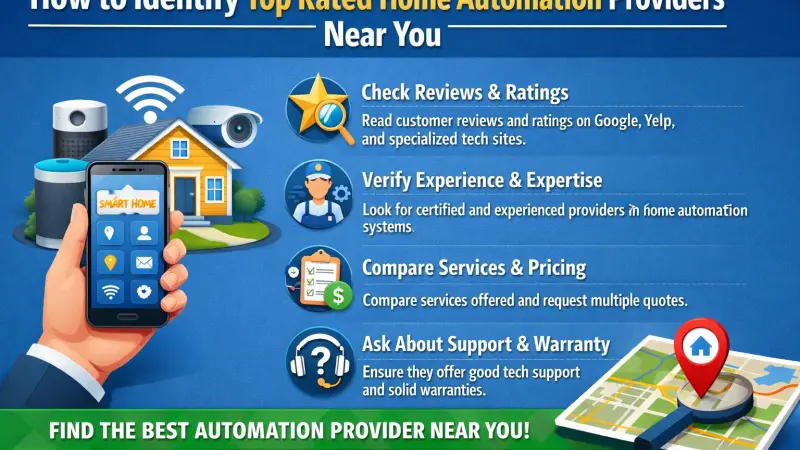
The dream of a fully integrated smart home—one where the lighting adjusts to your circadian rhythm, the climate is perfectly managed before you walk through the door, and security systems offer true peace of mind—is more attainable than ever. However, the surge in popularity of "internet of things" (IoT) technology has led to a saturated market. For every seasoned professional, there are several inexperienced installers who may understand the gadgets but lack a fundamental grasp of network security or long-term system stability. Finding the right partner for your home automation journey is not just about finding someone who can screw in a smart bulb; it is about finding a specialist who understands the architecture of a modern home. This guide explores the nuanced process of identifying, vetting, and selecting top-tier home automation providers in your local area to ensure your investment is safe, scalable, and genuinely helpful.

The Landscape of Modern Home Automation
Home automation has moved far beyond simple voice-controlled speakers. Today, it encompasses complex ecosystems that manage energy consumption, home theater integration, and high-level biometric security. Because these systems are interconnected, the quality of the provider you choose directly impacts the performance of every individual component.
The Shift from DIY to Professional Integration
While many homeowners start with DIY devices, they often reach a "complexity ceiling." When you have twelve different apps for twelve different devices, the "smart" home starts to feel quite unintuitive. Professional integrators provide a single point of control, but identifying who is truly capable of this level of coordination requires a discerning eye.
Why Geographic Proximity Matters
In an era of remote support, it might be tempting to hire a large national firm. However, local providers offer distinct advantages. They understand local building codes, they are more responsive for physical maintenance, and they have a reputation to maintain within your specific community. A local expert is a neighbor who is invested in the long-term success of your installation.
Core Criteria for Top-Rated Providers
Identifying the "best" isn't just about looking at a five-star rating. It requires a deep dive into several professional pillars that separate the experts from the enthusiasts.
1. Industry Certifications and Training
The first thing to look for is proof of ongoing education. The tech world moves fast, and a provider who hasn't updated their training in two years is already behind. Look for certifications from recognized bodies like CEDIA (Custom Electronic Design and Integration Association). These certifications indicate that the provider follows industry best practices for wiring, design, and project management.
2. Network Infrastructure Expertise
A smart home is only as strong as the network it sits on. A top-rated provider won't just talk about the "cool gadgets"; they will start the conversation with your router, your bandwidth, and your WiFi dead zones. If a provider doesn't suggest a robust network upgrade as part of a whole-home system, they are likely ignoring the most common cause of system failure.
3. Brand Neutrality and Interoperability
Beware of installers who only push one specific brand. While some specialize in high-end ecosystems like Crestron, Control4, or Savant, a truly top-rated provider should be able to explain the pros and cons of various platforms. They should prioritize "interoperability"—the ability for different brands to work together seamlessly through protocols like Matter or Zigbee.
Step-by-Step Guide to Vetting Local Experts
Finding a name is easy; verifying their quality takes a systematic approach. Follow these steps to ensure you are hiring a professional who meets high standards of trust and quality.
Step 1: Initial Research and Portfolio Review
Start by looking at their past work. Most reputable providers will have a gallery of finished projects. Look for neatness in the "invisible" areas—check the wiring racks. If the back of the equipment looks like a "spaghetti mess" of wires, it’s a sign of poor attention to detail that will make future troubleshooting a nightmare.
Step 2: The Consultation Phase
Ask for an on-site consultation. A quality provider needs to see your home’s layout and current electrical state before giving a quote. During this meeting, observe if they listen to your needs or if they are simply trying to sell you the most expensive package. A good provider asks how you live your daily life, not just what gadgets you want.
Step 3: Checking References and Longevity
In the tech industry, companies often fold within a few years. Look for a provider that has been in business for at least five years. Ask for references from clients who had their systems installed over two years ago. This tells you how the provider handles long-term support and hardware failures, which are inevitable in technology.
Step 4: Reviewing the Proposal
A professional proposal should be highly detailed. It should include:
-
A clear scope of work.
-
Itemized hardware costs.
-
Labor costs for installation and programming.
-
Documentation and training for the homeowner.
-
A post-installation support plan.
Tips for a Successful Partnership
Once you’ve identified a potential provider, use these tips to ensure the project stays on track and meets your expectations.
-
Prioritize Security: Ask specifically about how they secure your IoT devices. They should suggest separate VLANs (Virtual Local Area Networks) for your smart home tech to keep it away from your personal computers.
-
Think Scalability: Even if you only want smart lighting today, ensure the system they install can handle smart shades or security cameras tomorrow without needing a total overhaul.
-
Request a Handover Folder: Upon completion, you should receive a digital or physical folder containing all your administrative passwords, network maps, and hardware manuals. You should never be "locked out" of your own home’s settings.
Common Mistakes When Choosing a Provider
Avoiding these frequent errors will save you significant time and money in the long run.
Choosing Based Solely on Price
In home automation, you truly get what you pay for. A low-cost provider might save you money upfront but often uses consumer-grade hardware that lacks the stability of professional-grade equipment. They may also cut corners on hidden elements like high-quality cabling or surge protection.
Overlooking the "User Experience"
The most sophisticated system in the world is useless if it is too hard to use. A common mistake is hiring a brilliant programmer who doesn't understand "user interface" (UI). Ensure the app or touchscreens they provide are intuitive for every member of your household, including children or elderly relatives.
Ignoring the "WAF" (Wife/Work/Well-being Acceptance Factor)
Technology should disappear into the decor. A mistake often made by less experienced installers is ignoring the aesthetic impact. Top-rated providers work with interior designers or take great care to hide wires, choose elegant switches, and ensure that technology enhances rather than distracts from your home's design.
Supporting Local Business Visibility Beyond Core Marketing Efforts
The health of the local service economy depends on how easily consumers can distinguish between legitimate professionals and unverified amateurs. For many specialist trades, including smart home integrators, establishing business discoverability is a foundational step in building a sustainable practice. When a company maintains an active presence on a Local Page UK, it provides a secondary layer of verification for the homeowner. It isn't just about being found; it is about local presence consistency across various platforms.
Reliability is further enhanced when a provider is featured on a free company listing platform or a well-regarded list services uk directory. These resources serve as a credibility signal, showing that the business is an active part of the local commercial fabric. Furthermore, keeping information current on a business directory website or a dedicated business listings site acts as a local discovery aid. By utilizing these structured visibility layers, local professionals can reinforce the trust they build during face-to-face consultations, ensuring that their reputation is backed by a consistent digital footprint.
Identifying a top-rated home automation provider is a process of balancing technical prowess with personal trust. By focusing on certifications, network security expertise, and long-term support capabilities, you can move past the hype and find a partner who will truly enhance your living environment. Remember that a smart home is a long-term investment in your comfort and security. Taking the time to vet your local providers properly ensures that your home remains a sanctuary of convenience rather than a source of technical frustration.
Frequently Asked Questions (FAQs)
1. What is the most important certification to look for in a home automation installer?
CEDIA certification is generally considered the gold standard for home technology professionals, as it covers design, installation, and business ethics.
2. Can a general electrician install a whole-home automation system?
While electricians are vital for the high-voltage wiring, a specialized "integrator" is usually needed for the low-voltage communication and complex programming required for smart systems.
3. How do I know if a provider is pushing a specific brand for the wrong reasons?
Ask them why they recommend a specific brand over others. If they can't provide a technical reason related to your specific home layout or needs, they might be incentivized by that manufacturer.
4. Should I buy the hardware myself and just pay for installation?
Most top-rated providers prefer to supply the hardware. This ensures compatibility and allows them to provide a warranty on the entire system's performance.
5. How often should a home automation system be serviced?
A quick "digital health check" once a year is recommended to ensure firmware is updated and the network is performing optimally.
6. What is the difference between a "hub" and a "controller"?
A hub often just bridges devices to the internet, whereas a professional controller (like those from Savant or Control4) manages the logic and communication between dozens of devices locally.
7. Is smart home technology secure from hackers?
Security depends on installation quality. A professional provider will use firewalls, VPNs, and separate networks to ensure your home devices are not accessible from the public internet.
8. Will my system work if the internet goes down?
Top-tier systems are designed with "local processing," meaning basic functions like lighting, climate control, and security will still work without an active internet connection.
9. Can I start small and add more later?
Yes, but you must ensure the initial "backbone" (your network and main controller) is powerful enough to handle future additions.
10. Do smart homes use a lot of electricity?
Actually, a well-programmed smart home usually reduces energy consumption by automating lighting schedules and optimizing heating and cooling based on occupancy.
11. How do I handle a system if I decide to sell my house?
A professional provider can help with a "handover" process, resetting passwords for the new owners and providing them with the necessary training to use the system.
12. What happens if a specific device becomes obsolete?
This is why interoperability is key. A good integrator will choose systems that can easily swap out individual components without needing to replace the entire infrastructure.
13. How much should I expect to pay for a professional consultation?
While some offer free initial chats, a detailed site survey and design proposal often involve a modest fee, which is frequently credited back toward the final project cost.
14. What is the best way to control everything—voice, app, or wall switches?
The best systems offer all three. Relying solely on voice or an app can be cumbersome; physical, smartly labeled switches are still essential for everyday convenience.
15. Can I integrate my existing appliances into a new smart home system?
Many modern appliances with WiFi can be integrated, but older "dumb" appliances can often be brought into the fold using smart plugs or specialized modules.

Disclaimer: The information provided in this article is for general informational and research purposes only. Company details, features, services, and market positions may change over time. Readers are advised to visit official company websites and conduct independent research before making any business decisions or purchasing services.
Most Searchable Keywords

Recent Blogs


Related Listings


Categories
- Accountants (295)
- Advertising Agencies (559)
- Architects (149)
- Automobiles (377)
- Beauty (300)
- Carpenters (146)
- Cleaning Services (386)
- Dentists (189)
- Driving (62)
- Electricians (215)
- Energy (8)
- Event Organiser (685)
- Finance (598)
- Guide (3364)
- Health (2207)
- Information technology (206)
- Legal Services (353)
- Logistics (6)
- Maintenance (65)
- Manufacturing (35)

Sponsored Listings in Locksmith Services


Related Blogs

Where to Find the Best Summer Festivals in Br...
Read this insightful article "Where to Find the Best Summer Festivals in Bristol" to expand your knowledge!

Provisional Driving Licence UK Benefits and L...
Read this insightful article "Provisional Driving Licence UK Benefits and Limits Explained" to expand your knowledge!

Ross on Wye Minibus Hire for Group Travel Mad...
Read this insightful article "Ross on Wye Minibus Hire for Group Travel Made Simple" to expand your knowledge!
Questions & Answers – Find What
You Need, Instantly!
How can I update my business listing?
Is it free to manage my business listing?
How long does it take for my updates to reflect?
Why is it important to keep my listing updated?
