
How to Qualify for Development Finance
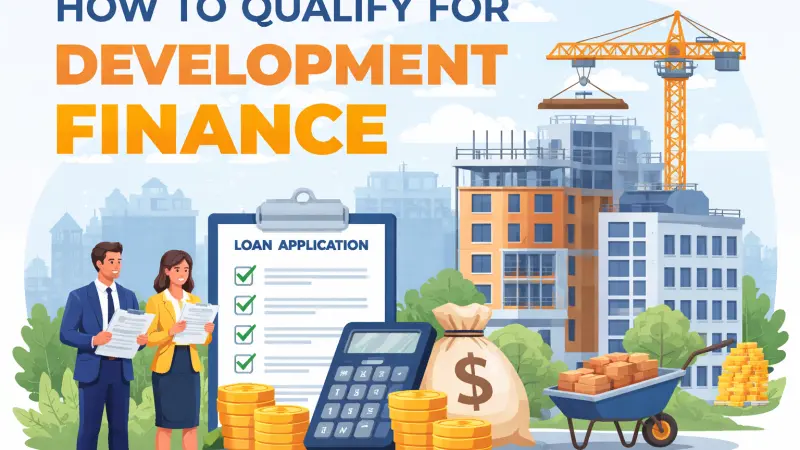
Have you ever wondered why some property developers secure multi-million pound funding packages within weeks, while others struggle to get past the initial enquiry stage? In the competitive UK real estate market, qualifying for development finance is not merely about having a viable plot of land; it is about demonstrating to a lender that your project represents a calculated, manageable risk with a guaranteed path to repayment.

For UK Small and Medium Enterprises (SMEs), contractors, and professional service providers, securing development finance is the engine of growth. Whether you are embarking on a ground-up residential build, a commercial-to-residential conversion, or a major refurbishment, the criteria for qualification are stringent. At its core, qualifying for development finance means proving that regardless of market fluctuations or construction delays, the lender will receive their capital and interest back within the agreed timeframe.
While the process can seem daunting, particularly when seeking significant sums, the "secret" to a successful application lies in meticulous preparation and professional transparency. This guide outlines the essential steps and strategic considerations required to position your application at the top of a lender's pile.
1. The Importance of Comprehensive Documentation
In the world of specialist lending, first impressions are almost entirely dictated by the quality of your "deal pack." Development finance specialists prioritize applicants who demonstrate high levels of organization. Presenting a complete, professional, and well-structured application from the outset signals to the lender that you are a competent borrower who respects their time and processes.
The Essential Document Checklist
To qualify, you will typically need to prepare the following:
- Detailed Cost Plans: A full breakdown of construction costs (professional fees, contingency funds, and build costs) provided by a Quantity Surveyor.
- Planning Permissions: Proof of full planning consent or, at the very least, an advanced "subject to" status.
- Site Appraisals: A comprehensive document detailing the Gross Development Value (GDV) versus the total costs.
- CVs of the Project Team: Profiles of your main contractor, architect, and project manager.
Utilizing the support of a specialized commercial finance broker can be invaluable here. A broker ensures that all paperwork is not only present but presented in a format that aligns with specific lender requirements, reducing the "back-and-forth" that often delays project starts.
2. Building and Evidence an Established Portfolio
Lenders do not just fund projects; they fund people. Your track record is perhaps the single most important factor in qualifying for competitive development finance rates.
A lender’s primary fear is a project stalling due to mismanagement, so they will scrutinize your history to find evidence of past successes.
If you are a seasoned developer, you should provide a "Track Record Document" that lists previous projects, their locations, the funding utilized, and the final profit margins achieved. For contractors moving into development, emphasizing your technical expertise and build history can help bridge the gap. If you lack a direct development track record, qualifying may require you to partner with an experienced Project Manager or Main Contractor who the lender can rely on for execution.
Pro Tip: The less research a lender has to do to verify your history, the more confident they will feel. Provide high-quality "before and after" photography and clear financial statements from previous exits.
3. Crafting a Robust Exit Strategy
A development finance facility is a short-term interest-only loan, typically lasting 6 to 24 months. Because the loan is not amortized (repaid monthly), the lender needs absolute certainty on how the debt will be cleared at the end of the term. This is known as the "Exit Strategy."
Primary and Contingency Exits
To qualify, you must present a primary exit—usually the sale of the completed units or a refinance onto a long-term commercial mortgage (if you intend to hold the assets). However, a strong application also includes "Plan B" and "Plan C" scenarios. What happens if the UK housing market slows down? What if a buyer pulls out of a commercial lease agreement?
Lenders will "stress test" your exit strategy to the extreme. If your plan is to sell, they will look at local demand, comparable evidence (comps), and the realism of your asking price. If your plan is to refinance, they will check your ability to meet debt service coverage ratios (DSCR) based on projected rental yields.
4. Navigating the UK Lender Landscape
Qualifying for development finance often depends on choosing the right type of lender for your specific project.
The UK market is highly fragmented, consisting of three main tiers:
- High Street Banks: These offer the lowest interest rates but have the strictest qualification criteria, often requiring a 50% contribution from the developer and a flawless track record.
- Challenger Banks: More flexible than traditional banks, these lenders are often more willing to look at "stretched" senior debt or projects with slightly higher risk profiles.
- Private Funds and Peer-to-Peer Lenders: These provide the highest speed and flexibility, often funding up to 70-90% of costs, but they charge higher interest rates to compensate for the risk.
Many of these specialist lenders operate exclusively through intermediaries. This means that to access the full market and ensure you are applying to a lender whose "appetite" matches your project, working with a broker is often a prerequisite for qualification.
5. Realism and Transparency in Financial Modelling
One of the fastest ways to disqualify an application is to provide "optimistic" figures. While it is natural to want to show a high profit margin, professional lenders have access to sophisticated data tools and independent valuers. If your projected GDV is significantly higher than local market averages, or if your build costs appear suspiciously low (e.g., failing to account for current UK inflation in material costs), your credibility will vanish.
Honesty is essential. If there are risks associated with the site—such as potential drainage issues or restrictive covenants—disclose them upfront along with your mitigation plan. Lenders prefer a developer who acknowledges challenges and has a budget to handle them, rather than one who ignores them and risks a mid-project funding crisis.
6. Maintaining Professional Communication
The relationship between a developer and a lender is a partnership. From the moment you submit your initial enquiry to the final "drawdown" of funds, your communication style is being evaluated. Are you responsive to requests for more information? Do you provide clear, jargon-free answers to technical questions?
Effective communication builds trust. In the event that a project hits a snag—which is common in the UK construction industry—a lender who trusts you is far more likely to work with you to find
a solution, such as a loan extension, rather than moving toward default. Transparency regarding your financial position and project milestones is non-negotiable for long-term qualification and repeat funding.
Frequently Asked Questions (FAQ)
Typically, UK lenders expect developers to contribute 10% to 35% of the total project costs. However, some lenders offer "Equity Stretch" or "Mezzanine Finance" which can reduce the initial capital requirement, provided the project has strong profit margins.
Yes, but it is more challenging. To qualify, you will likely need a higher deposit and will be required to hire an experienced project management team and a "fixed-price" building contract with a reputable firm to mitigate the lender's risk.
Unlike a standard mortgage, development finance is released in stages. You receive the initial funds to purchase the land, and then subsequent "tranches" are released following inspections by a Monitoring Surveyor who confirms that specific build stages have been completed.
An "In Principle" offer can often be secured within 48 to 72 hours. However, the full underwriting process, including valuations and legal due diligence, typically takes between 4 to 8 weeks depending on the complexity of the project.
GDV is the estimated market value of the completed development. Lenders use this figure to determine the "Loan to Gross Development Value" (LTGDV), which is a key metric they use to decide how much they are willing to lend.
Summary of Qualification Criteria
Securing development finance in the United Kingdom requires a blend of technical expertise, financial realism, and professional presentation. By ensuring your documentation is impeccable, your exit strategy is
bulletproof, and your project team is experienced, you transform your application from a "request for money" into a "commercial opportunity" for the lender.
Remember that the UK lending market is dynamic. What one lender rejects, another may specialize in. Maintaining a broad perspective, seeking expert advice, and being transparent with your figures will ultimately lead to a successful funding outcome and the successful delivery of your development project.

Disclaimer: The information provided in this article is for general informational and research purposes only. Company details, features, services, and market positions may change over time. Readers are advised to visit official company websites and conduct independent research before making any business decisions or purchasing services.
Most Searchable Keywords

Recent Blogs



Related Listings


Categories
- Accountants (295)
- Advertising Agencies (559)
- Architects (149)
- Automobiles (377)
- Beauty (300)
- Carpenters (146)
- Cleaning Services (386)
- Dentists (189)
- Driving (62)
- Electricians (215)
- Energy (8)
- Event Organiser (685)
- Finance (599)
- Guide (3365)
- Health (2207)
- Information technology (206)
- Legal Services (353)
- Logistics (6)
- Maintenance (65)
- Manufacturing (35)

Sponsored Listings in Locksmith Services


Related Blogs

Gen Z Political Reporters and News Creators i...
Read this insightful article "Gen Z Political Reporters and News Creators in the UK" to expand your knowledge!

Famous Female Social Media Influencers Across...
Read this insightful article "Famous Female Social Media Influencers Across the UK" to expand your knowledge!

Your UK Sponsor Licence 2026 Step by Step Gui...
Read this insightful article "Your UK Sponsor Licence 2026 Step by Step Guide" to expand your knowledge!
Questions & Answers – Find What
You Need, Instantly!
How can I update my business listing?
Is it free to manage my business listing?
How long does it take for my updates to reflect?
Why is it important to keep my listing updated?
