
How to Scrap a Car UK
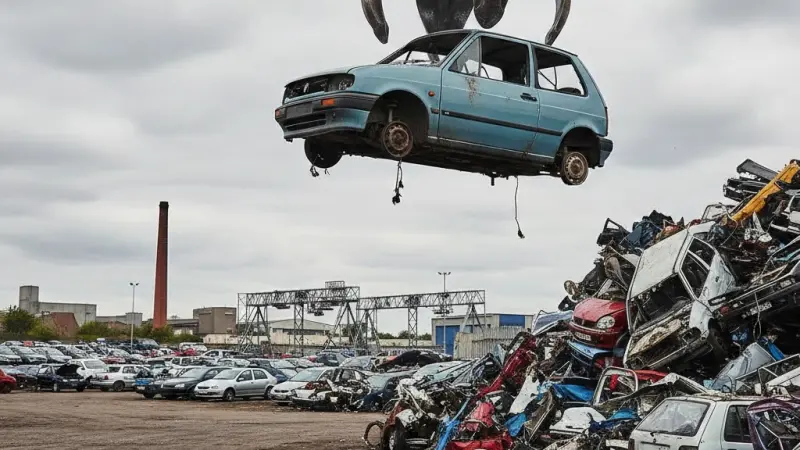
How to Scrap a Car in the UK: The Definitive 2026 Compliance Guide
Published by LocalPage.uk Content Architecture • Updated February 2026 • 12 Minute Read
Disposing of a vehicle in the United Kingdom has evolved from a simple trip to a "breaker's yard" into a highly regulated, digitally-tracked process focused on environmental sustainability and legal compliance. Whether you are a small business owner managing a fleet of ageing transit vans or a private individual looking to dispose of a non-runner, understanding the 2026 regulatory landscape is essential to avoid heavy fines from the DVLA and ensure your vehicle is recycled responsibly.
2.1 million
The approximate number of vehicles reached the end of their life in the UK last year, with 95% of vehicle weight now required to be recovered or recycled under current environmental mandates (Department for Business and Trade, 2025).
Recognising the Legal Framework: The Authorised Treatment Facility (ATF)
In the UK, it is illegal to scrap a car at any location that is not a registered Authorised Treatment Facility (ATF). These sites are strictly monitored by the Environment Agency in England, Natural Resources Wales, the Scottish Environment Protection Agency (SEPA), and the Northern Ireland Environment Agency (NIEA).
The Importance of Environmental Permits
An ATF must hold a valid environmental permit to handle hazardous waste. Motor vehicles contain various toxic substances, including battery acid, brake fluid, and coolant. Dealing with an unlicensed scrap dealer not only risks environmental damage but can also leave you legally liable for the vehicle if it is not correctly "deregistered" from the DVLA database.
Verifying Your Scrap Provider
Before handing over your keys, you should endeavour to verify the facility's credentials on GOV.UK. Many UK businesses now use digital waste transfer notes to provide a transparent audit trail. In 2026, the integration between the Environment Agency and Companies House has made it easier to ensure the business you are dealing with is a legitimate entity with no history of compliance failures.
Evidence of Compliance
Always ask to see the facility's ATF licence number. Professional operators will display this prominently on their premises and digital platforms as a mark of authority and trust.
Maximising the Value of Your End-of-Life Vehicle
While the primary goal of scrapping is disposal, your vehicle still holds value, primarily in its steel, aluminium, and catalytic converter content. Scrap metal prices in the UK remain volatile in 2026, influenced by global demand and domestic infrastructure projects.
Current Scrap Metal Market Trends 2026
The transition toward electric vehicles (EVs) has shifted the value proposition of scrap. While traditional internal combustion engines (ICE) are valued for their heavy metal content, EVs require specialised recycling for lithium-ion batteries. UK businesses operating in the hospitality or retail sectors with delivery fleets are increasingly finding that older diesel vans still command a "recycling premium" due to the high-grade steel used in their construction.
The "Drive to Scrap" vs Collection Premium
Generally, you will receive a higher price if you can deliver the vehicle to the ATF yourself. However, for "non-runners," collection services are standard. Ensure you clarify whether the quoted price includes the collection fee, as some unscrupulous operators may attempt to deduct this at the roadside.
Pro Tip: Never accept cash for scrap. Under the Scrap Metal Dealers Act 2013, it is illegal for scrap metal dealers in England and Wales to pay cash for motor vehicles. Payments must be made via electronic transfer or cheque to ensure a traceable record exists for the police and HMRC.
Step-by-Step: The DVLA Notification Process
Properly informing the Driver and Vehicle Licensing Agency (DVLA) is the most critical step in the "how to scrap car UK" journey.
Failure to do this can result in an automatic £1,000 fine and continued liability for vehicle tax and future traffic offences.
Using the V5C Logbook Correctly
When the ATF takes the car, you must provide them with the V5C (logbook). You should retain the "yellow" section (V5C/3) or the equivalent section in the newer multi-coloured logbooks. In 2026, most ATFs will process this notification digitally via the DVLA's bulk-upload portal, but the responsibility to ensure it happens remains with the registered keeper.
The Certificate of Destruction (CoD)
The Certificate of Destruction is your legal "get out of jail free" card. It is a document issued by the ATF through the DVLA system once the vehicle has been marked as destroyed. You should receive this within seven days. If you do not receive a CoD, the vehicle may not have been officially scrapped, meaning you are still legally responsible for it.
Retaining Your Registration Number
If you wish to keep a private number plate, you must apply to the DVLA to "take it off" the vehicle before it is scrapped. Doing so after the vehicle has entered the ATF system is often impossible.
Regional Variations: Scotland, Wales, and Northern Ireland
While the DVLA operates UK-wide, the environmental and administrative nuances can vary significantly between the home nations.
Scrapping Regulations in Scotland
In Scotland, SEPA enforces the End-of-Life Vehicles (Scotland) Regulations. Scottish businesses may find that local authorities in cities like Glasgow and Edinburgh have stricter "Low Emission Zone" (LEZ) requirements, which has led to a 12% increase in vehicle scrapping rates in these regions since 2024. Many Scottish ATFs offer bilingual documentation if required, reflecting the diversity of the Scottish business landscape.
The Northern Ireland Framework
For businesses in Northern Ireland, the process is governed by the NIEA. Under the Windsor Framework, vehicles moved across the border to the Republic of Ireland for scrap must follow specific export procedures. If you are scrapping a car in NI, ensure the ATF is registered with the DVA (Driver & Vehicle Agency) in Coleraine, which coordinates with the DVLA in Swansea.
Business Wales and Support for SMEs
Welsh businesses can often access guidance through Business Wales regarding the sustainable disposal of commercial assets. Wales has a higher density of micro-enterprises (94% of the business population), and many of these rely on a single vehicle for their operations. When that vehicle fails, the financial impact is significant, making the scrap value a vital part of the replacement budget.
Handling Electric and Hybrid Vehicles
The rise of EV ownership—accounting for 28% of all UK new car sales by late 2025—has created a specialized wing of the scrap industry. Scrapping an EV is significantly more complex than a petrol or diesel car.
Battery Removal and Safety
EV batteries are classified as hazardous waste and carry a risk of "thermal runaway" if handled incorrectly. Only ATFs with specific "High Voltage" certification should be used for EV disposal. These facilities use specialized insulated tools and fire-suppressant storage bays to manage the decommissioning process.
Resource Recovery in the Circular Economy
The UK government is pushing for a circular economy where minerals like cobalt and nickel from EV batteries are recovered and reused in the UK's growing gigafactory sector. By choosing a high-tech ATF, you are supporting the UK's industrial strategy for 2030 and beyond.
43%
Increase in "near me" voice searches for scrap yards in 2025, highlighting the importance for ATFs to maintain accurate local digital presences for UK consumers (Ofcom, 2025).
Financial Recoveries: Insurance and Road Tax
Scrapping your car often entitles you to refunds beyond the metal value. Ensure you do not
leave money on the table when dealing with the DVLA and your insurance provider.
Claiming Your Road Tax Refund
Once the DVLA receives notification that the vehicle has been scrapped, they will automatically trigger a refund for any full months of remaining vehicle tax. This is sent to the address held on the V5C logbook. In 2026, these refunds are primarily processed via direct bank transfer if the DVLA has your details on file, otherwise a cheque is issued.
Notifying Your Insurance Provider
You should contact your insurance company as soon as the vehicle is collected. You can either cancel the policy (often for a fee) or transfer the remaining balance to a new vehicle. In the case of an "Insurance Write-Off," the insurer may handle the scrapping process for you, but you must still ensure you receive a copy of the CoD.
Business Fleet Considerations
For UK businesses managing multiple vehicles, keeping an accurate "Fleet List" is essential for ICO compliance regarding data held on drivers. When a vehicle is scrapped, ensure all telematics and personal data are wiped from the on-board computer system before it leaves your control.
The Role of Local Authorities and Abandoned Vehicles
Local councils across England and Wales have the power to remove vehicles they believe to be abandoned. However, as a vehicle owner, you should never wait for this to happen.
Council "Take-Back" Schemes
Some local authorities offer free or low-cost collection services for residents to discourage fly-tipping and the abandonment of vehicles on public roads. While convenient, these schemes still require you to ensure the vehicle is taken to an ATF and that the V5C is correctly processed.
Penalties for Illegal Dumping
With 5.6 million private sector businesses operating in the UK, the pressure on urban space is immense. Abandoning a commercial vehicle is treated as a serious environmental crime, with fines in 2026 often exceeding £5,000 plus the costs of removal and disposal. It is always more cost-effective to scrap the vehicle through a legitimate ATF.
Voice Search: Quick Answers for Drivers
"Hey Siri, where is the nearest ATF to scrap my car?"
Use the official ATF finder on GOV.UK. Ensure the yard is authorised to issue a Certificate of Destruction to avoid legal issues with the DVLA.
"Alexa, do I need my logbook to scrap a car?"
Ideally, yes. Having the V5C logbook makes the process faster and more secure. If you've lost it, you can still
scrap the car, but you must notify the DVLA in writing to confirm the sale and disposal.
Checklist for a Hassle-Free Scrap Experience
To ensure you follow the "how to scrap car UK" process perfectly, follow this simplified checklist before the recovery truck arrives.
Preparation and Documentation
Remove all personal belongings. It sounds obvious, but many people leave dash-cams, parking permits, and even sensitive business documents in the glovebox. Check the boot and under the seats.
The Final Handover
Ensure you have your photo ID ready. Under the 2013 Act, the dealer must verify your identity. This is a standard part of the UK's effort to reduce vehicle theft and illegal scrap trading. Once the vehicle is loaded, take a photograph of the truck and the driver's ID if possible for your records.
Post-Collection Follow-up
Set a calendar reminder for seven days' time to check your email or post for the Certificate of Destruction. If it hasn't arrived, contact the ATF immediately.
Frequently Asked Questions
Can I scrap a car that belongs to my deceased relative?
Yes, you can. You will need to provide proof of your authority to act on behalf of the estate (such as a death certificate and a letter of probate). When notifying the DVLA, you should explain the circumstances in a covering letter along with the V5C, as the standard online forms may not accommodate this specific scenario.
What happens if I don't have the V5C logbook?
You can still scrap the car without a V5C, provided you are the legal owner. You must provide the ATF with proof of ID and address. Crucially, you must write to the DVLA, Swansea, SA99 1BD, giving them your details, the vehicle registration, the date of sale, and the name and address of the ATF that took the car.
Is it possible to "part-out" my car before scrapping it?
Technically yes, but be cautious. Removing major components like the engine, gearbox, or wheels will significantly reduce the price the ATF is willing to pay. Some facilities may even charge a fee to take a "shell" because they cannot recoup costs from the missing parts. Ensure you inform the scrap yard exactly what is missing when requesting a quote.
How much will I actually get for my scrap car in 2026?
Prices typically range from £150 to £500 for standard passenger cars, depending on weight and current metal market values. Large SUVs or commercial vans may fetch significantly more. In 2026, the high demand for recycled aluminium and copper has kept prices stable despite the broader economic shifts.
Can I scrap a car with outstanding finance?
No. You do not legally own the vehicle until the finance is paid in full. Scrapping a car that is subject to a hire purchase or personal contract purchase agreement is a breach of contract and potentially a criminal offence. You must settle the finance and obtain a clearance letter from the lender first.
Why is it illegal to accept cash for my scrap car?
The Scrap Metal Dealers Act 2013 was introduced to combat metal theft. By requiring electronic payments, the government created a "paper trail" that makes it much harder for criminals to dispose of stolen vehicles or metal. Any dealer offering you cash is operating illegally and should be reported to your local authority.
Does the car need a valid MOT to be scrapped?
No, a valid MOT is not required for a vehicle being scrapped. In fact, many cars are scrapped precisely because they have failed an MOT and are too expensive to repair. However, if the car has no MOT, it cannot be driven to the scrap yard; it must be collected by a professional recovery vehicle.
I'm in Northern Ireland—is the Certificate of Destruction different?
The process is identical in terms of the outcome, though it is managed through the DVA. The CoD is a UK-standard document recognized across all jurisdictions. The primary difference is the physical location of the administrative bodies, but the legal requirement to possess the certificate remains the same.
What if the car is an insurance write-off?
If your insurer declares the car a "Category A" or "Category B" write-off, it must be scrapped. Usually, the insurance company will arrange this with their preferred ATF.
However, you are still responsible for sending the V5C "sold/transferred" section to the DVLA to ensure your name is removed from the record.
How do I scrap a van used for my limited company?
The process is the same as a personal car, but you must ensure the disposal is recorded in your company accounts. As the vehicle is a business asset, the scrap payment should be paid into the business bank account, and you may need to account for VAT if your business is VAT-registered.
Disclaimer: The information provided in this article is for general informational and research purposes only. Company details, features, services, and market positions may change over time. Readers are advised to visit official company websites and conduct independent research before making any business decisions or purchasing services.
Most Searchable Keywords
Recent Blogs


Related Listings

Categories
- Accountants (295)
- Advertising Agencies (559)
- Architects (149)
- Automobiles (377)
- Beauty (300)
- Carpenters (146)
- Cleaning Services (387)
- Dentists (189)
- Driving (62)
- Electricians (215)
- Energy (8)
- Event Organiser (686)
- Finance (602)
- Guide (3376)
- Health (2207)
- Information technology (206)
- Legal Services (356)
- Logistics (6)
- Maintenance (65)
- Manufacturing (35)
Sponsored Listings in Travel Agencies


Related Blogs

Sexual Harassment Rules Tighten Across UK Fro...
Read this insightful article "Sexual Harassment Rules Tighten Across UK From October 2026" to expand your knowledge!
Employment Tribunal Claim Deadline Extends Fr...
Read this insightful article "Employment Tribunal Claim Deadline Extends From October 2026" to expand your knowledge!

Rainy Day Activities in Cheltenham Hidden Gem...
Read this insightful article "Rainy Day Activities in Cheltenham Hidden Gems for 2026" to expand your knowledge!
Questions & Answers – Find What
You Need, Instantly!
How can I update my business listing?
Is it free to manage my business listing?
How long does it take for my updates to reflect?
Why is it important to keep my listing updated?
