
How to Start a Company: A Complete Founder’s Guide
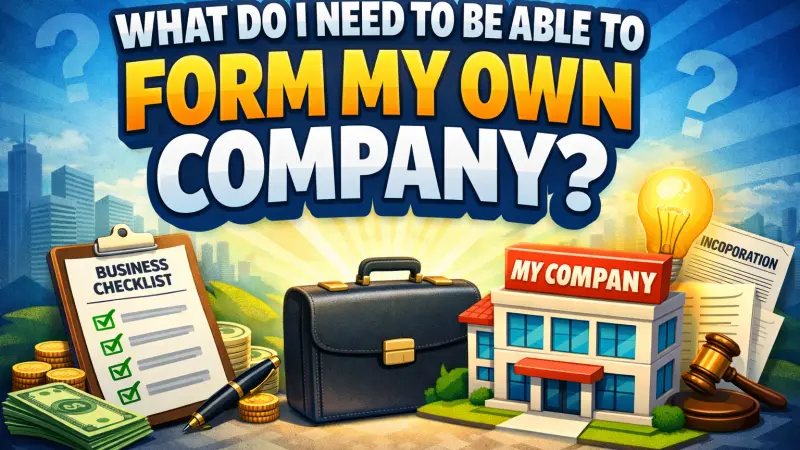
Starting a company is one of the most exhilarating—and daunting—challenges you can undertake. While the "garage startup" myth focuses on late nights and coding, the reality of formation is a blend of legal compliance, strategic planning, and financial groundwork.
If you’re ready to move from "thinking about it" to "doing it," here is the comprehensive breakdown of what you need to officially form your own company.
1. A Validated Business Concept
Before you file any paperwork, you need a viable idea. However, an idea isn’t enough; you need validation.
The Problem: What specific pain point are you solving?
The Market: Is there a large enough audience willing to pay for your solution?
The Competitive Edge: What makes your company different from existing players?
2. The Legal Structure (Entity Type)
Choosing your legal structure is perhaps the most critical technical step. It dictates how you are taxed, your level of personal liability, and your ability to raise capital.
Common structures include a Sole Proprietorship, which is easiest for individual consultants but offers no liability protection; an LLC (Limited Liability Company), which is the favorite for small businesses seeking asset protection and flexibility; or a C-Corp, which is the gold standard for startups intending to raise venture capital.
3. A Registered Business Name
Your name is your brand, but it also has to be legally available. First, you should search your state’s Secretary of State database to ensure the name isn't already in use. Following that, perform a trademark search to ensure you aren't infringing on existing intellectual property. Finally, check if the matching domain name is available so your digital presence remains consistent with your legal name.
4. Registration and Tax Identity
To exist in the eyes of the government, you must be formally registered. This involves filing Articles of Incorporation or Articles of Organization with your state.
Once filed, you must apply for an EIN (Employer Identification Number). Think of this as a Social Security number for your business; it is required to open a bank account and hire employees.
You will also need to designate a Registered Agent, which is a person or service authorized to receive official legal documents on behalf of your company.
5. Financial Infrastructure
Mixing personal and business finances is a recipe for legal and tax disasters. To avoid "piercing the corporate veil," you must establish a dedicated Business Bank Account using your EIN.
Additionally, you should implement Accounting Software from day one to track every expense and revenue stream. Beyond the infrastructure, you need Initial Capital—whether from personal savings, loans, or investors—to cover filing fees and early operating costs.
6. Permits and Licenses
Depending on your industry and location, you may need specific "keys" to operate legally. This could include a general business license from your city, professional licenses for specialized fields like law or construction, and zoning permits if you are operating out of a specific physical location.
7. Governance Documents
Even if you are a solo founder, having "rules of the road" prevents future headaches. An Operating Agreement for LLCs or Bylaws for Corporations outlines how decisions are made and how profits are distributed.
If you have partners, you also need a Founder Agreement to define equity splits and vesting schedules immediately.
The "Soft" Requirements
Beyond the paperwork, you need a specific mindset to navigate the early stages of entrepreneurship:
Resilience: The ability to handle "no" and pivot when things go wrong.
Risk Tolerance: Accepting that success isn't guaranteed and managing that uncertainty.
A Support Network: A circle of mentors, lawyers, and peers who can offer guidance when you hit a wall.
Pro Tip: Don't skip the insurance. Whether it's General Liability or Professional Indemnity, a small monthly premium can save your company from a total collapse in the event of an unforeseen lawsuit.
Disclaimer: The information provided in this article is for general informational and research purposes only. Company details, features, services, and market positions may change over time. Readers are advised to visit official company websites and conduct independent research before making any business decisions or purchasing services.
Most Searchable Keywords
Recent Blogs


Related Listings

Categories
- Accountants (295)
- Advertising Agencies (559)
- Architects (149)
- Automobiles (377)
- Beauty (300)
- Carpenters (146)
- Cleaning Services (387)
- Dentists (189)
- Driving (62)
- Electricians (215)
- Energy (8)
- Event Organiser (686)
- Finance (602)
- Guide (3372)
- Health (2207)
- Information technology (206)
- Legal Services (353)
- Logistics (6)
- Maintenance (65)
- Manufacturing (35)
Sponsored Listings in Travel Agencies


Related Blogs

How Much Do UK Actors Really Earn Full Indust...
Read this insightful article "How Much Do UK Actors Really Earn Full Industry Breakdown" to expand your knowledge!

Blue Light Card UK 2026 Check Eligibility and...
Read this insightful article "Blue Light Card UK 2026 Check Eligibility and Claim" to expand your knowledge!

BBC Radio 1 DJs Net Worth Ranking Revealed
Read this insightful article "BBC Radio 1 DJs Net Worth Ranking Revealed" to expand your knowledge!
Questions & Answers – Find What
You Need, Instantly!
How can I update my business listing?
Is it free to manage my business listing?
How long does it take for my updates to reflect?
Why is it important to keep my listing updated?
