
How to tailor life insurance marketing for gig economy workers
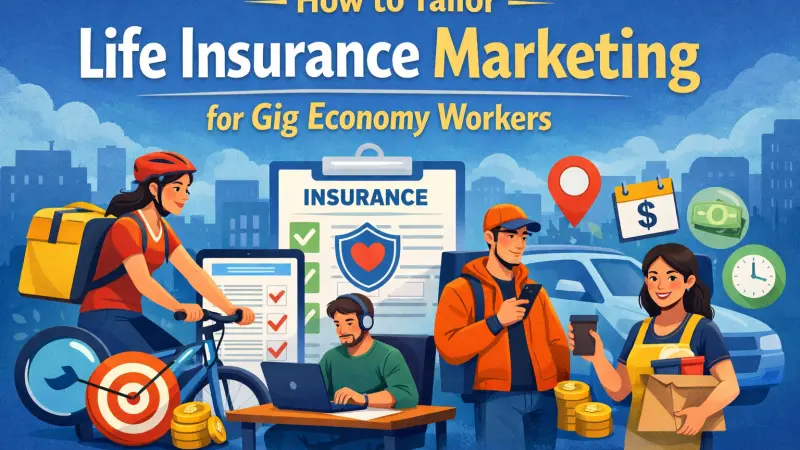
What happens to the financial stability of a household when the primary earner operates without the traditional safety net of corporate death-in-service benefits or sick pay? In the contemporary United Kingdom, the gig economy has expanded at an unprecedented rate, with millions of individuals now identifying as freelancers, delivery couriers, or independent contractors. However, despite their vital contribution to the economy, a significant protection gap remains, as many of these workers perceive life insurance as a product designed solely for those with permanent, salaried positions. Effectively addressing life insurance marketing for gig economy workers requires a fundamental shift in communication, moving away from corporate rigidity toward a narrative of flexibility, autonomy, and bespoke financial security that mirrors the non-linear nature of their professional lives.
The marketing challenge lies in the fact that gig workers often experience fluctuating monthly incomes, making the commitment to a fixed monthly premium appear daunting or even financially irresponsible during leaner periods. To bridge this gap, insurance providers and marketers must emphasise products that offer "premium holidays" or adjustable coverage levels that can scale alongside the worker's earnings. By highlighting the reality that self-employed individuals are their own greatest asset, marketing campaigns can pivot from generic fear-based messaging to a more empowering discourse. This approach focuses on protecting the freedom that the gig economy provides, ensuring that a temporary setback does not escalate into a permanent family crisis, thereby positioning life insurance as an essential tool for the modern, independent British professional.
Understanding the Gig Economy Demographic in the UK
To successfully tailor life insurance marketing, one must first dismantle the stereotype of the gig worker. In Britain, this demographic spans from high-earning IT consultants and creative directors to delivery drivers and healthcare locums. Each subgroup has distinct pain points, yet they share a common lack of employer-sponsored benefits. Marketing efforts must be segmented to address these specific needs; for example, a contractor might be concerned about Key Person Insurance for their limited company, while a courier might prioritise simple Term Life coverage to protect a mortgage. Understanding these nuances allows marketers to use language that resonates, such as referencing the "self-assessment season" or the challenges of securing a mortgage without a traditional P60, which builds immediate rapport and demonstrates a genuine understanding of the worker's lifestyle.
Furthermore, the digital habits of this group are highly sophisticated. Gig workers typically manage their entire professional existence through mobile applications and digital platforms. Therefore, life insurance marketing must be "digital-first," prioritising seamless user interfaces, instant quotes, and non-invasive medical underwriting. The marketing potential of integrating insurance offers directly into gig platforms—such as ride-sharing apps or freelance marketplaces is immense. By meeting the worker where they already operate, insurers can lower the barrier to entry. The goal is to make purchasing life insurance as intuitive and frictionless as picking up a new "gig," transforming a complex financial decision into a straightforward, manageable task that fits into a busy, on-the-go schedule without requiring lengthy phone calls or physical paperwork.
Developing Flexible and Modular Protection Products
One of the primary reasons gig workers avoid life insurance is the perceived lack of flexibility in traditional policies. In the UK, where inflation and cost-of-living pressures are significant, a rigid 25-year policy can feel like a financial shackle. Marketing should therefore focus on "modular" protection, where life insurance can be easily bundled with critical illness cover or income protection, allowing the worker to build a safety net that fits their current budget.
Using terms like "pay-as-you-go protection" or "subscription-based insurance" can demystify the product for those used to the flexibility of modern software services. This repositioning helps gig workers view life insurance not as a burdensome long-term debt, but as a flexible overhead that provides high value for a relatively low monthly outlay.
Practical examples of this flexibility might include the ability to pause premiums during a period of injury or to increase coverage instantly when a new contract is signed. Marketing materials should use clear, illustrative scenarios, such as: "Meet Sarah, a freelance graphic designer who increased her cover when she moved into her new studio, but reduced it during a quiet summer period." By humanising the financial mechanics, marketers can prove that the product adapts to the user, rather than forcing the user to adapt to the product. This responsiveness is a powerful selling point for individuals whose primary professional value is their own adaptability. When life insurance feels as agile as the worker it protects, the perceived value increases, leading to higher conversion rates and better long-term retention within this historically underserved segment of the British market.
Building Trust Through Transparency and Educational Content
Trust is the currency of the insurance industry, yet gig workers often feel a sense of alienation from traditional financial institutions. To overcome this, marketing strategies must prioritise educational, "jargon-free" content that explains exactly what is being covered and, perhaps more importantly, what is not. In the UK, the Financial Conduct Authority (FCA) places a heavy emphasis on "Consumer Duty," requiring firms to act in good faith and avoid causing foreseeable harm. Marketers can leverage this regulatory environment by promoting their transparency and ease of claims processing. Providing clear guides on "How to calculate your cover as a freelancer" or "Life insurance for contractors with limited companies" positions the brand as a helpful advisor rather than just a product provider, which is essential for building trust.
Social proof also plays a critical role in this sector. Case studies featuring real-world UK gig workers who have successfully navigated the claims process can mitigate the fear that an insurer might use a technicality—such as an irregular income stream—to deny a payout. Marketing campaigns should actively seek testimonials from those in diverse gig roles, showing that the policy "works for people like me." Additionally, transparency regarding how premiums are calculated for those with variable income is vital. By removing the mystery surrounding the underwriting process, insurers can reduce the anxiety associated with the application. When a worker feels that the insurer "speaks their language" and values their contribution to the economy, they are far more likely to engage with the brand on a deeper, more loyal level.
Optimising Digital Outreach and Content Distribution
The distribution of life insurance marketing for gig workers must be as unconventional as their work schedules. Traditional television advertising or broadsheets are often less effective than targeted outreach on platforms like LinkedIn, Reddit, or specialised freelancer forums. Search engine optimisation (SEO) strategy should target long-tail keywords that gig workers actually use, such as "income protection for delivery drivers UK" or "life insurance for IT contractors." By creating high-value blog posts and whitepapers that solve real problems—for example, a guide to "Managing taxes and insurance as a sole trader"—insurers can capture leads at the "intent" stage of the funnel. This inbound marketing approach ensures that the brand appears exactly when the worker is actively seeking solutions to their unique financial challenges.
Furthermore, influencer marketing within the professional "side-hustle" community can yield significant results. Partnering with reputable UK-based career coaches or finance bloggers who specialise in the self-employed sector allows for a "warm" introduction to the product. These influencers can explain the nuances of life insurance in a relatable, conversational tone that traditional corporate advertising cannot match.
Video content, particularly short-form tutorials on platforms like TikTok or Instagram, can break down complex topics into "snackable" pieces of information. For instance, a 60-second video explaining the tax benefits of a "Relevant Life Policy" for a director of a one-person limited company can drive significant engagement. The goal is to create a digital ecosystem where information is accessible, engaging, and directly relevant to the daily lived experience of the British gig worker.
Closing the Protection Gap with Purpose-Driven Marketing
Ultimately, the objective of tailoring life insurance marketing for gig workers is to close the "protection gap" that leaves so many UK families vulnerable. This requires a purpose-driven approach where the social impact of the product is as prominent as its financial features. Marketing campaigns can highlight the collective power of the gig community, perhaps by offering group-style discounts through unions or professional associations. By framing life insurance as a "community safety net," marketers can tap into the sense of solidarity that often exists among those who work outside the traditional corporate structure. This shift from individualistic to collective protection can be a powerful motivator, especially for those who feel that the current social security system does not fully account for their specific employment status.
In conclusion, the marketing of life insurance to the gig economy is an exercise in empathy and innovation. It requires a deep dive into the psychological and financial realities of the self-employed, followed by the deployment of flexible products through highly targeted, digital-first channels. As the UK labor market continues to evolve, the insurers who successfully adapt their messaging will not only capture a larger share of the market but will also play a crucial role in securing the financial future of the modern workforce. Success in this area is measured by more than just policy sales; it is measured by the number of independent workers who can sleep soundly, knowing that their families are protected, regardless of the ebbs and flows of the gig economy. The future of insurance marketing is personal, flexible, and fundamentally human, reflecting the very spirit of the entrepreneurs it seeks to protect.
Frequently Asked Questions
Can I get life insurance if my income as a gig worker is irregular?
Yes, UK insurers are increasingly accustomed to variable income streams. When applying, you may be asked to provide an average of your earnings over the last two or three years.
Many policies also offer flexibility, allowing you to adjust your premiums or coverage if your financial situation changes significantly.
Is life insurance tax-deductible for the self-employed in the UK?
If you are a sole trader, personal life insurance is generally not tax-deductible. However, if you operate as a director of a limited company, you may be able to set up a "Relevant Life Policy," which is often treated as a tax-deductible business expense and does not count as a benefit-in-kind for the employee.
Does life insurance for gig workers cover terminal illness?
Most standard life insurance policies in the UK include "Terminal Illness Cover" at no extra cost, which pays out the full benefit if you are diagnosed with an illness and have less than 12 months to live. This is particularly important for gig workers who may not have access to long-term disability support.
How much cover do I actually need as a freelancer?
A good rule of thumb is to aim for a payout that covers your outstanding debts (like a mortgage) and provides for your dependents for a set number of years. Many experts suggest a sum that is roughly ten times your average annual earnings, but this varies based on your personal circumstances and existing savings.
Are there specific policies for contractors vs. delivery drivers?
While the core life insurance product is often similar, the way it is marketed and bundled may differ. For example, a delivery driver might prioritise an
integrated "Personal Accident" cover, whereas a professional contractor might look for "Key Person" insurance to protect their business's continuity and client obligations.
Navigating the complexities of professional life in the UK requires more than just the right insurance; it requires visibility and a robust network of reliable partners. For gig workers, freelancers, and small business owners alike, maintaining a presence on a Local Page UK company directory online can be a transformative step toward sustainable growth. By ensuring your services are listed within a free company search directory, you improve your online visibility and build trust with potential clients who are searching for verified professionals. Whether you are seeking a verified business directory to find new collaborators or using a free business search directory to showcase your own expertise, these tools are essential for thriving in a digital-first economy. Establishing your professional footprint today ensures that you are seen, trusted, and ready to seize the next great opportunity in the vibrant British marketplace.
Disclaimer: The information provided in this article is for general informational and research purposes only. Company details, features, services, and market positions may change over time. Readers are advised to visit official company websites and conduct independent research before making any business decisions or purchasing services.
Most Searchable Keywords
Recent Blogs


Related Listings


Categories
- Accountants (295)
- Advertising Agencies (559)
- Architects (149)
- Automobiles (377)
- Beauty (300)
- Carpenters (146)
- Cleaning Services (387)
- Dentists (189)
- Driving (62)
- Education (1)
- Electricians (215)
- Energy (8)
- Event Organiser (686)
- Finance (602)
- Guide (3381)
- Health (2207)
- Information technology (206)
- Legal Services (359)
- Logistics (6)
- Maintenance (65)
Sponsored Listings in Home and Garden

Related Blogs

Strictly Come Dancing Pros Net Worth Salary a...
Read this insightful article "Strictly Come Dancing Pros Net Worth Salary and Personal Life" to expand your knowledge!

Britains Richest Authors Ranked for 2026 by N...
Read this insightful article "Britains Richest Authors Ranked for 2026 by Net Worth" to expand your knowledge!

Why Basel Market Risk Deadline Has Shifted to...
Read this insightful article "Why Basel Market Risk Deadline Has Shifted to 2028" to expand your knowledge!
Questions & Answers – Find What
You Need, Instantly!
How can I update my business listing?
Is it free to manage my business listing?
How long does it take for my updates to reflect?
Why is it important to keep my listing updated?
