
How to Train Employees on Cybersecurity
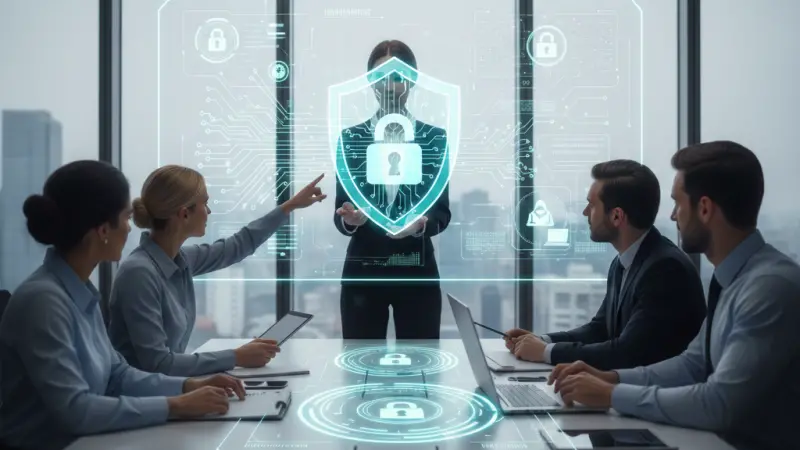
In the modern digital landscape, the question for Small and Medium Enterprises (SMEs) in Britain is no longer if they will be targeted by cybercriminals, but when. Recent studies indicate that between 60% and 63% of UK SMEs suffered a hacking attack last year. This staggering statistic highlights a critical vulnerability: a widespread lack of interest or awareness among smaller business owners who mistakenly believe their size makes them "invisible" to hackers.

The reality is quite the opposite. Cybercriminals often view SMEs as "low-hanging fruit" because they typically implement fewer IT security measures than larger corporations. While a large enterprise might have a dedicated Security Operations Centre (SOC), many small businesses rely on basic antivirus software and hope for the best. Currently, only 19% of small companies and 15% of midsize companies are truly reactive against cyber-attacks.
To bridge this gap, your employees must become your "human firewall." Here is a detailed, actionable guide on how to train your team to prevent and mitigate IT risks effectively.
Implement the Principle of Least Privilege: Delimit Access
One of the most common causes of internal data leaks—whether accidental or malicious—is excessive access rights. If every employee has access to every file, a single compromised account can bring down the entire company.
How to Train and Implement:
Role-Based Access Control (RBAC): Define specific roles within your company. An intern in marketing does not need access to the payroll database.
Regular Audits: Conduct quarterly reviews to ensure employees who have changed roles or left the company no longer have active permissions.
Employee Education: Explain to your team why access is restricted. It’s not about a lack of trust; it’s about reducing the "blast radius" of a potential breach.
Enforce High-Level Password Hygiene
Despite years of warnings, "password123" remains a common culprit in security breaches. In 2026, simple passwords are cracked in seconds by AI-driven brute-force tools.
Key Training Points:
Complexity is King: Require passwords to be at least 16 characters, combining uppercase, lowercase, numbers, and symbols.
Password Managers: Encourage or provide a corporate password manager (like Dashlane or 1Password). This prevents employees from writing passwords on sticky notes or reusing the same one across multiple sites.
The "Why" Factor: Show your team the consequences. Use real-world examples of how a stolen password led to a company-wide ransomware attack. When employees understand that a single weak password could bankrupt the business, they take it more seriously.
Cultivate a State of "Always Alert"
Cybersecurity training is not a "one and done" event. Threats like "Quishing" (QR code phishing) and AI-generated deepfake emails are evolving rapidly.
Maintaining Awareness:
Micro-Learning: Instead of a four-hour annual seminar, send "security nuggets" via email or Slack every two weeks. These should cover current threats, like a new type of phishing email circulating in the UK.
Simulated Phishing: Run occasional, friendly tests. Send a fake "suspicious" email and see who clicks. Use the results as a teaching moment, not a disciplinary one.
Gamification: Create a "Security Champion" program where employees are rewarded for spotting and reporting real threats.
Protect Every Endpoint: Mobile and Remote Security
With the rise of hybrid work, the "office perimeter" has disappeared. Personal phones and home laptops are now part of your corporate network.
Actionable Steps:
Mobile Device Management (MDM): Ask your systems manager to install tools that allow for remote
wiping of lost devices and block the download of "sideloaded" or dubious apps.
Update Discipline: Train staff to never hit "Remind me later" on software updates. Those patches often fix "Zero-Day" vulnerabilities that hackers are actively exploiting.
The Golden Rule: Say No to Public Wi-Fi
Coffee shop and airport Wi-Fi networks are notorious "Man-in-the-Middle" attack hubs. A hacker sitting in the same café can easily intercept data being sent over an unsecured connection.
The Policy:
VPN Mandatory: If an employee must work from a public space, they must use a Virtual Private Network (VPN).
Tethering: Encourage staff to use their phone’s 4G/5G cellular data (hotspotting) rather than joining a "Free Public Wi-Fi" network. It is significantly more secure.
Create a "No-Blame" Reporting Culture
If an employee clicks a malicious link, their first instinct might be to hide it out of fear. This is the worst-case scenario for an SME.
Building Trust:
Immediate Reporting: Make it clear that reporting a suspicion—even if it turns out to be a false alarm—is a professional obligation and will be met with gratitude, not punishment.
The Golden Hour: The first hour after a breach is critical. Early reporting can allow your IT team to isolate the affected machine before the malware spreads.
Lock Down Social Media
Social engineering is a major threat. Hackers browse LinkedIn and Facebook to find out who works in your finance department and who their manager is, then craft a highly convincing "spear-phishing" email.
Training Tips:
Disclosure Limits: Prohibit the posting of internal office photos where whiteboards with sensitive info or computer screens are visible.
Link Caution: Train staff to be wary of links sent via social media DMs, even from "friends," as those accounts may have been hijacked.
Get Cyber Insurance: Your Financial Safety Net
Even with the best training, no system is 100% foolproof. Cyber insurance has become an essential component of a modern business strategy.
Why You Need It:
Incident Response: Most policies provide access to specialist "breach coaches" and forensic IT experts who help you recover data.
Legal & PR Support: Insurance can cover the costs of notifying customers about a data breach and hiring a PR firm to manage reputational damage.
Business Interruption: If a hack takes your systems offline for a week, cyber insurance can help cover the lost revenue during that downtime.
Boost Your Business Visibility with Local Page UK
While securing your internal systems is vital for survival, growing your digital presence is vital for success. If you are looking to expand your reach and connect with more customers across the United Kingdom, Local Page UK is the premier platform to showcase your services.
Whether you are looking to find local businesses uk or want to list your own company on a reputable uk online business directory, our platform provides the tools you need. We serve as a comprehensive uk business directory and uk local business directory that helps bridge the gap between service providers and those who need them.
For those looking to grow without a massive initial investment, we offer a business listing uk through our business listing uk.
Small businesses can benefit from a business listing uk or a business listing uk, ensuring your brand is visible on a business listing uk.
Our local business listings uk are designed for maximum SEO impact. From uk service listings to uk verified business listings, we provide a curated local page uk listings experience. Whether you operate a business listing uk or a high-end uk professional services listings firm, Local Page UK is the uk business directory website you can trust.
Join our local businesses list uk today and take advantage of the most effective uk business listings online to reach your uk b2b business directory and uk b2c business directory goals. From uk top rated local businesses to uk trade services listings, we are the ultimate business directory uk online for uk service providers directory needs.
What Professionals Often Want to Know
Why are UK SMEs targeted more often now?
Hackers use automated bots to scan thousands of businesses at once. SMEs often have weaker security than large corporations, making them easier targets.
Is once-a-year cybersecurity training enough?
No. Threats evolve weekly. Monthly or bi-weekly "micro-learning" sessions are far more effective.
What is the most common type of cyber-attack?
Phishing (fraudulent emails) remains the #1 entry point for hackers.
Do I really need a VPN if my office Wi-Fi is password-protected?
Office Wi-Fi is generally safe, but a VPN is essential for remote work or when using any network outside your direct control.
What should an employee do first if they think they've been hacked?
They should disconnect the device from the internet (turn off Wi-Fi/unplug cable) and report it to the IT manager immediately.
Can my business be sued for a data breach?
Yes, under GDPR, you can face significant fines and legal action if you haven't taken "reasonable steps" to protect data.
Is cyber insurance expensive for a small business?
Costs vary, but it is often much cheaper than the cost of a single breach, which averages over £3,000–£11,000 for SMEs.
Does 2FA (Two-Factor Authentication) really work?
Yes. It is one of the single most effective ways to stop credential-based attacks.
Are Mac computers safer than Windows?
This is a myth. While Windows has a larger market share, hackers create malware for both platforms.
What is "Social Engineering"?
It is the psychological manipulation of people into performing actions or divulging confidential information.
Should I allow employees to use their own devices (BYOD)?
Only if you have a strict BYOD policy and Mobile Device Management (MDM) software installed.
How do I spot a phishing email?
Look for urgent language, slightly misspelled domains (e.g., "https://www.google.com/search?q=micros0ft.com"), and unexpected attachments.
What is Ransomware?
Malware that encrypts your files and demands a payment (usually in Bitcoin) to unlock them.
Is a "Free Business Listing" on a directory good for SEO?
Yes, it creates a backlink and increases your "NAP" (Name, Address, Phone) consistency across the web.
How can I get my business listed on Local Page UK?
Simply visit the business listing uk page and follow the prompts to register your company.

Disclaimer: The information provided in this article is for general informational and research purposes only. Company details, features, services, and market positions may change over time. Readers are advised to visit official company websites and conduct independent research before making any business decisions or purchasing services.
Most Searchable Keywords
Recent Blogs

Related Listings

Categories
- Accountants (295)
- Advertising Agencies (559)
- Architects (149)
- Automobiles (377)
- Beauty (300)
- Carpenters (146)
- Cleaning Services (386)
- Dentists (189)
- Driving (62)
- Electricians (215)
- Energy (8)
- Event Organiser (685)
- Finance (599)
- Guide (3365)
- Health (2207)
- Information technology (206)
- Legal Services (353)
- Logistics (6)
- Maintenance (65)
- Manufacturing (35)
Sponsored Listings in Locksmith Services

Related Blogs

Gen Z Political Reporters and News Creators i...
Read this insightful article "Gen Z Political Reporters and News Creators in the UK" to expand your knowledge!

Famous Female Social Media Influencers Across...
Read this insightful article "Famous Female Social Media Influencers Across the UK" to expand your knowledge!
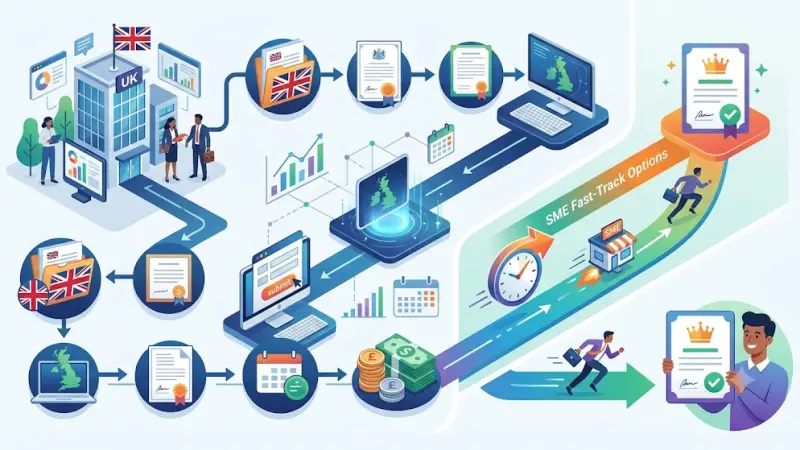
Your UK Sponsor Licence 2026 Step by Step Gui...
Read this insightful article "Your UK Sponsor Licence 2026 Step by Step Guide" to expand your knowledge!
Questions & Answers – Find What
You Need, Instantly!
How can I update my business listing?
Is it free to manage my business listing?
How long does it take for my updates to reflect?
Why is it important to keep my listing updated?
