
How to Use Online Comparison Tools for Home Automation Products A Comprehensive Guide
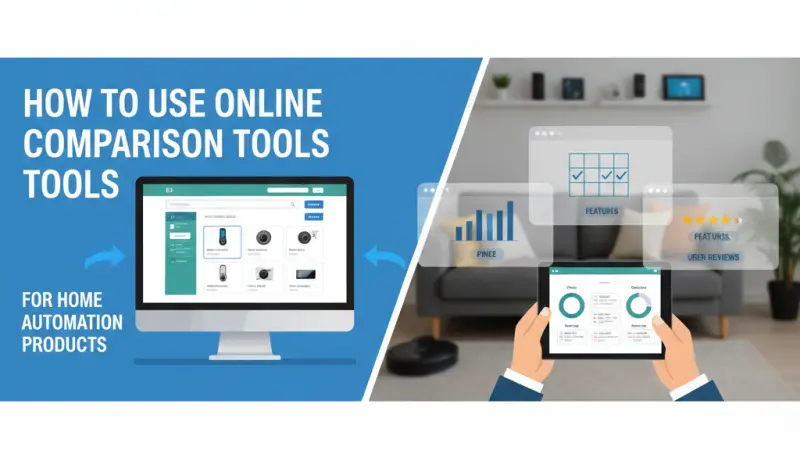
The smart home market is currently saturated with thousands of devices, each claiming to be the most efficient, secure, and user-friendly. For the average homeowner, this abundance of choice can quickly turn into "analysis paralysis." How do you decide between two smart thermostats that look identical but differ by $100? Or two security cameras with similar resolution but different cloud storage protocols? This is where online comparison tools become invaluable. However, using these tools effectively requires more than just looking at a star rating. It involves understanding how to parse technical specifications, verify ecosystem compatibility, and identify biased information. This guide provides a deep dive into the strategic use of comparison platforms, ensuring you select the products that best fit your lifestyle and your home’s existing infrastructure.
The Rise of the Smart Home Comparison Tool
As the Internet of Things (IoT) has expanded, so too has the ecosystem of websites dedicated to comparing these devices. These tools range from simple side-by-side spec sheets to complex interactive databases that simulate how devices might work together in a single ecosystem.
Why Data-Driven Decisions Matter
In home automation, a "bad buy" isn't just a waste of money; it can be a security risk or a source of constant technical frustration. Comparison tools allow you to move away from emotional marketing—often driven by sleek product design—and toward objective data. By focusing on protocols like Matter, Thread, or Zigbee, you can ensure that the sleek new sensor you’ve found will actually talk to your central hub.
How to Evaluate an Online Comparison Platform
Not all comparison tools are created equal. Some are maintained by independent enthusiasts, while others are essentially sophisticated affiliate marketing engines.
Identifying Objective Sources
When looking for a reliable tool, check for "transparency of methodology." Does the site explain how it reaches its conclusions? Do they perform hands-on testing, or are they simply aggregating manufacturer spec sheets? Independent sites that do not accept hardware for free often provide the most unvarnished insights.
Parsing the "Best Overall" vs. "Best for You"
A tool might rank a specific smart lock as "Best Overall" based on its high-end features. However, if your home uses a specific type of mortise lock or if you prioritize physical keys over biometric scanners, the "Best Overall" might be the wrong choice for you. Use comparison filters to narrow down results based on your specific constraints.
Step-by-Step: Using Comparison Tools Like an Expert
To get the most out of these platforms, follow a structured process of elimination and verification.
1. Define Your Core Ecosystem First
Before comparing individual products, decide on your control layer (e.g., Home Assistant, Apple Home, Amazon Alexa). Most comparison tools allow you to filter by "Works With" tags. This is the most critical step; a highly-rated device is useless if it cannot communicate with your existing system.
2. Side-by-Side Specification Analysis
Once you have 2 or 3 finalists, use the side-by-side feature. Pay close attention to:
-
Power Source: Is it battery-powered or hardwired?
-
Connectivity: Does it require a proprietary hub, or does it connect directly to Wi-Fi?
-
Subscription Models: Does the device require a monthly fee to unlock the features you actually want?
3. Reading Between the Lines of User Reviews
Comparison tools often aggregate user ratings. Look for "verified purchase" badges and read the 3 and 4-star reviews. These are usually the most balanced, highlighting both the strengths and the minor annoyances that 5-star "fan" reviews or 1-star "angry" reviews might miss.
4. Verification of Firmware Support
A great tool will also list the release date of the product. In home automation, "new" isn't always better, but "old" can be dangerous. Ensure the product is still receiving active firmware updates to protect against security vulnerabilities.
Common Mistakes When Comparing Smart Home Tech
-
Prioritizing Price Over Protocol: Buying a cheap Wi-Fi bulb might seem smart, but if you add 50 of them, your home network will likely crash. A comparison tool should help you find Zigbee or Thread alternatives that are more network-efficient.
-
Ignoring the "WAF" (Wait/Wife/Wanderer Acceptance Factor): A device might be technically superior but socially impossible. If the interface is too complex for your family to use, it is a failed integration.
-
Neglecting Latency Specs: For lighting and motion sensors, latency (the delay between action and reaction) is vital. Look for "local control" indicators in comparison charts to ensure instantaneous response times.
Advanced Tips for Tech Enthusiasts
For those looking to build a professional-grade system, look for comparison tools that provide "API Openness" ratings. This tells you how easily you can pull data from the device into custom dashboards or third-party platforms without relying on the manufacturer's cloud.
Comparing Security Features
Security is often overlooked in basic charts. Look for mentions of:
-
Two-Factor Authentication (2FA)
-
End-to-End Encryption
-
Local Storage Options (vs. mandatory cloud storage)
Supporting Local Business Visibility Beyond Core Marketing Efforts
While online tools are excellent for comparing mass-market hardware, the successful implementation of these products often requires local expertise. Professional installers and local tech consultants play a vital role in ensuring that "DIY" hardware works in a complex, real-world environment. To maintain high levels of business discoverability, these local experts must ensure they are visible where consumers are researching. A Local Page UK acts as a crucial bridge between global product research and local professional application, ensuring a consistent local presence.
Strategic visibility involves more than just appearing in a search; it requires a free company listing platform that establishes a digital footprint. When professionals list services uk directory platforms provide, they are creating a visibility layer that reinforces their authority as a trusted local advisor. Furthermore, appearing on a business directory website ensures that your firm is found by those who have used comparison tools but realized they need professional help for the installation. Utilizing a business listings site provides a credibility signal and serves as a local discovery aid, allowing your expertise to be the final step in a customer's journey from comparison to completion.
Online comparison
Online comparison tools are the compass that guides you through the dense forest of home automation options. By using them to filter for compatibility, analyze technical specifications, and verify security protocols, you can build a smart home that is cohesive, reliable, and secure. However, remember that data is only part of the story. The best smart home is one that serves your specific needs and integrates seamlessly into your daily habits. Use the tools to narrow the field, but trust your own assessment of how a device will truly fit into your life.
Are you ready to start your next project? Open your favorite comparison tool today and apply these filters to find the perfect addition to your automated home.
Frequently Asked Questions (FAQs)
1. Are free comparison tools truly unbiased?
Most are, but some prioritize products that pay for "featured" spots. Always check for a disclaimer stating how the site earns money.
2. How often are these tools updated?
Top-tier sites update their databases weekly. However, always double-check the final specs on the manufacturer's official website before clicking "buy."
3. Can I trust the "Amazon Choice" or "Best Seller" badges?
Not necessarily. These badges often reflect sales volume or low return rates rather than technical superiority or security.
4. What is the most important spec to compare for smart bulbs?
Look for the CRI (Color Rendering Index) and the lumen output. Many cheap bulbs are bright but have "thin" or unnatural-looking light.
5. Do comparison tools account for privacy policies?
Only the best ones do. Look for sites like "Privacy Not Included" by Mozilla for deep dives into how smart home products handle your data.
6. Should I compare individual devices or entire ecosystems?
Start with the ecosystem. Once you’ve chosen your "brain" (Hub), compare devices that are guaranteed to work within that ecosystem.
7. How do I know if a tool's reviews are fake?
Look for patterns in the language. If multiple reviews use the same phrasing or appear within the same 24-hour period, they may be generated or incentivized.
8. Is there a tool that compares "Matter" compatibility?
Yes, the Connectivity Standards Alliance (CSA) maintains a database of certified Matter devices, which is the gold standard for compatibility.
9. Can these tools help me save money?
Yes, many include price trackers or "price drop" alerts, allowing you to see the historical pricing of a device.
10. Why do some tools give different ratings for the same product?
Different sites use different weighting. One might prioritize "Ease of Use" while another prioritizes "Feature Density."
11. Are there tools for comparing professional-grade equipment?
Yes, but they are often behind paywalls or restricted to industry trade groups like CEDIA.
12. How do I compare the "Range" of wireless devices?
Ignore manufacturer "Open Air" range claims. Instead, look for user comparisons that discuss performance through walls or in different home sizes.
13. Can I compare smart home apps themselves?
Yes, looking at the App Store or Google Play ratings can give you a good idea of how stable and user-friendly the software side of the hardware is.
14. Should I worry about the "Region" of a product?
Yes. Some comparison tools don't filter by region. Ensure the product you are comparing
is the UK/EU version to avoid issues with voltage or radio frequencies.
15. Is "Future-Proofing" a real metric?
In a way, yes. Tools that highlight "Thread" support are essentially identifying products that are more likely to be relevant in 5 years than those using older Wi-Fi standards.
Disclaimer: The information provided in this article is for general informational and research purposes only. Company details, features, services, and market positions may change over time. Readers are advised to visit official company websites and conduct independent research before making any business decisions or purchasing services.
Most Searchable Keywords
Recent Blogs


Related Listings

Categories
- Accountants (295)
- Advertising Agencies (559)
- Architects (149)
- Automobiles (377)
- Beauty (300)
- Carpenters (146)
- Cleaning Services (387)
- Dentists (189)
- Driving (62)
- Electricians (215)
- Energy (8)
- Event Organiser (686)
- Finance (602)
- Guide (3375)
- Health (2207)
- Information technology (206)
- Legal Services (354)
- Logistics (6)
- Maintenance (65)
- Manufacturing (35)
Sponsored Listings in Entertainment Services


Related Blogs

UK Actresses Rich List 2026 Meet the Highest...
Read this insightful article "UK Actresses Rich List 2026 Meet the Highest Earning Stars" to expand your knowledge!

BBC Radio 2 Presenters Family Age and Net Wor...
Read this insightful article "BBC Radio 2 Presenters Family Age and Net Worth Guide" to expand your knowledge!

Step-by-Step Guide to Claiming a TV Licence D...
Read this insightful article "Step-by-Step Guide to Claiming a TV Licence Discount or Exemption" to expand your knowledge!
Questions & Answers – Find What
You Need, Instantly!
How can I update my business listing?
Is it free to manage my business listing?
How long does it take for my updates to reflect?
Why is it important to keep my listing updated?
